How to Sleep With a Stuffy Nose: 8 Methods Ranked by Effectiveness
Share
If you can't breathe through your nose at night, everything about sleep gets harder. You toss, you wake up dry-mouthed, and the next morning feels like it never quite started. The best way to sleep with a stuffy nose is to mechanically open the nasal passages with an external nasal strip — it works immediately, requires no drugs, and won't disrupt sleep quality the way decongestants can.
Whether it's fall allergies, the start of cold and flu season, or just the weather shifting, nasal congestion at night affects millions of people every week. The problem isn't just discomfort. A stuffy nose forces mouth breathing, which fragments sleep architecture, dries out your throat, and worsens snoring. The sooner you solve it, the sooner your sleep actually does its job.
Here are eight methods for sleeping with congestion, ranked from most to least effective based on speed, safety, and real-world reliability.
1. External Nasal Strips (Most Effective)
How it works: An external nasal strip uses flexible splints to physically lift your nasal sidewalls outward. This widens the nasal valve — the narrowest part of your airway — and increases airflow immediately. No drugs enter your system. Nothing needs to absorb or take effect. You apply the strip, and your nose opens.
This is the single best first-line approach when you can't breathe through your nose at night. Nasal strips have solid clinical backing for reducing airway resistance, and they work regardless of whether your congestion comes from allergies, a cold, or structural narrowing like a deviated septum.
TitanAir Nasal Strips use spring-loaded splints and medical-grade adhesive designed to stay put all night. They're drug-free, so there's no rebound congestion, no drowsiness, and no interference with your sleep cycles. Among the best nasal strips for snoring, they're also the most practical tool for congested sleepers.
2. Elevate Your Head
How it works: Gravity is simple and free. When you sleep flat, blood pools in the nasal tissues and mucus has nowhere to drain. Elevating your head 15-30 degrees helps fluid drain away from the sinuses and reduces swelling in the nasal passages.
Use an extra pillow or a wedge pillow — not a stack of flat pillows that bends your neck at a weird angle. The goal is a gradual incline from your upper back to your head. Pair this with nasal strips and you're attacking congestion from two directions. For more on positioning, see our guide to the best sleep position for breathing.
3. Steam or Hot Shower Before Bed
How it works: Warm, humid air loosens mucus and temporarily reduces swelling in the nasal tissues. A hot shower 20-30 minutes before bed can clear your passages enough to fall asleep breathing through your nose.
The downside: it's temporary. Most people find the relief lasts 30-60 minutes before congestion returns. Steam works best as a pre-bed ritual combined with a longer-lasting method like nasal strips — not as a standalone fix for all-night congestion.
4. Saline Rinse (Neti Pot)
How it works: A saline rinse flushes allergens, mucus, and irritants directly from the nasal passages. Neti pots and squeeze bottles push a saltwater solution through one nostril and out the other, physically clearing the airways.
Saline rinses are effective and drug-free, but they require some technique and setup. Always use distilled or previously boiled water — never tap water. The relief typically lasts longer than steam, but it's still not a full-night solution for severe congestion. During cold and flu season, a nightly saline rinse before bed can make a real difference when combined with a nasal strip.
5. Humidifier
How it works: Dry air irritates and inflames nasal tissue, making existing congestion worse. A humidifier adds moisture to your bedroom air, keeping nasal passages from drying out and helping mucus stay thin and drainable.
This is a slow-burn solution — it won't unclog your nose in 10 minutes, but it creates an environment where your nose is less likely to swell shut overnight. Keep your humidifier clean. Mold in a dirty humidifier will make congestion worse, not better. Aim for 40-50% humidity.
6. Reduce Allergens in the Bedroom
How it works: If your stuffy nose at night is worse than during the day, your bedroom environment is probably part of the problem. Dust mites in pillows and bedding, pet dander, and pollen tracked indoors are common triggers. Washing sheets weekly in hot water, using allergen-proof pillow covers, and running a HEPA air purifier can reduce nighttime congestion at the source.
This method takes time to show results, but it's one of the few that addresses the cause rather than the symptom. If your congestion is seasonal — worsening in fall when ragweed peaks or when you close windows and indoor air stagnates — allergen control becomes especially important.
7. Decongestant Nasal Sprays (Use With Caution)
How it works: Medicated sprays like oxymetazoline (Afrin) constrict blood vessels in the nasal tissue, rapidly reducing swelling. They work fast — within minutes — and the relief is dramatic.
The catch: use them for more than 3 consecutive days and you risk rebound congestion, where the spray itself causes the swelling it's supposed to treat. This cycle is well-documented and difficult to break. Decongestant sprays are a reasonable option for a single miserable night with a bad cold, but they're not a sustainable approach to nasal congestion sleep problems. If you're dealing with ongoing congestion from a sinus infection or post-nasal drip, talk to your doctor about longer-term solutions.
8. Oral Decongestants and Antihistamines (Least Ideal for Sleep)
How it works: Over-the-counter pills like pseudoephedrine (Sudafed) or diphenhydramine (Benadryl) can reduce nasal swelling or dry up secretions systemically. They work, but they come with trade-offs that directly affect sleep.
Pseudoephedrine is a stimulant — it can keep you awake or reduce time in deep sleep. Antihistamines like diphenhydramine cause drowsiness but actually degrade sleep quality by suppressing REM sleep and increasing next-day grogginess. Neither option is ideal when the whole point is better sleep. If congestion is your only issue, a mechanical solution like a nasal strip avoids these downsides entirely.
The Complete System: Nasal Strips + Mouth Tape
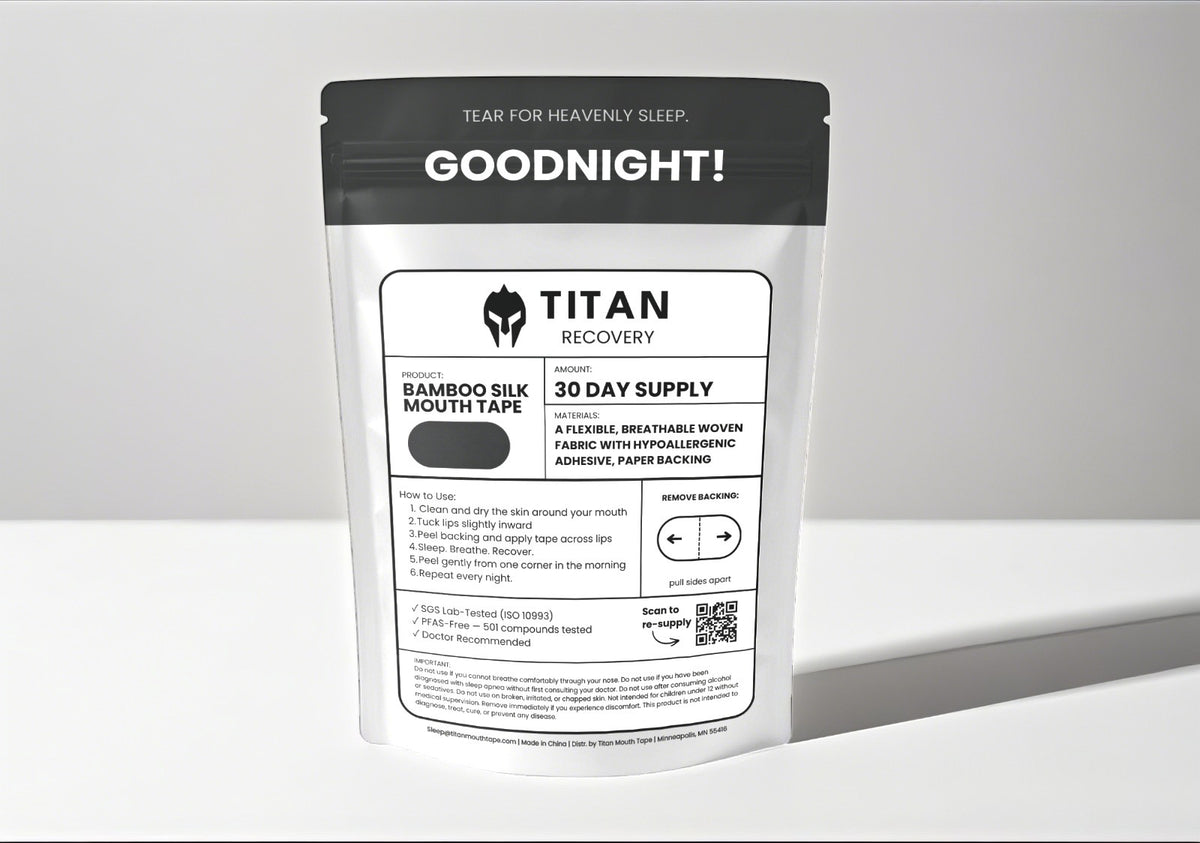
Opening your nasal passages is step one. Keeping your mouth closed all night is step two. When you combine TitanAir Nasal Strips with Titan Mouth Tape, you get the full picture: wider airways plus consistent nasal breathing from lights-out to alarm.
This combination is what the Deep Sleep Bundle is built for. The nasal strip handles the mechanical side — opening the airway — while the mouth tape gently keeps the lips sealed so your body can't default to mouth breathing even during deep sleep. If you've been dealing with congestion-related mouth breathing, this pairing is the most effective drug-free approach available. Learn more about using mouth tape and nasal strips together.
Frequently Asked Questions
Why does my nose get stuffy only at night?
Lying down changes blood flow. When you're horizontal, blood pools in the nasal tissues and causes them to swell. Gravity also stops mucus from draining downward the way it does when you're upright. Add in bedroom allergens like dust mites and dry indoor air, and you've got a recipe for nighttime congestion that doesn't bother you during the day.
Can I use mouth tape if my nose is congested?
Yes, but pair it with a nasal strip. Mouth tape on its own isn't recommended when you can't breathe through your nose at all. TitanAir Nasal Strips open the airway mechanically, so mouth tape can do its job without restricting your breathing. If congestion is severe — like during a bad cold or active sinus infection — wait until the worst passes before adding mouth tape.
Is it safe to sleep with a stuffy nose?
A stuffy nose isn't dangerous, but it does force mouth breathing, which has downstream effects: dry mouth, increased snoring, lower sleep quality, and potential dental health issues over time. Addressing the congestion with a drug-free method like nasal strips is the simplest way to protect your sleep without adding side effects.
How long do nasal strips take to work?
Immediately. Unlike medications that need to be absorbed or take 20-30 minutes to kick in, an external nasal strip physically opens the airway the moment you apply it. That's the primary advantage — it works on contact and lasts until you remove it in the morning.
The Bottom Line
Sleeping with a stuffy nose doesn't have to mean a night of mouth breathing and lousy rest. Start with the method that works fastest and carries the fewest trade-offs: an external nasal strip. Add head elevation, keep your bedroom air clean and humidified, and use a saline rinse when congestion is heavy. Save the sprays and pills for short-term emergencies, not nightly use.
For the most complete approach, grab the Deep Sleep Bundle — TitanAir Nasal Strips plus Titan Mouth Tape in one kit. It's the simplest drug-free system for sleeping through congestion season.
Doctor Recommended: "As a maxillofacial surgeon and dentist, I recommend Titan Mouth Tape. Nasal breathing during sleep is essential for airway health and deep restorative rest. Titan's bamboo silk design is the most comfortable and effective mouth tape I have tested. If you struggle with snoring, dry mouth, or poor sleep quality, this is the simplest change you can make for your health." — Dr. Francois P., MD, DDS — Maxillofacial Surgeon
Lab-Tested Safety: Titan's adhesive is independently tested to ISO 10993 medical device standards. Non-toxic (95% cell viability). Non-allergenic (0% reaction rate). Non-irritating (score 0.0/8.0). PFAS-free — 501 compounds tested, zero detected. See full test results →
Try the complete system tonight. Titan Mouth Tape (bamboo silk, SilkSeal™ adhesive) + TitanAir Nasal Strips. Free shipping. 30-night Better Sleep Guarantee. Shop Titan Mouth Tape → · Shop TitanAir Nasal Strips →
Related reading
- How to Set Up Your Bedroom for Sleep
- What Happens When You Don't Sleep
- How to Fall Asleep Fast, Naturally
- How to Stay Asleep All Night
- How to Start Mouth Taping: A Step-by-Step Guide
- What to Expect Your First Week of Mouth Taping
- How to Breathe Through Your Nose While Sleeping
- How to Recover From an All-Nighter