How to Set Up Your Bedroom for Better Sleep
Share
You can do everything else right and still sleep badly if your bedroom is working against you. A good sleep environment makes falling and staying asleep almost automatic; a bad one quietly sabotages you all night. Here's the complete checklist for setting up your bedroom for better sleep — temperature, light, noise, air, and bed — plus the one thing people forget: how you breathe in it.
Temperature: Cool Wins
Your body needs to cool down to fall and stay in deep sleep, so a warm room is one of the most common sleep-wreckers. Aim for around 65°F (18°C) with breathable bedding. Full detail in our guide to the ideal bedroom temperature.
Light: Dark as Possible
Light is the master signal to your body clock. Even small amounts at night suppress melatonin and lighten your sleep. Use blackout curtains, cover glowing electronics, and keep the room dark; then flood it with bright light in the morning to anchor your rhythm. (Why: circadian rhythm explained.)
Noise: Steady, Not Silent
Sudden noises cause micro-arousals even if you don't fully wake. If you can't eliminate noise, mask it with steady sound — a fan or white noise — which smooths over disruptive spikes. Earplugs work too.
Air Quality: Breathe Easy
Dry or stuffy air worsens congestion and the dry mouth that comes with mouth breathing. Keep the room ventilated, run a humidifier in dry months, and reduce allergens (wash bedding often, consider a HEPA purifier) so your nose stays clear enough to breathe through.
The Bed: Comfort and Association
A supportive mattress and pillow matter, but so does what your brain associates with the bed. Keep the bed for sleep — not work or scrolling — so lying down becomes a cue to sleep, not to think.
The Overlooked Piece: How You Breathe
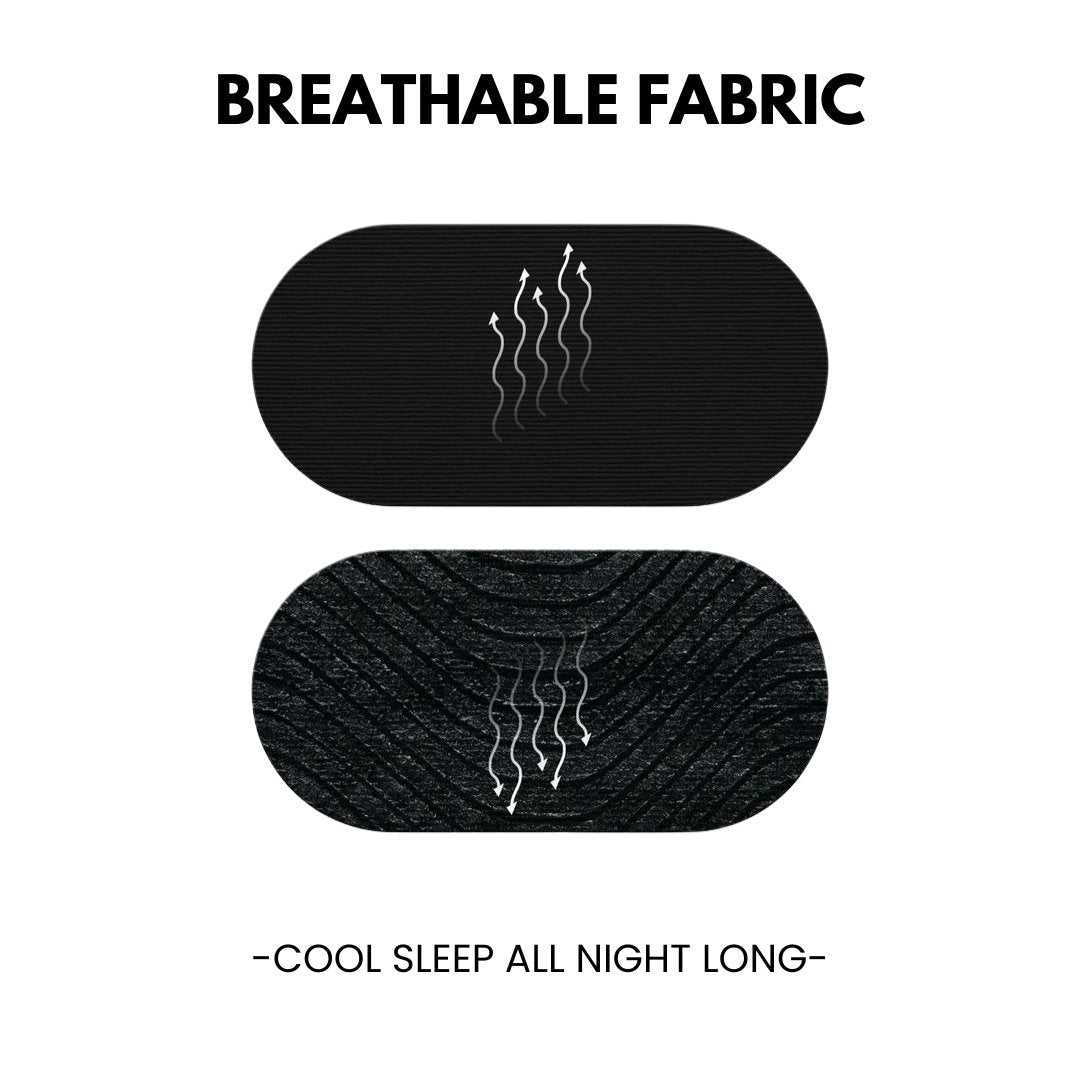
A perfect room still can't fix mouth breathing. If you sleep with your mouth open, you'll fragment your sleep and wake with a dry mouth regardless of how dialed-in the environment is. The final step in a great sleep setup is keeping calm nasal breathing all night — Titan Mouth Tape keeps the mouth closed, and TitanAir nasal strips open the airway if you're congested. See how to wake up refreshed.
What is the ideal sleep environment?
Cool (~65°F), dark, quiet or steadily masked, well-ventilated, and reserved for sleep — with clear nasal breathing on top. Get those right and your bedroom does much of the work for you.
What's the single most impactful bedroom change?
For most people it's temperature (cool the room) or light (make it dark). Both are cheap, fast, and fix common causes of nighttime waking.
Does air quality really affect sleep?
Yes — stuffy, dry, or allergen-heavy air worsens congestion and pushes you toward mouth breathing, which fragments sleep. Ventilation, humidity, and allergen control keep your nose clear enough to breathe through.
The Bottom Line
Set your bedroom up to sleep for you: cool, dark, quiet, well-aired, and bed-for-sleep-only. Then finish the job by protecting nasal breathing all night with Titan Mouth Tape — the best sleep environment plus the right breathing is how you get consistently deep, restorative nights.
Doctor Recommended: "As a maxillofacial surgeon and dentist, I recommend Titan Mouth Tape. Nasal breathing during sleep is essential for airway health and deep restorative rest. Titan's bamboo silk design is the most comfortable and effective mouth tape I have tested. If you struggle with snoring, dry mouth, or poor sleep quality, this is the simplest change you can make for your health." — Dr. Francois P., MD, DDS — Maxillofacial Surgeon
Lab-Tested Safety: Titan's adhesive is independently tested to ISO 10993 medical device standards. Non-toxic (95% cell viability). Non-allergenic (0% reaction rate). Non-irritating (score 0.0/8.0). PFAS-free — 501 compounds tested, zero detected. See full test results →
Try the complete system tonight. Titan Mouth Tape (bamboo silk, SilkSeal™ adhesive) + TitanAir Nasal Strips. Free shipping. 30-night Better Sleep Guarantee. Shop Titan Mouth Tape → · Shop TitanAir Nasal Strips →