How to Recover From an All-Nighter
Share
The fastest way to recover from an all-nighter is to get through the day without a nap longer than 20 minutes, use light and caffeine strategically, then protect your very next night of sleep instead of trying to binge nine hours. That's the honest answer: you cannot fully "make up" a lost night in a single stretch, but you can blunt the worst of it today and repay most of the debt over the next two to three nights. Whether you pulled the all-nighter for an exam, a deadline, a newborn, or a shift that ran long, the recovery plan is the same, and it starts the moment you realize you're running on empty.
Below is the two-part playbook: how to function after no sleep during the day, and how to structure the recovery night so the sleep you finally get actually restores you.
Part One: Surviving the Day After
Your goal today is not to feel great — it's to stay functional and safe without wrecking tonight's sleep. Sleep deprivation impairs reaction time, judgment, and memory in ways that feel a lot like being legally drunk. You will be tempted to over-caffeinate, crash on the couch at noon, or power through until you collapse. All three sabotage recovery. Here's what works instead.
Get bright light into your eyes early. Light is the master signal for your circadian clock, and after a sleepless night your internal clock is confused about whether it's day or night. Step outside within the first hour, even for 10 minutes. Outdoor light on an overcast day is still many times brighter than indoor lighting, and that morning signal suppresses residual melatonin, lifts alertness, and helps anchor tonight's bedtime. This is one of our favorite sleep hacks for a reason — it's free and it works fast.
Time your caffeine, don't just chug it. Caffeine genuinely helps reaction time and mood after sleep loss, but the way most people use it backfires. Space smaller doses through the morning rather than front-loading a triple espresso that spikes and crashes you. Most importantly, set a hard cutoff: caffeine has a half-life of five to six hours, so anything after early afternoon (roughly 2 p.m.) is still in your system at bedtime — and tonight's sleep is the whole point. Coffee at 4 p.m. trades recovery for a few more alert hours.
Hydrate deliberately. Sleep deprivation and dehydration produce nearly identical symptoms: headache, fatigue, poor concentration, irritability. People running on no sleep also tend to lean on coffee and skip water entirely. Keep a bottle within reach and drink through the morning. It won't replace sleep, but it removes a compounding drag on how you feel.
Move your body, gently. A brisk 10-minute walk does more for daytime alertness than a fourth cup of coffee, and without the crash. Light movement raises circulation and pushes back the fog. Save intense training for another day — hard workouts on zero sleep raise injury risk, and your coordination is already compromised.
Take one short power nap — and set an alarm. If the wall hits in early afternoon, a 20-minute nap is your single best tool: it skims the restorative edge of light sleep and leaves you refreshed. Go past 30 minutes and you drop into deep sleep; get pulled out of that and you'll feel worse — groggy and disoriented. That's sleep inertia, and it can linger an hour. Keep the nap short, keep it before 3 p.m., and never let a "quick rest" become a two-hour blackout that steals your sleep drive for tonight.
Eat for steady energy, not a sugar spike. Sleep loss ramps up hunger hormones and cravings for fast carbs and sugar. A donut and a soda spike your blood sugar and drop you into a deeper crash 45 minutes later. Anchor meals around protein, fiber, and healthy fats: eggs, yogurt, nuts, beans, vegetables, whole grains. Steady blood sugar means steady focus, a smaller-scale version of eating for sleep quality covered in our guide to the reasons you're still tired after eight hours.
Avoid the afternoon crash traps. The big three that turn a survivable day into a miserable one: a heavy carb-loaded lunch, late caffeine, and a nap that runs long. Protect against all three and you'll reach evening tired but functional — exactly where you want to be for the recovery night.
Part Two: The Recovery Night
The single biggest mistake people make is sleeping wildly late the next morning to "catch up." It feels logical, but sleeping until 1 p.m. shoves your circadian clock hours off schedule, and you'll pay for it with a second bad night — turning one rough day into a week of drift. The better move is to go to bed a little earlier than usual, wake within about an hour of your normal time, and let the deeper, more efficient sleep your body is craving do the repair work.
Go to bed slightly early, not drastically early. After a sleepless night, your sleep drive (the pressure that builds the longer you're awake) is enormous. You'll fall asleep fast, and your body will automatically prioritize deep, slow-wave sleep — the most restorative stage — in the first few cycles. Aim to be in bed 30 to 60 minutes before your normal time, not three hours early, or you'll fight to fall asleep and disrupt your rhythm anyway.
Protect the first sleep cycles above all. The first half of the night is where deep sleep is concentrated, and after sleep deprivation your brain rebounds by loading up on it — so an uninterrupted first few hours matters more than total time in bed. Anything that fragments those early cycles — a warm room, light through the curtains, snoring, a dry mouth — directly steals the recovery you came for. For more, see our guide to how to increase deep sleep.
Set the room cool and fully dark. Your core temperature needs to drop to trigger deep sleep. Aim for roughly 65 to 68 degrees, black out the room, and cut screens in the last hour so blue light isn't suppressing the melatonin your exhausted body is finally ready to release.
Breathe through your nose to maximize every cycle. Here's the lever most people overlook on a recovery night. When you're overtired and finally crash hard, jaw muscles go slack and the mouth falls open — leading to mouth breathing, snoring, a dry throat, and dozens of micro-arousals that fragment sleep without fully waking you. On a normal night that's a nuisance. On a recovery night, when the quality of those first deep cycles is doing the heavy lifting, it's costly. Nasal breathing keeps oxygen saturation steady, humidifies the airway, and supports the uninterrupted deep sleep your body is prioritizing.
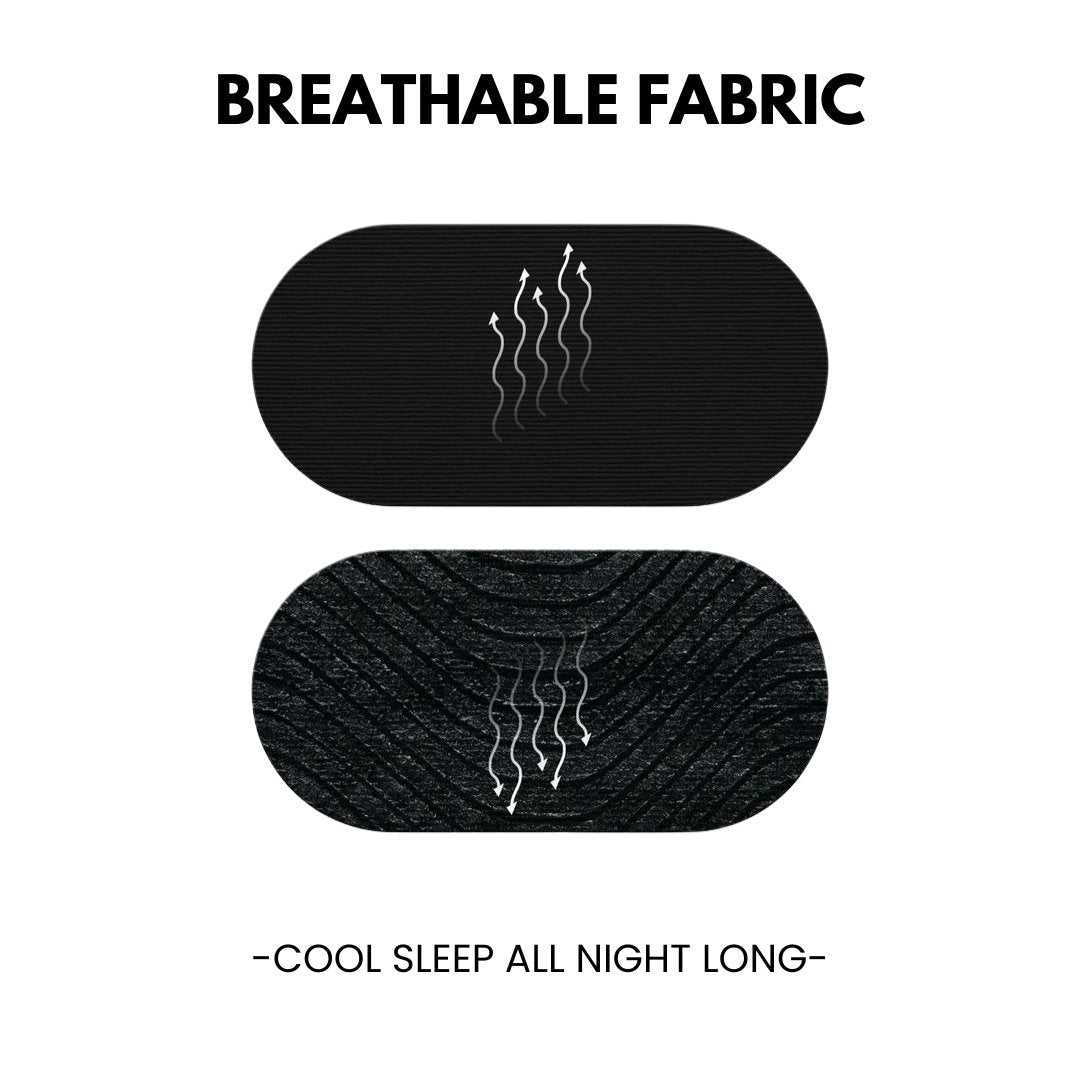
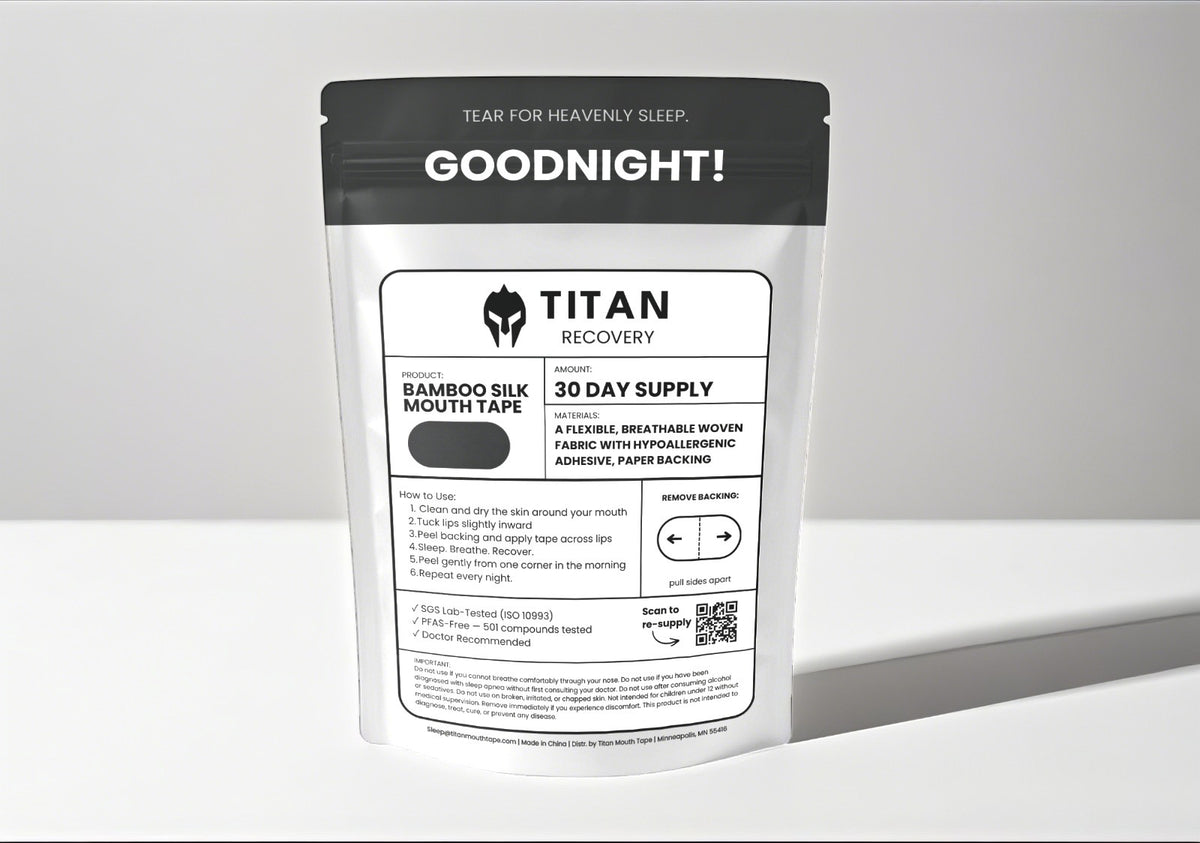
Mouth tape keeps the lips gently sealed so you stay nasal-breathing even when you're sleeping harder than usual — exactly the scenario that follows an all-nighter. Pairing it with nasal strips opens the nasal passages and makes that breathing effortless, useful if you're congested. The Deep Sleep Bundle combines both, and a recovery night is one of the highest-value times to use them: you get one shot at this sleep, and you want every cycle to count.
How Long Full Recovery Actually Takes
You cannot fully repay a night of lost sleep in a single night — and believing you can is what keeps people stuck. Sleep debt is cumulative and it settles slowly. Research on recovery sleep is consistent: one solid night restores a large chunk of your alertness and mood, but subtle deficits in reaction time, attention, and memory can linger for several days. Studies of recovery sleep find that some deficits don't fully bounce back even with a single weekend of catch-up.
The practical takeaway: treat recovery as a two-to-four-day project, not a one-night fix. Keep bedtimes consistent, keep morning light exposure high, and resist the urge to swing between crashing early and sleeping in late, which just re-scrambles your clock. If you're chronically short on sleep — the reality for many students, parents, and shift workers — the real fix is rebuilding a sustainable baseline, which is what our guide to sleeping better is built around.
Frequently Asked Questions
Should I stay up all day or nap after an all-nighter?
Stay up, with one exception: a single 20-minute power nap before 3 p.m. is fine and genuinely helpful. Anything longer risks dropping you into deep sleep, and waking from that leaves you groggier (sleep inertia) while also draining the sleep pressure you need to fall asleep at a normal bedtime tonight. The plan is short nap if needed, then a slightly early but not extreme bedtime.
How much sleep do I need to recover from an all-nighter?
Aim for a normal-to-slightly-longer night — roughly your usual amount plus maybe an extra hour — rather than a marathon 12-hour session. Your body will automatically front-load deep, restorative sleep after deprivation, so quality matters more than raw quantity. Sleeping drastically late throws off your circadian rhythm and sets up a second bad night, which is counterproductive.
Why do I feel worse the day after the all-nighter than during it?
Adrenaline, caffeine, and the novelty of staying up can mask fatigue during the all-nighter itself. Once those wear off and your sleep debt fully registers, the crash hits. It's also common to sleep poorly the recovery night if you've over-caffeinated or napped too long, which compounds the second-day slump. Guarding your caffeine cutoff and nap length is what prevents this.
Does mouth taping really help on a recovery night?
It helps by protecting sleep quality when it matters most. After sleep loss you tend to sleep hard and deep, which is exactly when the mouth falls open and mouth breathing, snoring, and micro-arousals creep in. Keeping the lips gently sealed supports steady nasal breathing and uninterrupted deep cycles, so more of your limited recovery sleep is actually restorative. It won't replace lost hours, but it makes the hours you get work harder.
Is it safe to drive or make big decisions after no sleep?
Be cautious. Sleep deprivation impairs reaction time and judgment comparably to alcohol intoxication, and drowsy driving is a serious crash risk. Avoid high-stakes decisions or long drives until you've had a recovery night. When in doubt, delegate the drive or delay the decision.
The Bottom Line
Recovering from an all-nighter is a two-part effort: survive the day without sabotaging the night, then protect the night so it does maximum repair. During the day, use morning light, well-timed caffeine with an early cutoff, hydration, gentle movement, steady-energy food, and at most a 20-minute nap. At night, go to bed a little early, keep the room cool and dark, and wake near your normal time.
What you can't do is make up the debt in a single stretch — full recovery takes two to four days of consistent, protected sleep. So make the sleep you do get count. Nasal breathing through the night, supported by mouth tape and nasal strips, keeps those recovery cycles uninterrupted, so you bounce back faster and feel human again sooner.
Doctor Recommended: "As a maxillofacial surgeon and dentist, I recommend Titan Mouth Tape. Nasal breathing during sleep is essential for airway health and deep restorative rest. Titan's bamboo silk design is the most comfortable and effective mouth tape I have tested. If you struggle with snoring, dry mouth, or poor sleep quality, this is the simplest change you can make for your health." — Dr. Francois P., MD, DDS — Maxillofacial Surgeon
Lab-Tested Safety: Titan's adhesive is independently tested to ISO 10993 medical device standards. Non-toxic (95% cell viability). Non-allergenic (0% reaction rate). Non-irritating (score 0.0/8.0). PFAS-free — 501 compounds tested, zero detected. See full test results →
Try the complete system tonight. Titan Mouth Tape (bamboo silk, SilkSeal™ adhesive) + TitanAir Nasal Strips. Free shipping. 30-night Better Sleep Guarantee. Shop Titan Mouth Tape → · Shop TitanAir Nasal Strips →