How to Breathe Through Your Nose While Sleeping
Share
You know nasal breathing is better for you. The improved filtration, the nitric oxide production, the deeper sleep stages, the reduced snoring. But knowing that does not help much when you wake up every morning with a dry mouth and realize your nose gave up at some point in the night. You cannot willpower your way through eight hours of unconsciousness. Your jaw relaxes, your mouth falls open, and your body defaults to whatever airway is easiest.
The good news is that switching to nasal breathing during sleep is not about discipline or training. It takes a few practical, mechanical steps that physically set you up to breathe through your nose all night. Here is how to make the switch and what to expect as your body adjusts.
Why your body defaults to mouth breathing at night
During the day, you have at least some conscious control over how you breathe. You can close your mouth and direct airflow through your nose if you think about it. At night, that control disappears entirely. Your muscles relax, your jaw goes slack, and air takes the path of least resistance. If your nasal passages have even mild congestion, slight swelling from allergies, or any structural narrowing, your body will route air through your mouth without you ever knowing it happened.
The most common reasons nasal breathing fails during sleep include allergies and chronic low-grade inflammation that swells nasal tissue, a deviated septum that narrows one or both nasal passages, sleeping on your back where gravity pulls the jaw open and the tongue backward, alcohol consumed within a few hours of bedtime that relaxes jaw and throat muscles, dry bedroom air that irritates and swells the nasal lining, and excess weight that puts additional pressure on the airway.
The fix is not about building a habit or training your brain. It is about removing the physical obstacles and giving your body a mechanical reason to keep your mouth closed all night.
Step 1: Clear your nasal passages before bed
Start every night with a clear airway. A saline rinse or neti pot flushes out allergens, dust, dried mucus, and inflammatory irritants that accumulated during the day. This simple step makes a significant difference for most people, especially during allergy season, in dusty environments, or in dry climates where nasal tissue dries and swells overnight.
If you have chronic congestion that goes beyond what saline can address, a nasal corticosteroid spray prescribed by your doctor can reduce the underlying inflammation over weeks of consistent use. For immediate mechanical support without medication, TitanAir Nasal Strips physically open the nasal valve from the outside, increasing airflow area and reducing resistance. The strips work from the first application and are especially useful if you have a narrow nasal bridge or mild septal deviation.
Step 2: Use mouth tape
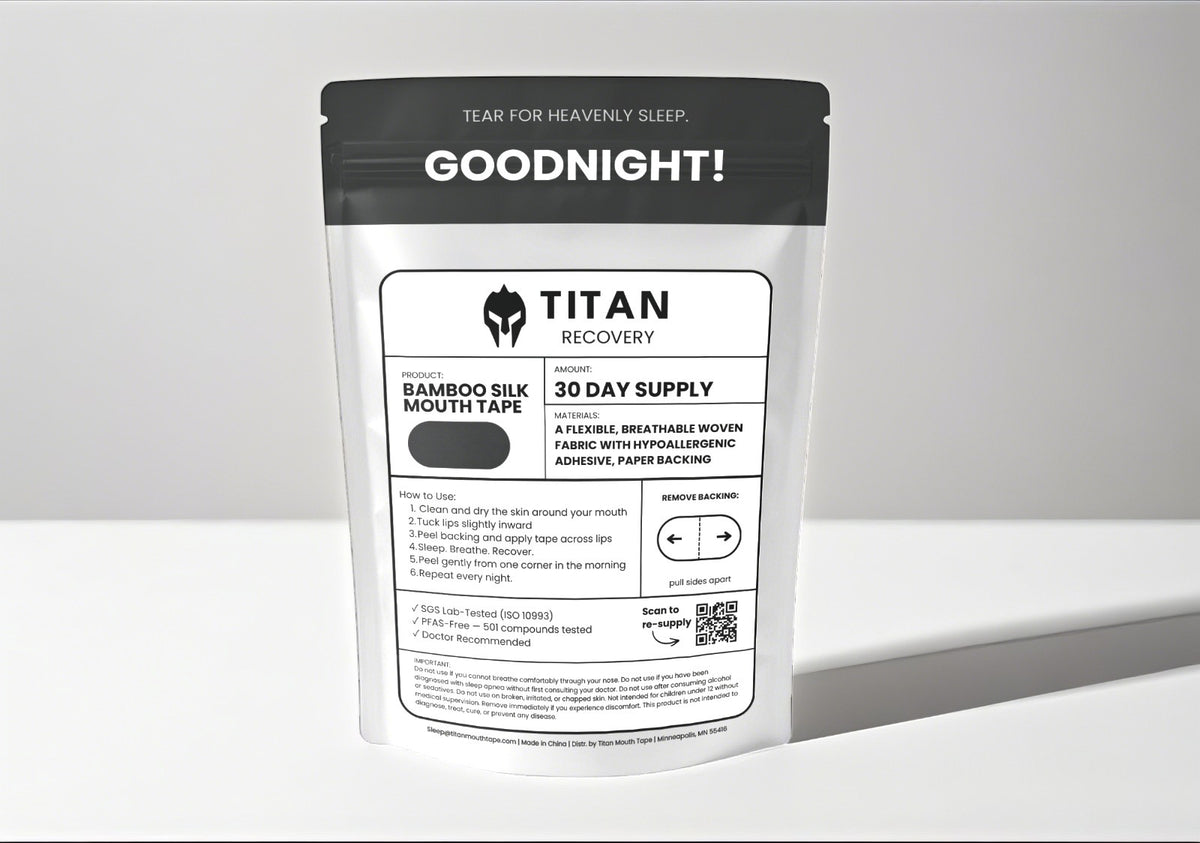
This is the single most effective change you can make for nighttime nasal breathing, and it is the step that makes all the others work. Mouth tape keeps your lips gently sealed so your body breathes through the nose by default. It does not force your mouth shut or lock your jaw closed. Quality tape like Titan Mouth Tape uses a gentle, medical-grade adhesive that provides just enough resistance to keep your relaxed jaw closed but lets you open your mouth easily if you need to cough, yawn, or drink water.
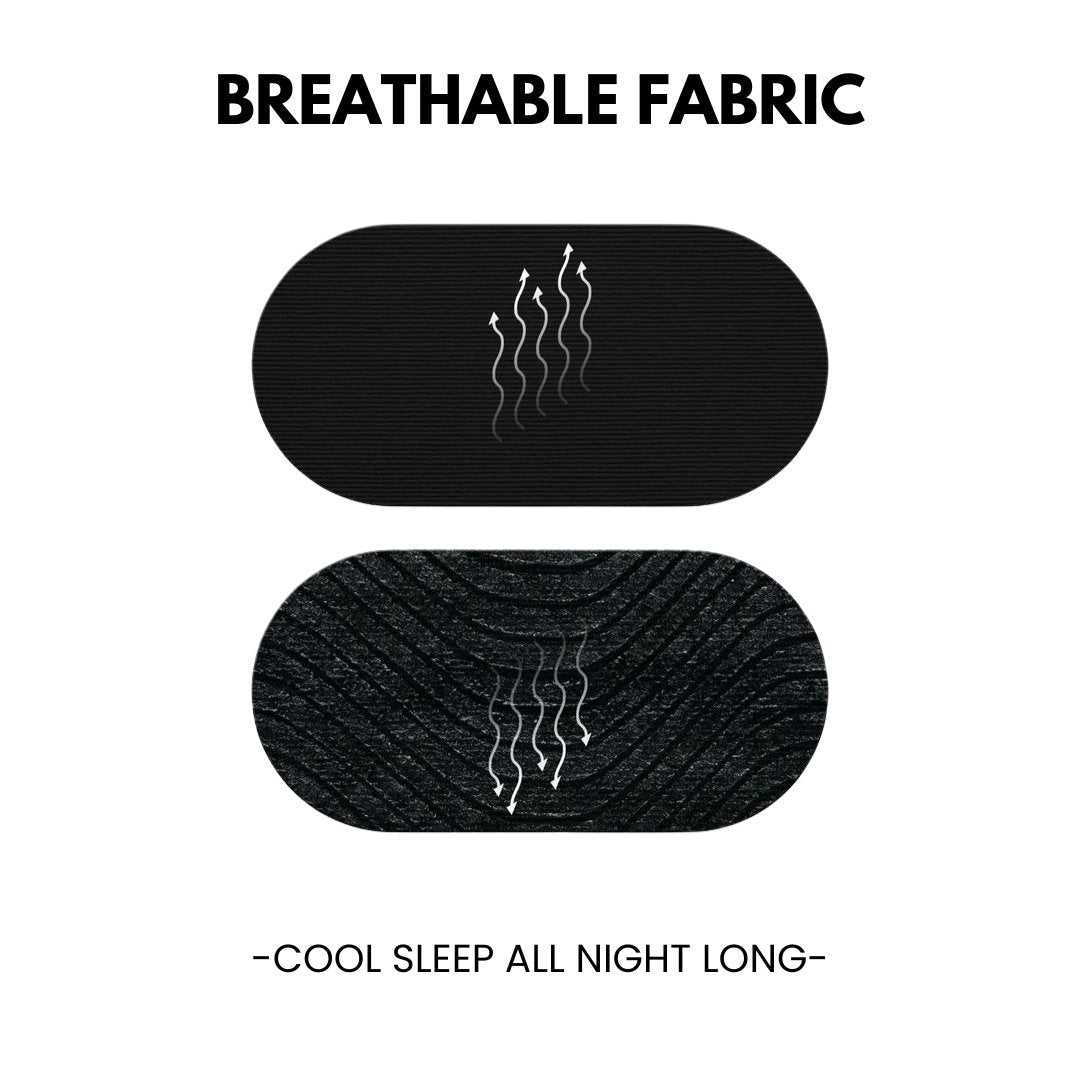
Most people adjust to taping within one or two nights. The first night might feel unfamiliar, and you might wake up once aware of it. By night three, the tape becomes invisible and you start noticing the results instead: no dry mouth, no sore throat, more energy in the morning. If you have tried mouth tape before and found it uncomfortable, the material was probably the problem. Titan's bamboo silk is breathable, hypoallergenic, tested to ISO 10993 medical device standards, and does not trap moisture or pull skin and facial hair when removed.
Step 3: Optimize your sleep position
Sleeping on your back is the worst position for nasal breathing. Gravity pulls your jaw open and your tongue backward toward the throat, narrowing the airway and making mouth breathing almost inevitable even with tape. Side sleeping keeps the jaw more naturally closed, the tongue more forward, and the airway more open.
If you cannot stay on your side throughout the night, elevating your head slightly with an extra pillow or a foam wedge reduces the gravitational pull on your jaw and tongue. This is also beneficial if you deal with acid reflux or post-nasal drip, both of which can cause nasal swelling and make nighttime congestion worse.
Step 4: Control your bedroom environment
Dry air swells nasal tissue and makes mouth breathing significantly more likely. Keep bedroom humidity between 40 and 60 percent with a humidifier, especially during winter heating season, in arid climates, or in heavily air-conditioned rooms. A hygrometer is inexpensive and takes the guesswork out of humidity levels.
Keep bedding clean and washed in hot water regularly to reduce dust mite allergen load. If you have pets, consider keeping them out of the bedroom during peak allergy season. And keep the room cool, between 65 and 68 degrees, which supports better sleep quality overall and reduces the swelling that heat causes in nasal tissue.
Step 5: Build nasal breathing awareness during the day
Conscious daytime nasal breathing retrains the neural pathways and muscle patterns that carry over into sleep. Pay attention to your breathing during low-intensity activities throughout the day: walking, working at your desk, watching TV, cooking. When you catch yourself with your mouth open, close it and redirect through your nose. This is not about forcing nasal breathing during intense exercise. It is about making nose breathing your resting default.
Over a few weeks, this daytime retraining makes nighttime nasal breathing more automatic, even during the lighter sleep stages where you have some residual muscle tone. Combined with mouth tape for the deeper stages, the result is full-night nasal breathing. For a broader look at why this matters, check our guide on the nine benefits of nasal breathing.
What to expect in the first two weeks
Night one or two you may wake up aware of the tape, or find it has come off partway through the night. This is completely normal and does not mean taping does not work for you. It means your jaw is still adjusting to staying closed. By the end of the first week, most people stop noticing the tape entirely and start noticing the results: no dry mouth, dramatically reduced or eliminated snoring, and feeling genuinely rested when the alarm goes off.
By week two, nasal breathing during sleep starts to feel like your natural default. Some people find they keep their mouth closed even on nights they forget to tape. The habit, once physically established through consistent taping, tends to self-reinforce because the sleep quality improvement is obvious and immediate. You feel the difference every single morning.
The Bottom Line
Switching to nasal breathing during sleep is not about willpower, meditation, or training yourself to breathe differently while unconscious. It is about removing physical obstacles (clear your nose, control humidity, adjust your position) and adding one simple mechanical cue (mouth tape) that keeps your mouth closed while your conscious mind is offline. The combination works for the vast majority of people within the first week.
Titan Mouth Tape costs under $0.75 per night and is the single most effective tool for maintaining nasal breathing throughout the entire night. Pair it with TitanAir Nasal Strips if congestion is a factor, and you have the complete system for better sleep through better breathing.
Doctor Recommended: “As a maxillofacial surgeon and dentist, I recommend Titan Mouth Tape. Nasal breathing during sleep is essential for airway health and deep restorative rest. Titan’s bamboo silk design is the most comfortable and effective mouth tape I have tested. If you struggle with snoring, dry mouth, or poor sleep quality, this is the simplest change you can make for your health.” — Dr. Francois P., MD, DDS — Maxillofacial Surgeon
Lab-Tested Safety: Titan’s SilkSeal™ adhesive is independently tested to ISO 10993 medical device standards. Non-toxic (95% cell viability). Non-allergenic (0% reaction rate). Non-irritating (score 0.0/8.0). PFAS-free — 501 compounds tested, zero detected. See full test results →
Try it tonight. Bamboo silk. SilkSeal™ adhesive. Beard-friendly. No logo on the tape. Free shipping. 30-night Better Sleep Guarantee. Shop Titan Mouth Tape → · Shop TitanAir →