Nasal Strips for a Deviated Septum: Real Help?
Share
If you have a deviated septum, you already know the drill: one side of your nose works fine, and the other side feels like breathing through a coffee straw. It gets worse at night when you lie down, and it can turn every attempt at restful sleep into a mouth-breathing marathon. So when you hear about nasal strips for deviated septum relief, the question is fair: can a strip on the outside of your nose actually help when the problem is a crooked wall on the inside?
The short answer is yes, nasal strips can meaningfully improve your nighttime breathing even with a deviated septum, but they are not a structural fix. Let's get specific about what they do, what they don't do, and how to get the most out of them.
First, some perspective. A deviated septum is far more common than most people realize. Estimates suggest that up to 80 percent of people have some degree of septal deviation. Most never notice it. But for a significant number of people, the deviation is pronounced enough to restrict airflow on one or both sides of the nose, and that restriction hits hardest when you are lying flat at night and gravity is no longer helping drain your nasal passages.
What a Deviated Septum Actually Does to Your Breathing
Your septum is the thin wall of cartilage and bone that divides your nasal cavity into two sides. When that wall is off-center, one nasal passage ends up narrower than the other. Sometimes both sides are affected if the deviation creates an S-curve.
During the day, you might not think much about it. You compensate unconsciously, breathing a little heavier through the wider side. But at night, several things stack against you:
Gravity shifts fluid into your head. When you lie down, blood flow to your nasal tissues increases and the lining swells. A passage that was already narrow from a deviation can become almost fully blocked.
Your muscles relax. The soft tissue around your nostrils loses tone during sleep. If your nasal valve (the narrowest external part of your nose) tends to collapse, that adds another layer of obstruction on top of the deviation.
You default to mouth breathing. When nasal airflow drops below a certain threshold, your body opens your mouth to compensate. That leads to dry mouth, throat irritation, snoring, and fragmented sleep. If you have ever woken up with a desert-dry throat and the feeling that you barely slept, deviated septum breathing at night could be a major factor.
The result is a chain reaction: deviation narrows the passage, lying down makes it worse, your nose can't keep up, your mouth takes over, and your sleep quality drops.
How Nasal Strips Help (and What They Can't Fix)
Let's be direct about the limits first. A nasal strip sits on the outside of your nose. It cannot straighten your septum. It cannot reshape cartilage or bone. The only procedure that corrects a deviated septum is septoplasty, a surgical intervention. If your deviation is severe enough to cause chronic sinus infections, persistent headaches, or significant breathing impairment throughout the day, surgery is the conversation to have with an ENT.
So do nasal strips help a deviated septum at all? They do, and here is why.
A nasal strip works by mechanically lifting the sidewalls of your nose outward. This widens the nasal valve, the external bottleneck at the front of your nasal passage. For someone with a deviated septum, the airway is already compromised internally. When you add nasal valve narrowing or collapse on top of that, you are fighting two restrictions at once. A nasal strip removes one of them.
Think of it this way: if your septum cuts your total nasal airflow by 30 percent and a weak nasal valve cuts it by another 20 percent, eliminating that second restriction gives you a real, noticeable improvement, even though the deviation is still there. Research on external nasal dilators has consistently shown that they reduce nasal airway resistance and improve subjective breathing comfort. For many people with a mild to moderate deviation, that improvement is enough to keep them breathing through their nose all night instead of switching to their mouth.
A nasal dilator for a deviated septum works best when your deviation is mild to moderate and when external valve collapse is contributing to your obstruction. It is a tool for symptom management, not a cure, and there is nothing wrong with that. Plenty of people live comfortably with a deviated septum and never need surgery because they manage the nighttime symptoms effectively.
What to Look for in Nasal Strips When You Have a Deviated Septum
Not all nasal strips deliver the same lift or hold through the night. When a deviated septum is already working against you, the strip needs to earn its place. Here is what matters:
Strong, consistent lift. A strip that feels good for the first hour but loses tension by 2am is not helping when you need it most. Look for a strip with a firm spring band that maintains its hold for a full night of sleep. Our TitanAir Nasal Strips are engineered for exactly this: a steady lift that does not fade as the adhesive warms to your skin.
Reliable adhesive. If a strip pops off at night, it was never really there. The adhesive should hold through turning, sweating, and the natural oils your skin produces over eight hours. Clean, dry skin before application is the baseline, but the adhesive itself has to do its job.
Comfortable material. You are wearing this on your face for seven to nine hours. If the material irritates your skin or feels stiff, you will stop using it within a week. Hypoallergenic, flexible strips are worth the small premium because consistency matters more than any single night.
Third-party quality testing. This is the part most brands skip. You are putting an adhesive product on your skin every night. Knowing it has been tested for irritants and allergens is not a bonus, it is a baseline. TitanAir strips are third-party tested and hypoallergenic because that is the standard we hold ourselves to.
If you want a deeper look at how our strips compare and what makes an effective nasal dilator, we broke that down in our full guide to TitanAir Nasal Strips.
Why Pair Nasal Strips With Mouth Tape
Here is the piece that ties everything together. Opening your nasal airway with a strip is a strong first step, but it only works if you actually breathe through your nose all night. And that is where people with a deviated septum often fall short.
When one side of your nose is restricted, your brain is quicker to trigger the mouth-breathing fallback. Even if a nasal strip opens things up enough for comfortable nasal breathing, old habits and reflexes can still pull your jaw open during deep sleep. Once your mouth opens, you lose the benefit of the strip entirely.
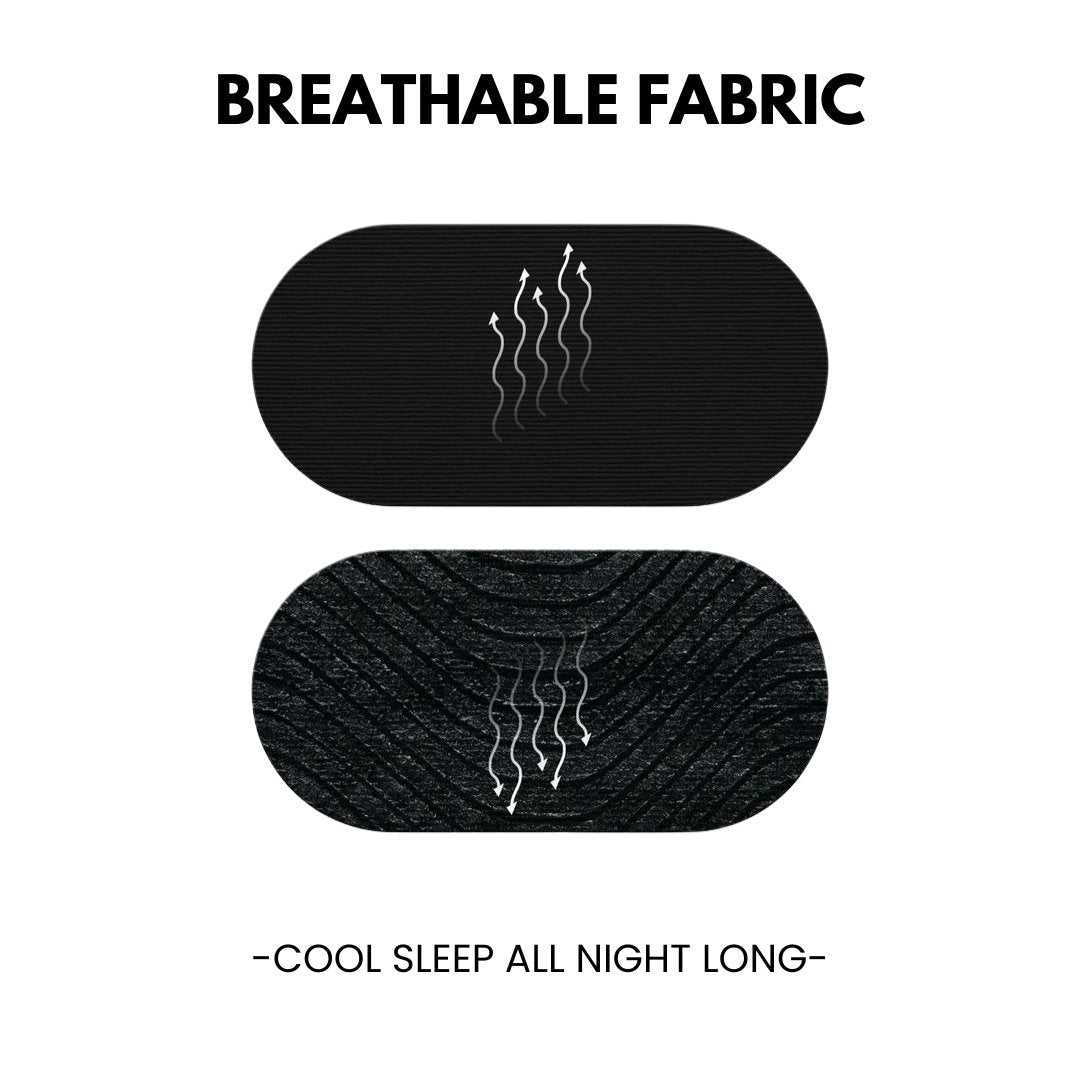
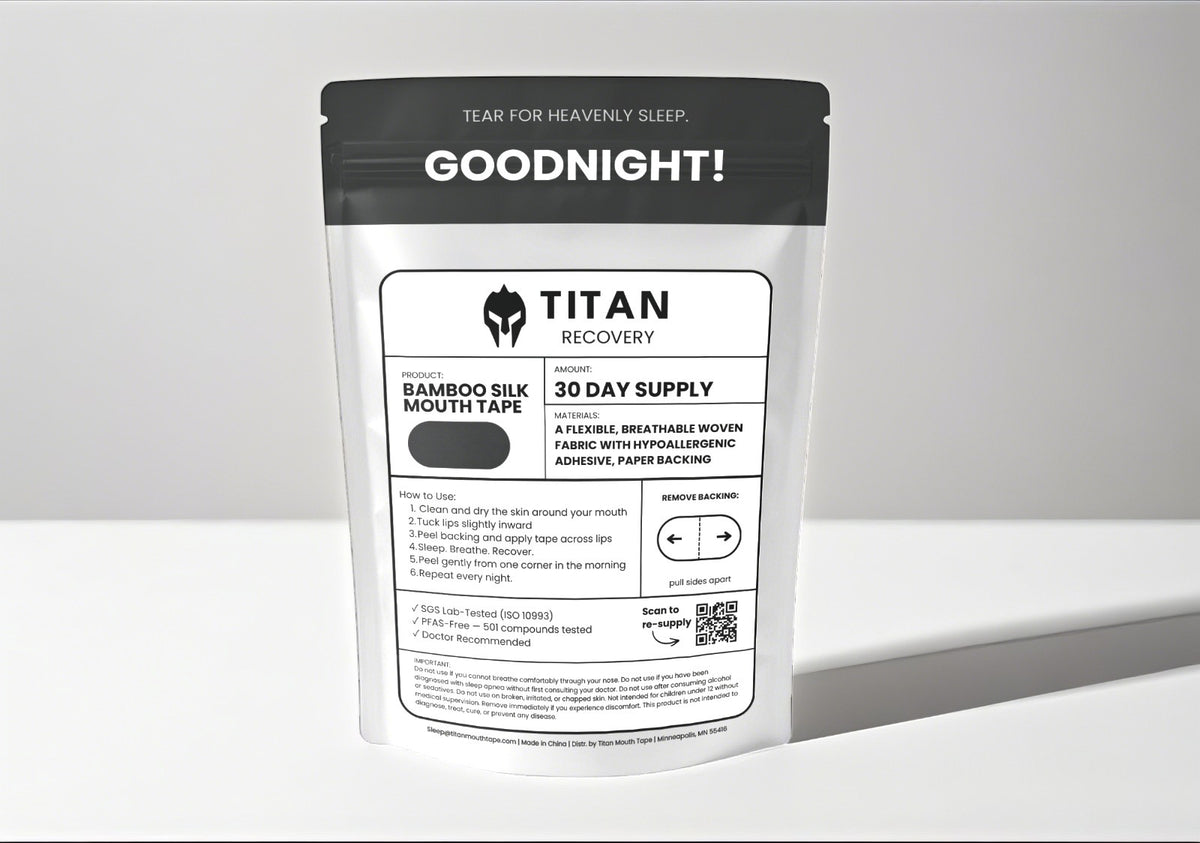
Mouth tape solves this. A gentle strip of tape across your lips keeps your mouth closed so your body routes all airflow through your nose, right through the passage the nasal strip just opened. The two products address different parts of the same problem: the strip opens the airway, and the tape makes sure you use it.
This combination is especially effective for people with a deviated septum because it eliminates the two most common failure points: not enough nasal airflow (solved by the strip) and unconscious mouth breathing (solved by the tape). We wrote a detailed comparison in our mouth tape vs. nasal strips breakdown, but the real answer is that they work best together.
If you are also dealing with snoring on top of a deviated septum, the combination is worth trying before you assume surgery is the only path forward. Snoring that comes from nasal obstruction and mouth breathing responds well to this approach. For more on that distinction, take a look at our guide on snoring vs. sleep apnea so you know when home solutions are appropriate and when to see a doctor.
The Bottom Line
A deviated septum is a structural issue, and nasal strips will not straighten it. But for the millions of people whose deviation causes nighttime breathing problems, nasal strips offer real, immediate relief by widening the external airway and reducing the total resistance your nose has to fight through. Paired with mouth tape to keep you breathing nasally, it is a simple, low-risk system that can meaningfully improve your sleep without surgery.
If your deviation is severe, talk to an ENT. But if you are in the large majority of people with a mild to moderate deviation who just want to breathe better at night, this is the place to start.
Try the TitanAir Deep Sleep Bundle, nasal strips and mouth tape together, and see what a full night of nasal breathing actually feels like. Every order ships with our Better Sleep Guarantee.
Doctor Recommended: “As a maxillofacial surgeon and dentist, I recommend Titan Mouth Tape. Nasal breathing during sleep is essential for airway health and deep restorative rest. Titan’s bamboo silk design is the most comfortable and effective mouth tape I have tested. If you struggle with snoring, dry mouth, or poor sleep quality, this is the simplest change you can make for your health.” — Dr. Francois P., MD, DDS — Maxillofacial Surgeon
Lab-Tested Safety: Titan’s SilkSeal™ adhesive is independently tested to ISO 10993 medical device standards. Non-toxic (95% cell viability). Non-allergenic (0% reaction rate). Non-irritating (score 0.0/8.0). PFAS-free — 501 compounds tested, zero detected. See full test results →
Try it tonight. Bamboo silk. SilkSeal™ adhesive. Beard-friendly. No logo on the tape. Free shipping. 30-night Better Sleep Guarantee. Shop Titan Mouth Tape → · Shop TitanAir →
This article is for informational purposes only and does not constitute medical advice. If you have or suspect a sleep disorder or other medical condition, consult a qualified healthcare provider before making changes to your routine.