Mouth Tape with a Deviated Septum or Congestion
Share
A deviated septum is one of the most common reasons people assume mouth tape won't work for them. The logic seems airtight: the septum is crooked, the nasal passage is narrowed, so closing the mouth is going to restrict breathing. But the reality of mouth tape deviated septum use is far more encouraging than that assumption suggests. Most people with deviated septums can still nasal breathe comfortably — and most of them can mouth tape successfully, especially with a nasal strip to help.
The same applies to chronic congestion from allergies, environmental irritants, or other causes. Congestion exists on a spectrum, and the question isn't whether your nose is perfect — it's whether your nose is functional enough to breathe through while your mouth is closed. For the majority of people, the answer is yes.
What a Deviated Septum Actually Means for Breathing
The nasal septum is the cartilage and bone partition that divides your nose into two passages. In a perfectly straight septum, both sides are roughly equal in size. In a deviated septum, the partition leans to one side, making one nasal passage narrower than the other. This is extremely common — estimates suggest that up to 80% of people have some degree of septal deviation, though most never notice it.
The critical point is this: a deviated septum rarely blocks both nasal passages. It narrows one side, sometimes significantly, but the other side typically remains open. You also have the nasal valve — the narrow point at the nostrils themselves — which is a separate source of airway resistance independent of the septum. Many people who think their deviated septum is causing all their breathing difficulty actually have nasal valve narrowing that responds well to an external nasal strip.
A deviated septum becomes genuinely problematic for mouth taping only when the deviation is severe enough to make nasal breathing labored or impossible while lying down. This affects a subset of people with significant deviations — not everyone with a diagnosis. If an ENT has told you that your deviation is mild to moderate, or if you can breathe through your nose with your mouth closed for a few minutes without strain, mouth tape is worth trying.
The Simple Test
Before you invest any thought in whether mouth tape will work with your anatomy, do this:
- Lie down in your normal sleeping position.
- Close your mouth.
- Breathe through your nose for two full minutes.
If you can do this comfortably — not effortlessly, but without feeling like you're fighting for air — your nasal airway is adequate for mouth taping. It doesn't need to feel as free as mouth breathing. Nasal breathing always involves slightly more resistance than oral breathing because the nasal passages are narrower than the oral cavity. That's normal and expected.
Now try the same test with an external nasal strip applied. If the strip makes a noticeable difference — and for most people with deviated septums or mild congestion, it does — then the combination of mouth tape and a nasal strip is your solution. The strip opens the nasal valve mechanically, compensating for whatever restriction your septum or congestion is creating.
If you cannot breathe through your nose at all with your mouth closed — even with a nasal strip — then mouth tape isn't the right tool for you right now. Address the obstruction first with your ENT or allergist, and revisit mouth taping once your nasal airway is functional.
How Nasal Strips Compensate for Structural Restriction
External nasal dilators work by physically lifting the sidewalls of the nostrils outward. This widens the nasal valve, which is the single narrowest point in the nasal airway and the primary bottleneck for airflow. Research has demonstrated that nasal strips can reduce nasal airway resistance by a clinically meaningful amount — enough to shift someone from uncomfortable to comfortable nasal breathing.
For people with deviated septums, nasal strips don't fix the deviation. The septum is still off-center. But by widening the valve opening, the strip increases total nasal airflow enough that the restricted side contributes more than it would otherwise, and the open side flows more freely. The net effect is improved bilateral airflow that often makes mouth taping comfortable even when the septum is noticeably deviated.
TitanAir Nasal Strips are designed to stay in place through a full night of sleep with adhesion strong enough to maintain the lift for 8+ hours. If you have a deviated septum or chronic congestion, these aren't an occasional accessory — they're your nightly pairing partner with mouth tape. Using nasal strips and mouth tape together addresses both the nasal valve restriction and the mouth-breathing habit in a single routine.
Chronic Congestion: Seasonal vs. Persistent
Nasal congestion from allergies, irritants, or non-allergic rhinitis adds another layer to the equation. Unlike a deviated septum — which is structural and constant — congestion fluctuates. This means your ability to mouth tape may vary by season, by day, and even by hour (due to the natural nasal cycle, where your body alternates which nostril handles the primary airflow).
Seasonal allergies. If your congestion follows a predictable pattern — spring pollen, fall ragweed, winter indoor allergens — you can plan your mouth taping strategy accordingly. During mild allergy periods, mouth tape plus a nasal strip works for most people. During acute flares when your nose is severely congested, pausing the tape for a few days while managing the congestion with antihistamines, nasal corticosteroid sprays, or saline rinse is the practical approach. We've covered mouth tape during allergy season in detail.
Chronic rhinitis. Year-round congestion — whether from dust mite allergies, non-allergic rhinitis, or environmental sensitivity — is a different management challenge. The congestion never fully resolves, so the strategy is about reducing baseline inflammation rather than waiting for a clear window. Daily nasal corticosteroid sprays (Flonase, Nasacort) are the most effective tool for this. After several days of consistent use, most people with chronic rhinitis see enough improvement in nasal airflow to make mouth taping viable.
The nasal cycle. Your body naturally alternates congestion between your nostrils every few hours. At any given time, one nostril carries about 75% of the airflow while the other handles 25%. This means that your "congested" side may clear periodically during the night while your "open" side narrows temporarily. Mouth tape works through these shifts because total nasal airflow remains relatively constant — what changes is the distribution, not the overall volume. This natural cycling is why many people with mild congestion find that mouth tape works fine despite sometimes feeling stuffy through one nostril.
Deviated Septum Plus Congestion: The Double Challenge
Having both a deviated septum and congestion — which is common, since the deviated side tends to collect more mucus and become irritated more easily — creates a compounded restriction. Your narrower passage is also the one most likely to swell during allergy episodes or colds. When both factors hit simultaneously, nasal breathing can become genuinely difficult.
The approach here is layered:
First, manage the congestion. Nasal corticosteroid sprays reduce the inflammatory swelling that's adding to the structural narrowing. Saline rinse before bed clears mucus and irritants. Antihistamines address allergic triggers. Get the soft-tissue swelling under control, and the structural deviation becomes more manageable.
Second, support the nasal valve. Apply a nasal strip to mechanically widen the nostril openings. This helps the open side perform at its best and gives the restricted side whatever additional space the strip can provide.
Third, test before taping. With the spray on board and the strip in place, close your mouth and breathe through your nose for a minute or two. If it's comfortable, apply the tape. If it's still labored, tonight is a nasal-strip-only night. No tape.
The goal is to build a sustainable nightly routine, not to force mouth taping on nights when it doesn't work. Consistency matters more than perfection. If you can mouth tape five or six nights out of seven, you're getting the majority of the benefit — better sleep quality, reduced snoring, improved oral health, and the physiological advantages of nasal breathing — even if you skip occasionally during congestion flares.
When Surgery Makes Mouth Taping Easier
For people with severe septal deviations that genuinely prevent nasal breathing — not mild deviations with occasional congestion, but significant structural blockages — septoplasty is the definitive solution. This surgical procedure straightens the septum and opens the restricted passage. Recovery typically takes one to two weeks, after which nasal airflow is substantially improved.
If your ENT has recommended septoplasty and you've been considering it, improved ability to nasal breathe during sleep is one of the practical benefits of the procedure. Post-septoplasty patients often find that they can mouth tape comfortably for the first time — and many report that the improvement in sleep quality is one of the most noticeable changes after surgery.
Turbinate reduction — sometimes performed alongside septoplasty — addresses the swollen tissue (turbinates) inside the nasal passages that contributes to chronic congestion. If you have a deviated septum combined with enlarged turbinates, the two procedures together can dramatically improve nasal airflow.
Surgery is not necessary for most people considering mouth tape. The majority of deviated septums and congestion issues are manageable with nasal strips, sprays, and environmental controls. But if you've tried conservative approaches and still can't breathe through your nose comfortably, a conversation with an ENT about structural options is reasonable.
Practical First-Night Protocol for Restricted Nasal Breathers
If you have a deviated septum, chronic congestion, or both, here's how to approach your first night with mouth tape:
- Earlier in the evening: Use a saline nasal rinse to clear mucus and reduce swelling. If you use a nasal corticosteroid spray, apply it per your usual schedule.
- At bedtime: Apply a TitanAir Nasal Strip across the bridge of your nose.
- Test: Lie down, close your mouth, and take 10 slow breaths through your nose. If this feels manageable — not effortless, just manageable — proceed to the tape.
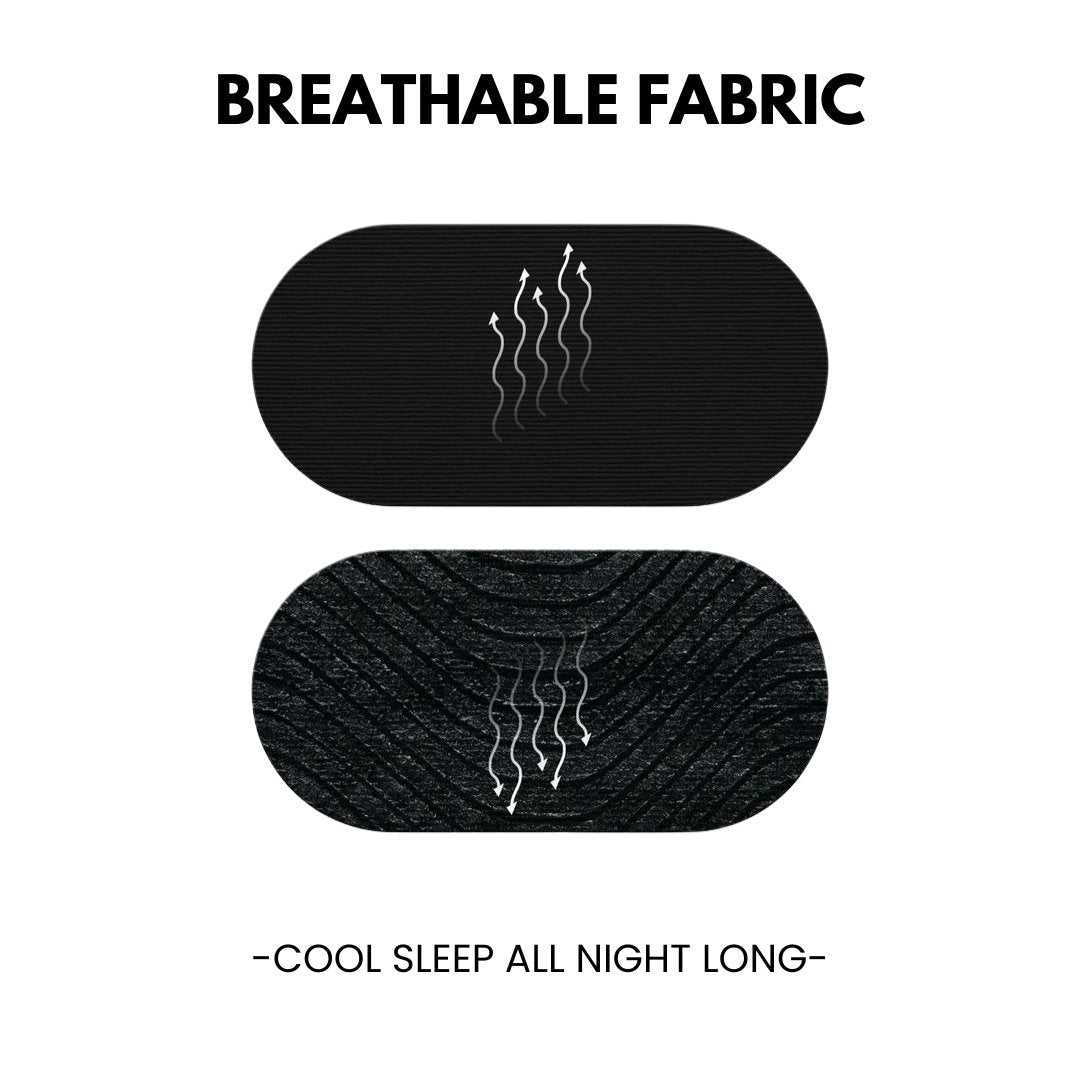
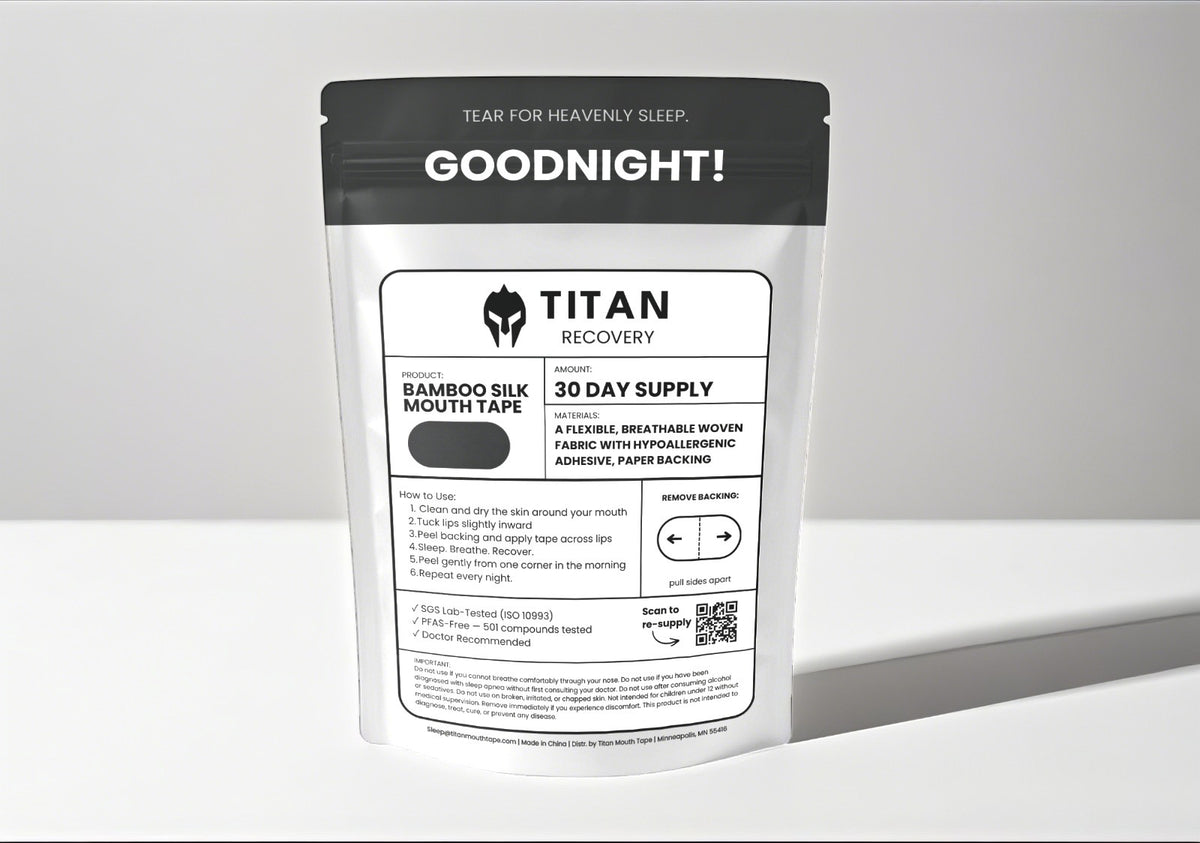
- Apply the tape: Place Titan Mouth Tape vertically across your lips. Take a few more nasal breaths to confirm comfort.
- Give yourself permission to remove it. If you wake up during the night and feel uncomfortable, peel the tape off. This isn't failure — it's data. You may need to address your congestion more aggressively, try a stronger nasal strip, or adjust your sleep position. Each night teaches you something about what your nasal airway needs.
The Bottom Line
A deviated septum or chronic congestion does not automatically disqualify you from mouth taping. The vast majority of people with these conditions can nasal breathe adequately — especially with the mechanical support of a nasal strip — and can mouth tape comfortably. The test is simple: can you breathe through your nose with your mouth closed while lying down? If yes, you can tape. If no, address the obstruction first and revisit.
For people dealing with both structural restriction and inflammatory congestion, the combination of a daily nasal corticosteroid, a nasal strip, and mouth tape covers all three layers: reduce swelling, open the valve, close the mouth. The result is nasal breathing through the night — filtered, humidified, and productive — even with anatomy that isn't textbook perfect. Most anatomy isn't. It doesn't need to be.
Doctor Recommended: "As a maxillofacial surgeon and dentist, I recommend Titan Mouth Tape. Nasal breathing during sleep is essential for airway health and deep restorative rest. Titan's bamboo silk design is the most comfortable and effective mouth tape I have tested. If you struggle with snoring, dry mouth, or poor sleep quality, this is the simplest change you can make for your health." — Dr. Francois P., MD, DDS — Maxillofacial Surgeon
Lab-Tested Safety: Titan's adhesive is independently tested to ISO 10993 medical device standards. Non-toxic (95% cell viability). Non-allergenic (0% reaction rate). Non-irritating (score 0.0/8.0). PFAS-free — 501 compounds tested, zero detected. See full test results →
Try the complete system tonight. Titan Mouth Tape (bamboo silk, SilkSeal™ adhesive) + TitanAir Nasal Strips. Free shipping. 30-night Better Sleep Guarantee. Shop Titan Mouth Tape → · Shop TitanAir Nasal Strips →