Using Mouth Tape and Nasal Strips Together
Share
Using mouth tape and nasal strips together is one of the simplest ways to improve how you breathe at night. Each product targets a different part of the problem: the nasal strip opens your nose, and the mouth tape keeps your mouth closed so you actually use it. Together, they create a complete nasal breathing system that neither product delivers on its own.
But most people treat these as either/or products. They buy mouth tape or nasal strips, not both. That's understandable -- the market positions them as competitors. In reality, they're complements. Here's why the combination works, when it makes sense, and how to get the most out of it.
What Each Product Actually Does
Before you combine two products, it helps to understand exactly what each one contributes -- because they solve different problems.
Nasal strips open your airway. An external nasal strip is an adhesive bandage with flexible splints embedded inside. When you apply it across the bridge of your nose, the splints lift the sidewalls of your nostrils outward, widening the nasal valve -- the narrowest point in your nasal passage. Research in rhinology has consistently shown that external nasal dilators reduce airway resistance and increase airflow. The effect is immediate: you can breathe more air through your nose with less effort.
Mouth tape keeps your mouth closed. A strip of medical-grade tape applied gently across the lips prevents the mouth from falling open during sleep. It doesn't force anything -- it provides a light physical reminder that keeps you breathing through the path of least resistance. When that path is the nose, the mouth stays shut naturally. When nasal resistance is high, the tape can feel restrictive, which is why nasal clearance matters before you tape.
Here's the key insight: a nasal strip makes nasal breathing easier, but it doesn't prevent mouth breathing. Your mouth can still fall open. And mouth tape prevents mouth breathing, but it doesn't make nasal breathing any easier. Each product has a gap -- and the other product fills it.
Why the Combination Works Better Than Either Alone
Think of nighttime breathing as a system with two failure points. The nose can be too restricted to breathe through comfortably, and the mouth can open as a bypass once you're asleep and your jaw muscles relax. A nasal strip only fixes the first problem. Mouth tape only fixes the second.
When you use mouth tape and nasal strips together, you address both failure points simultaneously:
- The nasal strip widens the nasal valve, reducing resistance and making nose breathing feel effortless.
- The mouth tape ensures your body doesn't default to mouth breathing once you fall into deeper sleep stages -- even if you roll onto your back or enter REM sleep, when jaw muscle tone drops.
This is especially relevant for people who are training themselves to breathe through their nose at night. During the transition period, nasal breathing may not feel completely natural yet. A nasal strip lowers the effort threshold, and the tape reinforces the habit. Over weeks, many people find they can drop the nasal strip as their body adapts -- but the strip makes the early nights far more comfortable.
Who Benefits Most From Using Both
The combination is not necessary for everyone. Some people breathe well through their nose with tape alone. Others benefit from a nasal strip without tape. But certain groups see the biggest improvement from using both.
People with mild nasal congestion. Allergies, dry air, or slight anatomical narrowness can make nasal breathing feel like you're working harder than you should. A nasal strip compensates for that restriction. Mouth tape keeps you from bypassing it. If you can breathe through your nose while awake but notice you wake up with a dry mouth, this combination is likely your fix.
Snorers. Most snoring happens because the mouth opens, the jaw drops, the tongue falls back, and the soft tissues at the back of the throat vibrate as air passes through. A nasal strip makes the nose a more attractive airway. Mouth tape keeps the jaw from dropping. Together, they address the mechanics behind the majority of simple snoring. If your snoring is a relationship issue, this is worth trying before anything more invasive. (That said, if your snoring involves pauses in breathing or gasping, check whether it might be sleep apnea -- that requires medical evaluation.)
New mouth tapers. If you've been hesitant to try mouth tape because you're not sure your nose is clear enough, starting with a nasal strip gives you a safety margin. The strip opens the passage, the tape keeps the mouth closed, and you build confidence that your body can handle nasal-only breathing overnight.
Athletes and people focused on recovery. Nasal breathing during sleep supports better oxygen exchange, nitric oxide production in the sinuses, and overall sleep quality. If you're already tracking recovery metrics -- HRV, sleep scores, resting heart rate -- the combination can nudge your numbers in a meaningful direction.
How to Use Mouth Tape and Nasal Strips at the Same Time
The application order matters, and getting it right takes about 30 seconds once you've done it a couple of times.
Step 1: Start with the nasal strip. Wash the bridge of your nose with water and dry it thoroughly. Oil, moisturizer, or sweat weakens adhesive. Apply the nasal strip across the widest part of your nostrils -- not too high on the bony bridge, not too low near the tip. Press firmly for about 10 seconds. You should feel an immediate opening sensation as the splints engage.
Step 2: Apply the mouth tape. With the nasal strip in place, take a few breaths through your nose to confirm you're breathing easily. Then apply the mouth tape across your lips. If you're new to taping, start with a smaller vertical strip rather than a full horizontal seal -- this allows some air to escape from the sides if needed and makes the first few nights less intimidating.
Step 3: Breathe normally and go to sleep. Don't overthink it. The nasal strip is doing the work of keeping your nose open. The tape is doing the work of keeping your mouth closed. Your job is just to breathe and sleep.
In the morning: Remove the mouth tape first, then peel the nasal strip from one side slowly. If you have sensitive skin, holding a warm, damp washcloth against either strip for a few seconds loosens the adhesive before removal.
What to Look for in Products You'll Use Together
If you're going to wear two adhesive products on your face every night, the quality of those products matters more, not less.
Adhesive safety. Both products should use medical-grade, hypoallergenic adhesive. Cheap adhesives can irritate the skin, especially when you're doubling up the contact area. Look for products that are latex-free and tested for biocompatibility -- ISO 10993 is the international standard.
PFAS-free materials. Per- and polyfluoroalkyl substances are used in some adhesive products for moisture resistance. They're persistent environmental contaminants. When you're applying products to your face nightly, PFAS-free construction is worth verifying.
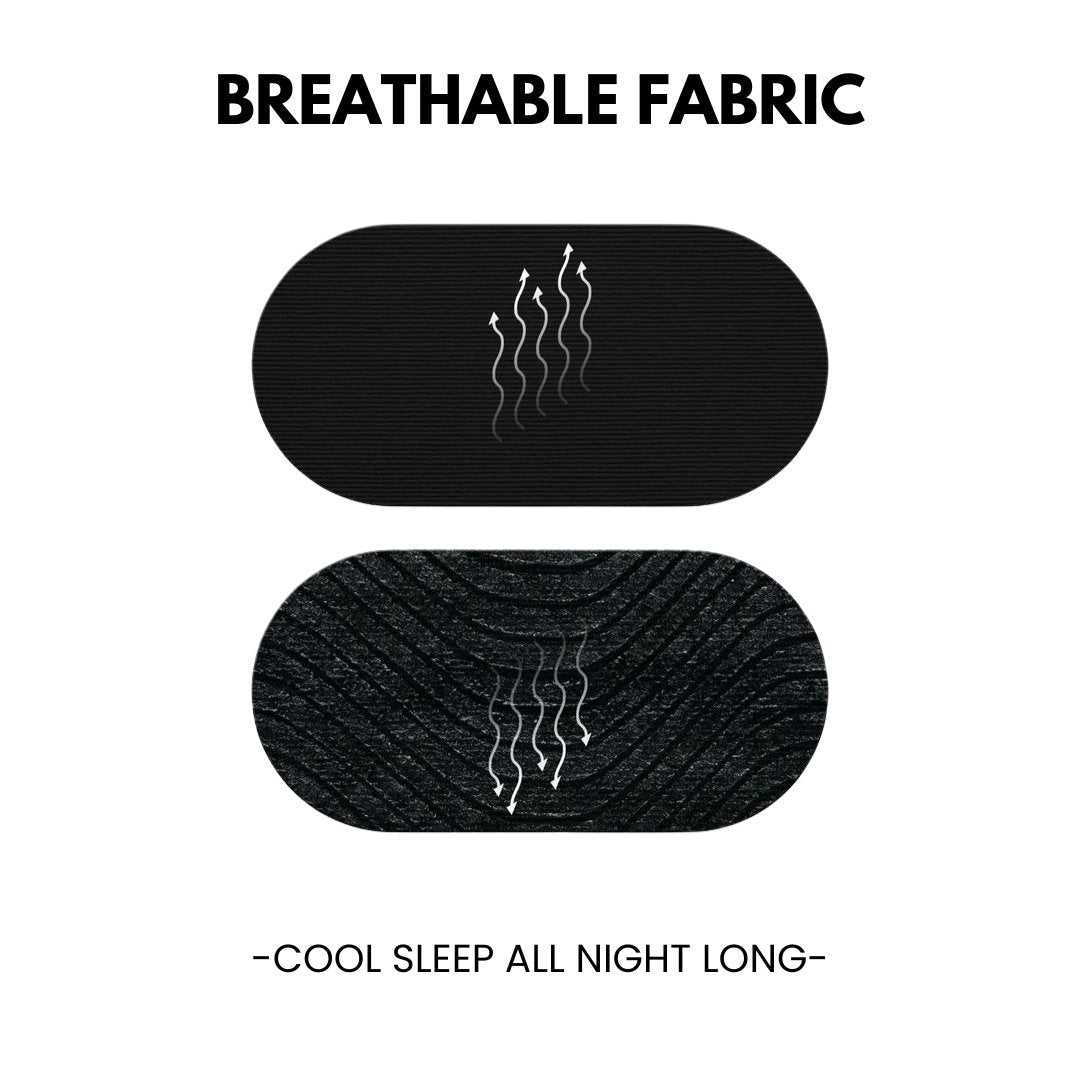
Comfort for all-night wear. The mouth tape should be gentle enough for sensitive facial skin, including beards. The nasal strip should hold its shape without leaving deep red marks on your nose in the morning. Both should still be in place when you wake up.
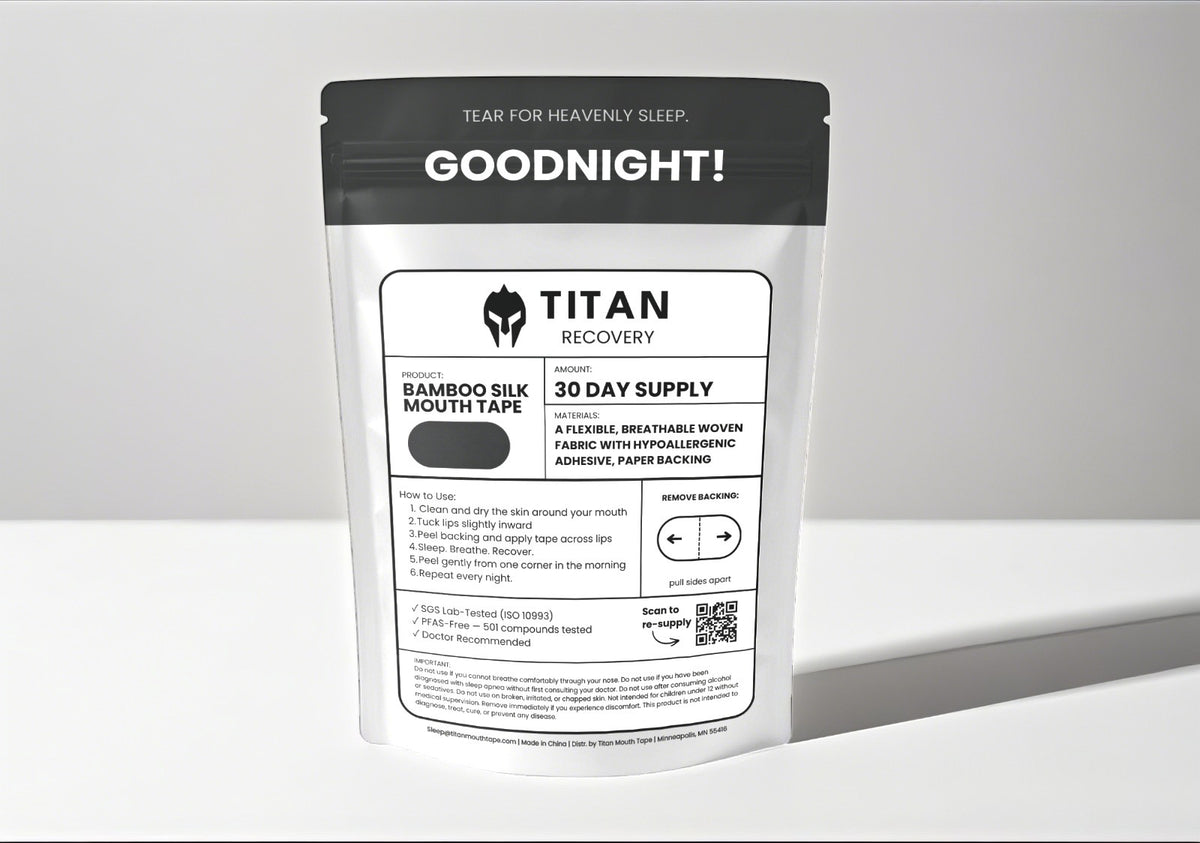
We built the Titan Deep Sleep Bundle specifically for people who want to use both products together. It includes our bamboo silk mouth tape and TitanAir Nasal Strips -- both third-party tested to ISO 10993, PFAS-free, latex-free, and designed for nightly use. Buying them together saves money versus purchasing separately, and it's the most straightforward way to try the combination.
When Not to Use Both (or Either)
Being honest about limitations builds more trust than overpromising. Here are the situations where this combination is not the right call.
Severe nasal obstruction. If you can't breathe through your nose while awake -- due to polyps, severe septal deviation, or acute sinusitis -- do not tape your mouth shut. A nasal strip can't compensate for a fully blocked airway. See an ENT first.
Active illness with heavy congestion. When you're sick and your nose is significantly congested, skip the mouth tape. A nasal strip alone may help with comfort, but don't restrict your mouth breathing when your nasal passages are compromised.
Suspected sleep apnea. If you snore loudly, experience gasping or choking during sleep, or feel exhausted despite getting enough hours, talk to your doctor before using mouth tape. Nasal strips and mouth tape are not treatments for obstructive sleep apnea. They can support breathing in mild cases, but they're not substitutes for proper diagnosis and treatment.
Children. Mouth tape is designed for adults. Consult a pediatric dentist or ENT if your child is a mouth breather -- there are often underlying causes that need to be addressed, and taping is not appropriate for kids.
Do You Actually Need Both Long-Term?
Not necessarily. Many people use the combination during a transition period and then find they can simplify. Once nasal breathing becomes habitual -- typically after a few weeks of consistent use -- some people drop the nasal strip and use mouth tape alone. Others find the nasal strip adds enough comfort that they prefer to keep using both.
There's no single right answer. The goal is nasal breathing through the night, and the tools you use to get there can evolve as your body adapts. The combination is particularly valuable as a starting point because it removes both barriers at once and lets you build the habit without fighting your own anatomy.
The Bottom Line
Mouth tape and nasal strips together are more effective than either product alone because they solve different problems. The nasal strip makes nose breathing easy. The mouth tape makes nose breathing consistent. The combination is the fastest path to full-night nasal breathing, especially if you're new to taping, deal with mild congestion, or snore.
If you want to try the combination without piecing together products from different brands, the Titan Deep Sleep Bundle is designed for exactly this -- both products, matched in quality and material safety, at a better price than buying separately. Your first night of nose-only breathing starts at under $0.75 per night, and it ships free with our Better Sleep Guarantee.
Doctor Recommended: “As a maxillofacial surgeon and dentist, I recommend Titan Mouth Tape. Nasal breathing during sleep is essential for airway health and deep restorative rest. Titan’s bamboo silk design is the most comfortable and effective mouth tape I have tested. If you struggle with snoring, dry mouth, or poor sleep quality, this is the simplest change you can make for your health.” — Dr. Francois P., MD, DDS — Maxillofacial Surgeon
Lab-Tested Safety: Titan’s SilkSeal™ adhesive is independently tested to ISO 10993 medical device standards. Non-toxic (95% cell viability). Non-allergenic (0% reaction rate). Non-irritating (score 0.0/8.0). PFAS-free — 501 compounds tested, zero detected. See full test results →
Try it tonight. Bamboo silk. SilkSeal™ adhesive. Beard-friendly. No logo on the tape. Free shipping. 30-night Better Sleep Guarantee. Shop Titan Mouth Tape → · Shop TitanAir →
This article is for informational purposes only and does not constitute medical advice. If you have or suspect a sleep disorder or other medical condition, consult a qualified healthcare provider before making changes to your routine.