Cold and Flu Season Sleep Guide: Rest Better When Sick
Share
When you're sick, sleep is the single most important thing your body needs — and congestion makes it the hardest thing to get. If you're wondering how to sleep when sick, the frustrating reality is that the common cold and flu attack your airways first, turning every night into a battle between your need for rest and your inability to breathe comfortably. The good news: you can significantly improve sick-sleep with a few targeted strategies, and some of the tools you already use for everyday sleep optimization can help — with important caveats.
This guide covers what actually works for sleeping with a cold or flu, how to decide whether to use mouth tape when you're congested, and where to draw the line between pushing through and just riding it out.
Why Sleep Matters More When You're Sick
Sleep isn't just "rest" during illness — it's active recovery time. Your immune system is significantly more active during sleep than during wakefulness.
Cytokine production increases. Pro-inflammatory cytokines — the signaling proteins that fight infection — are produced in greater quantities during sleep. This is partly why you feel sleepier when sick: the same molecules fighting the virus also promote sleepiness. Your body is pushing you toward sleep because that's when it does its best immune work.
T-cell effectiveness improves. Sleep enhances T-cells' ability to attach to and destroy virus-infected cells. Even one night of poor sleep can measurably reduce this immune response.
The practical takeaway: every hour of quality sleep you lose while sick is an hour your immune system operates at reduced capacity. Better sleep when sick directly affects how quickly you recover.
Why Congestion Makes Sleep So Hard
The same virus that makes you need sleep also makes it harder to get. Understanding why congestion worsens at night helps you address it.
Gravity works against you. Upright during the day, gravity drains mucus from the sinuses. Lying down, drainage stalls — fluid pools in the nasal tissues, passages swell, and congestion spikes. This is why you feel functional during the day and blocked up within minutes of lying down.
Mouth breathing becomes the default. When nasal breathing is restricted, the body switches to mouth breathing automatically during sleep. This further dries the already irritated throat, worsens coughing, and causes dry mouth that makes middle-of-the-night wakeups even more miserable.
Post-nasal drip triggers coughing. Mucus draining down the back of the throat triggers the cough reflex — one of the most disruptive sleep fragmenters during illness, and worse when lying flat.
How to Optimize Sleep When You're Sick
You can't eliminate congestion entirely without waiting for the virus to run its course. But you can meaningfully reduce its impact on sleep. These strategies are listed roughly in order of impact.
Elevate your head and upper body. This is the single most effective positional change for sleeping with congestion. Elevating the head 20 to 30 degrees — using an extra pillow, a wedge pillow, or raising the head of the bed — uses gravity to promote sinus drainage and reduce fluid pooling in the nasal tissues. It also reduces post-nasal drip and the coughing it triggers. Don't just stack flat pillows (this kinks the neck and creates its own problems) — a wedge that elevates from the mid-back up is ideal, or an adjustable bed if you have one.
Maximize humidity. Dry air thickens mucus and irritates inflamed nasal and throat tissues. A cool-mist humidifier in the bedroom during illness can make a significant difference in comfort and sleep quality. Aim for 40 to 60% humidity. Hot steam from a shower before bed also helps loosen congestion temporarily — a 10-minute hot shower right before lying down can clear the nasal passages enough to help you fall asleep before they re-congest.
Stay aggressively hydrated. Adequate fluid intake keeps mucus thinner and easier to drain. Dehydration — which is common during illness due to fever, mouth breathing, and reduced appetite — thickens secretions and worsens congestion. Warm liquids (tea, broth, warm water with honey) are particularly effective because the warmth helps loosen mucus and the steam provides additional nasal moisture. Keep water on the nightstand so you can hydrate during wakeups without getting out of bed.
Use saline nasal rinse before bed. A saline nasal rinse (neti pot or squeeze bottle) physically flushes mucus and irritants from the nasal passages. It's one of the few congestion interventions with consistently strong evidence behind it, and it has no drug interactions or side effects. Doing a rinse 15 to 30 minutes before bed clears the passages and can buy you enough clear-breathing time to fall asleep.
Consider a nasal decongestant strategically. Nasal spray decongestants work quickly and locally, but should not be used for more than three consecutive days to avoid rebound congestion. A single application before bed during peak illness can meaningfully improve that night's sleep. Oral decongestants can be stimulating — take them earlier in the day if they affect your sleep.
Keep the room cool. Even with a fever, a cool room (65 to 68 degrees) supports better sleep. Fever already elevates your core temperature, and a warm room on top of that makes falling and staying asleep harder.
Mouth Tape When Sick: When You Can and When You Should Not
If you normally use mouth tape for sleep, the question during illness is straightforward: can you breathe comfortably through your nose? The answer determines whether tape is appropriate.
When mouth tape is still fine:
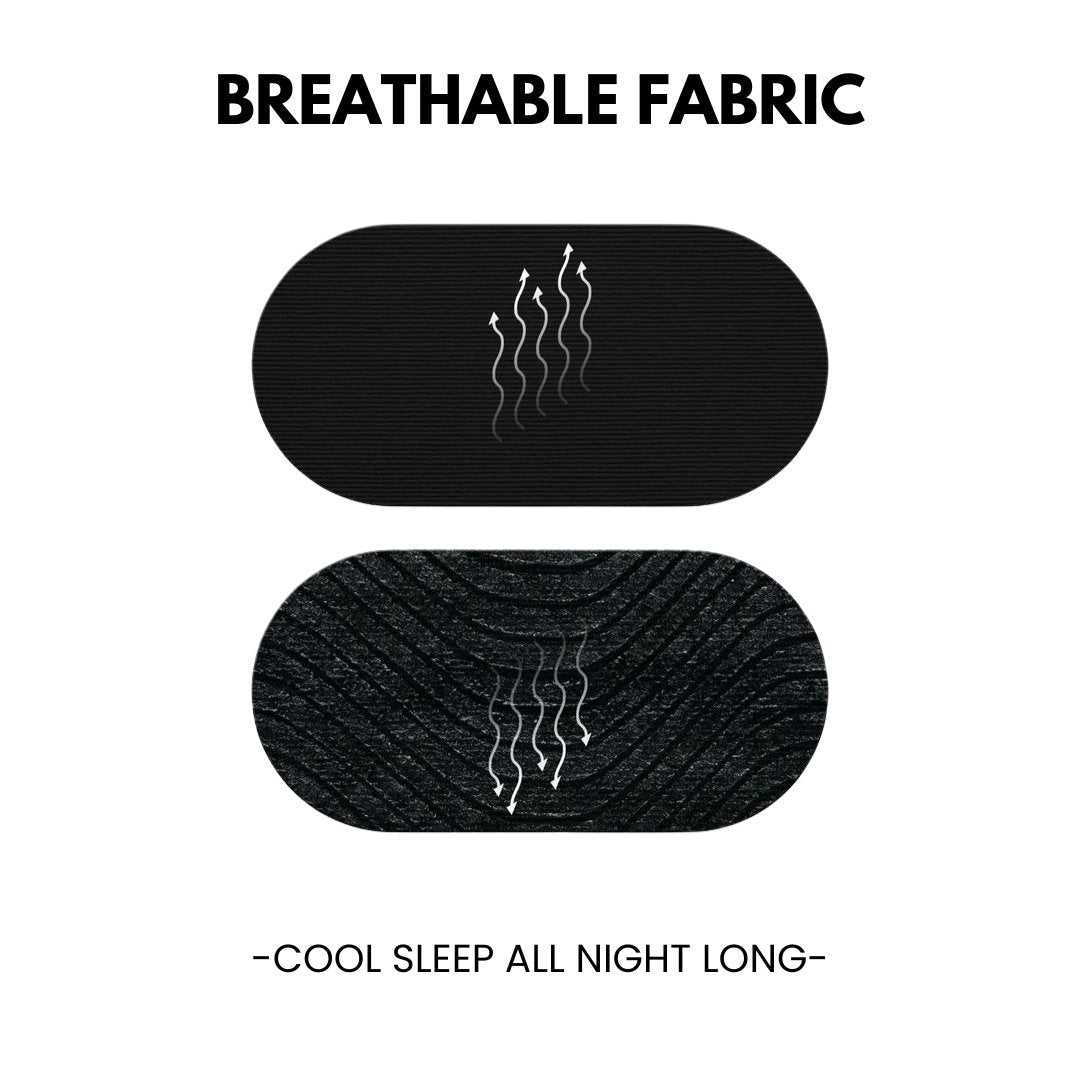
If your congestion is mild — one or both nostrils are partially open and you can breathe through your nose without straining — mouth tape can still be beneficial. Mild congestion often responds well to the combination of mouth tape plus TitanAir Nasal Strips. The nasal strip mechanically opens the nasal valve (the narrowest point of the nasal passage), which can be enough to compensate for mild mucosal swelling. The mouth tape then ensures you actually breathe through the nose rather than defaulting to the mouth when you fall asleep.
This combination works particularly well during the early and late stages of a cold — the first day or two when congestion is just starting, and the tail end when things are clearing up but you're still slightly stuffy. During these phases, nasal breathing with some assistance is usually comfortable, and maintaining it helps you sleep more restfully than you would mouth breathing with an already-sore throat.
When you should NOT use mouth tape:
If your nose is significantly blocked — you're mouth breathing because you have to, not because of habit — do not use mouth tape. This includes severe congestion where one or both nostrils are fully or nearly fully obstructed, active sinus infection with significant swelling, any illness involving vomiting or nausea (you need a clear oral airway), and high fever with heavy mucus production where airway management is unpredictable.
This isn't a gray area. Mouth tape works by routing breathing through the nose. If the nose can't handle the full airflow, the tape is counterproductive. Your body is defaulting to mouth breathing because it needs to — that's not a habit to correct during acute illness, it's a necessary adaptation. Listen to it.
The test is simple: before bed, close your mouth and try to breathe exclusively through your nose for 60 seconds. If you can do it comfortably — even if it feels slightly more restricted than normal — tape is fine, especially with a nasal strip. If you feel air-starved, strained, or anxious, skip the tape until your congestion improves. As always, if you're unsure, check our guide on common concerns about mouth taping safety.
A Night-by-Night Approach to Sick Sleep
Cold and flu symptoms change over the course of the illness. Your sleep strategy should adapt with them.
Days 1-2 (onset): Congestion may be mild enough for mouth tape plus nasal strips. Prioritize going to bed early — the fatigue you feel is your immune system telling you to sleep. Hydrate aggressively. Start the humidifier.
Days 3-4 (peak): Congestion is at its worst. Mouth tape is probably off the table. Focus on elevation, humidity, saline rinse, and a nasal decongestant spray if needed. Go to bed earlier to compensate for lower sleep efficiency. Daytime naps are unambiguously beneficial during acute illness.
Days 5-7 (resolution): Congestion begins clearing. Reintroduce mouth tape with nasal strips as nasal breathing becomes comfortable. Continue elevation and humidity.
Week 2 and beyond: If symptoms persist beyond 10 days, or if you develop facial pain/pressure, discolored discharge, or returning fever, see a healthcare provider — these can indicate a secondary bacterial infection that may need treatment.
What Not to Do
Don't take combination medications unless you need every ingredient. Multi-symptom cold medications often include a first-generation antihistamine that suppresses REM sleep — exactly what your immune system needs most. Use the specific medication for your specific symptom.
Don't sleep flat. Even a modest 15-degree elevation helps. Roll up a towel under the head-end of your mattress if you don't have a wedge pillow.
Don't drink alcohol to "knock yourself out." Alcohol suppresses the immune system, dehydrates you, fragments sleep architecture, and suppresses REM. The sedation it provides is not restorative sleep.
Don't force mouth tape when you can't nasal breathe. During peak congestion, the nose may not be functional enough. That's okay. Skip the tape for a few nights and bring it back when your congestion clears.
Frequently Asked Questions
Can I use nasal strips without mouth tape when I'm congested?
Yes. Nasal strips work independently of mouth tape. During peak congestion, wearing nasal strips alone can improve nasal airflow enough to make sleep more comfortable even if you're also mouth breathing. They mechanically open the external nasal valve, which helps compensate for internal mucosal swelling. Use them whenever congestion is present, whether or not you're also using mouth tape.
Should I take a hot shower or use steam before bed when sick?
Yes. A 10 to 15 minute hot shower right before bed loosens mucus, reduces nasal swelling temporarily, and clears the passages. The effect lasts 30 to 60 minutes — usually enough time to fall asleep before congestion returns to baseline.
Is it better to sleep on my back or side when sick?
Slightly elevated on your back is generally best — it allows both nasal passages to drain evenly. Side sleeping works, but gravity will congest the downward nostril. If you sleep on your side, switch sides periodically.
How much extra sleep do I need when I'm sick?
Your body's signals are reliable. If you feel like you need 10 to 12 hours, that's your immune system telling you what it needs. Go to bed early, sleep in if you can, and nap during the day. During acute illness, more sleep is almost always better for recovery.
When should I see a doctor instead of trying to sleep through it?
See a healthcare provider if fever exceeds 103 degrees Fahrenheit (or lasts more than three days), if you experience difficulty breathing beyond nasal congestion, if symptoms worsen after initially improving, or if you belong to a high-risk group. For routine cold and flu, sleep, hydration, and time are the primary treatments — but complications require medical attention.
The Bottom Line
Sleeping when sick is hard precisely because your body needs it most. Congestion, coughing, and general misery conspire against the restorative sleep your immune system requires to fight the infection. You can't eliminate these obstacles entirely, but you can reduce them meaningfully: elevate your head, maximize humidity, rinse your sinuses, stay hydrated, and keep the room cool.
For mouth tape users, the rule is simple and honest: if you can breathe comfortably through your nose, use the tape — pair it with nasal strips for mild congestion. If your nose is too blocked for comfortable nasal breathing, skip the tape until it clears. There's no benefit to fighting your body's need for oral airflow during peak congestion. Use the Deep Sleep Bundle through the mild stages, set it aside during the worst nights, and bring it back as you recover. Your sleep — and your recovery — will be better for the honest approach.
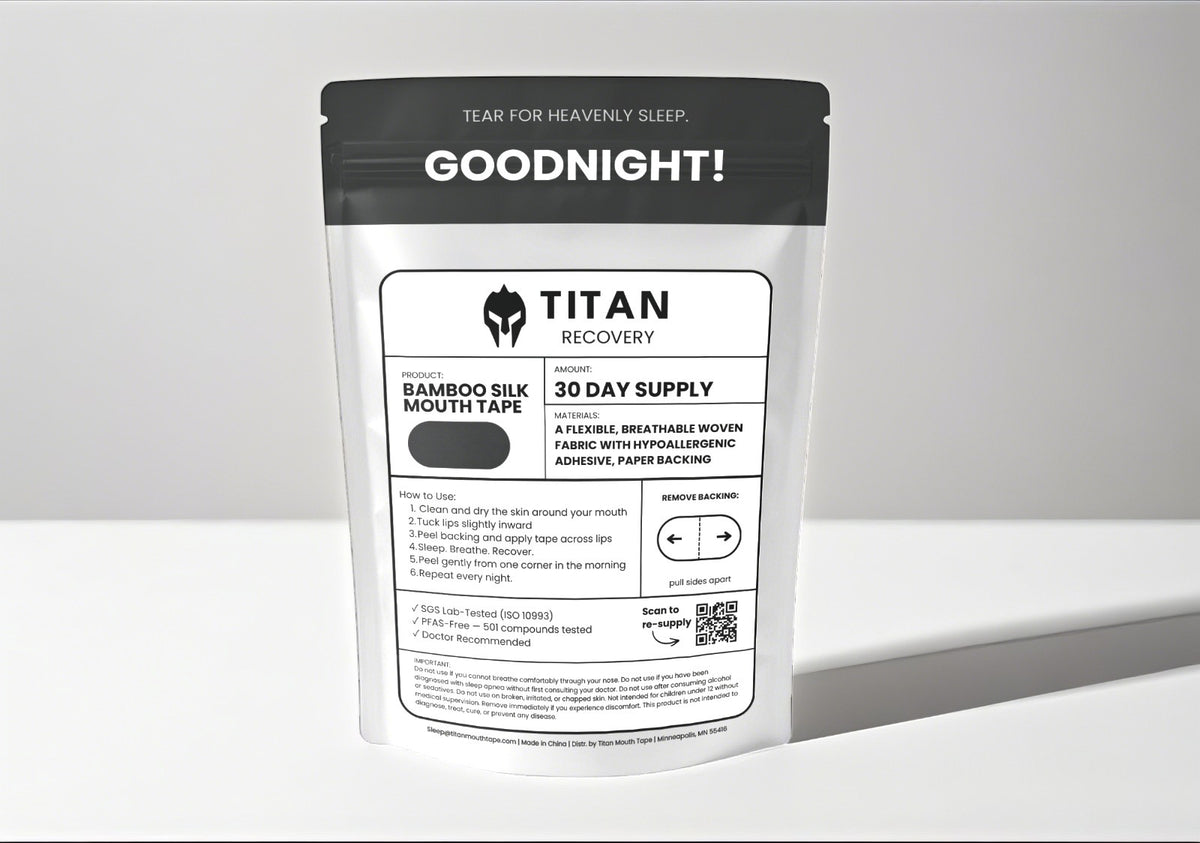
Doctor Recommended: "As a maxillofacial surgeon and dentist, I recommend Titan Mouth Tape. Nasal breathing during sleep is essential for airway health and deep restorative rest. Titan's bamboo silk design is the most comfortable and effective mouth tape I have tested. If you struggle with snoring, dry mouth, or poor sleep quality, this is the simplest change you can make for your health." — Dr. Francois P., MD, DDS — Maxillofacial Surgeon
Lab-Tested Safety: Titan's adhesive is independently tested to ISO 10993 medical device standards. Non-toxic (95% cell viability). Non-allergenic (0% reaction rate). Non-irritating (score 0.0/8.0). PFAS-free — 501 compounds tested, zero detected. See full test results →
Try the complete system tonight. Titan Mouth Tape (bamboo silk, SilkSeal™ adhesive) + TitanAir Nasal Strips. Free shipping. 30-night Better Sleep Guarantee. Shop Titan Mouth Tape → · Shop TitanAir Nasal Strips →