Better Sleep: The Evidence-Based Guide
Share
If you want to know how to get better sleep, the honest answer is that sleep quality comes down to a handful of high-leverage inputs, not a hundred small hacks: a consistent circadian rhythm, a cool and dark room, nasal breathing through the night, sensible nutrition timing, and a real wind-down routine. Fix those and most people sleep dramatically better within a week or two. This guide walks through each lever in the order it actually matters, links to the deep-dive on every topic, and points out the one thing most people never think to check — how they breathe while they sleep.
Better sleep is not about willpower or spending more time in bed. It is about giving your body the conditions it evolved to sleep well in, then getting out of the way. Below is the framework, organized from the foundations outward.
Start With How Sleep Actually Works
You cannot optimize what you do not understand. Sleep is not a single flat state — it is a structured cycle your brain runs four to six times a night. Each roughly 90-minute cycle moves through light sleep, deep (slow-wave) sleep, and REM sleep, and each stage does a different job. Deep sleep handles physical repair, immune function, and hormone release. REM handles memory consolidation and emotional processing. Light sleep is the connective tissue between them.
The practical takeaway is that total sleep time matters less than complete, uninterrupted cycles. Waking up mid-cycle is why eight hours can still leave you groggy. If you want to understand what is happening in your body each hour of the night, start with the breakdown of the four sleep stages and why each one matters.
How much do you actually need? Most healthy adults need seven to nine hours, and the range is genetic — a small minority genuinely thrive on less, but far more people who claim to are simply adapted to being tired. If you rely on an alarm every single morning and crash on weekends, you are under-slept, full stop.
Quality is the variable most people ignore. Two people can both spend eight hours in bed and get wildly different sleep. One cycles cleanly through deep and REM sleep; the other fragments all night from noise, temperature swings, or disordered breathing. If you are logging the hours but waking up exhausted, the problem is almost always quality, and that is exactly the situation covered in why you are still tired after eight hours of sleep.
Anchor Your Circadian Rhythm With Light
Your body has an internal clock, and light sets it. The circadian rhythm is a roughly 24-hour cycle governing when you feel alert and when you feel sleepy, driven largely by light hitting your eyes. Get this right and falling asleep stops being a fight. Get it wrong and no amount of magnesium or blackout curtains will fully compensate.
Morning light is the single most underused free tool for better sleep. Getting ten to thirty minutes of outdoor light within an hour of waking anchors your clock, sharpens daytime alertness, and — critically — sets the timer for melatonin release roughly fourteen to sixteen hours later. That is what makes you naturally sleepy at a reasonable hour. Cloudy days still work; outdoor light on an overcast morning is many times brighter than indoor lighting.
Protect the evening. Bright light and screens after sunset suppress melatonin and push your clock later. You do not have to live in the dark — dim the overheads, shift to warmer lighting, and cut screen brightness in the last hour before bed. Consistency is the multiplier: going to bed and waking at the same time every day, weekends included, is one of the highest-return habits in all of sleep. The full routine, including light timing, is laid out in our complete guide to sleeping better.
Engineer the Bedroom for Sleep
Your environment either supports deep sleep or quietly sabotages it. Three variables do most of the work: temperature, darkness, and quiet. None of them require discipline once they are set up — that is what makes them so valuable. You configure the room once and it pays off every night.
Temperature is the most powerful and most overlooked. Your core body temperature has to drop by one to two degrees to initiate and maintain deep sleep, and a hot room physically blocks that drop. Most sleep research points to a bedroom in the mid-60s Fahrenheit as the sweet spot for the majority of people. If you run warm, wake up sweating, or struggle to fall asleep in summer, this is likely your problem — the full range and the reasoning behind it are in the ideal bedroom temperature for sleep.
Darkness signals your brain that it is night. Even small amounts of light can suppress melatonin and lighten your sleep. Blackout curtains, covered LED indicators, and keeping your phone face-down or out of the room make a measurable difference. Total darkness is the goal.
Quiet, or consistent sound. Sudden noises pull you out of deep sleep even when you do not fully wake. Earplugs or a steady white-noise source smooth out the disruptions. Temperature, darkness, and sound are the three environmental levers, and together with a few habits they form the foundation of good sleep hygiene, which you can improve with a few simple changes.
The Lever Almost Nobody Checks: How You Breathe
This is the section most sleep guides skip, and it is often the difference-maker. You can have a perfect circadian rhythm and a perfectly engineered bedroom and still sleep badly — because you are breathing through your mouth all night. Breathing quality during sleep is the most underrated lever in the entire framework, and unlike most sleep advice, fixing it is cheap and fast.
Nasal breathing and mouth breathing are not equivalent. Your nose is built for breathing: it filters, humidifies, and warms incoming air, and it produces nitric oxide, a molecule that helps your blood absorb oxygen more efficiently. Your mouth does none of that. When you breathe through your mouth all night, you get dry mouth, more snoring, a more fragmented night, and lighter, less restorative sleep. Many people who "sleep eight hours" but wake up unrefreshed are mouth breathers who have no idea.
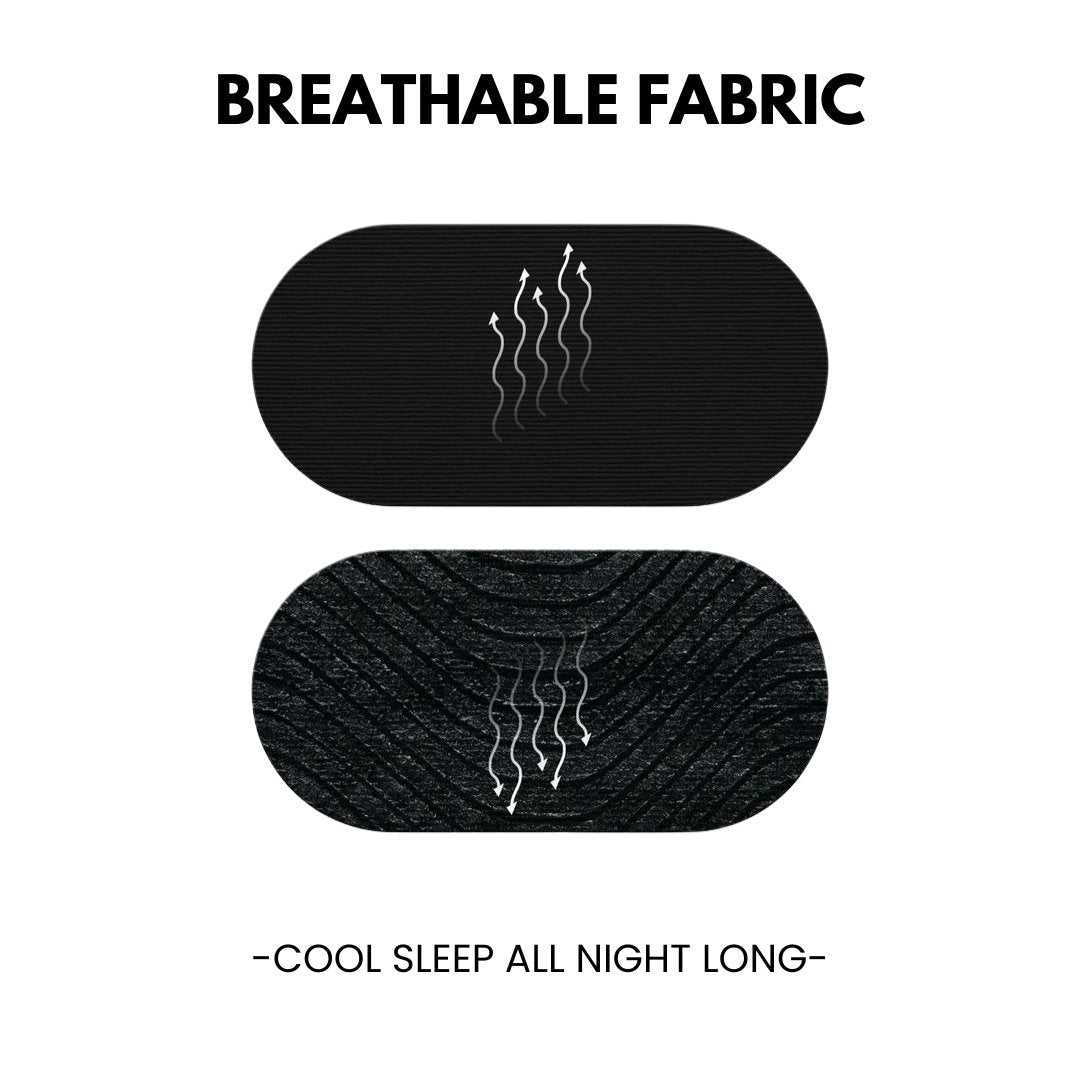
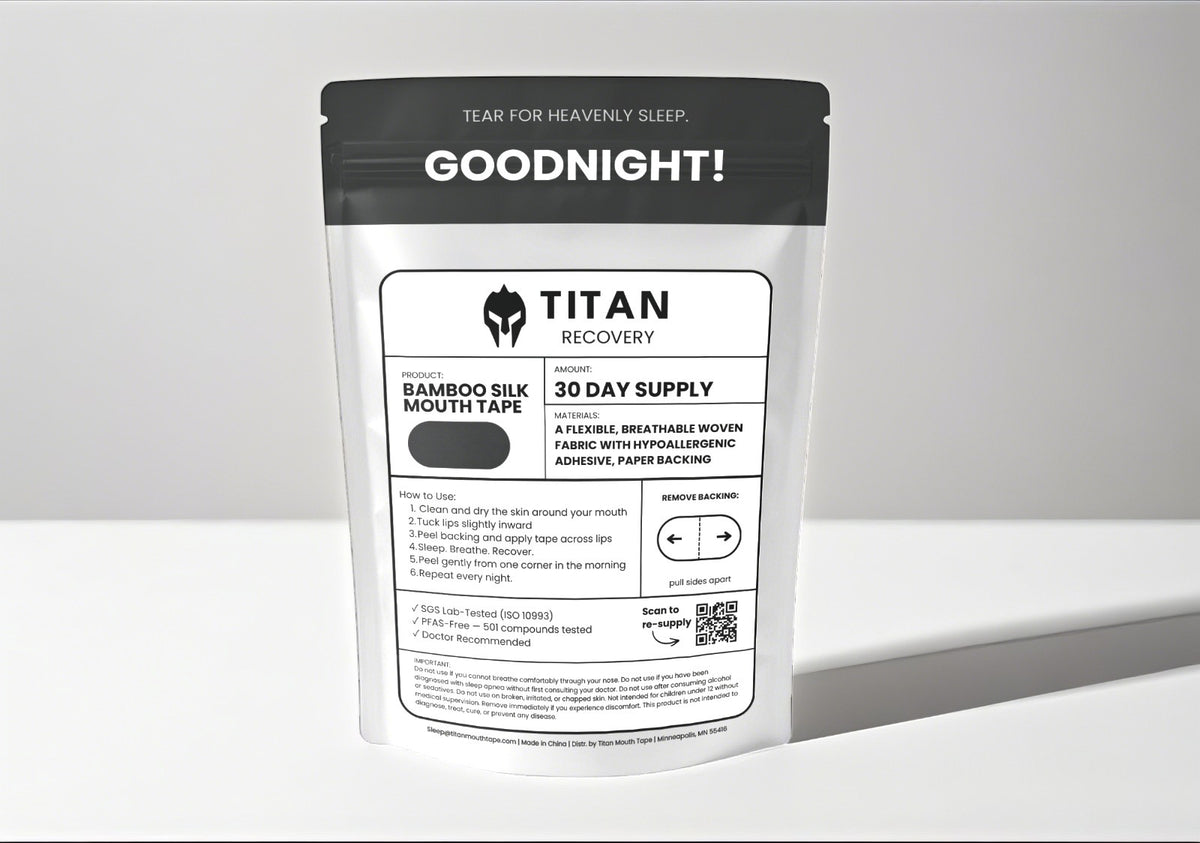
The tells are easy to spot. Waking with a dry or sticky mouth, a sore throat, morning grogginess despite adequate hours, or a partner who reports snoring — those are the signatures of nighttime mouth breathing. The fix is to keep the mouth gently closed so air routes through the nose where it belongs, which is exactly what mouth tape does. A single strip across the lips encourages nasal breathing through the whole night without any conscious effort on your part.
If your nose feels blocked, open it first. Some people default to mouth breathing because their nasal passages are genuinely restricted — from allergies, a deviated septum, or naturally narrow nostrils. In that case, nasal strips mechanically widen the nasal passages so nasal breathing feels effortless, and they pair naturally with tape. For people who want the complete breathing system in one place, the deep sleep bundle combines both.
Nasal breathing does more than stop snoring. Breathing through the nose activates the parasympathetic nervous system — the "rest and digest" state — which lowers heart rate and helps you settle into deep sleep faster. It is also the mechanism behind several of our favorite science-backed sleep hacks. If deep sleep specifically is where you fall short, nasal breathing is one of the most direct levers in the guide to increasing deep sleep.
Eat and Drink for the Night Ahead
What and when you eat and drink shapes how you sleep. You do not need a rigid diet — a few timing rules cover most of the benefit.
Caffeine has a long tail. Caffeine has a half-life of roughly five to six hours, meaning a mid-afternoon coffee can still have a meaningful dose circulating at bedtime, quietly reducing your deep sleep even if you fall asleep fine. A hard cutoff eight to ten hours before bed protects the back half of your night. For most people that means no caffeine after early afternoon.
Alcohol is a sleep thief in disguise. It helps you fall asleep faster, which is why people believe it helps — but it fragments the second half of the night and heavily suppresses REM sleep. A nightcap trades falling asleep quickly for waking up unrefreshed.
Timing beats obsessing over specific foods. Finishing large meals two to three hours before bed lets digestion settle so it does not interfere with sleep. That said, some foods genuinely help — those rich in magnesium, tryptophan, and slow-release carbohydrates support the body's wind-down. The specifics are in the best foods for better sleep. And go easy on fluids right before bed if you tend to wake up needing the bathroom.
Build a Wind-Down Routine That Lowers Stress
You cannot sprint from a stressful day straight into deep sleep. A racing mind and an activated nervous system are among the most common reasons people lie awake. The nervous system needs a runway to shift from the sympathetic "fight or flight" state into the parasympathetic "rest and digest" state that sleep requires.
A consistent pre-sleep routine is a signal, not a luxury. Doing the same calming sequence each night — dimming lights, a warm shower, reading, light stretching — trains your brain to associate those cues with sleep, so you fall asleep faster over time. The specific activities matter less than the consistency and the removal of stimulation.
Breathing exercises are the fastest route to a calm nervous system. Slow, controlled breathing directly activates the parasympathetic response, lowering heart rate within minutes. One of the most reliable techniques is box breathing, a simple pattern you can do in bed — inhale, hold, exhale, and hold, each for a count of four. It is free, portable, and works whether your problem is falling asleep or getting back to sleep at 3 a.m.
Track, Then Iterate
What gets measured gets improved — within reason. A wearable or a simple sleep journal helps you connect cause and effect: the late coffee that wrecked your deep sleep, the cool room that fixed your 3 a.m. wakeups, the tape that ended your dry mouth. You do not need lab-grade accuracy. You need trends over weeks, not single-night scores.
Do not let the tracker become the stressor. Chasing a perfect sleep score can create anxiety that itself harms sleep — a real phenomenon clinicians have named. Use the data to test one change at a time, then judge by how you actually feel during the day: energy, mood, and focus are the metrics that matter, not the number on the app.
Change one variable at a time. If you overhaul everything at once, you will never know which change did the work. Start with the biggest lever for your specific situation — for most people that is either the circadian rhythm or breathing — give it one to two weeks, and build from there. When you are ready for a structured approach, work through the sleep checklist of seven things that actually improve sleep quality.
Frequently Asked Questions
What is the single most effective way to get better sleep?
There is no universal answer, but the highest-return habit for most people is a consistent sleep and wake time anchored by morning light exposure. It stabilizes your circadian rhythm, which makes falling asleep and waking up easier without an alarm. If you already do that and still sleep poorly, the next place to look is how you breathe at night — nasal versus mouth breathing — because it is the lever most people never check.
How long does it take to improve sleep quality?
Environmental changes like lowering your bedroom temperature or switching to nasal breathing can produce noticeable results within a few nights. Circadian changes — shifting your sleep and wake times — usually take one to two weeks to fully settle because your internal clock adjusts gradually. Give any single change at least a week before judging it, and change one thing at a time so you can tell what worked.
Is mouth taping safe, and does it really help?
For healthy adults who can breathe comfortably through the nose, gently taping the mouth closed encourages nasal breathing through the night, which reduces dry mouth and snoring and supports deeper, less fragmented sleep. It is one of the simplest and cheapest sleep upgrades available. If your nose is often congested, open it first with nasal strips, and if you have sleep apnea or a breathing disorder, talk to a doctor before taping.
Why am I still tired after sleeping eight hours?
Eight hours in bed does not guarantee eight hours of quality sleep. Fragmented sleep from a warm room, noise, alcohol, or nighttime mouth breathing keeps you out of the deep and REM stages that make sleep restorative. The number of hours is only half the equation — sleep architecture is the other half, covered in depth in why you are still tired after eight hours of sleep.
What temperature should my bedroom be for the best sleep?
Most people sleep best in a room in the mid-60s Fahrenheit, because your core body temperature needs to drop to initiate deep sleep and a cool room supports that. The exact number is personal, so treat that as a starting point and adjust based on how you sleep. The full reasoning and range are in the ideal bedroom temperature for sleep.
The Bottom Line
Better sleep is not a mystery and it is not a matter of buying the most expensive mattress on the market. It is a short list of high-leverage inputs: anchor your circadian rhythm with morning light and consistent timing, keep your bedroom cool, dark, and quiet, breathe through your nose all night, time your caffeine and alcohol sensibly, and give your nervous system a real runway to wind down.
If you only change one thing, make it the one that fits your situation best — consistent timing if your schedule is chaotic, temperature if you sleep hot, and breathing if you wake up with a dry mouth or a snoring partner. That last one is the most overlooked, which is exactly why fixing it so often produces the biggest jump. Keeping the mouth closed with mouth tape — and opening the nose with nasal strips when you need to — turns nasal breathing into the default instead of a struggle. Start with the lever that matters most for you, give it a week, and build from there.
Doctor Recommended: "As a maxillofacial surgeon and dentist, I recommend Titan Mouth Tape. Nasal breathing during sleep is essential for airway health and deep restorative rest. Titan's bamboo silk design is the most comfortable and effective mouth tape I have tested. If you struggle with snoring, dry mouth, or poor sleep quality, this is the simplest change you can make for your health." — Dr. Francois P., MD, DDS — Maxillofacial Surgeon
Lab-Tested Safety: Titan's adhesive is independently tested to ISO 10993 medical device standards. Non-toxic (95% cell viability). Non-allergenic (0% reaction rate). Non-irritating (score 0.0/8.0). PFAS-free — 501 compounds tested, zero detected. See full test results →
Try the complete system tonight. Titan Mouth Tape (bamboo silk, SilkSeal™ adhesive) + TitanAir Nasal Strips. Free shipping. 30-night Better Sleep Guarantee. Shop Titan Mouth Tape → · Shop TitanAir Nasal Strips →