How to Increase Deep Sleep (Backed by Science)
Share
If you want to know how to increase deep sleep, the short answer is this: control the signals your body uses to decide when and how deeply to sleep. Deep sleep isn't random. It's a physiological response to specific conditions — temperature, timing, breathing pattern, and nervous system state — and when you set those conditions correctly, your body spends more time in the most restorative stage of sleep. Most people get less deep sleep than they need, and the fix is rarely dramatic. It's a handful of environmental and behavioral changes that stack on top of each other.
The longer answer involves understanding what deep sleep actually does, how much you need, and which strategies have genuine research behind them versus which ones are marketing noise. Here's everything that matters, stripped down to what actually works.
What Deep Sleep Is and Why It Matters
Deep sleep — also called slow-wave sleep or NREM stage 3 — is the phase where your brain produces large, slow delta waves. It's the hardest stage to wake from, and it's when the body does its most critical repair work.
Growth hormone release. The pituitary gland releases the majority of its daily growth hormone during deep sleep, driving muscle repair, tissue regeneration, and bone density maintenance. If you're training hard and not recovering, insufficient deep sleep is a likely bottleneck.
Immune function. Deep sleep is when the immune system produces cytokines — proteins that fight infection and inflammation. Chronic deficits are linked to increased illness susceptibility and slower injury recovery.
Memory consolidation. During deep sleep, the brain moves information from short-term to long-term storage — particularly declarative memory like facts and events.
Metabolic regulation. Deep sleep influences insulin sensitivity, appetite hormones, and glucose metabolism. People who consistently get too little deep sleep show markers of metabolic dysfunction, even when total sleep hours look adequate.
This is why you can sleep eight hours and still wake up tired. Total sleep time is only part of the equation. The composition of that sleep — how much of it is deep versus light — determines how restored you actually feel.
How Much Deep Sleep Do You Need?
For most adults, deep sleep should make up roughly 15-20% of total sleep time. On a 7.5-hour night, that's about 1 to 1.5 hours. If you're tracking with an Oura Ring, Apple Watch, Whoop, or similar wearable, you can see your actual numbers. Many people discover they're getting 30-45 minutes of deep sleep per night — well below the threshold for full recovery.
Deep sleep percentage tends to decline with age, partly due to biology and partly because older adults are more likely to have fragmented sleep and less consistent schedules. The good news is that most modifiable factors respond quickly to changes in behavior and environment.
10 Evidence-Based Ways to Increase Deep Sleep
These are ranked roughly by impact and ease of implementation. Most of them are free. All of them have research support.
1. Cool your bedroom to 65-68 degrees Fahrenheit. Core body temperature needs to drop by 1-2 degrees to initiate and maintain deep sleep. A cool room accelerates this process. Research consistently identifies ambient temperature as one of the strongest environmental predictors of deep sleep duration. If 65 feels too aggressive, start at 68 and work down.
2. Lock in a consistent sleep schedule. Going to bed and waking up at the same time every day — including weekends — synchronizes your circadian rhythm. Your body anticipates sleep and begins the hormonal cascade (melatonin release, cortisol suppression, core temperature drop) before you even get into bed. Irregular sleep timing is one of the most common and most underestimated reasons people fail to get adequate deep sleep. Even a 30-minute shift can disrupt the pattern.
3. Exercise — but get the timing right. Regular physical exercise, particularly resistance training and moderate-intensity cardio, is one of the best-studied interventions for increasing deep sleep. The effect is dose-dependent: more consistent exercise produces more deep sleep. However, intense exercise within 2-3 hours of bedtime elevates core temperature and cortisol enough to reduce deep sleep in the first half of the night. Morning or afternoon training is ideal.
4. Eliminate or sharply reduce alcohol. Alcohol is the most common deep sleep disruptor that people actively choose. It's a sedative, so it makes you feel like you're sleeping well, but it fragments sleep architecture — particularly in the second half of the night — and suppresses both deep sleep and REM. Even two drinks can reduce deep sleep by 20-30%. The data on this is unambiguous.
5. Manage light exposure across the full day. Morning sunlight within the first 30-60 minutes of waking sets your circadian clock and anchors melatonin release 14-16 hours later. Bright light during the day strengthens the circadian signal. Then, dimming lights in the evening — especially overhead and blue-spectrum sources — allows melatonin production to begin on schedule. The combination matters more than either end alone. A solid sleep hygiene routine starts with light management in the morning, not just screen avoidance at night.
6. Switch to nasal breathing during sleep. This is one of the most impactful and easiest changes you can make. Nasal breathing activates the diaphragm more fully, produces nitric oxide in the sinuses that supports oxygen delivery, maintains airway humidity, and keeps the parasympathetic nervous system engaged throughout the night. Mouth breathing does the opposite — it dries the airway, positions the tongue lower in the mouth where it can partially obstruct airflow, and keeps the nervous system in a more activated state.
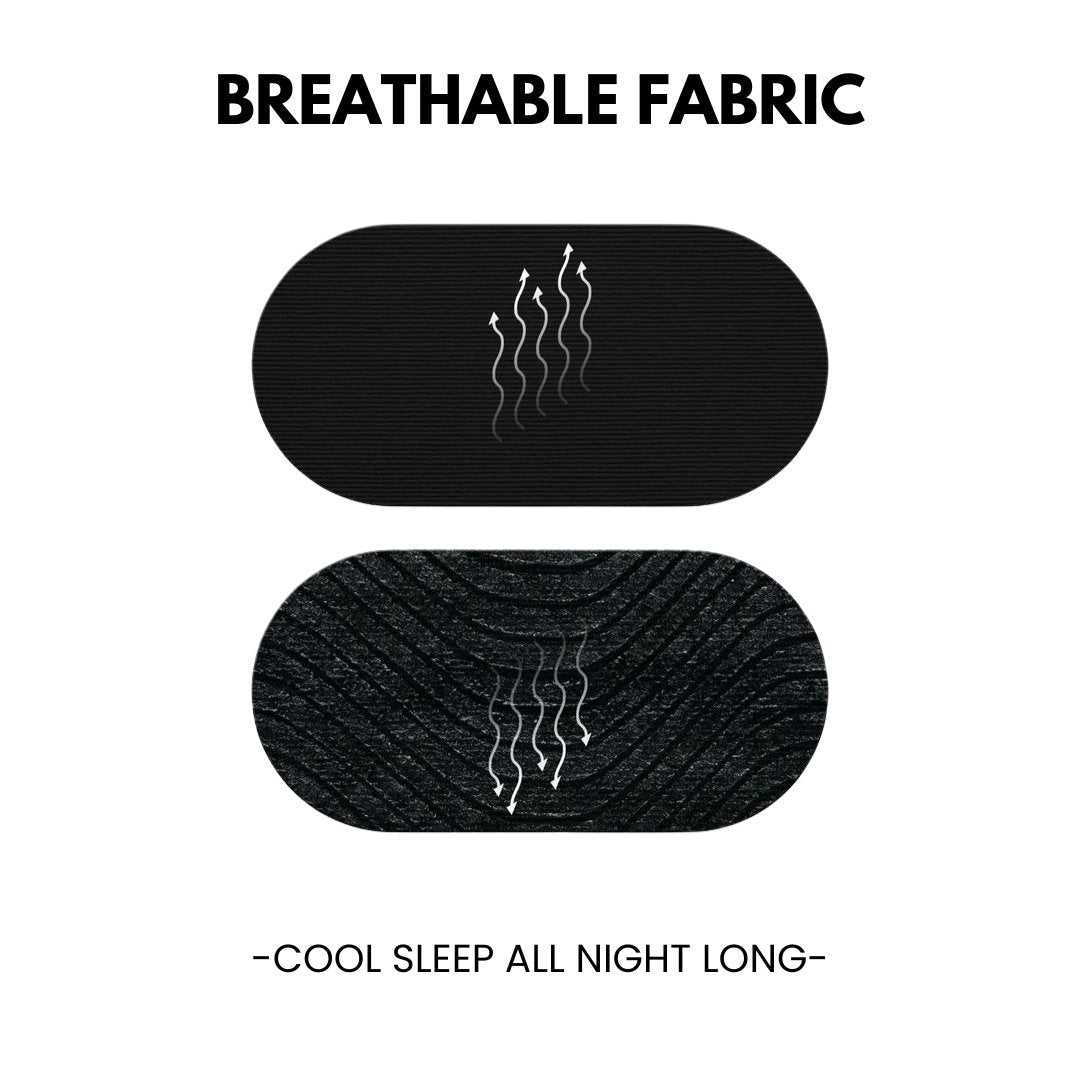
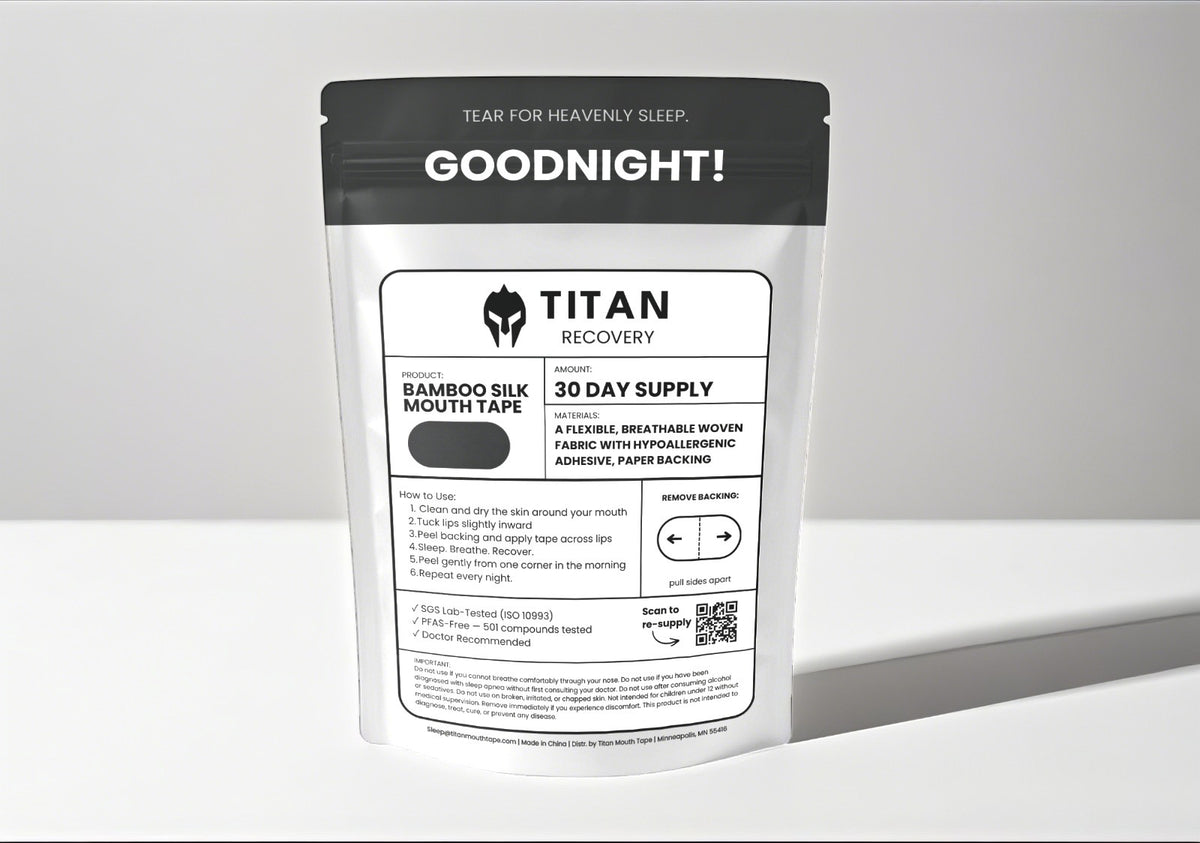
The problem is that most people can't control their jaw position while unconscious. Mouth tape solves this mechanically by holding the lips gently closed, routing all breathing through the nose from lights-out to morning. Wearable data from users who start mouth taping consistently shows measurable increases in deep sleep percentage — often within the first week. Pairing mouth tape with nasal strips further opens the airway, which is especially useful if you have any nasal congestion or a deviated septum. The Deep Sleep Bundle combines both for the full airway setup.
7. Reduce stress before bed. Elevated cortisol directly inhibits deep sleep. If you go to bed with an activated stress response, your nervous system stays in a sympathetic-dominant state that prevents the full descent into slow-wave sleep. Practical interventions: a brief breathing exercise (4-7-8 or box breathing, 4-6 cycles), journaling to externalize racing thoughts, or light stretching. Extended exhalation activates the vagus nerve, which slows heart rate and signals safety to the brain.
8. Stop eating 2-3 hours before bed. Digestion elevates core temperature and keeps the body working when it should be winding down. Late-night eating — particularly high-glycemic foods — disrupts sleep architecture and reduces deep sleep. If you need something small, stick to low-glycemic options like almonds, cottage cheese, or nut butter.
9. Consider magnesium and glycine. Magnesium glycinate (200-400mg before bed) supports deep sleep by regulating GABA, the neurotransmitter that calms neural activity. Glycine (3g before bed) has been shown in small studies to support sleep quality and thermoregulation. Neither is a sedative, and neither replaces the strategies above. They're worth trying if the rest of your routine is solid — a surprising percentage of people are magnesium-deficient, and correcting that tends to improve sleep.
10. Eliminate bedroom light pollution. Even small amounts of ambient light — a charging indicator, streetlight through thin curtains, a hall light under the door — register through closed eyelids and can reduce deep sleep without ever waking you. You don't know it's happening. Your sleep tracker does. Blackout curtains or a quality sleep mask are among the cheapest, highest-ROI sleep investments you can make. Cover or remove every visible light source in the bedroom.
How to Track Your Progress
If you're implementing these changes, a wearable sleep tracker turns vague feelings into data. Look at your deep sleep percentage over a 7-14 day rolling average rather than any single night. Single nights fluctuate. The trend is what matters. Most people who implement even four or five of these strategies see their deep sleep percentage climb from the low end (8-12%) into the 15-20% range within two to three weeks. Stacking multiple interventions is more effective than perfecting any single one.
Frequently Asked Questions
How long does it take to increase deep sleep?
Most people see measurable changes within 5-10 days. Temperature, alcohol elimination, and nasal breathing produce the fastest results — often visible on a tracker within the first week. Circadian consistency and exercise take 2-3 weeks as the body recalibrates.
Can you get too much deep sleep?
In practice, no. The body self-regulates deep sleep duration based on recovery needs. After intense training or illness, your body naturally spends more time in deep sleep. Wearable trackers occasionally show unusually high deep sleep on recovery nights — that's the system working as designed.
Does mouth taping really increase deep sleep?
Yes, and the mechanism is straightforward. Nasal breathing maintains parasympathetic nervous system dominance, supports airway stability, and produces nitric oxide — all of which create conditions favorable to deep sleep. Users who track with Oura, Whoop, or Apple Watch consistently report higher deep sleep percentages after starting mouth taping. It's one of the simplest changes with the most visible impact on wearable data.
Is deep sleep more important than REM sleep?
They serve different functions, and you need both. Deep sleep handles physical repair, immune function, and growth hormone release. REM handles emotional processing, creativity, and procedural memory. The strategies in this guide tend to improve overall sleep architecture, which means both deep sleep and REM typically increase together when you address the fundamentals.
Why is my deep sleep so low even though I sleep 8 hours?
Total sleep time and sleep quality are separate variables. The most common culprits for low deep sleep despite adequate hours are alcohol, inconsistent sleep timing, elevated nighttime cortisol, mouth breathing, and bedroom temperature that's too warm. Start by addressing those five factors and track the results over two weeks. You can also read our full breakdown of how to sleep better for a broader look at what might be off.
The Bottom Line
Deep sleep is where the real recovery happens — muscle repair, immune defense, hormone production, and memory consolidation all depend on it. The strategies to increase deep sleep are neither complicated nor expensive. Cool your room, fix your schedule, cut the alcohol, manage your light exposure, and close your mouth at night. Each one nudges your body toward the conditions that favor slow-wave sleep. Stack enough of them together and the effect compounds. Your sleep tracker will show the difference before you feel it — and then you'll feel it too.
Doctor Recommended: "As a maxillofacial surgeon and dentist, I recommend Titan Mouth Tape. Nasal breathing during sleep is essential for airway health and deep restorative rest. Titan's bamboo silk design is the most comfortable and effective mouth tape I have tested. If you struggle with snoring, dry mouth, or poor sleep quality, this is the simplest change you can make for your health." — Dr. Francois P., MD, DDS — Maxillofacial Surgeon
Lab-Tested Safety: Titan's adhesive is independently tested to ISO 10993 medical device standards. Non-toxic (95% cell viability). Non-allergenic (0% reaction rate). Non-irritating (score 0.0/8.0). PFAS-free — 501 compounds tested, zero detected. See full test results →
Try the complete system tonight. Titan Mouth Tape (bamboo silk, SilkSeal™ adhesive) + TitanAir Nasal Strips. Free shipping. 30-night Better Sleep Guarantee. Shop Titan Mouth Tape → · Shop TitanAir Nasal Strips →