The Ideal Bedroom Temperature for Deep Sleep
Share
If you're optimizing your sleep and haven't touched your thermostat, you're skipping one of the most impactful changes you can make. The ideal bedroom temperature for sleep is between 60 and 67 degrees Fahrenheit (15-19 degrees Celsius) -- a range backed by decades of sleep research showing that ambient temperature directly controls how quickly you fall asleep and how much time you spend in the deepest, most restorative stages. Get it right, and you set the stage for better recovery. Get it wrong, and no amount of melatonin, blackout curtains, or sleep tracking will fully compensate.
Temperature isn't just one variable among many. It's the master switch. Your body has to cool down to fall asleep, and it has to stay cool to cycle through deep sleep properly. Understanding why -- and knowing how to apply that knowledge practically -- is one of the highest-leverage sleep improvements available to anyone with a thermostat or a fan.
Why Your Body Needs to Cool Down to Sleep
Sleep onset is triggered by a drop in core body temperature. The hypothalamus -- your body's internal thermostat -- orchestrates this as part of your circadian rhythm. In the hours before bedtime, core temperature begins falling by roughly 1-2 degrees Fahrenheit. This decline signals melatonin release and initiates the cascade that transitions you from wakefulness into sleep. As evening progresses, the hypothalamus triggers vasodilation -- blood vessels near the skin expand, radiating heat outward. This is why your hands and feet sometimes feel warm right before sleep: heat is leaving the body, pulling core temperature down.
Deep sleep depends on sustained cooling. The deepest stages of non-REM sleep occur primarily in the first half of the night, when core temperature hits its lowest point. Even small disruptions to this temperature nadir can reduce time spent in deep sleep -- the stage responsible for physical repair, growth hormone release, immune function, and memory consolidation.
Your bedroom is the thermostat you control. Your body can only dump heat into an environment cool enough to accept it. If ambient temperature is too high, core temperature stays elevated and the body struggles to maintain deep sleep. The 60-67 degree recommendation exists because it creates the thermal gradient your body needs.
What Happens When the Room Is Too Hot
Sleeping in a room above 70 degrees Fahrenheit doesn't just make you uncomfortable -- it actively degrades sleep architecture. The effects are measurable and consistent across research.
Deep sleep duration drops. When ambient temperature is too high, the body cannot complete the core temperature decline needed for deep sleep. Polysomnography studies show that elevated room temperatures reduce slow-wave sleep by as much as 25-30 percent. You may still sleep for eight hours, but the composition shifts toward lighter, less restorative stages.
You wake up more often. Heat triggers micro-arousals -- brief transitions to lighter sleep that fragment your architecture throughout the night. Each micro-arousal resets the sleep cycle, making it harder to accumulate continuous deep sleep. This is why people who sleep in warm rooms often feel unrested even after a full night.
Sweat disrupts the environment. When passive heat radiation isn't enough, the body escalates to sweating. The cycle of sweating, waking, kicking off covers, getting cold, pulling covers back, and repeating is one of the most common patterns of fragmented sleep -- and it almost always traces back to a room that's too warm.
What Happens When the Room Is Too Cold
The solution isn't to crank the AC to 55 degrees. Excessively cold rooms create their own set of problems for sleep, and the relationship between temperature and sleep quality follows a U-shaped curve -- too hot is bad, too cold is also bad, and the sweet spot is narrower than most people expect.
Cold triggers a stress response. When the environment is too cold, the body activates vasoconstriction, shivering, and increased sympathetic nervous system activity -- the opposite of what sleep requires. These defenses keep the body alert, making deep sleep harder to reach and maintain.
REM sleep is particularly vulnerable. During REM, the body's ability to shiver or sweat is naturally suppressed. A room that felt comfortable during lighter stages can become genuinely cold during REM, triggering awakenings. Consistently cold rooms tend to reduce REM duration, which affects emotional processing and learning.
Find the range, not the extreme. The best temperature for sleeping is a window, not a single number. Most people land between 62 and 67 degrees. If you run warm, aim for the lower end. If you run cold, the higher end will feel better. The goal is cool enough to support your body's natural temperature drop without triggering a defensive response.
Practical Ways to Dial In Your Sleeping Temperature
Knowing the ideal range is the easy part. Actually achieving it -- especially in warm climates, older buildings, or shared bedrooms -- takes some practical problem-solving.
Set your thermostat on a schedule. Program it to begin dropping 30-60 minutes before bedtime. A setting of 65-67 degrees during sleeping hours is a solid starting point -- adjust by a degree based on how you feel.
Use a fan strategically. A fan doesn't lower room temperature, but it improves heat dissipation by moving air across the skin. A ceiling fan on low or a floor fan pointed at the bed can make a 70-degree room feel like 65. The steady airflow also provides white noise, which helps mask environmental disruptions that fragment sleep.
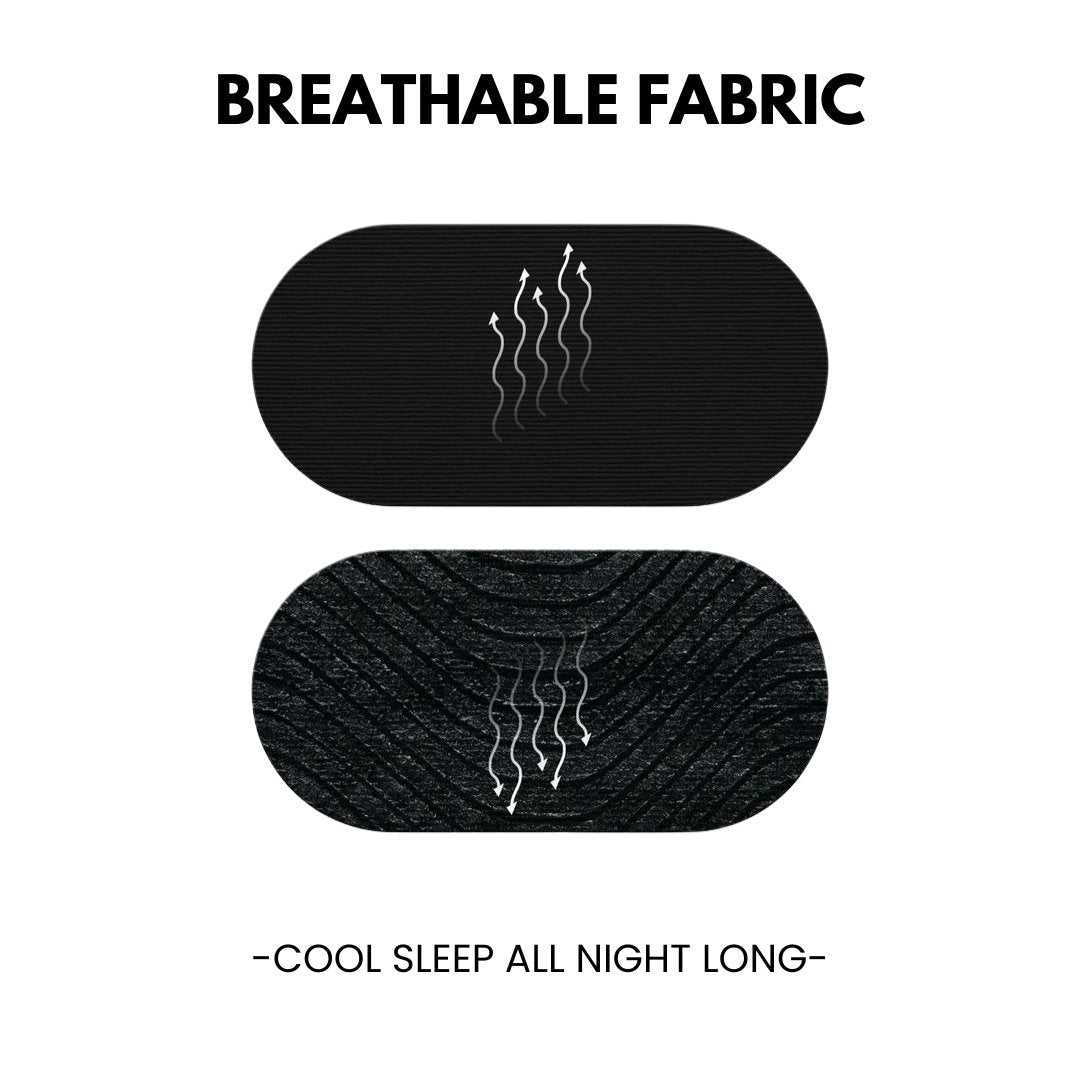
Choose bedding that breathes. Heavy synthetic comforters trap heat, creating a microclimate under the covers that's far warmer than the room. Switch to natural fibers -- cotton percale, linen, or wool -- and layer lighter blankets so you can adjust throughout the night.
Take a warm shower 60-90 minutes before bed. Counterintuitively, warming the skin triggers vasodilation -- the same process the hypothalamus uses to dump core heat. When you step into a cooler room, core temperature drops faster than it would on its own. Studies show this paradox reduces sleep onset latency by about 10 minutes and increases deep sleep duration.
Manage your mattress. Memory foam retains body heat. If you consistently wake up warm, consider a latex or gel-infused topper that dissipates heat more effectively, or a mattress cooling pad that circulates chilled water.
How Breathing Affects Temperature Regulation During Sleep
The route air takes into your body affects how well you manage thermoregulation during sleep -- a connection that rarely gets discussed.
Nasal breathing conditions incoming air. When you breathe through your nose, air passes through the turbinates -- scroll-shaped structures lined with blood-rich tissue that warm, humidify, and filter air before it reaches the lungs. Whether your room is 60 degrees or 75, the nasal passages do the thermal work so your airways don't have to.
Mouth breathing bypasses this system. Cold, dry air hits the throat and lower airways directly. In a cooled bedroom -- exactly the environment you're creating for deep sleep -- mouth breathing delivers unconditioned air that dries the airway, triggers micro-arousals, and undermines the parasympathetic state deep sleep requires. You cool the room to improve sleep, but mouth breathing turns that cool air into a source of disruption.
Nasal breathing supports parasympathetic dominance. Breathing through the nose activates the diaphragm more fully and produces a slower, deeper pattern that sustains the rest-and-recover state throughout the night. Mouth breathing trends shallower and faster, keeping the sympathetic nervous system partially engaged.
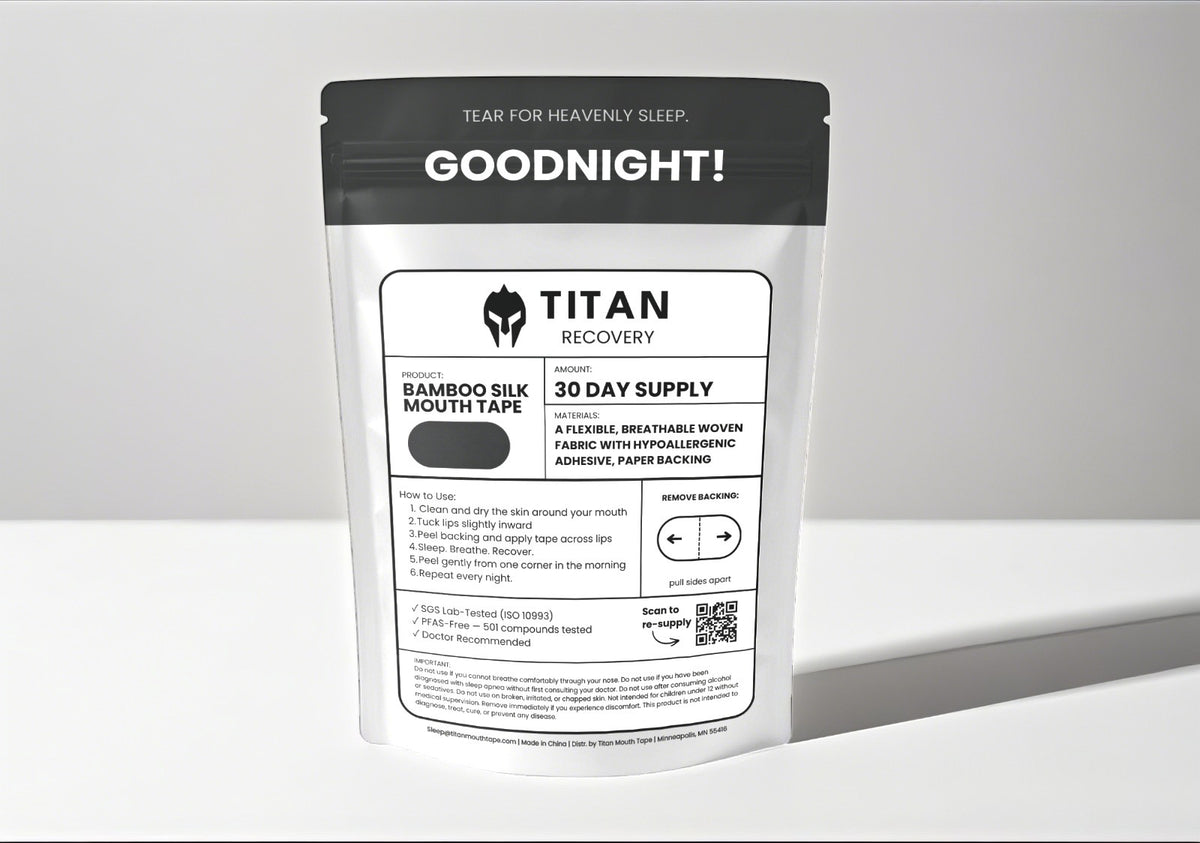
If you've dialed in your bedroom temperature for deep sleep but still wake up with a dry mouth or a sense of restlessness, mouth breathing is likely undermining your temperature optimization. Mouth tape keeps the lips gently closed, routing all airflow through the nose where it can be properly conditioned. If nasal congestion is a factor, nasal strips open the airway mechanically -- the Deep Sleep Bundle combines both for this reason.
Frequently Asked Questions
Is 72 degrees too warm for sleeping?
For most people, yes. Research consistently shows that temperatures above 70 degrees reduce deep sleep by interfering with core temperature decline. Some individuals may sleep comfortably at 70-72, but the evidence-backed range is 60-67. If 65 feels too cold, start at 68 and lower by one degree every few nights until you find your threshold.
Does room temperature affect REM sleep differently than deep sleep?
Yes. Deep sleep (slow-wave sleep) is most affected by rooms that are too warm, because heat prevents the core temperature drop that initiates these stages. REM sleep is more vulnerable to rooms that are too cold, because the body's ability to regulate its own temperature is naturally suppressed during REM -- you can't shiver or sweat effectively. This is why the 60-67 degree range works well: it's cool enough to support the deep sleep temperature drop without being so cold that it disrupts REM later in the night.
Should I sleep with socks on to regulate temperature?
It can. Wearing socks promotes vasodilation in the feet, which helps the body release core heat faster. A Swiss study found that warm extremities were the strongest predictor of rapid sleep onset. Use thin, breathable socks -- not thick wool -- to warm the feet just enough to encourage surface blood flow and accelerate core cooling.
Why do I sleep better in a hotel room than at home?
Hotels typically keep rooms at 65-68 degrees, use blackout curtains, and provide white noise from HVAC systems -- three of the strongest environmental factors for better sleep. Most home bedrooms are warmer, lighter, and noisier. Replicate those conditions: set the thermostat lower, add blackout curtains or a sleep mask, use a fan for airflow and white noise, and keep your breathing nasal to humidify the cooler air.
The Bottom Line
The ideal bedroom temperature for sleep is 60-67 degrees Fahrenheit, and the science behind it is straightforward: your core body temperature needs to drop 1-2 degrees to initiate sleep, and it needs to stay low to sustain deep sleep throughout the night. A cool room provides the thermal gradient that makes this possible. Too warm, and you lose deep sleep. Too cold, and you fragment REM.
Set your thermostat, use a fan, choose bedding that breathes, and consider a warm shower before bed to accelerate the cooling process. Then close the loop on your sleep environment by addressing the other factors on a complete sleep checklist -- including nasal breathing, which ensures that the cool air you've created gets properly conditioned before it reaches your lungs. Temperature is the foundation. Build on it, and the deep sleep follows.
Doctor Recommended: "As a maxillofacial surgeon and dentist, I recommend Titan Mouth Tape. Nasal breathing during sleep is essential for airway health and deep restorative rest. Titan's bamboo silk design is the most comfortable and effective mouth tape I have tested. If you struggle with snoring, dry mouth, or poor sleep quality, this is the simplest change you can make for your health." — Dr. Francois P., MD, DDS — Maxillofacial Surgeon
Lab-Tested Safety: Titan's adhesive is independently tested to ISO 10993 medical device standards. Non-toxic (95% cell viability). Non-allergenic (0% reaction rate). Non-irritating (score 0.0/8.0). PFAS-free — 501 compounds tested, zero detected. See full test results →
Try the complete system tonight. Titan Mouth Tape (bamboo silk, SilkSeal™ adhesive) + TitanAir Nasal Strips. Free shipping. 30-night Better Sleep Guarantee. Shop Titan Mouth Tape → · Shop TitanAir Nasal Strips →