Sleep Stages Explained: REM, Deep, and Light
Share
Your body doesn't just switch off when you fall asleep. It moves through a precise sequence of physiological states, each one doing something different, each one essential. Here are sleep stages explained in plain terms: every night, your brain cycles through four distinct stages -- two phases of light sleep, one phase of deep sleep, and one phase of REM -- in repeating 90-minute loops. The quality of each stage determines whether you wake up restored or running on empty.
When someone says they got eight hours but still feel wrecked, the issue is almost always in the stages, not the duration. Understanding what happens during sleep at each stage changes how you think about rest entirely. It stops being about hours logged and starts being about what your body accomplished -- or failed to accomplish -- during those hours.
The Four Stages of Sleep
Sleep researchers once divided sleep into five stages. The current model, standardized by the American Academy of Sleep Medicine, recognizes four: three stages of non-REM (NREM) sleep and one stage of REM. Each has a distinct brain wave pattern, a different physiological purpose, and a specific role in recovery.
Stage 1 (N1) -- the doorway. This is the lightest phase of sleep, lasting roughly one to five minutes. Your muscle tone begins to relax, your eye movements slow, and your brain shifts from alpha waves to theta waves. You can be woken easily during N1, and if you are, you might not even realize you were asleep. It accounts for about 5% of total sleep time. Think of it as the warm-up, not the workout.
Stage 2 (N2) -- true light sleep. Your heart rate drops, your body temperature falls, and your brain produces short bursts of electrical activity called sleep spindles alongside K-complexes. Both help block external stimuli so you stay asleep. N2 makes up roughly 45-50% of your total sleep time, making it the stage you spend the most time in. It's not dramatic, but it matters: sleep spindles are directly linked to memory consolidation and learning. Your brain is actively filing away information from the day.
Stage 3 (N3) -- deep sleep. Also called slow-wave sleep, N3 produces large, slow delta brain waves. Your blood pressure drops. Your breathing becomes its slowest and most regular. Growth hormone floods your system -- this is when your body physically repairs muscle tissue, strengthens the immune system, and restores energy at the cellular level. Deep sleep stages are the hardest to wake from, and for good reason: interrupting this phase costs your body the most. N3 is concentrated in the first half of the night, which is why those early hours of sleep are disproportionately important for physical recovery.
REM sleep -- the brain's shift. After cycling through the three NREM stages, your brain enters REM sleep -- rapid eye movement sleep. Brain activity surges back to near-waking levels while your eyes dart rapidly behind closed lids. Meanwhile, your voluntary muscles are temporarily paralyzed through a mechanism called atonia, which prevents you from acting out dreams. REM is where emotional processing, creativity, and complex memory integration happen. Your brain consolidates procedural memories, processes emotional experiences, and runs what researchers describe as a kind of overnight therapy. REM periods grow longer as the night progresses, so your longest REM episodes happen in the final hours before waking.
How Sleep Cycles Work
You don't move through these stages once and stop. Your brain runs through them in sleep cycles that repeat roughly every 90 minutes. A full night typically includes four to six complete cycles, depending on total sleep time.
The composition of each cycle shifts as the night goes on. Early cycles are heavy on deep sleep and lighter on REM. As the night progresses, the ratio flips -- deep sleep becomes scarce and REM periods stretch longer. This is why cutting your night short by even one hour often means losing a disproportionate amount of REM: that last cycle before your alarm would have contained your most substantial REM episode of the entire night.
It also explains why the first three hours feel especially critical. Lose those, and you've lost the bulk of your deep sleep. This is a major reason people sleep eight hours and still feel exhausted -- if those early deep sleep stages were disrupted or shallow, no amount of additional REM later compensates fully.
Why Deep Sleep and REM Matter Most for Recovery
All four stages serve a purpose, but deep sleep and REM are where the serious restoration happens. Lose time in N1 or N2 and the impact is minimal. Lose time in N3 or REM and you feel it immediately.
Deep sleep is physical recovery. Growth hormone secretion peaks during N3, driving real tissue repair. Micro-tears in muscle fibers from exercise get patched. The immune system ramps up production of cytokines that fight infection and inflammation. Your brain's glymphatic system -- a waste-clearance pathway that operates primarily during deep sleep -- flushes out metabolic byproducts including beta-amyloid, the protein associated with Alzheimer's disease. Less deep sleep means less cleanup, and the consequences are both immediate (soreness, brain fog, inflammation) and long-term.
REM sleep is cognitive and emotional recovery. During REM, your brain essentially reorganizes itself. It integrates new information with existing knowledge, processes emotionally charged experiences, and strengthens neural pathways you'll rely on tomorrow. People deprived of REM show impaired problem-solving, reduced emotional regulation, and worse performance on tasks learned the previous day. Athletes who protect their REM sleep perform better. Students who protect their REM sleep retain more. The research is consistent across populations.
How Breathing Quality Shapes Your Sleep Stages
The stages described above aren't guaranteed just because you're in bed long enough. Your body needs specific conditions to access them, and one of the most influential conditions is how you breathe.
Nasal breathing activates the parasympathetic nervous system -- the branch responsible for rest and recovery. When you breathe through your nose, air is warmed, filtered, and humidified before reaching your lungs. The nasal passages also produce nitric oxide, a vasodilator that improves oxygen uptake in the alveoli. The result: better gas exchange, more stable blood oxygen, and a lower resting heart rate. All of which signal to your nervous system that it's safe to descend into deep sleep.
Mouth breathing does the opposite. It activates the sympathetic nervous system -- the fight-or-flight response -- raising heart rate, increasing cortisol production, and holding your body in a state of low-grade stress. In that state, your brain has a harder time transitioning from light sleep into the deep sleep stages where physical restoration happens. Micro-arousals increase. Sleep cycles get fragmented. You spend more time in N1 and N2, less time where it counts.
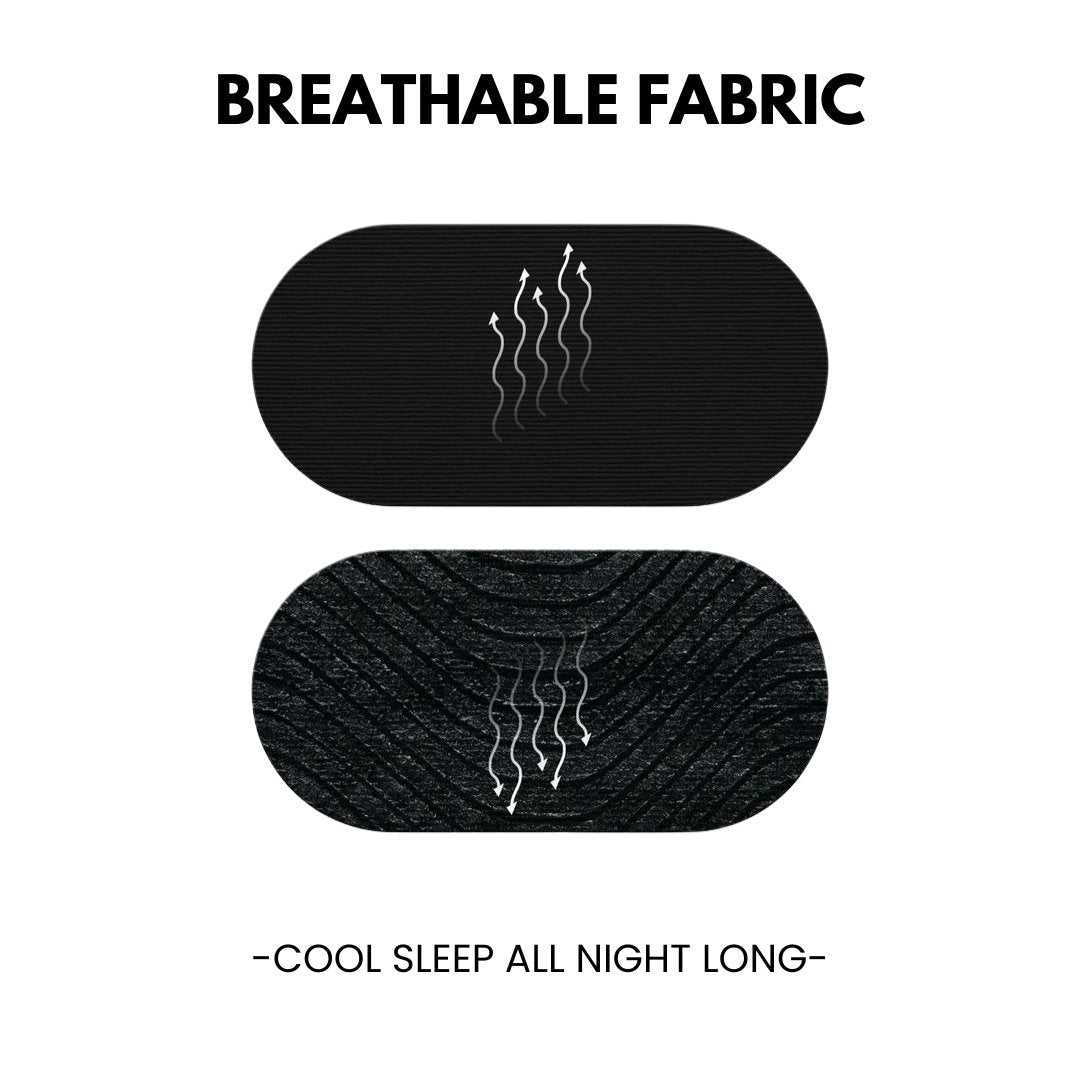
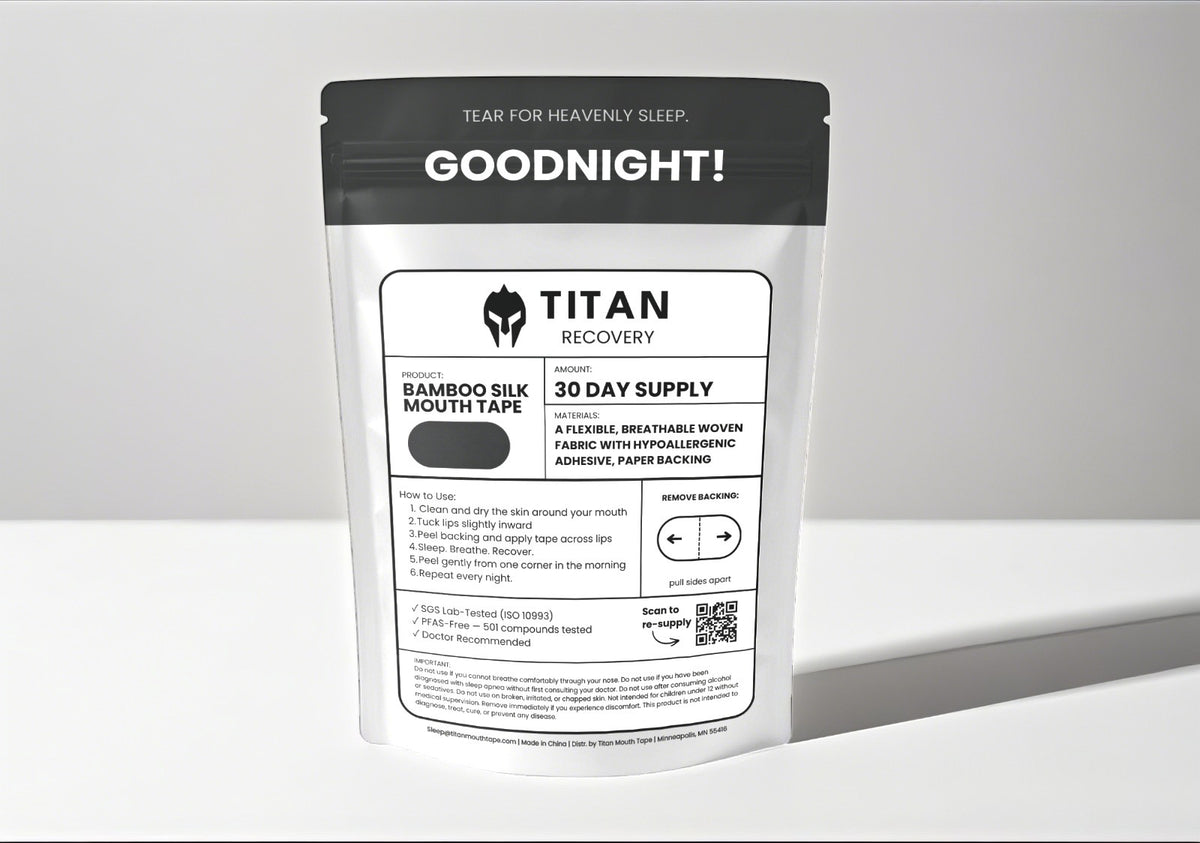
This is why mouth tape has become a practical tool for people serious about sleep quality. It keeps the lips sealed, routing all breathing through the nose, shifting the nervous system toward parasympathetic dominance, and creating the conditions that support full, uninterrupted cycles. If nasal congestion makes nose breathing difficult, pairing nasal strips with mouth tape opens the airway from both directions -- the Deep Sleep Bundle is built for exactly that combination.
Sleep tracker data consistently reflects the shift: users report higher deep sleep percentages, improved HRV, and better readiness scores within the first week of consistent nasal breathing during sleep. The stages don't change -- but how effectively your body accesses them does.
Frequently Asked Questions
How much deep sleep do I need each night?
Most adults need roughly 60 to 90 minutes of deep sleep per night, accounting for 15-20% of total sleep time. Your body front-loads deep sleep into the first few cycles, so consistent early-night sleep matters more than total hours. If your tracker shows deep sleep below 10%, your deep sleep stages may be disrupted -- improving your sleep hygiene and breathing quality are the two most effective adjustments.
What happens if I don't get enough REM sleep?
REM deprivation shows up as cognitive and emotional impairment: difficulty concentrating, irritability, slower reaction times, and reduced ability to learn or retain information. Since REM sleep is concentrated in the back half of the night, the most common cause of REM loss is simply cutting sleep short. But fragmented sleep from mouth breathing also truncates REM periods, even when you spend a full eight hours in bed.
Can I catch up on lost deep sleep or REM?
Partially. After deprivation, your brain prioritizes whichever stage was most depleted -- a phenomenon called sleep rebound. You'll enter deep sleep faster and spend more time there on recovery nights. But the catch-up is never complete, and chronic deprivation creates deficits that accumulate. The better strategy is protecting your sleep architecture nightly. Consistent sleep practices make a bigger difference than any single recovery night.
Do sleep trackers accurately measure sleep stages?
Consumer wearables estimate sleep stages using movement, heart rate, and HRV -- useful for spotting trends over time but not clinically precise. A polysomnography (in-lab sleep study) remains the gold standard for accurate staging. That said, trackers are valuable for directional changes: if your deep sleep percentage climbs after you start mouth taping, the trend is real even if the absolute minutes aren't perfectly calibrated.
The Bottom Line
Sleep is not a single state. It's a structured sequence of stages, each with a specific job. Light sleep sets the conditions, deep sleep restores the body, and REM restores the brain. Every 90 minutes your brain runs through this cycle again, and the quality of each pass determines how you feel when the alarm goes off. The most controllable factor in that equation is the one most people overlook: whether you breathe through your nose or your mouth. Nasal breathing creates the conditions -- lower heart rate, parasympathetic activation, stable oxygen -- that allow your body to access deep sleep and REM fully. When the airway stays open and the mouth stays closed, every cycle does what it's designed to do.
Doctor Recommended: "As a maxillofacial surgeon and dentist, I recommend Titan Mouth Tape. Nasal breathing during sleep is essential for airway health and deep restorative rest. Titan's bamboo silk design is the most comfortable and effective mouth tape I have tested. If you struggle with snoring, dry mouth, or poor sleep quality, this is the simplest change you can make for your health." — Dr. Francois P., MD, DDS — Maxillofacial Surgeon
Lab-Tested Safety: Titan's adhesive is independently tested to ISO 10993 medical device standards. Non-toxic (95% cell viability). Non-allergenic (0% reaction rate). Non-irritating (score 0.0/8.0). PFAS-free — 501 compounds tested, zero detected. See full test results →
Try the complete system tonight. Titan Mouth Tape (bamboo silk, SilkSeal™ adhesive) + TitanAir Nasal Strips. Free shipping. 30-night Better Sleep Guarantee. Shop Titan Mouth Tape → · Shop TitanAir Nasal Strips →