How to Sleep Better: 10 Changes Ranked by Impact (Start With the One You’ve Never Tried)
Share
You've read the advice. Cool bedroom. Dark room. No screens. Consistent bedtime. Magnesium.
You've tried most of it. Your sleep is still bad.
Here's what the standard advice misses: it optimizes the environment around your sleep but ignores what your body is doing during sleep. Specifically, how you're breathing.
Research suggests that an estimated 50-60% of adults breathe through their mouth during some portion of the night. Mouth breathing during sleep is associated with sympathetic nervous system activation (the stress response), reduced oxygen efficiency, fragmented sleep architecture, and decreased time in the deep sleep stages where recovery actually happens.
You can have the perfect bedroom and still sleep poorly — because your mouth is open.
Here's how to sleep better, starting with the variable most people have never addressed.
1. Close Your Mouth
This is the highest-leverage change on this list and the one you've probably never tried.
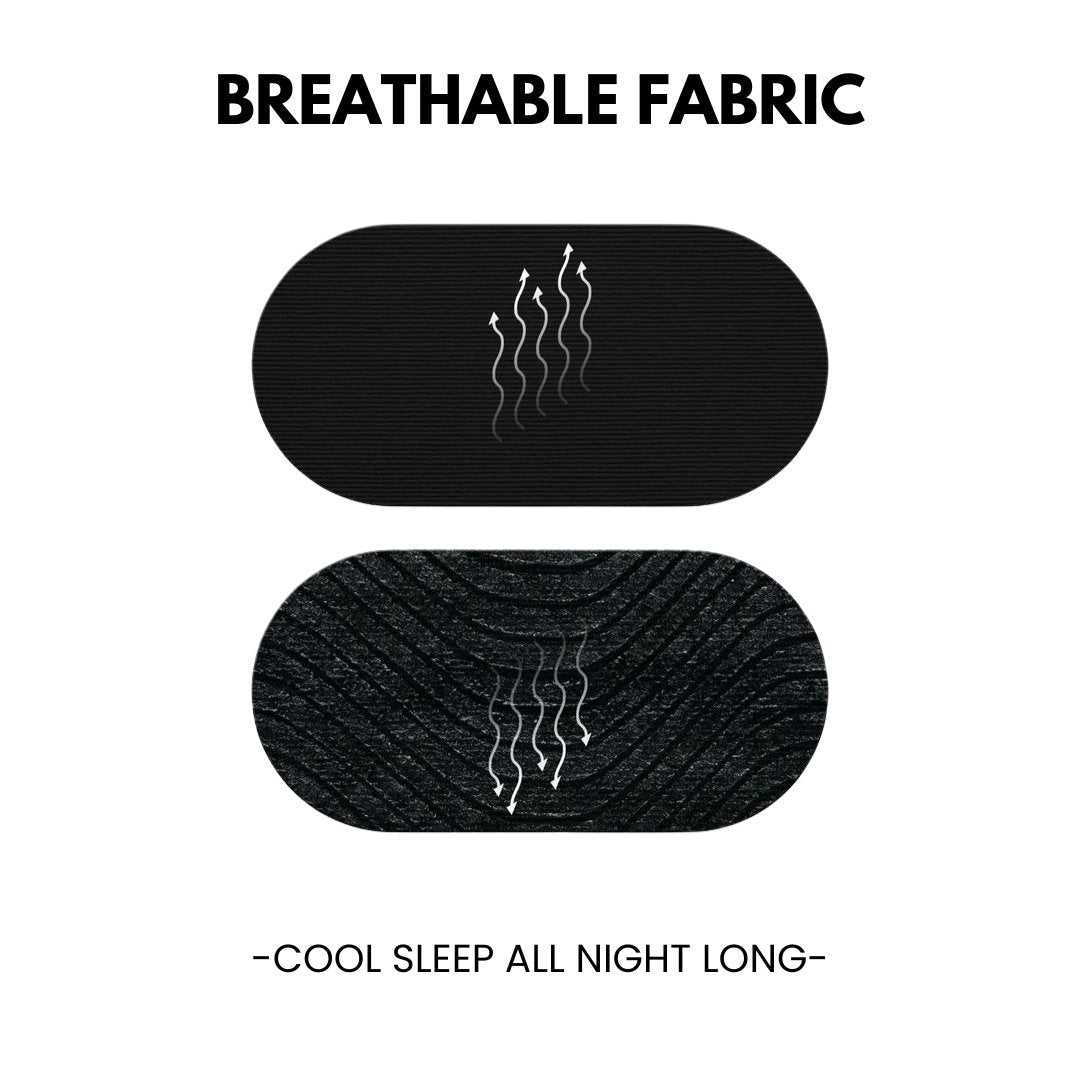
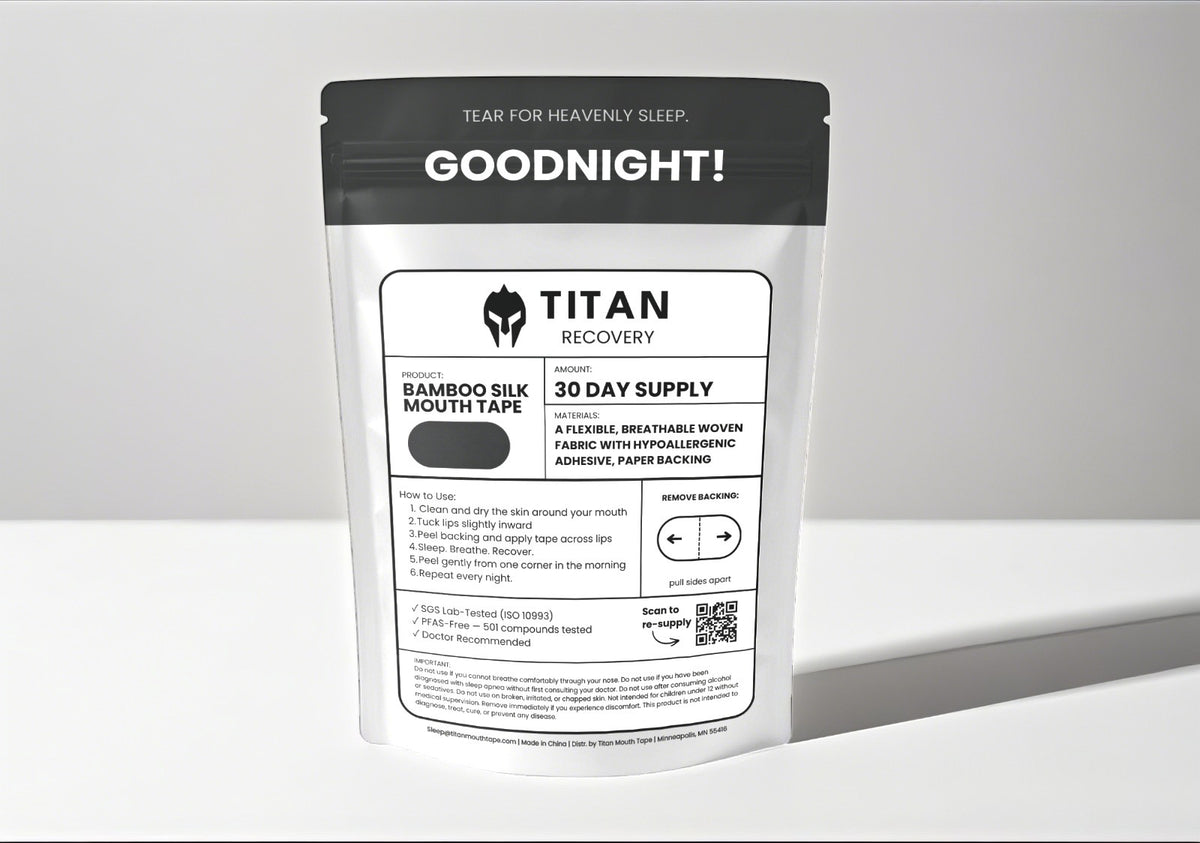
A strip of mouth tape across your lips before bed holds your mouth gently closed during sleep. Air flows through your nose instead. Your tongue stays forward against the palate instead of dropping backward into the airway. Research suggests nasal breathing activates the parasympathetic nervous system — the branch responsible for rest, recovery, and deep sleep.
Most people notice a difference on night one: no dry mouth, no sore throat, less snoring. Within a week, the pattern is clear — mornings feel different.
If nasal congestion makes nose breathing difficult, pair mouth tape with a nasal strip — one opens the nose, one closes the mouth.
2. Cool Your Room to 65-68°F
Your core body temperature needs to drop 2-3°F to initiate deep sleep. Research from the National Sleep Foundation confirms that a bedroom above 68°F interferes with this drop. This is the most well-supported environmental intervention for sleep quality. If you change nothing else about your bedroom, lower the temperature.
3. Block All Light
Research from JAMA Internal Medicine found that even moderate ambient light during sleep increased heart rate, reduced HRV, and impaired glucose metabolism. Cover LED indicators with black tape. Use blackout curtains or a sleep mask. Your room should be dark enough that you can't see your hand in front of your face.
4. Get Morning Sunlight Within 30 Minutes of Waking
10-15 minutes of outdoor light (no sunglasses) within 30 minutes of waking sets your circadian clock and begins the 14-16 hour countdown to melatonin release. This single habit may improve both how quickly you fall asleep and how deeply you sleep that same night. Overcast days still work — outdoor light on a cloudy day is 50x brighter than indoor lighting.
5. Stop Caffeine After Noon
Caffeine has a half-life of 5-7 hours. Research published in the Journal of Clinical Sleep Medicine found that caffeine consumed 6 hours before bed reduced deep sleep by up to 20% — even when subjects reported falling asleep normally. The insidious part: caffeine can degrade your sleep quality without you feeling it. Cut it at noon, not 2 PM.
6. Stop Alcohol 4 Hours Before Bed
Alcohol acts as a sedative initially but causes a rebound arousal effect as it metabolizes — fragmenting the second half of the night where deep sleep and REM normally occur. Even moderate drinking (2 drinks) within 4 hours of bed measurably reduces sleep quality. Sedation is not sleep.
7. Keep a Consistent Bedtime
Your circadian clock frontloads deep sleep in the first 3-4 hours of the night. If your bedtime shifts by more than 30-60 minutes, you may miss the deep sleep window. Go to bed within a 30-minute window every night — including weekends. Consistency is the most underrated sleep variable.
8. Stop Eating 2-3 Hours Before Bed
Digestion raises core body temperature and diverts blood flow away from recovery processes. Late eating also increases the risk of acid reflux in the supine position, which can cause nighttime awakenings. Finish your last meal 2-3 hours before bed. A small protein-fat snack (handful of nuts, piece of cheese) is less disruptive than a full meal if you're hungry.
9. Build a 10-Minute Wind-Down
Your brain cannot shift from stress mode to sleep mode instantly. A simple wind-down routine — writing tomorrow's to-do list, 4-7-8 breathing (inhale 4, hold 7, exhale 8), or gentle stretching — signals your nervous system to transition from sympathetic to parasympathetic. Research from the Journal of Experimental Psychology found that writing a to-do list before bed reduced sleep onset latency by 9 minutes.
10. Stop Screens 60 Minutes Before Bed
Blue light from screens suppresses melatonin by up to 50% (Harvard Medical School data) and shifts circadian rhythm by up to 90 minutes. The content matters too — scrolling social media or checking work email activates the prefrontal cortex, which needs to quiet down for sleep onset. Replace screens with reading, stretching, or your wind-down routine.
Where to Start
Don't try all ten tonight. That's how people burn out on sleep optimization and quit after three days.
Start with two changes this week:
1. Mouth tape. It's the one on this list you've never tried, and it addresses the variable (breathing route) that no amount of bedroom optimization can fix. Five seconds to apply. Results on night one.
2. Cool your room. Turn the thermostat down to 65-68°F before bed tonight.
Track how you feel for a week. Then add the next two. Then the next two. Within a month, all ten are in place — and your sleep is measurably, noticeably better.
Doctor Recommended: "As a maxillofacial surgeon and dentist, I recommend Titan Mouth Tape. Nasal breathing during sleep is essential for airway health and deep restorative rest. Titan's bamboo silk design is the most comfortable and effective mouth tape I have tested. If you struggle with snoring, dry mouth, or poor sleep quality, this is the simplest change you can make for your health." — Dr. Francois P., MD, DDS — Maxillofacial Surgeon
Lab-Tested Safety: Titan's adhesive is independently tested to ISO 10993 medical device standards. Non-toxic (95% cell viability). Non-allergenic (0% reaction rate). Non-irritating (score 0.0/8.0). PFAS-free — 501 compounds tested, zero detected. See full test results →
Try it tonight. Bamboo silk. SilkSeal™ adhesive. Beard-friendly. No logo on the tape. Free shipping. 30-night Better Sleep Guarantee. Shop Titan Mouth Tape → · Shop TitanAir →