TitanAir Nasal Strips: The Complete Guide
Share
This is the complete TitanAir nasal strips guide -- everything you need to know about how external nasal strips work, who they help, how to use them correctly, and where they fit in a real nasal breathing routine. The short version: a nasal strip is a small adhesive band that physically lifts the sidewalls of your nose open, reducing the airflow resistance that makes breathing feel like work. It won't cure a serious obstruction, but for the millions of people whose noses simply narrow at night, it's one of the simplest, most effective sleep upgrades available. Everything below is the full picture -- the science, the honest limits, and how to get it right.
This is the hub that ties our nasal strip coverage together. Wherever a topic deserves its own deep dive, we link out to it so you can go as deep as you want.
What a Nasal Strip Actually Is
A nasal strip is a spring-loaded adhesive band that sits across the bridge of your nose, just above the flare of your nostrils. Inside the fabric are one or more flexible splints under tension. When you stick the strip down flat, those splints try to straighten back out, and in doing so they gently pull the sidewalls of your nose outward. That outward pull is the entire mechanism. There are no drugs, no medication, and nothing goes inside your body.
The part of your nose that matters here is the nasal valve -- the narrowest point in your entire airway, located just inside each nostril where the soft cartilage meets the harder structures higher up. Because it's the narrowest point, it's where most airflow resistance is created. Even a small collapse or narrowing of the nasal valve has an outsized effect on how hard you have to work to move air. A nasal strip braces that region open from the outside, holding the valve wider than it would otherwise sit while you sleep.
If you want the deeper mechanical breakdown, we cover it in detail in how TitanAir nasal strips work. The rest of this guide assumes the basics above.
The Science of External Nasal Dilation
Breathing is governed by resistance, and airflow resistance is extremely sensitive to the radius of the passage -- narrow it a little and resistance climbs sharply; widen it a little and resistance drops just as sharply. That physics is why a strip's few millimeters of lift can feel like a genuinely more open nose. External nasal dilation targets the one place where that lever is longest: the nasal valve. By pulling the sidewall cartilage outward, the strip increases the cross-sectional area at the narrowest point of the airway, so you move more air with the same effort. People describe the nose as feeling "open" -- what they're feeling is less work per breath.
This matters most at night. When you lie down, blood pools slightly in the nasal tissues, the passages swell and narrow, and relaxed muscle tone lets the soft parts of the airway collapse inward with each inhale. That's why a nose that feels fine standing up can feel blocked the moment your head hits the pillow -- and why holding the valve mechanically open through the night is more useful than it sounds. If you're weighing whether the effect is real or placebo, do nasal strips work walks through the evidence honestly.
External Strips vs. Internal Dilators
There are two ways to physically open the nose, and they are not the same product. External strips like TitanAir sit on the outside and lift the sidewalls from the bridge. Internal dilators are small stents or frames you insert into each nostril to push the passages open from within.
Internal dilators can deliver a strong opening and, for certain anatomies, apply force more directly. The tradeoff is comfort: you're sleeping with a device inside your nose for eight hours, it needs cleaning, and it can slip out. External strips ask nothing except peeling and sticking, which is why they're the right starting point for most sleepers. If external lift is enough -- and for most people it is -- there's no reason to put anything inside your nose.
External strips are also completely distinct from mouth tape, though the two are often confused. A strip opens the nose; mouth tape keeps the lips together so you actually use the nose. We break the comparison down in nasal strips vs. mouth tape and from the other angle in mouth tape vs. nasal strips. They solve different problems, which is exactly why they work so well together.
Who Benefits From Nasal Strips
Nasal strips help anyone whose limiting factor is the nasal valve rather than something deeper in the airway. That covers a surprisingly wide range of people:
Snorers. A large share of snoring is driven by turbulent airflow through a narrowed nose. Open the valve, smooth the airflow, and the vibration that produces the sound often drops. Strips won't touch snoring that originates in the soft palate or throat, but for nasal-origin snoring they can make a real difference. For a focused look, see the best nasal strips for snoring.
People with congestion. When a cold, allergies, or a dry room swells your nasal tissue, mechanically holding the valve open partially offsets the narrowing. A strip doesn't reduce inflammation, but it buys back some of the airway swelling takes.
People with a mild deviated septum. If your septum leans and narrows one side, an external strip can widen the passage enough to help you breathe more evenly. It's not a fix for the deviation itself, but it can make the difference tolerable at night. We cover the nuances in nasal strips for a deviated septum.
Athletes. Nasal breathing during training has real physiological upsides, and a strip makes committing to it easier when your effort ramps up. If you're deciding when to breathe through your nose during exercise, this guide lays out where it helps and where it doesn't.
Side sleepers. Lying on your side compresses the down nostril, and a strip's outward lift helps keep that passage from collapsing under the weight of your own face.
CPAP users. Some people on CPAP find a strip reduces the sensation of nasal resistance and makes therapy more comfortable. It does not treat the underlying apnea -- it's a comfort layer used alongside a machine your doctor prescribed, never instead of it.
How to Apply a Nasal Strip Correctly
Placement is the single biggest factor in whether a strip works for you, and most people who say "strips don't do anything" simply had them in the wrong spot. The steps:
Start with a clean, dry nose. Wash the bridge and sides to remove oil, sweat, moisturizer, or sunscreen, then dry completely. Adhesive bonds to skin, not to the layer of oil on top of it -- this one step fixes most hold complaints.
Find the right position. The strip belongs across the fleshy part of your nose where the sidewalls flare out -- roughly half an inch up from the tip -- not high on the hard bony bridge. Too high and the splints have nothing soft to lift; too low and the strip peels off the nostril flare. Center it left to right.
Press and hold. Press the strip down along its whole length and hold for a few seconds; warmth and pressure activate the adhesive. You should immediately feel a slight outward tension on your nostrils -- that's the strip doing its job.
Get placement right and the difference is obvious on the first night. If a strip won't stay put, the cause is almost always skin oil, facial hair under the adhesive, or placement that's too high.
How to Remove It, and How Long It Lasts
Remove a strip gently and it comes off clean. The best method is in the shower or after holding a warm, damp washcloth over your nose for a few seconds -- warm water loosens the adhesive. Peel slowly from each end toward the center, following the curve of your nose rather than yanking straight out, which is what causes redness on sensitive skin.
Each strip is single-use. Once you peel a strip off, the adhesive is spent and the splints have relaxed, so it won't hold or lift properly again -- reusing one is the fast track to a strip that falls off at 2 a.m. One TitanAir strip lasts the full night through side sleeping and normal movement, then it's done. A 30-count box is a 30-night supply.
What to Expect -- and the Honest Limits
When a nasal strip is right for you, it works immediately. There's no adaptation period and no building up of an effect over weeks. The first night you wear it correctly, your nose feels more open. That's the honest upside: for the right person, it's one of the few sleep interventions that delivers on night one.
Now the limits, stated plainly, because a guide that oversells is useless:
A strip cannot fix a severe obstruction. If your blockage comes from a badly deviated septum, large polyps, or significant structural narrowing, an external strip's few millimeters of lift won't be enough. It may help a little; it won't solve it. That's a conversation with an ENT.
A strip is not a treatment for sleep apnea. This is the most important line in this guide. Obstructive sleep apnea is a medical condition in which the airway collapses at the throat, well below anything a nasal strip touches. A strip may reduce snoring and improve comfort, but it does not treat apnea, and no one should use one to avoid diagnosis. If you gasp awake, stop breathing in your sleep, or feel exhausted despite a full night in bed, get evaluated.
A strip only opens the nose. It does nothing to keep your mouth closed. If your jaw drops open at night, air takes the easy path through your mouth and the open nose goes unused -- which is the entire reason the next section exists.
Why TitanAir Specifically
All external strips share the same basic physics, but the materials decide whether you'll actually wear one every night. That's where TitanAir is built to stand apart.
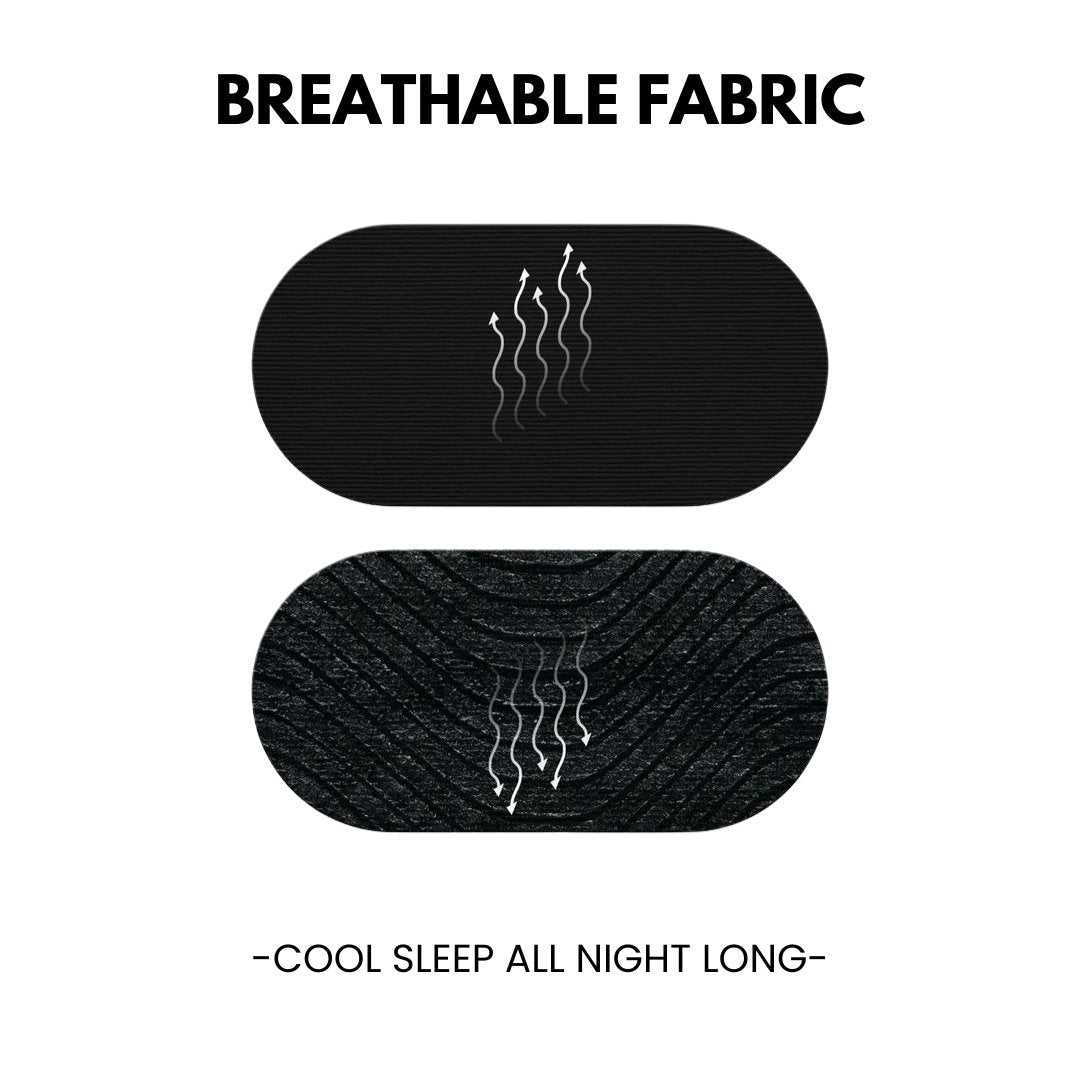
Material. TitanAir strips are made from a bamboo-silk fabric rather than the stiff plastic-and-fabric construction of typical drugstore strips. On the skin it feels softer and more breathable -- closer to a silk bandage than a hardware-store adhesive. For anyone who's bounced off cheaper strips because they felt harsh, the material is the first thing you notice.
Hold. The adhesive is tuned to hold through a full night -- side sleeping, pillow adjustment, the occasional face-plant -- without the aggressive grab that leaves marks. It stays put where it counts and comes off clean.
Comfort on removal. A skin-friendly adhesive means clean removal without the residue, redness, or skin-tugging that drives people away from strips entirely. The best strip is the one you don't dread putting on -- comfort is what turns it from a one-week experiment into a nightly habit.
TitanAir isn't the cheapest strip on the shelf, and we won't pretend otherwise -- a drugstore box costs less per night. What you're paying for is material quality and consistency, the things that determine whether you'll still be using it in a month. For the full rundown, see the TitanAir nasal strips overview.
Nasal Strips + Mouth Tape: The Complete Airway System
A nasal strip solves half the problem. Mouth tape solves the other half. Together they form a complete system for nasal breathing at night, and understanding why is the most valuable idea in this guide.
Here's the logic. A strip opens your nose and lowers the resistance of breathing through it. But your body takes the path of least resistance, and if your lips fall apart while you sleep, your mouth becomes an even easier path than your freshly opened nose. Air detours through the mouth, and you're right back to snoring, dry mouth, and fragmented sleep -- your open nose sitting there unused all night.
Mouth tape closes that loophole. A small, gentle strip over the lips encourages them to stay together, so the airway you opened is the airway your body actually uses. The strip makes nasal breathing easy; the tape makes it the only option. That combination -- open nose, closed mouth -- is the foundation of better, deeper sleep, a payoff we explore in how mouth tape supports deep sleep.
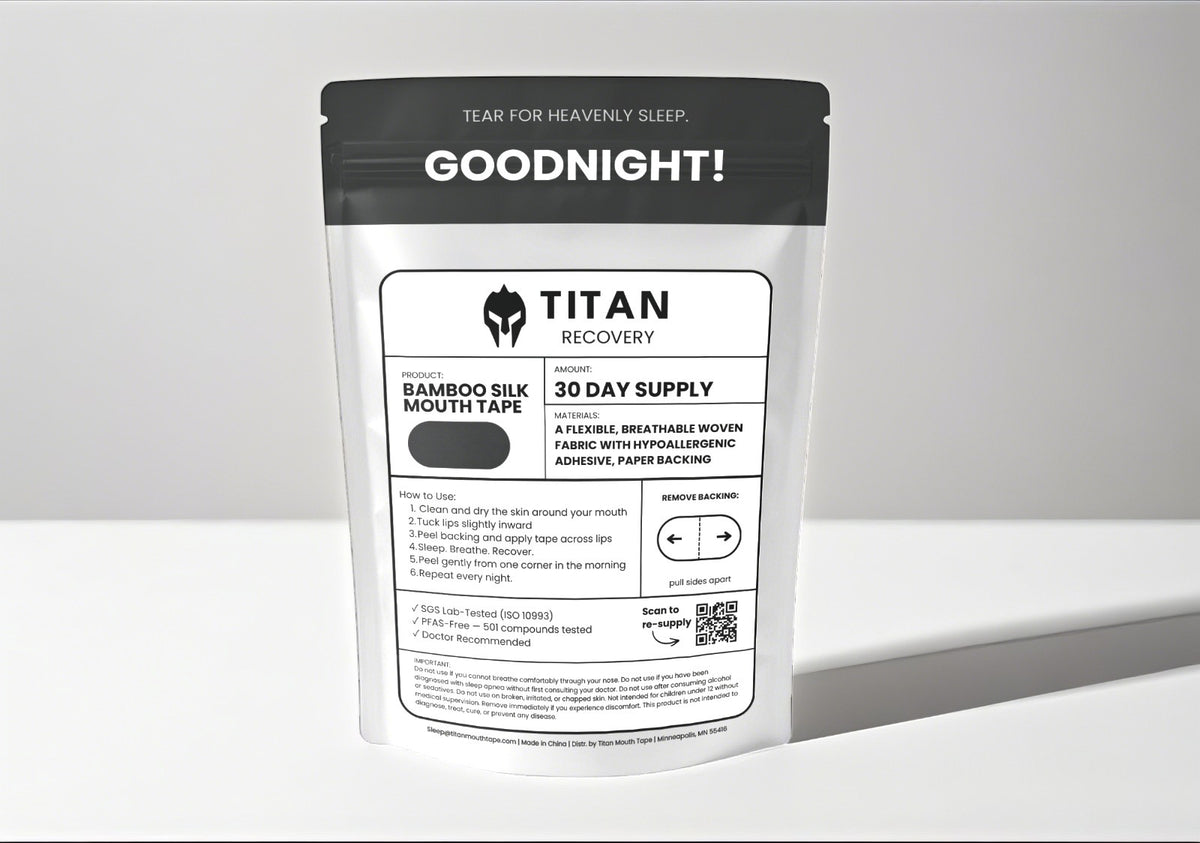
TitanAir and Titan Recovery mouth tape were designed as a pair -- same skin-friendly adhesive approach, same premium-material philosophy -- and the Deep Sleep Bundle packages them together at a lower per-unit cost than buying each alone. You can pair any strip with any mouth tape and get the benefit, but this is the only pairing built from the ground up to work as one system. For how these habits stack with everything else that matters, start with how to sleep better.
Frequently Asked Questions
Do nasal strips actually work, or is it a placebo?
For the right person, the effect is mechanical and real -- the strip physically widens the nasal valve and lowers airflow resistance, which you can feel on the first night. It won't help if your blockage is deeper in the airway or structural. We cover the evidence in detail in do nasal strips work.
Can I wear a nasal strip every night?
Yes. Nasal strips are designed for nightly use, and there's no dependency or rebound effect from using one regularly. The main thing to watch is your skin -- start with a clean, dry nose and remove the strip gently, and most people can wear one every night without irritation.
Will a nasal strip stop my snoring?
It depends on where your snoring comes from. Snoring driven by a narrowed nose often improves noticeably. Snoring from the soft palate or throat won't respond to a nasal strip, because the strip doesn't reach that far. See the best nasal strips for snoring for the full breakdown.
Do I need mouth tape too, or is a strip enough?
If you're purely a nasal breather who just needs a little more airway, a strip alone may be all you need. But if your mouth falls open at night, a strip alone leaves the easier path -- your mouth -- wide open. Pairing it with mouth tape is what turns an open nose into actual nasal breathing all night.
Are nasal strips safe for a deviated septum or CPAP?
A strip is safe to try with a mild deviated septum and can help you breathe more evenly, though it won't correct the deviation. With CPAP, a strip is a comfort layer used alongside your prescribed therapy, never a replacement for it. See nasal strips for a deviated septum for more.
The Bottom Line
A nasal strip is one of the simplest, fastest sleep upgrades you can make -- a small adhesive band that opens the narrowest point of your airway and lowers the work of every breath. It helps snorers, congested and mildly deviated noses, athletes, side sleepers, and CPAP users, and when it's right for you, it works on the first night. It won't fix a severe obstruction and it is not a treatment for sleep apnea -- know those limits and it becomes a genuinely useful tool.
TitanAir earns its place by getting the details right -- bamboo-silk comfort, all-night hold, and clean removal -- so it becomes a habit instead of an experiment. And paired with Titan Recovery mouth tape, it stops being half a solution and becomes a complete airway system: nose open, mouth closed, breathing the way your body was built to at night. That's the whole guide in one sentence.
Doctor Recommended: "As a maxillofacial surgeon and dentist, I recommend Titan Mouth Tape. Nasal breathing during sleep is essential for airway health and deep restorative rest. Titan's bamboo silk design is the most comfortable and effective mouth tape I have tested. If you struggle with snoring, dry mouth, or poor sleep quality, this is the simplest change you can make for your health." — Dr. Francois P., MD, DDS — Maxillofacial Surgeon
Lab-Tested Safety: Titan's adhesive is independently tested to ISO 10993 medical device standards. Non-toxic (95% cell viability). Non-allergenic (0% reaction rate). Non-irritating (score 0.0/8.0). PFAS-free — 501 compounds tested, zero detected. See full test results →
Try the complete system tonight. Titan Mouth Tape (bamboo silk, SilkSeal™ adhesive) + TitanAir Nasal Strips. Free shipping. 30-night Better Sleep Guarantee. Shop Titan Mouth Tape → · Shop TitanAir Nasal Strips →