
Nasal Strips for Side Sleepers: One Blocked Nostril Fix
Share
If you sleep on your side and keep waking up with one nostril completely blocked, nasal strips for side sleepers are one of the simplest fixes available. The short version: lying on one side reliably congests the "down" nostril, and an external nasal strip holds the nasal valve open against that pressure so you keep breathing through your nose all night. Side sleeping isn't the problem — it's actually the better position for breathing. The single blocked nostril is a solvable side effect.
Almost every side sleeper has noticed it. You settle onto your left side, and within minutes the left nostril feels stuffy. Roll to your right, and the congestion follows the pillow. It isn't your imagination, and it usually isn't a cold — it's a predictable interaction between your body's natural rhythm and gravity.
Why Side Sleeping Blocks the "Down" Nostril
Two things happen at once when you lie on your side, and they stack.
The nasal cycle. Your nose doesn't breathe equally through both nostrils. Throughout the day, one side carries most of the airflow while the other partially closes down, and the two swap roles every few hours. This is the nasal cycle, and it's completely normal — most people never notice it because there's always one open nostril doing the work. You only feel it when something forces your attention to the quieter side.
Gravity and blood pooling. When you lie on your side, blood pools in the lower half of your body by gravity — including the lower side of your nose. The tissue lining your nostrils, called the turbinates, is spongy and full of blood vessels. On the "down" side, those turbinates swell as blood collects in them, narrowing the airway on exactly the nostril that's already pressed toward the pillow.
Put those together and the result is consistent: the down nostril congests while the up nostril stays clear, which is why the blocked side switches when you roll over. It's also why side sleepers so often wake around 3 or 4 AM feeling like they can only breathe through half their nose — you've been lying on that side long enough for the turbinate to fully swell.
For most people this is a minor annoyance. But if you already have baseline congestion — allergies, a mild deviated septum, a dry bedroom — the extra swelling can tip a slightly restricted nostril into a fully blocked one. That's when you start mouth breathing without realizing it, which is what drags down your sleep quality.
How Nasal Strips Hold the Airway Open
A nasal strip is an external dilator. It sits across the bridge of your nose, and spring-loaded bands inside the strip pull outward on the sidewalls of your nose, physically lifting the nasal valve open. The nasal valve is the narrowest part of your airway — the point where most of your breathing resistance lives — so widening it has an outsized effect on how freely air moves.
For side sleepers this matters because the strip works mechanically. The turbinate on the down side swells from the inside, but the strip pulls the nostril open from the outside. It doesn't stop the blood from pooling — it holds the airway wide enough that the swelling can't close it off, so you keep a usable channel through the down nostril all night.
Unlike a decongestant spray, which shrinks the tissue chemically and stops working after a few nights, a strip does nothing chemical at all — it's a purely physical lift, so it works the same on night one as on night one hundred. It also sits on the bridge of your nose, above the part of your face that touches the pillow, so it isn't fighting pillow friction the way mouth tape edges can. For a deeper look, see whether nasal strips actually work and how the spring-band design creates lift.
Side Sleeping Is Still the Better Position
Here's the part that surprises people: the blocked nostril is worth solving because side sleeping is genuinely good for your breathing. Don't switch to your back to avoid it — you'd be trading a small problem for a bigger one.
Back sleeping is worse for snoring and apnea. When you lie on your back, gravity pulls your jaw and tongue straight down toward your throat. The tongue base can fall backward and partially block the airway — a leading cause of snoring and a major aggravator of obstructive sleep apnea. This is why doctors routinely tell snorers and apnea patients to sleep on their side.
Side sleeping keeps the throat clearer. On your side, the tongue and soft tissues fall sideways rather than straight back, so the throat airway stays more open and most people snore less. If snoring is part of the picture, side sleeping is already helping you.
So the goal isn't to abandon side sleeping — it's to keep the throat benefit while fixing the one nasal downside that comes with it. That's exactly the gap a nasal strip fills.
Practical Tips for Side Sleepers
A nasal strip does the heavy lifting, but a few habits make the whole setup work better.
Alternate sides during the night. If you naturally shift from one side to the other, that's a feature, not a bug — it lets the congested down side drain and re-open while the other side takes a turn.
Raise your head slightly. Elevating your head reduces how much blood pools in the turbinates, meaning less swelling on the down side. Side sleepers generally need a taller, firmer pillow than back sleepers to fill the shoulder-to-head gap and keep the airway straight; for severe congestion, raising the whole head of the mattress a few inches with a wedge works even better.
Keep the bedroom humidified. Dry air thickens mucus and irritates the turbinates. Keeping the room around 40 to 50 percent humidity keeps nasal tissue calmer. The fundamentals of better sleep compound with everything else here. The highest-leverage move, though, gets its own section below.
Why the Strip-Plus-Tape Combo Works So Well for Side Sleepers
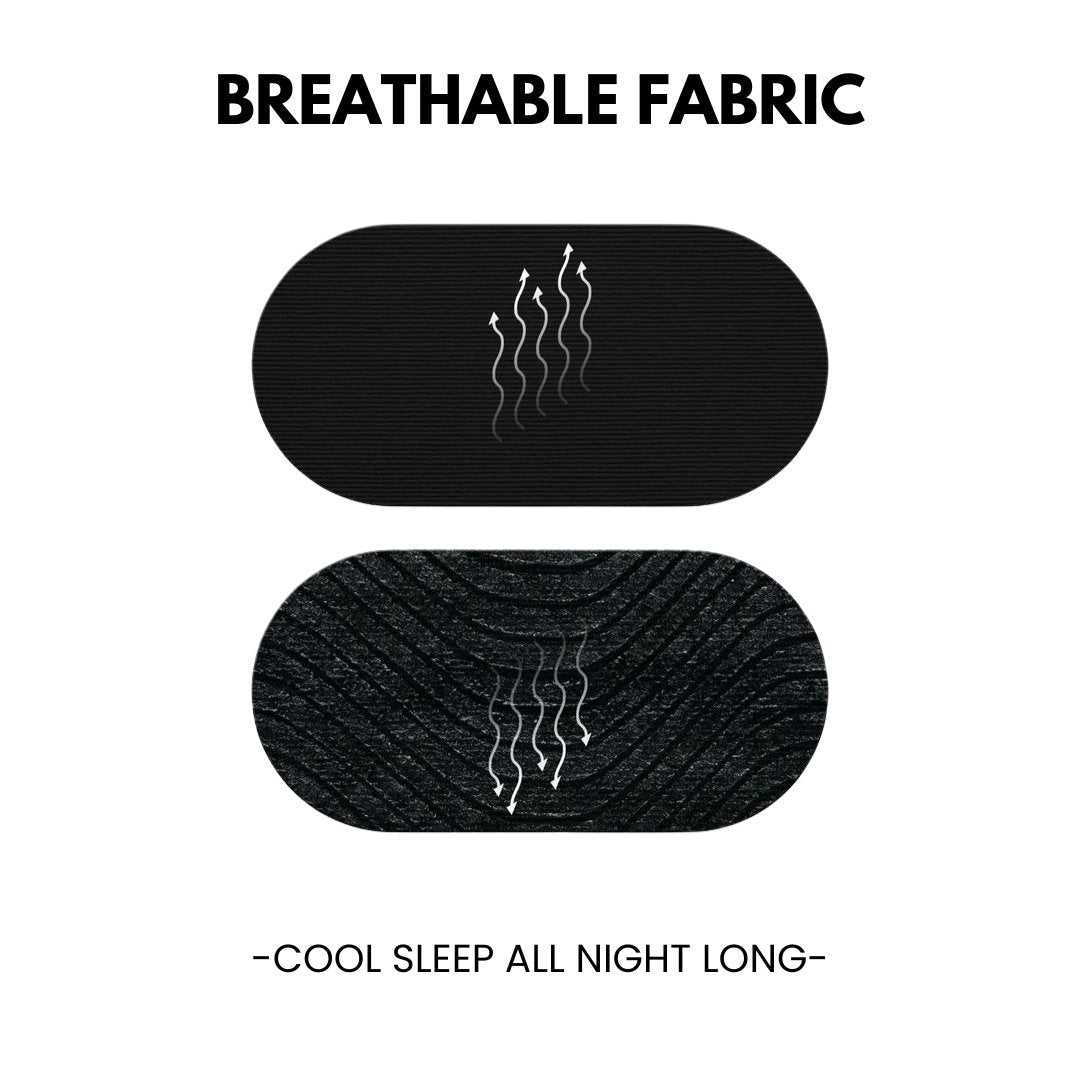
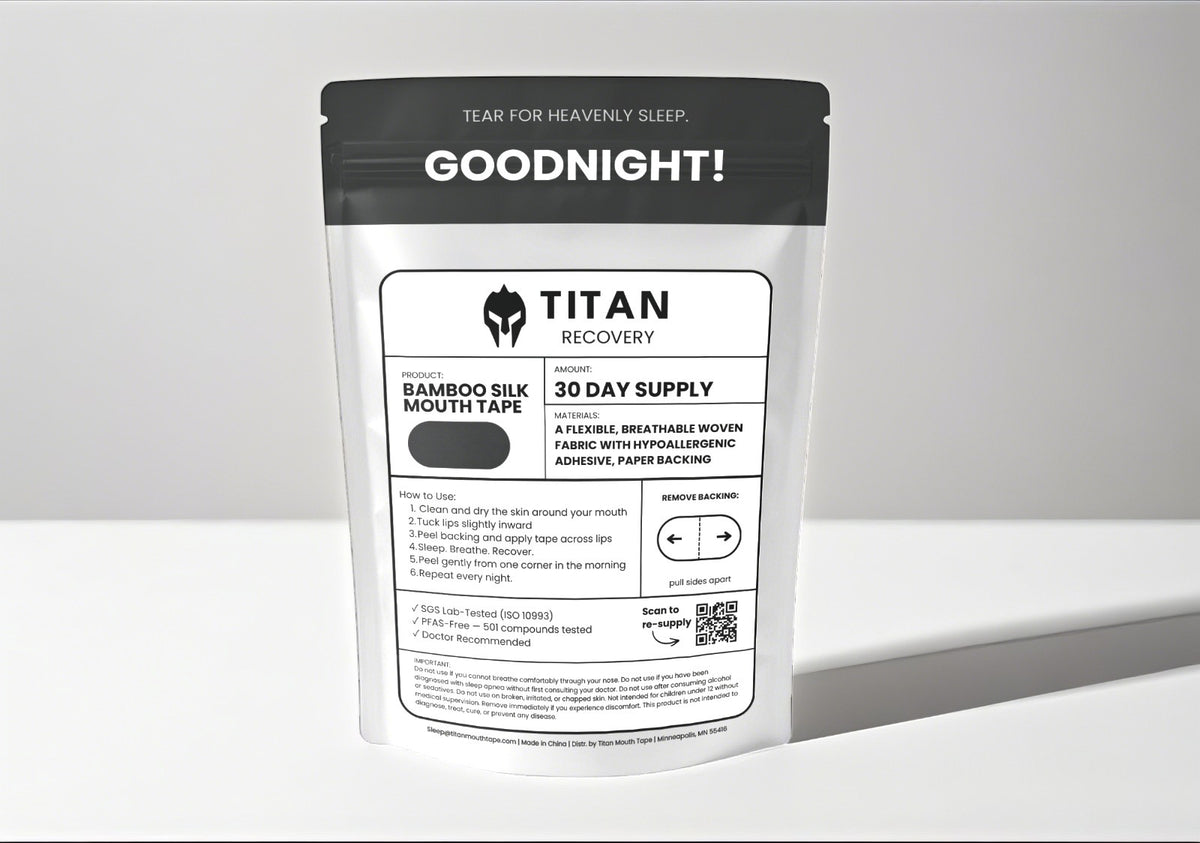
A nasal strip opens the nose. But if your mouth still falls open during deep sleep — which it does for most people once the jaw muscles relax — you'll default to mouth breathing anyway, and the open nose goes to waste. That's where Titan Mouth Tape comes in: it keeps your lips gently sealed so your body actually uses the nasal airway the strip is holding open. The strip clears the nose, the tape closes the mouth, and together they lock in nasal breathing for the whole night.
Side sleepers get an extra benefit from the pairing. Some worry that taping the mouth shut leaves them with only one working nostril if the down side blocks up. The nasal strip is the answer — it keeps that nostril open enough that you always have both available, which makes mouth taping comfortable rather than claustrophobic.
If you want both, the Deep Sleep Bundle packages the strips and tape at a better per-unit price than buying them separately — the setup we'd recommend for any side sleeper starting from scratch.
Where TitanAir Fits for Side Sleepers
TitanAir Nasal Strips were built for all-night, every-night wear — exactly what the side-sleeper congestion problem demands. The blocked-nostril effect doesn't hit until you've been on one side for a few hours, so a strip that loses tension by midnight (the common failure of cheap pharmacy strips) solves nothing. The whole point is to still be holding the down nostril open at 4 AM.
Two design details matter here. The dual-band spring system creates more lifting force than single-band drugstore strips — what you need to counteract turbinate swelling rather than just a stuffy-nose tickle. And the medical-grade adhesive on a bamboo silk backing is formulated for eight-plus hours of continuous wear, so it holds through the tossing, turning, and warmth of a full night on your side. Sitting high on the nasal bridge, above the pillow contact zone, it doesn't peel off — you apply it once and it's still working when you wake, on whichever side you ended up on.
Frequently Asked Questions
Why does only one nostril get blocked when I sleep on my side?
It's your natural nasal cycle plus gravity. Your body always routes more air through one nostril at a time, and when you lie on your side, blood pools in the lower turbinate and swells the tissue on the down side. So the nostril closest to the pillow congests while the upper one stays clear, and the blocked side switches when you roll over. A nasal strip holds the down nostril open enough that the swelling can't close it off.
Do nasal strips stay on if I sleep on my side?
Yes. The strip sits on the bridge of your nose — the high, dry part that doesn't press into the pillow — so side sleeping doesn't create the friction that peels it. The bigger factor is adhesive quality. TitanAir strips use a medical-grade adhesive rated for eight-plus hours, so they hold through position changes and warm rooms. Clean, dry skin at application makes the bond even more reliable.
Is it bad to sleep on my side if my nose gets blocked?
No — side sleeping is generally the better position, because it keeps your tongue and soft palate from falling back into your throat the way they do on your back, which means less snoring and less airway obstruction. The one-blocked-nostril issue is a minor, fixable side effect. Keep sleeping on your side and use a nasal strip to hold the down nostril open rather than switching to your back and creating a worse throat problem.
What's the best sleep position for nasal breathing?
Side sleeping with your head slightly elevated is the sweet spot for most people. It keeps the throat airway open (better than back sleeping) while a raised pillow or elevated bed head reduces the nasal blood pooling that causes down-side congestion. Add a nasal strip to hold the nose open and mouth tape to keep breathing routed through it, and you've optimized all three factors — throat, nose, and mouth.
Will a nasal strip help if I have allergies or a deviated septum?
For mild to moderate cases, yes. A strip can't cure allergies or straighten a septum, but it opens the nostrils mechanically from the outside, partially counteracting allergy swelling and compensating for a narrowed passage. Side sleepers with either condition feel the down-nostril blockage more intensely, so the strip's lift often makes the biggest difference for exactly this group. If congestion is severe or constant, see an ENT.
The Bottom Line
The blocked nostril from side sleeping isn't a reason to stop — it's a predictable result of the nasal cycle plus gravity pooling blood in the down-side turbinate. Side sleeping is still the better position for your airway, keeping your throat clearer and your snoring lower than back sleeping. The only thing to fix is that one congested nostril, and a nasal strip does it directly: it holds the nasal valve open from the outside so the down nostril stays usable even as the tissue swells. Add a higher pillow, a humidified room, and the freedom to roll between sides, and the problem largely disappears.
For side sleepers, TitanAir Nasal Strips are built for the all-night wear this requires — strong dual-band lift and adhesive that lasts until morning. Start with a 30-day supply for $34.95, or get the full system with the Deep Sleep Bundle so the open nose the strip creates doesn't go to waste when your mouth falls open at 3 AM.
Doctor Recommended: "As a maxillofacial surgeon and dentist, I recommend Titan Mouth Tape. Nasal breathing during sleep is essential for airway health and deep restorative rest. Titan's bamboo silk design is the most comfortable and effective mouth tape I have tested. If you struggle with snoring, dry mouth, or poor sleep quality, this is the simplest change you can make for your health." — Dr. Francois P., MD, DDS — Maxillofacial Surgeon
Lab-Tested Safety: Titan's adhesive is independently tested to ISO 10993 medical device standards. Non-toxic (95% cell viability). Non-allergenic (0% reaction rate). Non-irritating (score 0.0/8.0). PFAS-free — 501 compounds tested, zero detected. See full test results →
Try the complete system tonight. Titan Mouth Tape (bamboo silk, SilkSeal™ adhesive) + TitanAir Nasal Strips. Free shipping. 30-night Better Sleep Guarantee. Shop Titan Mouth Tape → · Shop TitanAir Nasal Strips →