TitanAir Nasal Strips Review: Full Breakdown
Share
TitanAir Nasal Strips were designed to work with Titan Mouth Tape as a complete breathing system -- but they also stand on their own as one of the strongest, most comfortable nasal strips available. Here's an honest breakdown of what they get right, where the complaints land, and who should actually buy them.
What TitanAir Nasal Strips Actually Are
TitanAir Nasal Strips are external nasal dilators -- no drugs, no medication. You stick one across the bridge of your nose before bed, and embedded spring-loaded bands lift your nostrils open from the outside, widening the nasal valve and reducing resistance to airflow. The effect is immediate.
The spring-loaded design. TitanAir uses a dual-band spring system that creates more lifting force than the single-band approach in most pharmacy strips. The bands hold tension for eight or more hours without relaxing -- the difference between a strip that opens your nose at 10 PM and still opens it at 6 AM versus one that loses tension by midnight.
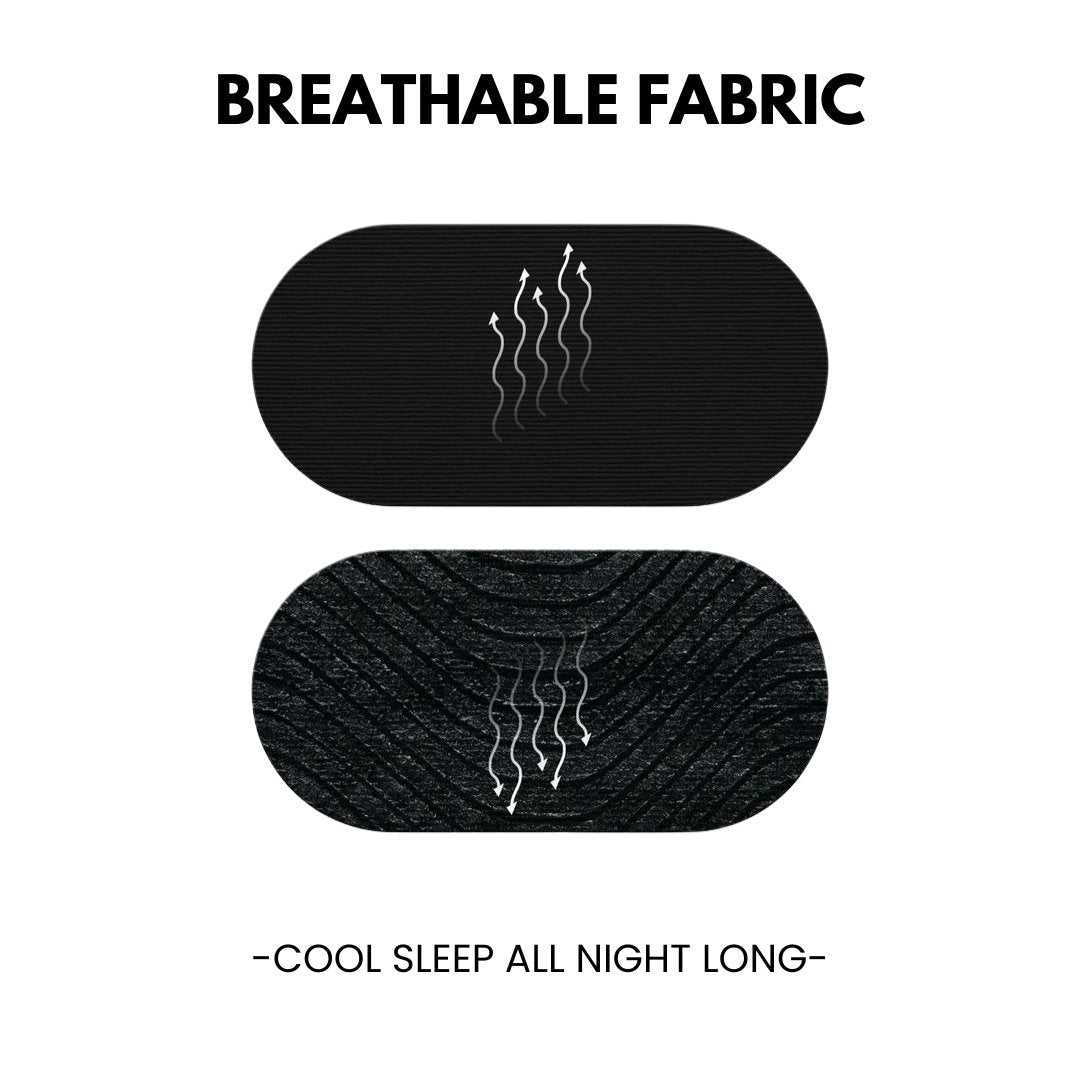
The adhesive. Medical-grade, hypoallergenic, bonded to a bamboo silk backing. Strong enough to hold through a full night -- tossing, turning, sweating -- but peels off cleanly in the morning without residue or pulling skin. People with sensitive skin report fewer reactions compared to pharmacy-brand strips.
Sizing. TitanAir ships in a universal size that works for most adult noses. People with very narrow or very wide nasal bridges may need to experiment with placement -- centering the strip slightly higher or lower on the bridge can make a meaningful difference in how much the nostrils open.
How TitanAir Compares to Pharmacy Strips
If you've used Breathe Right or any of the generic nasal strips from the drugstore, you have a reference point. Pharmacy strips are designed for temporary relief -- a stuffy nose, a few hours of easier breathing. TitanAir is built for all-night, every-night use.
Stronger spring tension. TitanAir's dual-band system creates noticeably more lifting force than a standard Breathe Right strip. For people with moderate nasal restriction -- a mildly deviated septum, chronic congestion, or naturally narrow nostrils -- that extra tension is the difference between partial relief and actually breathing freely.
Better adhesive durability. Many users report that Breathe Right strips start peeling at the edges two or three hours in, especially in warm rooms or for people who sweat during sleep. TitanAir's adhesive is formulated for eight-plus hours of continuous wear.
Comfort over time. The bamboo silk backing is softer than the plastic or rigid fabric on most pharmacy strips. When you're wearing something on your nose for eight hours every night, material matters. The bamboo silk conforms without digging in.
The trade-off: price. A 30-count box of Breathe Right runs about $15-18. A 30-day supply of TitanAir is $34.95 -- roughly double. If you use nasal strips occasionally for a cold, pharmacy strips are fine. If you use them every night, the differences in tension, adhesive durability, and comfort compound over months.
What Customers Love
The strength. The most common positive comment. People describe TitanAir as "actually opening" their nose, as opposed to strips that provide a mild lift they can barely feel. For snorers, this is the detail that matters most -- a strip that doesn't open enough doesn't solve the problem.
The comfort. The bamboo silk backing gets mentioned frequently -- soft, flexible, non-irritating. Customers with sensitive skin who experienced redness or rashes from other strips say TitanAir doesn't cause the same reaction.
Stays on all night. This is the baseline requirement that most pharmacy strips fail. TitanAir holds from bedtime to morning. Side sleepers, hot sleepers, and restless sleepers report the strip stays in place. Losing a nasal strip at 2 AM means half a night of benefit -- TitanAir eliminates that problem for most users.
Partner feedback. A recurring theme: the customer bought the strips for themselves, and their partner noticed the difference first. Less snoring, quieter breathing. Sleep is shared space.
What Customers Complain About
No honest review skips the negatives.
The price. The most common complaint, and it's fair. At $34.95 for a 30-day supply, TitanAir costs more than pharmacy alternatives. The longer-supply bundles bring the per-strip cost down -- a 360-day supply is $272.95, about $0.76 per strip. Subscribe and Save takes an additional 11% off. TitanAir will always cost more than the pharmacy option. Whether the performance difference justifies the premium depends on how you use them -- for nightly users, most say it does.
Sizing limitations. One universal size. Most people find it works. Some don't. People with very small noses say the strip extends too far; people with very wide nasal bridges say it doesn't cover enough. A second size option would help.
Availability. TitanAir is sold exclusively through the Titan Recovery website. No drugstores, no Amazon. For people who want to try a single strip before committing to a box, the lack of retail availability is a barrier.
Who TitanAir Nasal Strips Are Best For
Not every person needs a nasal strip. Nasal strips work when the restriction is in your nose -- if you breathe freely through your nose without effort, you probably don't need one. But for certain groups, TitanAir strips make a clear difference.
Snorers. Snoring often starts with nasal restriction. When the nose can't move enough air, the body opens the mouth, the tongue drops back, and the airway narrows. A nasal strip that holds open the nasal valve reduces mouth compensation. TitanAir's stronger tension means more airflow before the body defaults to mouth breathing. Pair it with the right approach to snoring and the results compound.
Athletes. Nasal breathing during exercise improves oxygen uptake efficiency. The stronger lift from TitanAir means less resistance per breath -- at high output, that reduction compounds over a workout or race.
People with a deviated septum. A deviated septum narrows one side of the nasal passage, sometimes both. External strips can't straighten the septum, but they can open the nostrils wide enough to partially compensate. For mild to moderate deviation, TitanAir provides a meaningful nightly improvement in airflow.
People with chronic congestion. Allergies or inflammation can cause nightly congestion that worsens when you lie down. A nasal strip counteracts swelling mechanically, opening the passage from the outside. TitanAir's stronger tension provides more counterforce.
CPAP users. Some CPAP users wear a nasal strip under their mask to keep the passages open and reduce the pressure required for adequate airflow. Lower resistance at the nose means the machine can run at a lower setting, improving comfort and mask seal.
Pairing TitanAir with Titan Mouth Tape
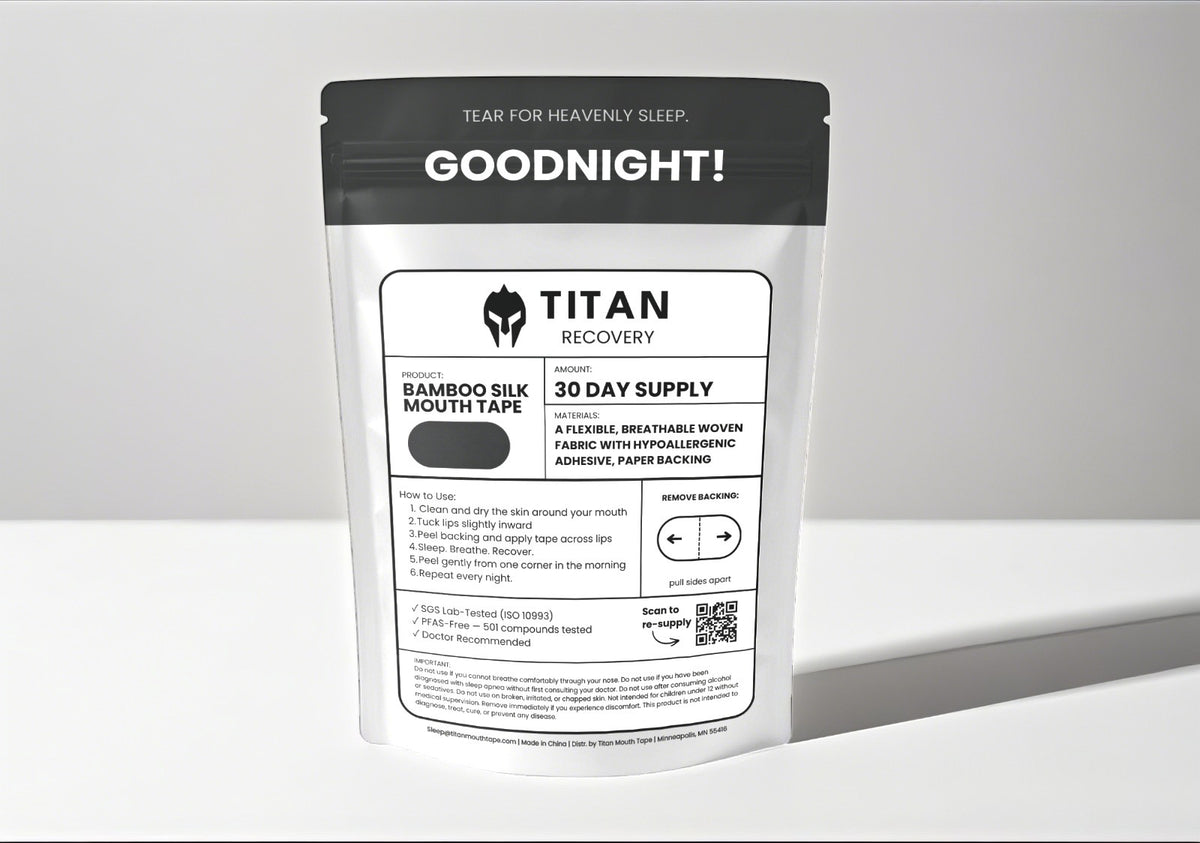
TitanAir was designed to work as half of a system. Nasal strips and mouth tape solve different problems. The strip opens the nose so air flows freely. Mouth tape keeps the mouth shut so the body actually uses the nose instead of defaulting to mouth breathing when the jaw relaxes during sleep.
Together, they create a complete nasal breathing loop. Open the nose. Close the mouth. Every breath flows through the nasal passages, where it's filtered, warmed, humidified, and infused with nitric oxide.
The Deep Sleep Bundle packages both products at a better per-unit price than buying each separately. It's the recommended starting point for anyone new to nasal breathing optimization -- the full system from night one.
If you already breathe easily through your nose and you're only interested in the strip for congestion or athletic use, TitanAir works perfectly well on its own.
Frequently Asked Questions
Are TitanAir Nasal Strips reusable?
No. TitanAir strips are single-use. After a full night of wear, the adhesive bond and spring tension are spent. Reusing a strip means weaker lift and unreliable adhesion. Each strip is individually sealed and ready to apply.
How do TitanAir strips compare to internal nasal dilators?
Internal dilators (like Mute or Intake) sit inside the nostrils and push outward. External strips pull from the outside. Both widen the nasal valve, but external strips like TitanAir feel more natural for most people -- apply and forget. Internal dilators are reusable, which gives them a cost advantage over time, but they require cleaning and many people find them uncomfortable enough to stop within a few weeks.
Can I wear TitanAir strips during exercise?
Yes. The adhesive holds during runs, gym sessions, and outdoor training. The strip's tension opens the nasal passages wider, which can reduce perceived breathing effort during high-intensity work. Nasal breathing during cardio takes adjustment, but the strip makes the transition easier by reducing airway resistance.
What's the best TitanAir supply size for a first purchase?
The 30-day supply ($34.95) is the lowest-commitment way to try them. It gives you a full month to evaluate fit, comfort, and effectiveness. If you already know you want nasal strips as part of your nightly routine, the 90-day supply ($78.95) drops the per-strip cost and saves you from reordering every month. The 180-day ($146.95) and 360-day ($272.95) supplies bring the cost down further for committed users. Subscribe and Save takes an additional 11% off any size.
The Bottom Line
TitanAir Nasal Strips do what they claim: open the nasal passages with more force and better adhesion than pharmacy alternatives, and hold that opening for the entire night. Stronger tension, longer-lasting adhesive, more comfortable backing. You feel the difference the first time you put one on.
The price premium is real. TitanAir costs more than Breathe Right. For occasional use, that premium is hard to justify. For nightly use -- paired with Titan Mouth Tape, or used to manage chronic congestion or a deviated septum -- the performance gap makes the cost worthwhile. A strip that falls off at 2 AM or loses tension by midnight isn't saving you money. It's giving you half a product.
If you want the complete system from night one, start with the Deep Sleep Bundle. If you want to try the strips alone, the 30-day supply is a full month to evaluate. You'll know within a few nights whether TitanAir is the right fit.
Doctor Recommended: "As a maxillofacial surgeon and dentist, I recommend Titan Mouth Tape. Nasal breathing during sleep is essential for airway health and deep restorative rest. Titan's bamboo silk design is the most comfortable and effective mouth tape I have tested. If you struggle with snoring, dry mouth, or poor sleep quality, this is the simplest change you can make for your health." — Dr. Francois P., MD, DDS — Maxillofacial Surgeon
Lab-Tested Safety: Titan's adhesive is independently tested to ISO 10993 medical device standards. Non-toxic (95% cell viability). Non-allergenic (0% reaction rate). Non-irritating (score 0.0/8.0). PFAS-free — 501 compounds tested, zero detected. See full test results →
Try the complete system tonight. Titan Mouth Tape (bamboo silk, SilkSeal™ adhesive) + TitanAir Nasal Strips. Free shipping. 30-night Better Sleep Guarantee. Shop Titan Mouth Tape → · Shop TitanAir Nasal Strips →