Phone Before Bed: What Screens Do to Your Sleep
Share
You know you shouldn't be on your phone before bed. Everyone knows. You've read the articles, heard the advice, probably told someone else to put theirs down. And then last night, at 11:47 p.m., you were scrolling through something you won't remember today while your body quietly missed its window for deep sleep. No judgment — roughly 70 percent of adults use a phone before bed, and most of them know they shouldn't. The gap between knowing and doing is enormous because phones are engineered to hold attention, and the bedroom is the last place you're still holding yours.
Here's what's actually happening when you bring a screen into your last hour of the day — and why putting the phone down is necessary but not sufficient if you want the sleep you're losing back.
The Blue Light Problem Is Real, but It's Not the Whole Story
The most cited reason to avoid screen time before bed is blue light. It's a legitimate concern. Your eyes contain photosensitive cells — called intrinsically photosensitive retinal ganglion cells — that respond specifically to short-wavelength blue light. When those cells detect blue light, they send a signal to the suprachiasmatic nucleus in your brain, which is the master clock that controls your circadian rhythm. That signal says: it's daytime. Stay alert.
The practical result is suppressed melatonin production. Melatonin is the hormone that tells your body it's time to transition into sleep. Research from Harvard Medical School has shown that blue light exposure in the evening can suppress melatonin for roughly twice as long as other light wavelengths and shift the circadian clock by 30 minutes or more. That means even if you put the phone down and close your eyes at your usual time, your body's internal chemistry is running behind. You lie there. You toss. Eventually you fall asleep, but later than your body needed to.
Night mode and blue light filters help — they shift the color temperature toward warmer tones, which reduces the melatonin suppression. But blue light and sleep is only one piece of this. If blue light were the only issue, wearing orange glasses would solve everything. It doesn't, because the light is not the only thing your phone delivers to your brain before bed.
The Dopamine Problem Nobody Talks About Enough
Scrolling — whether it's social media, news, short videos, or even just bouncing between apps — keeps your brain locked in reward-seeking mode. Every swipe is a micro-decision. Every new piece of content triggers a small dopamine response. Your prefrontal cortex stays engaged in evaluation, judgment, and reaction. This is the exact opposite of the mental state your brain needs to fall asleep.
Sleep onset requires your brain to disengage from active processing and shift into a quieter default mode. When you're scrolling, you're asking your brain to do the opposite — stay alert, evaluate novelty, anticipate the next reward. Even if the content itself isn't stressful or stimulating, the act of scrolling is. Your brain doesn't distinguish between "I'm reading something important" and "I'm mindlessly swiping." The reward circuitry fires either way.
This is why night mode doesn't fully fix the problem. You can eliminate every photon of blue light from the screen and your brain is still running a dopamine loop at 11:30 at night. The phone is a stimulation device. Bringing it to bed is like trying to fall asleep while someone taps you on the shoulder every eight seconds with something mildly interesting.
How Screen Time Affects Your Sleep Stages
Delayed sleep onset isn't just annoying — it structurally changes the sleep you get. If your alarm goes off at the same time regardless of when you fell asleep, the hours you lose come disproportionately from the end of the night. And the end of the night is when your longest REM cycles happen.
Here's the math. Say you normally fall asleep at 10:30 and wake at 6:30 — eight hours. Using your phone in bed pushes sleep onset to 11:15. You now get seven hours and fifteen minutes. But the lost forty-five minutes weren't blank space. They held a full sleep cycle's worth of REM sleep and some additional deep sleep time. Your overall sleep quality drops even if you don't feel dramatically different in the morning.
Compounding this, the arousal state from scrolling means the sleep you do get starts shallower. Your first sleep cycle — which normally contains the most deep sleep of the night — gets compressed and diluted. Deep sleep is where physical recovery, immune function, and memory consolidation happen. Less deep sleep means your body does less repair work overnight, and you feel it the next day even if you can't pinpoint exactly why.
The Dose Response: How Much Screen Time Matters
Research on screens before sleep shows a clear dose-response relationship. Thirty minutes of screen use before bed has a measurable effect on sleep onset latency — you take longer to fall asleep. One hour has a larger effect. Two hours produces significant melatonin suppression and extends sleep onset by 20 to 40 minutes in most studies.
A 2019 meta-analysis in Sleep Medicine Reviews found that screen time before bed was associated with shorter sleep duration, poorer sleep quality, and increased daytime sleepiness across age groups. The effect scaled with exposure. People who used screens within 30 minutes of their intended bedtime showed the worst outcomes.
The practical takeaway: a quick glance at your phone to check the time is not the same as 90 minutes of TikTok. But anything beyond a few minutes starts the clock on suppressed melatonin and activated reward circuitry. There isn't a clean cutoff where "this much is fine and this much isn't" — it's a gradient, and less is better.
What Actually Works
The evidence consistently points to one effective intervention: no screens for 30 to 60 minutes before bed. Not reduced screens. Not dimmer screens. No screens. Here's what that looks like in practice:
Charge your phone outside the bedroom. This is the single most effective change most people can make. If the phone isn't within arm's reach, you can't scroll. Buy a $10 alarm clock if that's your excuse for keeping it on the nightstand. The proximity is the problem — when the phone is right there, willpower fails predictably.
Night mode is better than nothing, but don't rely on it. If you're going to use a screen in the last hour — and sometimes you will — at least enable the blue light filter. It reduces one of the two problems. But don't mistake it for a solution. The dopamine issue persists regardless of color temperature.
Set a hard stop. Pick a time — say, 30 minutes before you want to be asleep — and make that the boundary. Not "I'll start winding down" but "the phone goes on the charger in the kitchen at this time." Vague intentions lose to habit. Specific rules have a chance.
If melatonin supplements aren't helping you fall asleep, screen time in the last hour before bed is one of the first things worth examining. You can't supplement your way past a behavior that's actively suppressing the melatonin your body is trying to produce on its own.
Replacing the Scroll: What to Do in That Last Hour
The hardest part of putting the phone down isn't the phone — it's the void. You've trained yourself to fill every quiet moment with stimulation. Take that away and the first few nights feel restless, maybe boring. You need something to replace the scroll, not just the absence of it.
Read a physical book. Not on a Kindle (it's a screen), not on your phone's Kindle app (definitely a screen). A paper book. The reading itself is calming, and the lack of backlight lets your melatonin production proceed normally.
Stretch or do light mobility work. Five to ten minutes of gentle stretching tells your nervous system to downshift. It doesn't need to be yoga. Basic hamstring stretches, hip openers, shoulder rolls. The physical signal matters as much as the mental one.
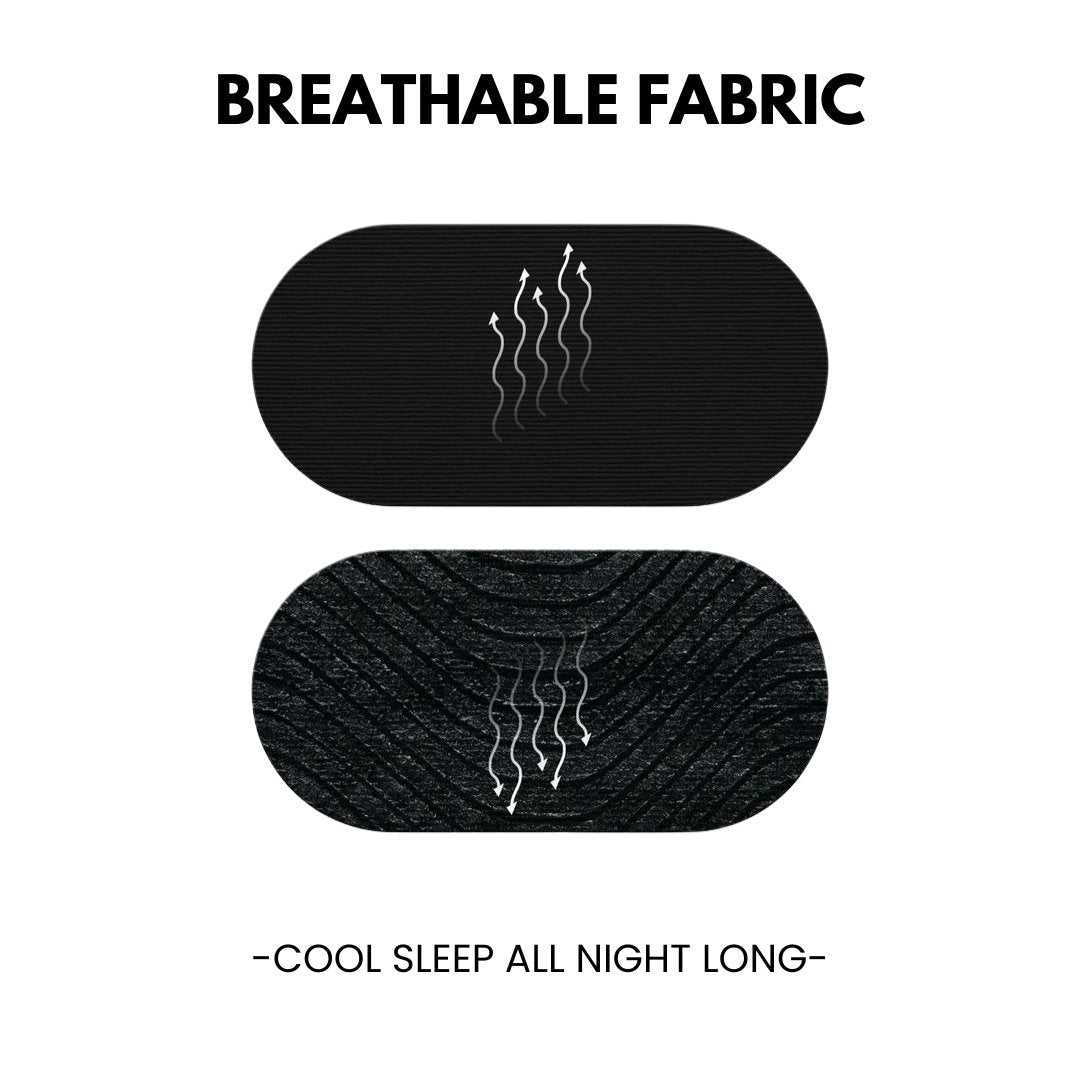
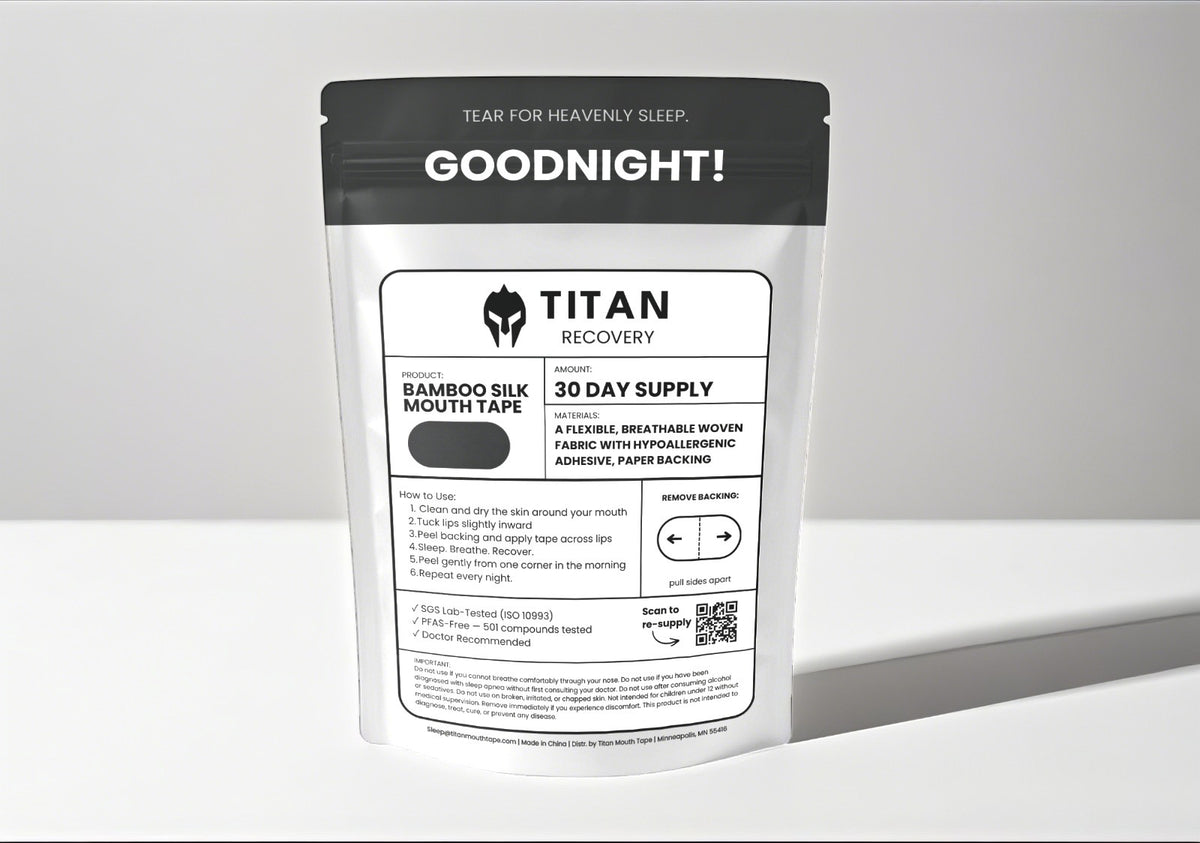
Build a tactile sleep ritual. The best nighttime routines have a physical endpoint — a definitive action that tells your brain the day is over. Applying mouth tape works well for this. It's a deliberate physical act that happens right before you close your eyes. Once the tape is on, you're not getting up to check your phone. You're not going to talk. You're done. The tape becomes a line in the sand between "awake" mode and "sleep" mode, and over time your brain starts associating that action with shutdown.
Pair it with nasal strips if congestion is part of the picture, and you've created a two-step physical ritual that takes thirty seconds and doubles as a breathing optimization for the entire night. The ritual piece matters more than people expect — sleep quality depends on what happens before you close your eyes as much as what happens after.
The Hidden Screen: TV in the Bedroom
Phones get all the attention in this conversation, but the television in your bedroom does the same thing. The blue light output is actually higher because the screen is larger. The dopamine hit from streaming is similar to scrolling — cliffhangers, autoplay, and "just one more episode" keep your brain in evaluation mode well past when it should be shutting down.
The television has one advantage over the phone: it's easier to fall asleep with it on because you can close your eyes and just listen. But that's not actually an advantage. Falling asleep with audio stimulation means your brain never fully disengages into the quiet transition state that precedes deep sleep. You fall asleep faster, but the sleep you get is worse — more fragmented, less restorative, with reduced time in the deep stages your body needs most.
If the TV is your wind-down tool, consider whether it's actually helping or just masking the discomfort of being alone with your thoughts for twenty minutes. That discomfort is temporary. The sleep debt is cumulative.
Frequently Asked Questions
How long before bed should I stop using my phone?
The minimum effective threshold is 30 minutes, but 60 minutes produces significantly better results. Research on screen time before bed shows that melatonin suppression begins recovering within 30 minutes of removing the light source, but the mental arousal from scrolling and content consumption takes longer to resolve. If you're choosing one number, aim for an hour. If that feels impossible, start with 30 minutes and extend it as the habit forms.
Does night mode or a blue light filter actually help?
It helps with the light component but not the stimulation component. Night mode reduces blue light emission, which means less melatonin suppression. That's genuinely useful. But it doesn't address the dopamine loop from scrolling, the mental arousal from content consumption, or the fact that your brain is in active processing mode instead of winding down. Think of night mode as doing half the job. It's worth using when you do need to check your phone, but it's not a substitute for putting the phone down entirely.
Is listening to a podcast or audiobook before bed okay?
Audio-only content is significantly less disruptive than screen-based content because it eliminates the blue light problem entirely and removes the visual stimulation that keeps the brain in evaluation mode. Calm, narrative content — a familiar audiobook, a low-key podcast — can work as part of a wind-down routine. The caveat: stimulating content (true crime, intense drama, political commentary) will keep your brain active regardless of the medium. Choose boring over gripping.
What if I use my phone for white noise or a sleep app?
Using your phone as a white noise machine is fine as long as you set it up, put it face-down or screen-off, and don't touch it again. The problem isn't the device itself — it's the interaction. Set the sleep app, place the phone across the room, and leave it. If you find yourself picking it back up to adjust something, to check notifications, or to "just quickly look at one thing," the phone needs to leave the bedroom entirely. A standalone white noise machine or a smart speaker removes the temptation.
The Bottom Line
Using your phone before bed is one of the most common and most fixable sleep mistakes. The blue light suppresses melatonin. The scrolling keeps your brain wired. The combination delays sleep onset, compresses deep sleep, truncates REM, and leaves you waking up tired from what should have been enough hours.
The fix is straightforward even if it's not easy: no screens for the last 30 to 60 minutes of the day. Charge the phone outside the bedroom. Replace the scroll with something physical — reading, stretching, a sleep ritual that signals to your brain that the day is done. Applying Titan Mouth Tape as the last step of that routine creates a definitive endpoint and ensures the sleep you get is higher quality through nasal breathing all night. Putting down the phone is step one. What you do after you put it down determines whether the sleep you get is actually worth the hours you gave it.
Doctor Recommended: "As a maxillofacial surgeon and dentist, I recommend Titan Mouth Tape. Nasal breathing during sleep is essential for airway health and deep restorative rest. Titan's bamboo silk design is the most comfortable and effective mouth tape I have tested. If you struggle with snoring, dry mouth, or poor sleep quality, this is the simplest change you can make for your health." — Dr. Francois P., MD, DDS — Maxillofacial Surgeon
Lab-Tested Safety: Titan's adhesive is independently tested to ISO 10993 medical device standards. Non-toxic (95% cell viability). Non-allergenic (0% reaction rate). Non-irritating (score 0.0/8.0). PFAS-free — 501 compounds tested, zero detected. See full test results →
Try the complete system tonight. Titan Mouth Tape (bamboo silk, SilkSeal™ adhesive) + TitanAir Nasal Strips. Free shipping. 30-night Better Sleep Guarantee. Shop Titan Mouth Tape → · Shop TitanAir Nasal Strips →