Waking Up Tired After 8 Hours of Sleep
Share
You went to bed at a reasonable hour. You got your eight hours. The room was dark, the phone was charging on the nightstand instead of in your hand, and you didn't even have caffeine after noon. You did everything right — and you still woke up feeling like you hadn't slept at all. If you're waking up tired after 8 hours, you're not lazy, you're not broken, and you're not imagining things. The problem is real. And the answer most people miss is this: the issue isn't how long you sleep. It's how you breathe while you sleep.
Mouth breathing during sleep silently sabotages the quality of every hour you spend in bed. You can log a perfect eight hours on your tracker and still feel drained by 10 a.m. because the sleep you got was fragmented, shallow, and physiologically stressful — even though you never fully woke up.
Sleep Quantity vs. Sleep Quality: The Real Issue
Eight hours is a target, not a guarantee. The number only matters if those hours contain enough deep sleep and REM sleep to actually restore your brain and body. Sleep happens in cycles — roughly 90 minutes each — and each cycle needs to progress through light sleep, deep sleep, and REM without interruption. When something disrupts those transitions, the clock still runs, but the restoration doesn't happen.
Think of it like this: you can sit in a chair at your desk for eight hours and get nothing done if you're interrupted every fifteen minutes. Sleep works the same way. Why am I still tired after sleeping 8 hours? Because your sleep is being interrupted — not by your alarm, not by noise, but by how your body is breathing.
This is why two people can sleep the same number of hours and wake up in completely different states. One person's eight hours included four to five full, unbroken cycles with healthy amounts of deep and REM sleep. The other person's eight hours were fractured by dozens of micro-arousals they don't remember, and their deep sleep was cut in half. The difference between those two nights often comes down to one thing: whether the mouth was open or closed.
How Mouth Breathing Fragments Your Sleep
When you breathe through your mouth during sleep, the physiological consequences run deeper than a dry throat. Mouth breathing activates your sympathetic nervous system — the fight-or-flight side. That's the opposite of what your body needs during sleep, when the parasympathetic (rest-and-recover) system should be running the show.
Sympathetic activation raises your heart rate, increases cortisol output, and keeps your nervous system on low-level alert. Your body interprets the breathing pattern as mild stress. It responds accordingly — lighter sleep, faster heart rate, less time in the deep restorative stages. You're technically asleep, but your body never fully relaxes into the states where real recovery happens.
Mouth breathing also reduces the efficiency of gas exchange in your lungs. Nasal breathing produces nitric oxide, a molecule that helps oxygen transfer into your bloodstream more effectively. Bypass the nose, and your blood oxygen levels dip slightly — often enough to trigger micro-arousals where your brain briefly surfaces toward wakefulness to correct the problem. You don't remember these. They don't show up as "awake" on your sleep tracker. But they fragment your sleep architecture just the same, and they're a major reason people are sleeping enough but still tired.
The result is a night that looks fine from the outside — eight hours, minimal tossing — but feels terrible from the inside. Your deep sleep percentage drops. Your REM cycles get truncated. Your heart rate variability, a reliable marker of recovery, stays suppressed. And you wake up wondering what's wrong with you.
Signs That Mouth Breathing Is Your Problem
Most mouth breathers don't know they're mouth breathing. You're asleep when it happens, and the symptoms get chalked up to other causes. Here's what to look for:
Dry mouth or sore throat in the morning. If you wake up reaching for water before your feet hit the floor, your mouth was open all night. Saliva evaporates when air flows across oral tissue for hours. Dry mouth in the morning is the most reliable indicator of nighttime mouth breathing.
Snoring. You may not hear it yourself, but if a partner has mentioned it — or if you've noticed it on a sleep recording — snoring is almost always a mouth-breathing issue. The vibration happens because the airway is partially obstructed, and mouth breathing makes that obstruction worse.
Morning headaches. Reduced oxygen efficiency from mouth breathing can leave you with a dull headache that fades within an hour of waking. If you're reaching for ibuprofen before breakfast, your breathing during sleep deserves attention.
Brain fog and poor focus in the first half of the day. When deep sleep is compromised, cognitive function takes the hit. That groggy, can't-think-straight feeling that persists even after coffee is a hallmark of poor sleep quality despite adequate duration. The connection between breathing quality and deep sleep is direct — less deep sleep means less cognitive restoration overnight.
Feeling unrested no matter how long you sleep. If sleeping nine or ten hours doesn't fix the problem — if you still feel heavy and sluggish — duration isn't the variable that needs to change. Quality is.
The Fix: Keep Your Airway Optimized
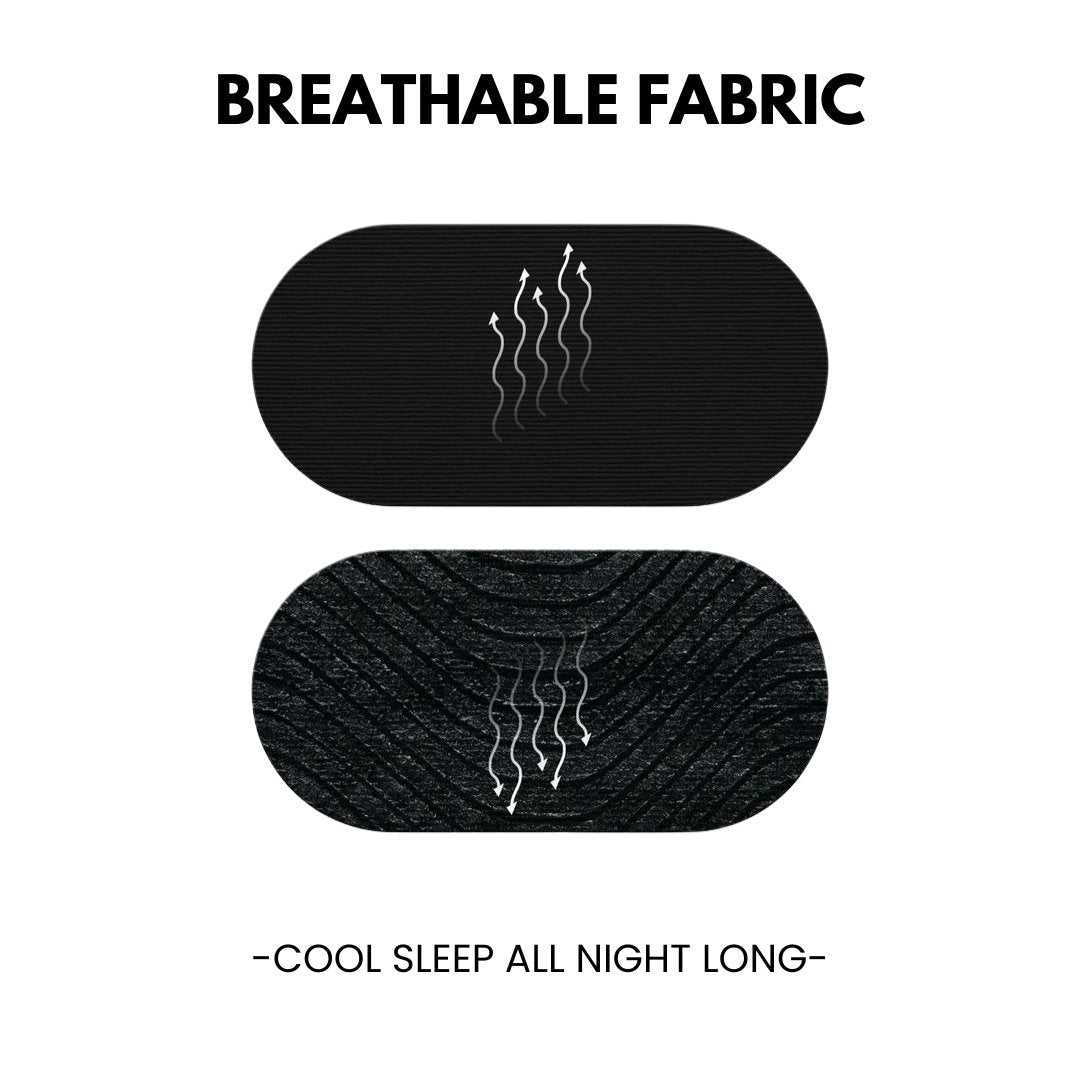
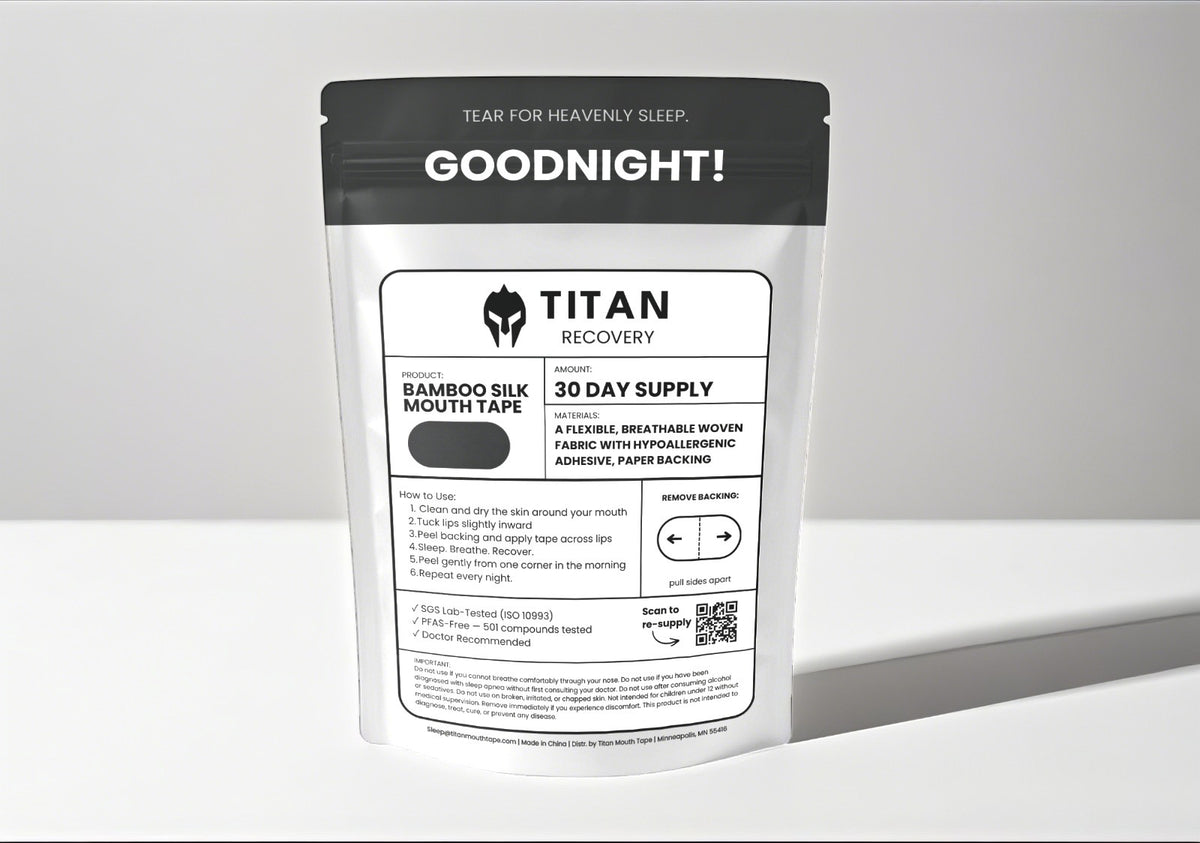
Mouth tape holds your lips gently closed during sleep, which routes all breathing through the nose. That single mechanical change — mouth closed, nose open — corrects the chain of physiological problems that mouth breathing creates.
Nasal breathing activates the parasympathetic nervous system, lowers heart rate, improves oxygen transfer through nitric oxide production, and allows your body to settle into deeper sleep stages without micro-arousals pulling you back toward the surface. Starting is straightforward — apply the tape before bed, breathe through your nose, and let your biology do the rest.
If nasal congestion makes nose breathing feel difficult, pairing TitanAir Nasal Strips with Titan Mouth Tape opens both sides of the equation — the strips physically expand the nasal valve while the tape keeps the mouth sealed. The Titan Sleep System combines both so you don't have to figure out the pairing on your own.
What Changes When You Switch to Nasal Breathing
The shift is measurable. People who track their sleep with wearables like Oura, WHOOP, or Apple Watch consistently report the same pattern after switching to mouth taping:
Deep sleep increases. With the sympathetic nervous system no longer running interference, your body drops into slow-wave deep sleep more readily and stays there longer. Deep sleep is where physical restoration happens — muscle repair, immune function, growth hormone release. More deep sleep from the same number of hours in bed means dramatically better recovery.
Heart rate variability improves. HRV is one of the most reliable markers of recovery quality. Higher HRV during sleep means your nervous system is in a genuinely relaxed state. Mouth tapers routinely see their overnight HRV climb within the first week. Oura users in particular notice their readiness scores jump once nasal breathing becomes consistent.
Morning energy changes. This is the one that matters most to people who are not feeling rested after sleep. When your sleep architecture is intact — full cycles, adequate deep sleep, healthy REM — you wake up differently. Not jolted awake by an alarm, not dragging yourself out of bed. You wake up and you're actually ready. The grogginess clears faster. The need for coffee shifts from desperate to optional.
Other Causes Worth Ruling Out
Mouth breathing is the most common overlooked cause of poor sleep quality, but it's not the only one. If mouth taping doesn't resolve your daytime fatigue, consider these:
Sleep apnea. Obstructive sleep apnea involves repeated airway collapse during sleep, and it requires diagnosis through a sleep study. Mouth tape is not a treatment for sleep apnea. If you snore heavily, gasp during sleep, or have been told you stop breathing at night, see a sleep specialist. Better sleep starts with ruling out conditions that need medical attention.
Chronic stress and anxiety. Elevated cortisol from daytime stress carries into the night and suppresses deep sleep independently of breathing pattern. If your mind races at bedtime or you wake between 2 and 4 a.m., stress management may be the missing piece alongside breathing optimization.
Medical conditions. Thyroid disorders, iron deficiency, vitamin D deficiency, and other conditions can cause fatigue that persists regardless of sleep quality. If you've optimized your breathing and your sleep environment and you're still exhausted, get bloodwork done. Persistent fatigue deserves a thorough medical evaluation.
Frequently Asked Questions
Can mouth tape really make me feel more rested without changing how long I sleep?
Yes. The hours don't change — the quality of those hours does. When nasal breathing replaces mouth breathing during sleep, your body accesses deeper stages of sleep more consistently. The result is waking up restored from the same eight hours that previously left you drained. Most people notice a difference within the first few nights.
How do I know if I'm mouth breathing during sleep?
The clearest indicators are waking up with a dry mouth, morning bad breath, a sore or scratchy throat, and snoring. If any of those describe your mornings, mouth breathing is almost certainly happening. You can also record yourself sleeping with a phone propped on the nightstand — many people are surprised to see their jaw drop open within minutes of falling asleep.
Is mouth tape safe to use every night?
For healthy adults who can breathe through their nose, yes. Titan Mouth Tape uses a medical-grade adhesive designed for nightly use on facial skin. If you have diagnosed sleep apnea, a severe nasal obstruction, or any condition that compromises your ability to breathe through your nose, talk to your doctor before starting. Our step-by-step guide covers how to ease into the practice if you're new to it.
What if I already use a sleep tracker and my stats look fine?
Consumer sleep trackers estimate sleep stages based on movement and heart rate — they're useful directional tools but not clinical instruments. It's possible to show "normal" deep sleep on a tracker while still experiencing micro-arousals that fragment your recovery. If your numbers look reasonable but you still feel tired, the tracker may not be catching the full picture. Try mouth taping for two weeks and let how you feel in the morning be the real metric.
The Bottom Line
If you're doing everything right — consistent schedule, dark room, no screens, eight solid hours — and still waking up exhausted, the problem is almost certainly happening while you're unconscious. Mouth breathing during sleep creates a cascade of physiological stress that prevents your body from reaching the deep, restorative stages that actually make sleep count. The fix is mechanical and simple: keep the mouth closed, breathe through the nose, and let your body do what it's designed to do when the airway is optimized. Your eight hours will finally start working like eight hours should.
Doctor Recommended: "As a maxillofacial surgeon and dentist, I recommend Titan Mouth Tape. Nasal breathing during sleep is essential for airway health and deep restorative rest. Titan's bamboo silk design is the most comfortable and effective mouth tape I have tested. If you struggle with snoring, dry mouth, or poor sleep quality, this is the simplest change you can make for your health." — Dr. Francois P., MD, DDS — Maxillofacial Surgeon
Lab-Tested Safety: Titan's adhesive is independently tested to ISO 10993 medical device standards. Non-toxic (95% cell viability). Non-allergenic (0% reaction rate). Non-irritating (score 0.0/8.0). PFAS-free — 501 compounds tested, zero detected. See full test results →
Try the complete system tonight. Titan Mouth Tape (bamboo silk, SilkSeal™ adhesive) + TitanAir Nasal Strips. Free shipping. 30-night Better Sleep Guarantee. Shop Titan Mouth Tape → · Shop TitanAir Nasal Strips →