Melatonin Isn't Fixing Your Sleep. Here's What Will.
Share
Every morning, the same thing. You wake up and your throat is raw. Scratchy, dry, sometimes slightly painful. By mid-morning it's gone. By the next morning, it's back.
You've ruled out illness — you're not sick. You don't have allergies (or you do, but they're treated). You've tried humidifiers, lozenges, different pillows. Nothing consistently eliminates the morning sore throat.
Here's what's happening: you're sleeping with your mouth open. And the sore throat is the most obvious symptom of a problem that's affecting far more than your throat.
Why Your Throat Hurts Every Morning
When you breathe through your nose, incoming air passes through the nasal passages where it's warmed to near body temperature, humidified to approximately 95% relative humidity, and filtered of particles, allergens, and pathogens. By the time it reaches your throat and lungs, the air is clean, warm, and moist.
When you breathe through your mouth, none of this happens. Room-temperature air — which in heated or air-conditioned rooms can be extremely dry — flows directly across your throat tissue at ambient humidity. For 7-8 hours straight.
The effect is the same as leaving any moist tissue exposed to dry air for 8 hours: it dries out. The mucosal lining of your throat dehydrates. The tissue becomes irritated and inflamed. You wake up with the scratchy, raw feeling you've been experiencing every morning.
This isn't an infection. It's not post-nasal drip (though that can contribute). It's mechanical drying from 8 hours of unhumidified air flowing directly over your throat tissue.
Why It Goes Away by Mid-Morning
Once you're awake, you close your mouth and breathe through your nose. Saliva production resumes. Your throat tissue rehydrates. The irritation resolves — usually within 1-2 hours.
This pattern — sore on waking, gone by noon — is the signature of mouth-breathing-induced throat irritation. It's different from illness (which persists throughout the day), allergies (which typically include other symptoms like congestion and itchy eyes), and acid reflux (which often includes a burning sensation and is worse when lying down).
If your sore throat appears every morning and disappears every afternoon, your mouth is almost certainly open during sleep.
What Else Mouth Breathing Is Doing While You Sleep
The sore throat is the symptom you notice. But mouth breathing during sleep may be causing several other problems simultaneously:
Dry mouth. Saliva evaporates through the open mouth all night. You wake up with a sticky tongue, dry lips, and the immediate need for water. This isn't just uncomfortable — saliva protects your teeth and gums. Without it for 8 hours, your oral environment becomes acidic and vulnerable to bacterial damage.
Bad breath. The dry, low-oxygen environment created by mouth breathing is ideal for the anaerobic bacteria that produce volatile sulfur compounds — the source of morning breath. This is why your breath is bad despite good brushing habits.
Snoring. When the mouth opens, the tongue drops backward, narrowing the airway. Air vibrating through this restricted space is the sound of snoring. If you have a sore throat every morning AND a partner who says you snore, both symptoms share the same root cause.
Poor sleep quality. Research suggests mouth breathing is associated with sympathetic nervous system activation — the stress response. Deep sleep requires parasympathetic dominance. If your breathing route is keeping your nervous system in stress mode, your body may not reach the restorative sleep stages it needs. You sleep 8 hours. You wake up exhausted. And your throat hurts.
Facial appearance changes. Chronic mouth breathing is associated with facial puffiness, under-eye darkness, and reduced jaw definition — all downstream effects of poor sleep quality and sympathetic activation.
The sore throat is the canary in the coal mine. It's the most obvious signal that your mouth is open — but it's not the only thing that's happening.
How to Stop Waking Up With a Sore Throat
1. Close your mouth during sleep
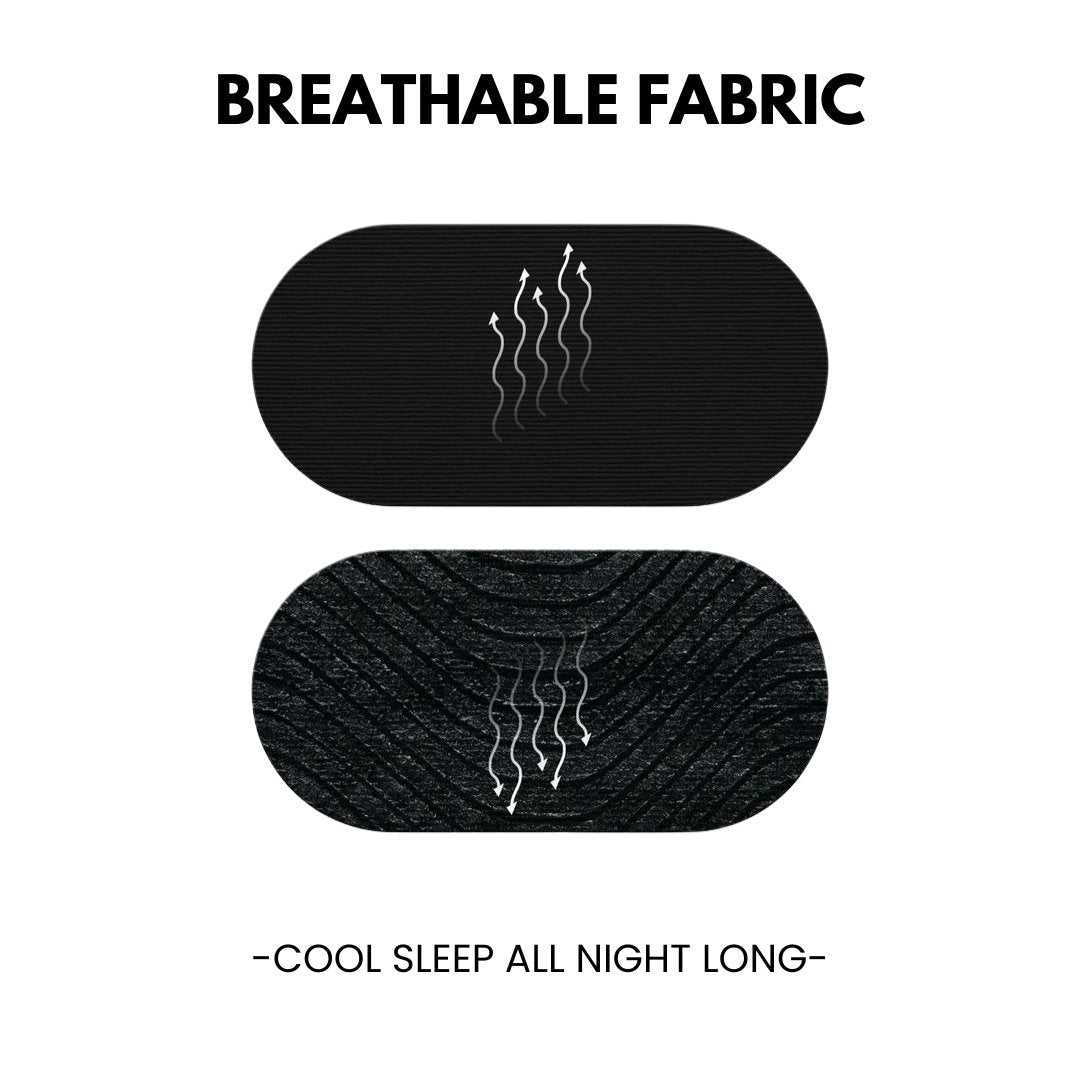
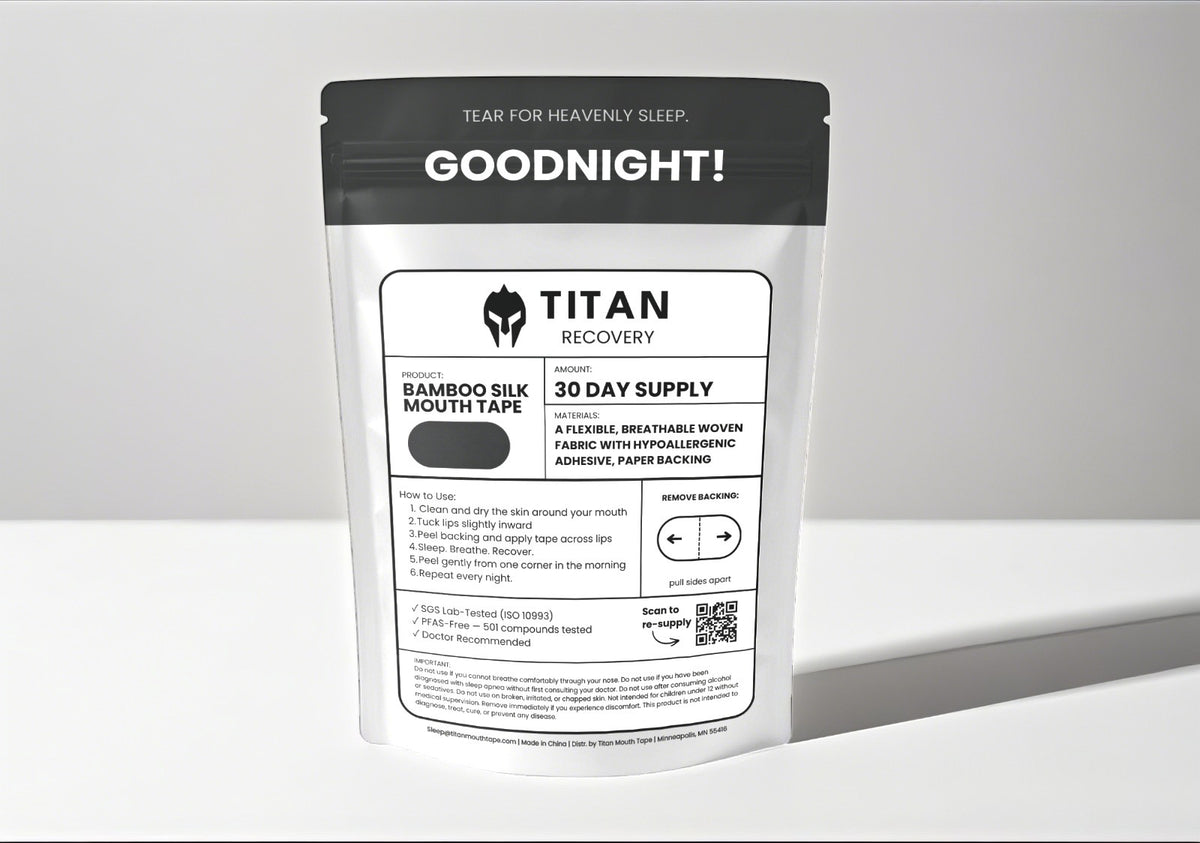
This directly addresses the cause. A strip of mouth tape across your lips before bed holds your mouth gently closed all night. Air flows through your nose — where it's warmed, humidified, and filtered before reaching your throat. Your throat tissue stays moist. The sore throat doesn't happen.
Most people notice this improvement on night one. It's the fastest, most immediate benefit of mouth taping — because the mechanism is purely mechanical. Mouth closed → no dry air on throat → no sore throat. There's nothing to build up over time. The cause is removed. The symptom disappears.
2. Open your nasal passages
If nasal congestion makes nose breathing difficult, pair mouth tape with a nasal strip. The strip physically lifts and widens the nostrils, reducing nasal airflow resistance. Open the nose first, then close the mouth.
Other congestion-relief options: saline rinse before bed, nasal corticosteroid spray for chronic allergies, or a bedroom humidifier set to 40-60% humidity.
3. Run a humidifier
Dry air worsens the effect of mouth breathing on throat tissue. A bedroom humidifier set to 40-60% humidity adds moisture to the air — which helps regardless of whether you breathe through your nose or mouth, but is especially important while you're transitioning to consistent nasal breathing.
This is a supporting intervention, not a fix. If your mouth is open, humid air still flows directly across your throat without the warming and filtering your nasal passages provide. The humidifier helps — but closing the mouth addresses the root cause.
4. Elevate your head slightly
If acid reflux is contributing to the sore throat (burning sensation, worse when lying flat), elevating the head 4-6 inches with a wedge pillow can reduce acid reaching the throat. This doesn't address mouth breathing — but it eliminates one potential contributing factor.
When to See a Doctor
A sore throat that follows the pattern described above — present on waking, gone by mid-morning, recurring daily — is most commonly caused by mouth breathing and doesn't require medical evaluation.
See a doctor if: the sore throat persists throughout the day (may indicate infection or chronic pharyngitis). You have difficulty swallowing, a visible lump, or hoarseness lasting more than two weeks. The sore throat is accompanied by fever, swollen lymph nodes, or white patches on the tonsils. You have symptoms of sleep apnea — witnessed breathing pauses, gasping, or extreme daytime sleepiness.
The Fastest Test
Tape your mouth tonight. If the sore throat is absent tomorrow morning — and your mouth feels moist instead of dry — mouth breathing was the cause. One night is enough to confirm the diagnosis.
By the end of the first week, morning sore throat becomes something you used to have — a daily symptom you tolerated for months or years that disappeared the moment you addressed how you breathe during sleep.
One strip. Five seconds. And the sore throat that no lozenge, humidifier, or doctor visit could explain may finally have its answer.
Doctor Recommended: "As a maxillofacial surgeon and dentist, I recommend Titan Mouth Tape. Nasal breathing during sleep is essential for airway health and deep restorative rest. Titan's bamboo silk design is the most comfortable and effective mouth tape I have tested. If you struggle with snoring, dry mouth, or poor sleep quality, this is the simplest change you can make for your health." — Dr. Francois P., MD, DDS — Maxillofacial Surgeon
Lab-Tested Safety: Titan's adhesive is independently tested to ISO 10993 medical device standards. Non-toxic (95% cell viability). Non-allergenic (0% reaction rate). Non-irritating (score 0.0/8.0). PFAS-free — 501 compounds tested, zero detected. See full test results →
Try it tonight. Bamboo silk. SilkSeal™ adhesive. Beard-friendly. No logo on the tape. Free shipping. 30-night Better Sleep Guarantee. Shop Titan Mouth Tape → · Shop TitanAir →
This article is for informational purposes only and does not constitute medical advice. If you have or suspect a sleep disorder or other medical condition, consult a qualified healthcare provider before making changes to your routine.