Sleep and Breathing for Women: A Complete Guide
Share
When it comes to sleep and breathing for women, the short answer is this: women report worse sleep than men even though they tend to sleep slightly longer, and the reason traces back to hormones, airway anatomy, and life stages that reshape how the body breathes at night. From the monthly rhythm of the menstrual cycle to pregnancy and menopause, a woman's airway is under constant hormonal influence — and the quality of her sleep rises and falls with it. This guide walks through what is actually happening, stage by stage, and the practical steps that help most.
Most sleep advice was studied on men and written for a general audience. That leaves the specific ways female biology shapes sleep and breathing largely unaddressed. Consider this your definitive starting point — a hub that connects the science to the solutions, with links out to deeper reads on each piece.
Why Women Sleep Worse Than Men
Here is the paradox at the center of women's sleep. On paper, women sleep more. Large population studies consistently find that women spend a little more time asleep than men and get slightly more deep sleep in early adulthood. Yet women are the ones who report more insomnia, more nighttime awakenings, and less refreshing rest. The subjective experience does not match the sleep-duration numbers.
The explanation is that duration is not quality. Women are roughly 40 percent more likely to develop insomnia than men, and that gap opens up around puberty and widens with each major hormonal transition. Part of it is biological — cyclical hormone swings that men simply do not experience. Part of it is circumstantial — women are still more likely to be the default caregiver, meaning sleep gets interrupted by children, aging parents, and a mental load that does not clock out at bedtime. And part of it is that women's sleep problems are underdiagnosed, because the classic textbook picture of conditions like sleep apnea was built around male patients.
Breathing sits underneath a surprising amount of this. When sleep fragments, it is often because the airway is not staying open and clear through the night. Understanding why women sleep worse means understanding how hormones govern the airway — and that story changes across the month and across a lifetime. If you want the broad fundamentals first, our guide on how to sleep better covers the universal basics that apply to everyone.
Hormones and Sleep: The Monthly Cycle
For women in their reproductive years, sleep is not a flat line. It moves with the menstrual cycle, and the key player is progesterone — a hormone that happens to be a respiratory stimulant. Progesterone helps maintain the muscle tone of the upper airway, keeping it more open and stable during sleep.
The follicular phase runs from the first day of a period through ovulation. Progesterone is low here, which means less airway support and a body more prone to mouth breathing overnight. Many women also sleep poorly during the first day or two of menstruation itself, when cramps and the drop in hormones combine.
The luteal phase is the roughly two weeks after ovulation, before the next period. Progesterone climbs, which can support steadier breathing — but the same hormone raises core body temperature by about half a degree, and a warmer body has a harder time settling into and holding deep sleep. This is why the days right before a period so often bring restless, broken nights despite feeling exhausted. The premenstrual window is one of the most consistent sleep-disruption points in the entire month.
The practical takeaway is that hormones and sleep are inseparable for cycling women, and symptoms like snoring, dry mouth, and 3 AM wake-ups often follow a monthly pattern rather than appearing at random. Tracking when your worst nights land in your cycle is genuinely useful information. A future post in this hub will go deep on optimizing sleep across each cycle phase.
Pregnancy, Breathing, and Sleep
Pregnancy reshapes breathing more dramatically than almost any other life stage, and it does so from two directions at once.
From below, lung capacity shrinks. As the uterus expands, it pushes the diaphragm upward and reduces the volume the lungs can hold — by as much as 20 percent in the third trimester. The body compensates by breathing a little faster and deeper, but the sense of being slightly short of breath, especially lying down, is extremely common.
From above, the nose swells shut. Rising estrogen increases blood flow to mucous membranes and causes nasal tissues to swell, producing a stuffy, congested feeling even without a cold. This is called pregnancy rhinitis, and it affects up to 30 percent of pregnant women. A blocked nose forces the path of least resistance toward the mouth.
Put those together and you get a predictable result: more nighttime mouth breathing, more snoring, and more fragmented sleep during the exact months when restorative rest matters most. Snoring that begins or worsens in pregnancy is worth mentioning to a provider, because it can be linked to blood pressure concerns. Keeping the nasal airway as open as possible — and preserving nasal breathing where comfortable — is a reasonable, low-risk goal during this stage, though pregnant women should always check new sleep tools with their doctor first. A dedicated pregnancy-and-breathing post will link back here as this hub grows.
Perimenopause and Menopause
If the menstrual years are defined by cyclical swings, the menopausal transition is defined by a sustained decline — and it hits sleep from several angles simultaneously.
Estrogen and progesterone fall. Losing progesterone means losing that airway-stabilizing respiratory drive. The upper airway becomes more prone to relaxing and narrowing during sleep, which is a major reason snoring and sleep-disordered breathing rise sharply after menopause. In fact, a woman's risk of obstructive sleep apnea climbs substantially post-menopause, narrowing a gap that was much wider in favor of women during the reproductive years.
Hot flashes and night sweats fragment sleep. These vasomotor symptoms cause sudden temperature spikes that pull the body out of deep sleep, sometimes several times a night. Even brief awakenings the next morning may not be remembered — but the fragmentation shows up as daytime fatigue and brain fog.
Insomnia becomes more common. Research estimates that 40 to 60 percent of women experience significant sleep disruption during the menopausal transition. Falling asleep gets harder, staying asleep gets harder, and early-morning waking becomes a frequent complaint.
This is also where the sleep-related and breathing-related pieces most clearly overlap. Because a lot of the reasons sleep degrades in this window are shared with general aging, our post on why sleep gets worse after 40 is a useful companion read for anyone in perimenopause.
How Women's Airways and Snoring Differ
Snoring is often typecast as a male problem, and that stereotype does real harm to women's health. Women absolutely snore — they are simply less likely to be asked about it, less likely to report it, and more likely to be told their symptoms are stress or depression rather than a breathing issue.
The anatomy differs in ways that matter. Women tend to have shorter airways and different patterns of fat distribution around the neck and tongue, and their sleep-disordered breathing more often takes the form of prolonged partial airway narrowing rather than the dramatic full stops seen in the classic male apnea picture. The daytime symptoms skew differently too — women with disrupted nighttime breathing more often report fatigue, insomnia, mood changes, and headaches rather than the loud, witnessed gasping that gets a man sent for a sleep study.
The result is systematic underdiagnosis. A woman describing exhaustion and poor sleep may be evaluated for everything except her airway. If your sleep is broken and unrefreshing, breathing deserves to be on the list of suspects — regardless of whether anyone has ever called you a snorer. Loud or persistent snoring, gasping, or witnessed pauses in breathing always warrant a medical evaluation for sleep apnea.
The Beauty-Sleep Connection Is Real
"Beauty sleep" sounds like a marketing phrase, but the biology behind it is legitimate — and it gives women a concrete, visible reason to care about sleep and breathing quality.
The skin does most of its repair work at night. During deep sleep, the body releases growth hormone that drives cell turnover and collagen production, blood flow to the skin increases, and the day's damage from UV and pollution gets repaired. Cortisol, the stress hormone that breaks down collagen and aggravates inflammation, drops to its lowest point during quality overnight sleep. Shortchange deep sleep and you shortchange all of that — which is why chronic poor sleep shows up as dullness, slower healing, and more pronounced fine lines.
Breathing feeds directly into this. Fragmented, mouth-breathing sleep means less time in the deep stages where skin repair concentrates. Mouth breathing also dehydrates the tissues of the face and can contribute to the puffy eyes and dark circles many people wake up with. Nasal breathing supports deeper, more continuous sleep — the kind where skin repair actually happens. We break the deep-sleep piece down in detail in our post on mouth tape and deep sleep, and there is even a jaw-and-facial-structure angle covered in does mouth taping improve your jawline.
Practical Solutions for Women
None of the above is fixable by willpower. But a lot of it responds to keeping the airway open and defaulting to nasal breathing at night — and that is exactly where a few simple tools earn their place.
Nasal breathing is the foundation. Breathing through the nose warms, filters, and humidifies air, and it triggers nitric oxide production that improves oxygen uptake and helps calm the nervous system into deeper sleep. Whenever hormones push the body toward mouth breathing — low-progesterone days, pregnancy congestion, menopausal airway changes — gently steering it back to the nose is the highest-leverage move.
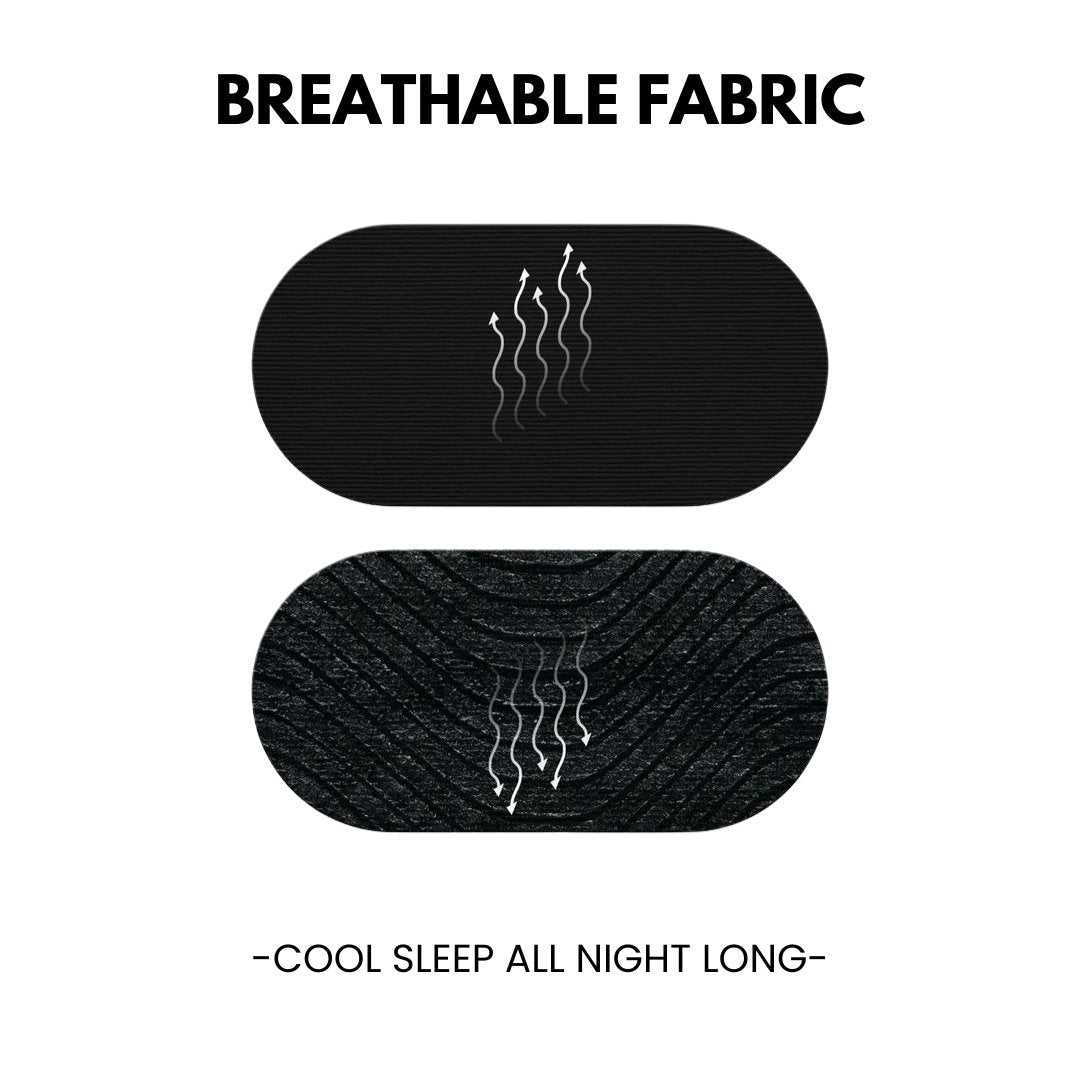
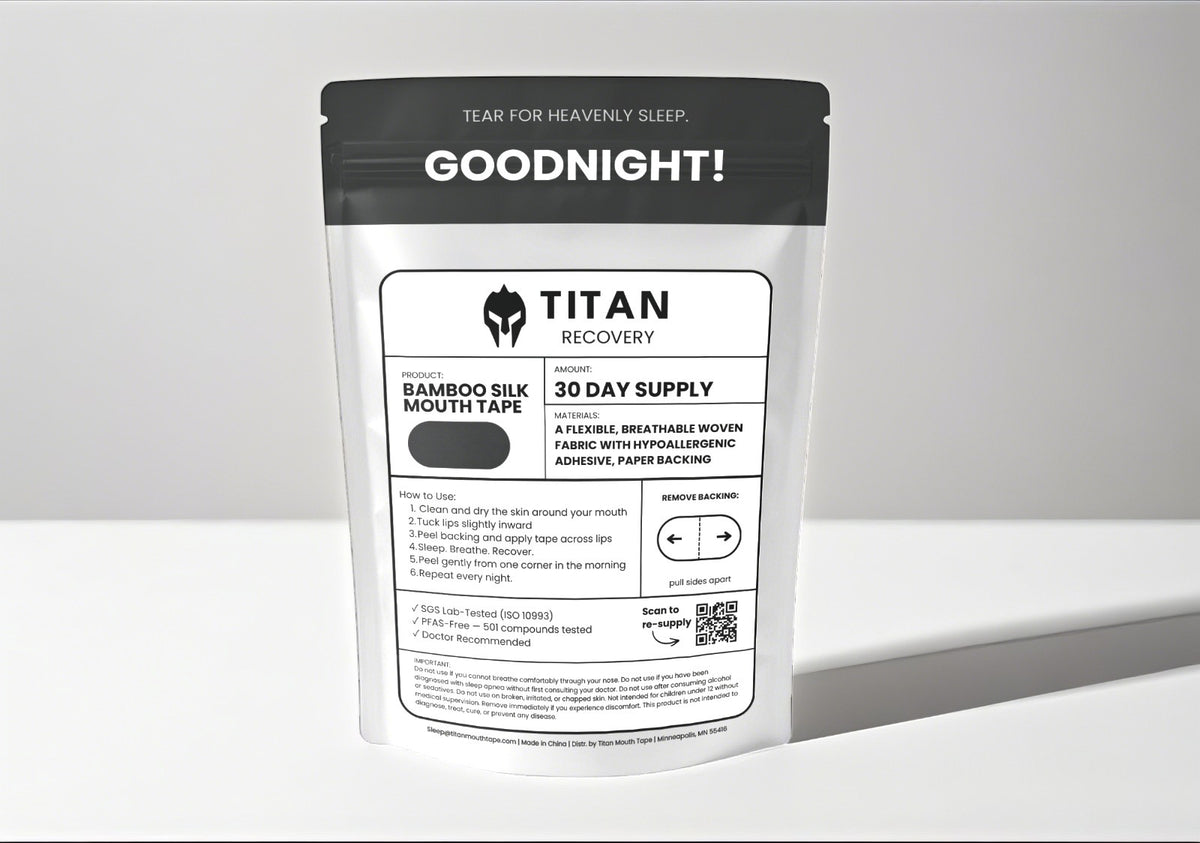
Mouth tape keeps the lips sealed. Titan Mouth Tape is a light, comfortable way to encourage nasal breathing overnight, so you are not defaulting to the drying, sleep-fragmenting oral route. Mouth tape for women has grown quickly for exactly the reasons in this guide — it addresses dry mouth, snoring, and disrupted deep sleep at the same time. If you are curious about the trend itself, we covered it in why mouth taping is gaining popularity among women. New to it? Start with our step-by-step guide to mouth taping.
Nasal strips open a congested nose. When the nose itself is the bottleneck — pregnancy rhinitis, allergy season, a cold, or the general congestion that comes and goes with hormones — TitanAir Nasal Strips physically lift the nostrils open to make nasal breathing easier. They pair naturally with mouth tape: the strip clears the pathway, the tape keeps you using it. For women who want both working together, the Deep Sleep Bundle combines them.
Sleep hygiene amplifies everything else. A cool, dark room matters even more for women managing hot flashes or luteal-phase temperature spikes. Consistent sleep and wake times help stabilize a system already being pushed around by hormones. Our post on improving sleep hygiene with simple changes covers the highest-return habits, and it stacks well with the breathing tools above.
The through-line is simple: you cannot out-discipline your hormones, but you can remove the breathing obstacles they create. Keep the nose clear, keep breathing through it, and protect the deep-sleep stages where your body does its repair work.
Frequently Asked Questions
Why do women sleep worse than men if they sleep longer?
Sleep duration and sleep quality are two different things. Women average slightly more total sleep, but cyclical hormone changes, higher insomnia rates, more frequent nighttime awakenings, and underdiagnosed breathing issues make that sleep less restorative. The extra time asleep does not offset the fragmentation, which is why women more often wake up feeling unrefreshed.
How do hormones affect women's sleep?
Hormones govern both sleep drive and the airway. Progesterone stabilizes the upper airway and supports breathing, so when it drops — during the follicular phase, or permanently after menopause — snoring and mouth breathing become more likely. Estrogen affects nasal congestion and temperature regulation. The result is that sleep quality shifts across the menstrual cycle and changes markedly during pregnancy and menopause.
Is mouth taping safe for women during pregnancy or menopause?
Mouth tape is designed to gently encourage nasal breathing, and many women use it through menopause specifically to counter the snoring and dry mouth that come with declining progesterone. During pregnancy, nasal congestion is common, so clear the nose first and check with your provider before adding any new sleep tool. Anyone who cannot breathe comfortably through their nose, or who may have untreated sleep apnea, should get medical guidance before taping.
Can better breathing at night improve my skin?
Indirectly, yes. Skin repairs itself during deep sleep, when growth hormone peaks and cortisol bottoms out. Fragmented or mouth-breathing sleep cuts into those deep stages and dehydrates facial tissues. Supporting continuous, nasal-breathing sleep protects the exact window where collagen production and cell turnover happen, which is the real biology behind "beauty sleep."
Do women snore, and should I worry about it?
Women absolutely snore — they are just less likely to be asked about it or diagnosed. Occasional light snoring is common, especially before a period, during pregnancy, or after menopause. But loud, persistent snoring, gasping, or pauses in breathing should be evaluated by a doctor, since women's sleep apnea is frequently missed and often shows up as fatigue and insomnia rather than dramatic nighttime symptoms.
The Bottom Line
Sleep and breathing for women is not the same story as sleep and breathing for men, and treating it that way is how so many women end up exhausted with no clear answer. Hormones move the airway around across the month, through pregnancy, and into menopause — and breathing quality moves with them. The good news is that the highest-leverage fixes are also the simplest: keep the nose clear, keep breathing through it, and protect your deep sleep. Nasal breathing supported by tools like mouth tape and nasal strips addresses the breathing-related piece directly, while good sleep hygiene handles the rest. Understand what your body is doing, work with it instead of against it, and better nights follow.
Doctor Recommended: "As a maxillofacial surgeon and dentist, I recommend Titan Mouth Tape. Nasal breathing during sleep is essential for airway health and deep restorative rest. Titan's bamboo silk design is the most comfortable and effective mouth tape I have tested. If you struggle with snoring, dry mouth, or poor sleep quality, this is the simplest change you can make for your health." — Dr. Francois P., MD, DDS — Maxillofacial Surgeon
Lab-Tested Safety: Titan's adhesive is independently tested to ISO 10993 medical device standards. Non-toxic (95% cell viability). Non-allergenic (0% reaction rate). Non-irritating (score 0.0/8.0). PFAS-free — 501 compounds tested, zero detected. See full test results →
Try the complete system tonight. Titan Mouth Tape (bamboo silk, SilkSeal™ adhesive) + TitanAir Nasal Strips. Free shipping. 30-night Better Sleep Guarantee. Shop Titan Mouth Tape → · Shop TitanAir Nasal Strips →