Can Nasal Breathing Improve Your Skin? The Sleep-Skin Connection
Share
Your skin does most of its repair work while you sleep. That's not a wellness talking point -- it's basic dermatology. Blood flow to the skin increases during deep sleep, growth hormone surges, collagen production ramps up, and cellular damage from the day gets addressed. The question nobody in skincare seems to ask is what happens to all of that when you spend the night breathing through your mouth. The answer isn't complicated, and it isn't good. Nasal breathing skin health starts with understanding that your skin's overnight repair system depends on sleep quality -- and mouth breathing quietly sabotages it.
Mouth tape is not a skincare product. It won't replace retinol, sunscreen, or a solid moisturizer. But fixing the way you breathe at night can meaningfully improve the conditions under which your skin repairs itself. That distinction matters, and it's the honest framing this topic deserves.
What Your Skin Actually Does While You Sleep
Sleep isn't just rest for your brain and muscles -- it's an active maintenance window for your skin. During the deeper stages of non-REM sleep, several processes converge that are essential for skin health.
Growth hormone release peaks during deep sleep. The pituitary gland releases most of its daily growth hormone during stage 3 (slow-wave) sleep, with the largest pulse in the first deep sleep cycle of the night. Growth hormone stimulates fibroblasts to produce collagen -- the structural protein that keeps skin firm, elastic, and resistant to wrinkling. Without adequate deep sleep, growth hormone output drops, and collagen production follows.
Blood flow to the skin increases overnight. During deep sleep, the body redirects blood flow toward the skin and organs undergoing repair. This increased perfusion delivers oxygen and nutrients to skin cells while clearing metabolic waste. It's the reason healthy sleepers often have a visible glow in the morning and poor sleepers tend to look pale or sallow.
UV damage repair happens on a circadian schedule. Research has shown that the enzymes responsible for repairing UV-induced DNA damage in skin cells are most active during the nighttime hours. Sleep deprivation or fragmented sleep disrupts this repair window, leaving skin cells more vulnerable to cumulative sun damage -- the single largest driver of premature skin aging.
Cortisol drops to its lowest point. The stress hormone cortisol follows a circadian rhythm, hitting its lowest levels during the first half of the night. Low cortisol is essential for skin repair because cortisol actively breaks down collagen. When sleep is disrupted, cortisol stays elevated through the hours when it should be at its trough, tipping the balance from net collagen production toward net collagen degradation. Over months and years, this shows up as thinner skin, more visible fine lines, and reduced elasticity.
How Mouth Breathing Disrupts the Repair Cycle
Here's where mouth breathing skin problems enter the picture. Mouth breathing during sleep doesn't just affect your airway -- it degrades the quality of sleep itself, which cascades into every repair process described above.
Mouth breathing fragments sleep architecture. Breathing through the mouth is associated with snoring, upper airway resistance, and micro-arousals -- brief interruptions that pull you out of deep sleep stages. Each micro-arousal resets the sleep cycle, reducing total time in stage 3 slow-wave sleep. Less deep sleep means less growth hormone, less collagen production, less DNA repair, and less of the circulatory shift that nourishes skin cells overnight. You can spend eight hours in bed and still shortchange your skin's repair window.
Blood oxygenation drops. Nasal breathing produces nitric oxide in the paranasal sinuses -- a molecule that dilates blood vessels and improves oxygen transfer in the lungs. Mouth breathing bypasses this entirely, resulting in slightly but consistently lower blood oxygen saturation during sleep. Skin cells need adequate oxygen to repair and regenerate, and chronically lower overnight oxygenation means they're working in a subtly deprived environment during their most critical hours.
The nervous system stays in the wrong mode. Nasal breathing activates the parasympathetic nervous system -- the branch responsible for rest, digestion, and repair. Mouth breathing keeps the sympathetic nervous system more active, maintaining a low-grade stress state that elevates cortisol and diverts resources away from repair processes. If you've ever wondered why some people look rested after seven hours while others look haggard after nine, sleep quality metrics tell the story that total hours in bed cannot.
The Visible Damage: Dry Lips, Perioral Irritation, and Dehydrated Skin
Beyond the systemic effects on sleep quality, mouth breathing creates direct, local skin damage that most people attribute to other causes.
Chronic lip dryness and cracking. When your mouth hangs open for seven or eight hours, air flows continuously over the lips and surrounding tissue, stripping moisture. Lips lack the oil glands that protect the rest of your skin, making them especially vulnerable to this drying effect. People who chronically mouth breathe at night often cycle through lip balms and treatments without ever addressing the root cause -- the open mouth. Sealing the lips with mouth tape eliminates this mechanism entirely, and the improvement is usually visible within days.
Perioral dermatitis and corner cracking. The skin around the mouth -- especially at the corners -- takes a beating from overnight mouth breathing. Angular cheilitis (cracking and redness at the corners of the lips), perioral irritation, and chronic flakiness in the chin area are all associated with prolonged oral airflow during sleep. Dermatologists routinely ask patients with these presentations about their breathing habits, because the treatment is often less about creams and more about closing the mouth at night.
Overall facial dehydration. Mouth breathing increases water loss during sleep. Humidified air from your lungs escapes through the mouth instead of being recirculated through the nasal passages, which recover moisture on exhalation. This dehydration shows up in the skin -- particularly the delicate tissue around the eyes. Morning puffiness, pronounced under-eye circles, and a dull complexion are all downstream of overnight dehydration that mouth breathing makes worse.
"Mouth Breather Face" -- What the Research Says
The term sounds harsh, but it comes from orthodontic and craniofacial research, not social media. Decades of clinical study have documented that chronic mouth breathing during childhood can lead to measurable structural changes: a longer, narrower face, a recessed chin, a high narrow palate. These changes happen because the open-mouth posture alters the muscular forces that guide facial bone growth during critical developmental years.
For adults, the bones are set. No amount of mouth taping or tongue posture correction will reshape your skeletal structure. Social media has made irresponsible claims about adult facial restructuring from breathing changes -- this breakdown on mouth tape and jawline separates what's real from what isn't.
What can change in adults: soft tissue appearance. Chronic mouth breathing contributes to facial puffiness, a slack jaw posture that reads as tiredness, and under-eye hollowing from consistently poor sleep. Correcting the breathing pattern won't give you a new jawline, but it can reduce the puffiness and fatigue that make your existing structure look less defined. The difference between your face after a night of deep nasal-breathing sleep and a night of fragmented mouth-breathing sleep is real -- it's just a soft tissue difference, not a skeletal one.
How to Improve Skin While Sleeping -- The Practical Approach
If you want to give your skin the best possible conditions for overnight repair, breathing is one piece of a larger picture. Here's what actually moves the needle.
Establish nasal breathing during sleep. Mouth tape is the simplest way to maintain nasal breathing overnight without conscious effort. If you're new to it, start with the step-by-step guide. Most people adapt within a week. If nasal congestion is a barrier, TitanAir Nasal Strips can open the airway enough to make nasal breathing comfortable from the first night.
Protect your sleep architecture. Deep sleep is where skin repair happens, so anything that fragments it undermines the process. Consistent sleep and wake times, a cool bedroom (65-68 degrees), and eliminating light and noise disruptions all support deep sleep. Alcohol deserves a specific mention -- even moderate amounts suppress deep sleep and growth hormone release, which is why your skin looks worse the morning after a few drinks regardless of your skincare routine.
Don't skip the basics. Sunscreen reduces the UV damage your skin needs to repair at night. A simple moisturizer before bed supports the skin barrier. Hydration throughout the day matters more than any single nighttime product. These fundamentals do more for your skin than breathing optimization alone -- but breathing optimization makes them work better by ensuring the repair window opens fully each night.
Build the daytime habit. If you mouth breathe during the day, your nighttime pattern will be harder to change. Practicing nasal breathing during waking hours retrains the habit so your body defaults to nasal breathing when you fall asleep. If you've been taping for a while and want to see how it's affecting your sleep quality, this 30-day experiment documents the kind of changes people typically see in their data.
What Mouth Tape Won't Do for Your Skin
Mouth tape will not erase existing wrinkles, reverse sun damage, clear acne, or replace a dermatologist-recommended skincare regimen. Anyone selling mouth tape as a skincare solution is overpromising.
What mouth tape does is fix a specific problem -- mouth breathing during sleep -- that has real, documented downstream effects on skin health. It's infrastructure, not treatment. You wouldn't expect fixing a leaky pipe to redecorate your house, but you'd be right to fix the pipe before redecorating. Fix the breathing that's undermining your sleep quality, then let your skincare routine work on top of a foundation that actually supports it.
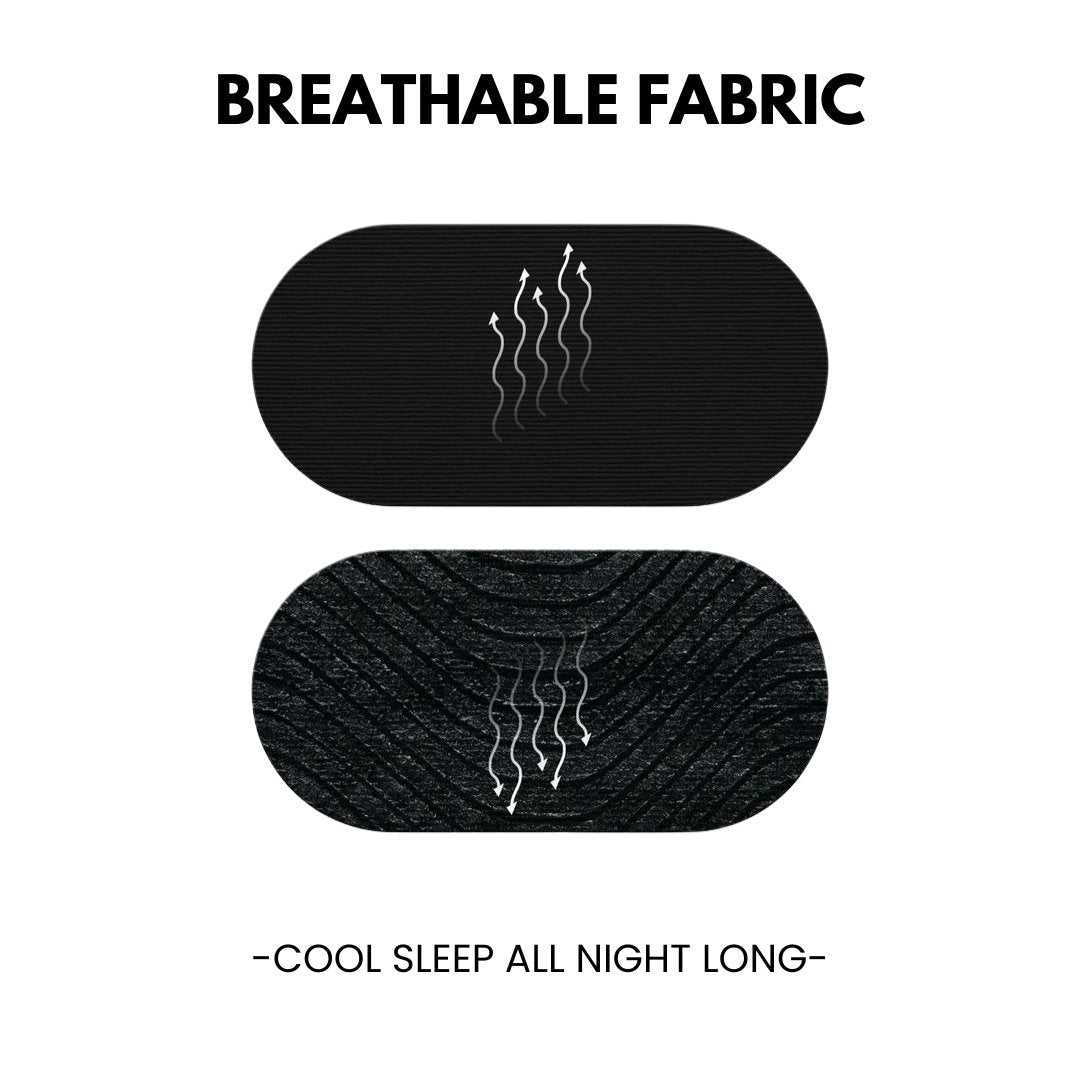
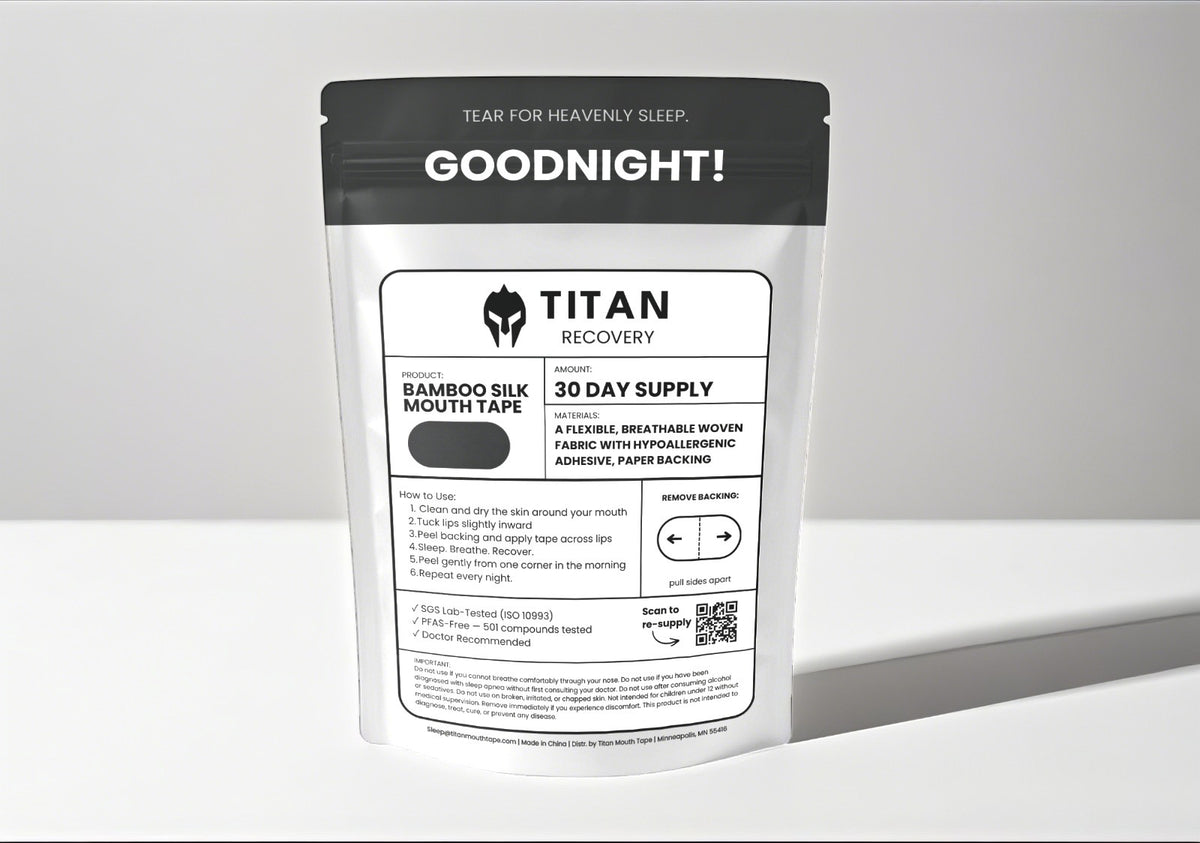
If you're concerned about the adhesive causing skin issues, that's a legitimate question. Choosing the right tape matters -- Titan Mouth Tape uses a hypoallergenic, latex-free adhesive on bamboo silk fabric because anything you wear on your face for eight hours needs to be gentle enough not to create the problems you're trying to avoid. If you have reactive skin, start with the safety basics and test on a small area first.
The Bottom Line
Your skin's ability to repair itself overnight depends on sleep quality -- specifically on the deep sleep stages where growth hormone surges, blood flow increases, cortisol drops, and cellular repair kicks into high gear. Mouth breathing disrupts every one of those processes by fragmenting sleep, reducing blood oxygenation, and keeping the nervous system in a stress state that works against repair.
Fixing your breathing won't replace your skincare routine. But it addresses a root cause that no serum, mask, or moisturizer can touch. The connection between nasal breathing skin health and sleep and skin health is real, measurable, and underappreciated. The path to better skin might not start at the beauty counter -- it might start with how you breathe when the lights go out.