Nasal Breathing for Runners: Train Your Breathing
Share
Every runner has a breathing technique until the pace gets hard. Then the mouth opens, the breathing gets shallow and rapid, and whatever control you had disappears into survival mode. This is normal. It is also trainable. Nasal breathing for runners is a deliberate practice that improves oxygen uptake, engages the diaphragm more effectively, and builds the aerobic base that separates efficient runners from runners who redline too early. The honest answer to "should I breathe through my nose when running?" is yes -- at the right intensities, with the right progression, and with realistic expectations about where mouth breathing still belongs.
Here's what nasal breathing changes physiologically, how Phil Maffetone's MAF method connects to the practice, and a concrete plan for training nose breathing while running.
Why Runners Default to Mouth Breathing
The mouth is a bigger opening than the nose. When the demand for air rises -- a hill, a tempo segment, the last quarter mile -- the path of least resistance is to open the mouth and gulp air. The problem is that this becomes the default even at paces where the nose could handle the load.
Habit, not necessity. Most runners mouth-breathe during easy runs not because they need to, but because they've always done it. The threshold at which nasal breathing feels insufficient sits artificially low. The nose can handle far more airflow than most runners give it credit for -- they just haven't trained it.
The panic response. The first time most runners try keeping their mouth closed during a run, CO2 rises slightly and the body interprets that as air hunger. That response is real, but it's calibrated to an untrained baseline. With consistent practice, CO2 tolerance increases, and the same pace that felt suffocating through the nose in week one feels routine by week four.
What Nasal Breathing Changes for Runners
Breathing through the nose during running isn't just a different route for the same air. It changes what happens to that air and how the body uses the oxygen it delivers.
Nitric oxide production. The paranasal sinuses produce nitric oxide, a molecule that dilates blood vessels and supports oxygen exchange in the lungs. Every nasal breath carries nitric oxide into the pulmonary system; every mouth breath bypasses it. Over a 45-minute easy run, the cumulative difference in oxygen delivery is meaningful.
Diaphragmatic engagement. The added airflow resistance of nasal breathing naturally encourages deeper, slower breaths that engage the diaphragm rather than the shallow chest breathing pattern that mouth breathing produces under exertion. More efficient gas exchange per breath, less energy wasted on rapid respiratory cycles.
Reduced exercise-induced bronchoconstriction. Cold, dry air through an open mouth is a known trigger for exercise-induced bronchoconstriction -- the airway tightening that causes chest tightness, coughing, or wheeziness during or after hard efforts. The nose filters, warms, and humidifies every breath before it hits the lungs. Runners who struggle with this during winter training often find that nasal breathing reduces or eliminates the symptoms at moderate paces.
Lower perceived exertion. Once past the adaptation period, many runners report that easy runs feel genuinely easier through the nose. Better CO2 tolerance means the body isn't triggering panic responses at paces that don't warrant them, and slower breathing activates the parasympathetic nervous system rather than reinforcing the fight-or-flight state.
The MAF Method Connection
Phil Maffetone's Maximum Aerobic Function method has been a cornerstone of endurance training since the 1980s. The core idea: train at or below your maximum aerobic heart rate (180 minus your age, with adjustments) to build an aerobic base without the systemic stress of high-intensity work.
Nasal breathing and MAF training overlap in a useful way. For most runners, the intensity at which nasal breathing becomes unsustainable roughly corresponds to the aerobic threshold. The nose becomes a pace governor -- a free intensity monitor that requires no heart rate strap and no math.
The rule is simple: if you can't nose-breathe, you're going too fast. Maffetone himself has described nasal breathing as a practical test for aerobic-zone compliance. For runners who train without heart rate monitors or who find heart rate data unreliable on hot days and uphill segments, the nose is a more direct signal. It measures respiratory demand, not cardiac response.
Over weeks of MAF-style training with nasal breathing as the governor, your aerobic base improves and the pace you can sustain through the nose increases. These aren't separate adaptations -- they're the same one, measured two different ways.
How to Train Nasal Breathing While Running
The mistake most runners make is trying to nose-breathe at their normal training pace and failing immediately. The adaptation requires backing off -- temporarily -- to build the capacity up.
Start with easy runs only. Pick two or three runs per week that are already designated as easy or recovery efforts. Leave tempo work, intervals, and long runs alone initially.
Slow down until nasal breathing is comfortable. This might mean slowing by 30 seconds to a full minute per mile. The pace at which you can sustain nasal breathing is your current aerobic ceiling. Training below that ceiling is the entire point of aerobic base work.
Use a nasal strip during runs. TitanAir Nasal Strips mechanically open the nasal passages, reducing the resistance that makes nasal breathing feel like breathing through a straw. The strip doesn't replace the training, but it lowers the barrier enough that the practice is sustainable.
Extend gradually. In week one, you might sustain nasal breathing for the first ten minutes of an easy run. By week three, that extends to twenty or thirty minutes. By week six, many runners hold nasal breathing through an entire easy run at a pace that would have required mouth breathing at the start.
Track your nasal-breathing pace. Note the fastest pace at which you can sustain nasal breathing for at least twenty minutes. Watch it improve week over week. That improvement is a direct measure of aerobic development -- more specific than resting heart rate or general "perceived fitness."
Sleep Recovery: The Other Half of the Equation
Running adaptations don't happen during the run. They happen during recovery -- and the highest-quality recovery window is sleep. Growth hormone peaks during deep sleep, muscle repair consolidates overnight, and the cardiovascular adaptations from today's run lock in while you're unconscious.
Mouth breathing during sleep disrupts that process -- more frequent nighttime arousals, reduced deep sleep, dry mouth, and increased snoring. For runners logging serious training volume, poor sleep compounds across the week and blunts the adaptation from every hard session.
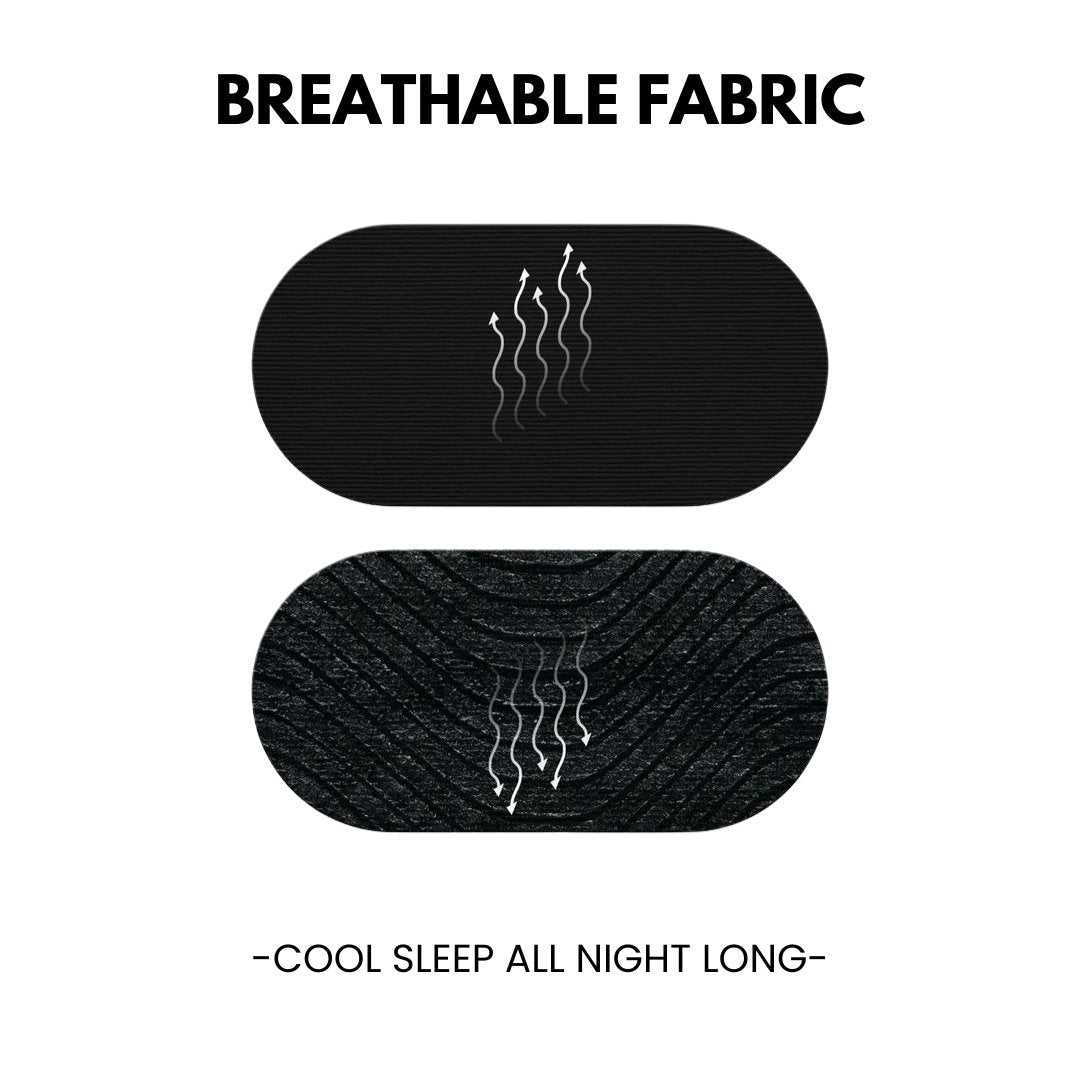
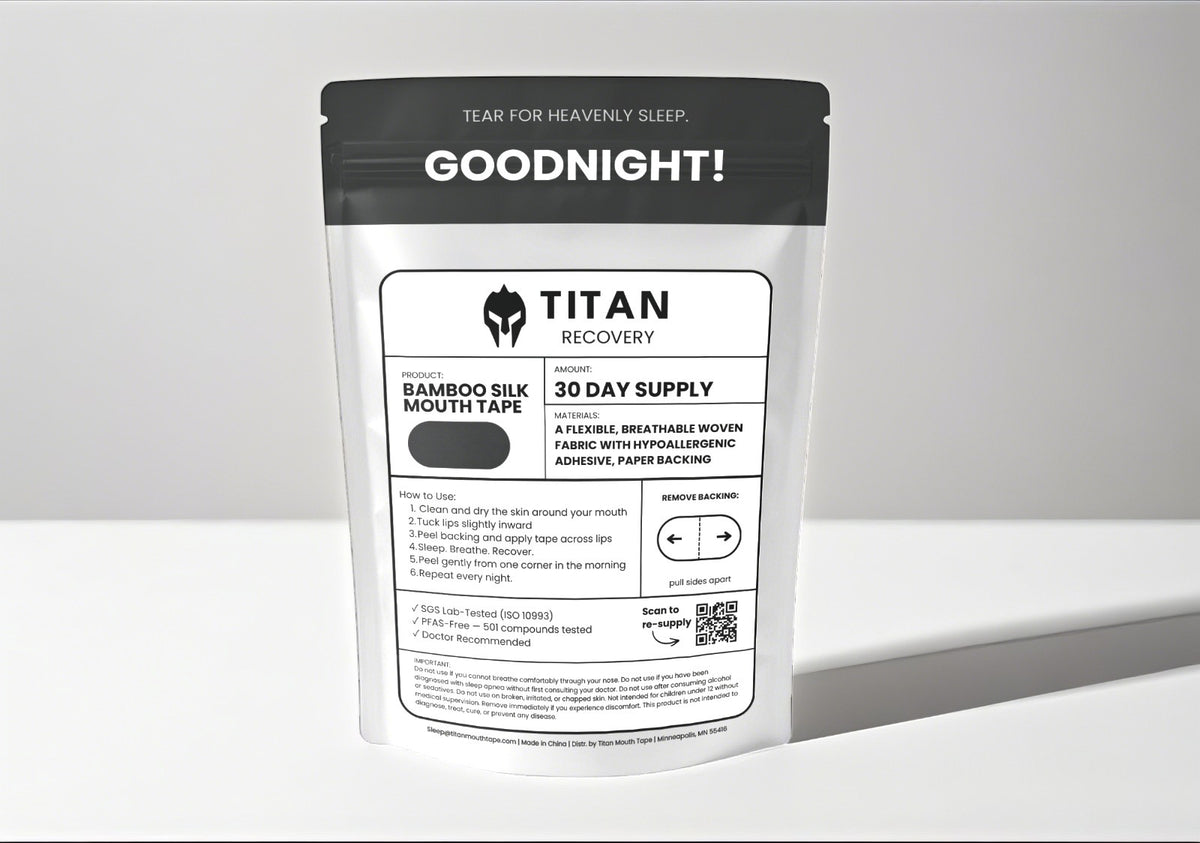
Titan Mouth Tape enforces nasal breathing overnight. Eight hours of nasal breathing during sleep reinforces the same pattern you're building during training runs and protects sleep quality so your training actually converts to fitness. Runners who combine daytime nasal breathing practice with mouth tape at night are training the pattern from both ends -- and the adaptation happens faster.
The combination for runners is straightforward: TitanAir Nasal Strips during runs to open the airway, and Titan Mouth Tape at night to lock in nasal breathing during recovery. The Deep Sleep Bundle includes both -- strips for training, tape for sleep.
Be Honest About the Limits
Nasal breathing is not appropriate at every intensity. At VO2max effort -- race-pace 5Ks, hard interval repeats, all-out hill sprints -- the body's demand for air exceeds what the nose can deliver. Forcing it there doesn't build tolerance; it just limits performance and creates unnecessary distress.
The practical approach is intensity-dependent. Easy and moderate runs: nose-breathe. Tempo runs: nose-breathe as long as you can, then let the mouth open at the threshold. Intervals and races: breathe however your body demands. The goal is to push the nasal threshold higher over time, not to eliminate mouth breathing entirely. At peak oxygen demand, both pathways should be open -- nasal breathing training ensures your body defaults to the nose for every intensity below that peak.
Frequently Asked Questions
Should I breathe through my nose when running?
At easy and moderate paces, yes. Nasal breathing improves oxygen uptake efficiency, engages the diaphragm, and serves as a natural pace governor for aerobic base building. At hard tempo efforts and above, let the mouth open when you need it. The practice is for the 70-80% of your training that should be aerobic-zone work, not for race-day efforts.
How long does it take to adapt to nasal breathing while running?
Most runners see meaningful improvement in four to six weeks. The first two weeks require slowing down noticeably. By week four, the pace you can sustain nasally has usually increased significantly. By week eight, nasal breathing on easy runs often feels automatic. Consistency matters more than volume.
What is the MAF method and how does nasal breathing relate to it?
The MAF (Maximum Aerobic Function) method, developed by Phil Maffetone, trains runners at or below their maximum aerobic heart rate to build endurance without overtraining. Nasal breathing serves as a practical intensity test: if you can't maintain nose breathing, you've likely exceeded your aerobic threshold. Many MAF practitioners use nasal breathing as their primary pacing tool instead of a heart rate monitor.
Do nasal strips help with nose breathing while running?
Yes. External nasal dilators reduce mechanical resistance, making it easier to sustain nasal breathing at higher exercise intensities. They're particularly useful during the first few weeks of adaptation. They don't replace the underlying CO2 tolerance adaptation, but they make the transition more sustainable. Many competitive athletes use nasal strips during training for this reason.
Can I use mouth tape while running?
Some runners do, particularly during easy efforts and treadmill sessions. But the more practical setup is nasal strips during training and mouth tape during sleep. The strips reduce resistance when you need maximum nasal airflow under exertion. The tape enforces nasal breathing during eight hours of recovery where training adaptations consolidate. Both build the nasal breathing habit from different angles. Learn more in our guide to getting started with mouth taping.
The Bottom Line
Nasal breathing for runners is a trainable skill, not a genetic gift. Start with easy runs, slow down until nose breathing is comfortable, and track the pace you can sustain over weeks. Use TitanAir Nasal Strips during runs to reduce nasal resistance while the adaptation builds. Use Titan Mouth Tape at night to reinforce the pattern during sleep and protect the recovery that makes your training count.
The runners who stick with it describe the same progression: two weeks of discomfort, four weeks of adjustment, and then a permanent shift in how easy runs feel. The nose becomes the default. The aerobic base grows. And the pace you can hold without opening your mouth keeps climbing -- the clearest possible signal that your nasal breathing endurance is actually improving.
Doctor Recommended: "As a maxillofacial surgeon and dentist, I recommend Titan Mouth Tape. Nasal breathing during sleep is essential for airway health and deep restorative rest. Titan's bamboo silk design is the most comfortable and effective mouth tape I have tested. If you struggle with snoring, dry mouth, or poor sleep quality, this is the simplest change you can make for your health." — Dr. Francois P., MD, DDS — Maxillofacial Surgeon
Lab-Tested Safety: Titan's adhesive is independently tested to ISO 10993 medical device standards. Non-toxic (95% cell viability). Non-allergenic (0% reaction rate). Non-irritating (score 0.0/8.0). PFAS-free — 501 compounds tested, zero detected. See full test results →
Try the complete system tonight. Titan Mouth Tape (bamboo silk, SilkSeal™ adhesive) + TitanAir Nasal Strips. Free shipping. 30-night Better Sleep Guarantee. Shop Titan Mouth Tape → · Shop TitanAir Nasal Strips →