Mouth Taping: The Complete Guide
Share
Mouth taping has gone from a niche biohacker habit to something millions of people do every night. If you're new to it, or you've tried it and want to understand it better, this is the complete picture — what it does, who it actually helps, how to do it safely, and what separates a good mouth tape from a bad one.
What Mouth Taping Actually Is
Mouth taping is the practice of placing a strip of skin-safe adhesive tape across closed lips before sleep, to gently keep the mouth shut through the night. The goal isn't to physically force your mouth closed — it's to interrupt the habit of mouth breathing during sleep and encourage breathing through the nose instead.
That distinction matters. A well-designed mouth tape doesn't seal your mouth like duct tape over a box. It applies just enough gentle hold that your mouth stays closed by default, while still being something you could open with normal effort if you needed to.
Why Nasal Breathing Matters
Your nose isn't just a backup air intake. Nasal breathing filters incoming air, warms and humidifies it before it reaches your lungs, and produces nitric oxide — a molecule research suggests may support oxygen absorption and cardiovascular function. None of that happens when you breathe through your mouth. For more on this molecule's role in health, see our guide on nasal breathing and nitric oxide benefits.
During sleep specifically, mouth breathing has been associated with a cluster of common complaints: dry mouth, sore throat, snoring, and waking up feeling unrested despite a full night in bed. Switching to nasal breathing — which mouth tape is designed to encourage — addresses the mechanism behind several of these issues at once.
Who Mouth Taping Is For
Mouth taping tends to help most when mouth breathing is the actual root cause of your sleep complaints. Good candidates include people who:
If you depend on your voice for work -- singing, teaching, public speaking -- the case for mouth taping is even stronger. Learn more in our guide on mouth tape for singers and vocal health.
- Wake up with a dry mouth or sore throat most mornings
- Snore, especially when sleeping on their back
- Can breathe comfortably through their nose when awake
- Want to support an existing CPAP routine — mouth tape can help reduce mouth leaks with a nasal CPAP mask
- Have facial hair and have struggled to find a tape that actually holds — this is a specific, solvable problem
It's not for everyone, and it's not a treatment for any medical condition. More on that below.
Is Mouth Taping Safe?
For healthy adults who can breathe comfortably through their nose, mouth taping is generally well tolerated. The bigger safety question isn't the practice itself — it's what's actually in the tape you're using.
This is where a lot of mouth tape on the market falls short. Cheap or repurposed tapes — surgical tape, kinesiology tape, even duct tape in the worst cases people report online — aren't designed for nightly, hours-long contact with facial skin. They can irritate skin, contain adhesives that haven't been tested for this kind of use, or simply fail to hold properly.
Two things are worth checking before you commit to a brand:
Has the adhesive been independently tested? Look for ISO 10993 biocompatibility testing — the standard used for medical devices and surgical tape — covering cytotoxicity, skin sensitization, and skin irritation.
Has the product been screened for PFAS? This is something almost no mouth tape brand has published data on. We tested for 501 PFAS compounds and published the full results — a strip you're wearing on your face for 7+ hours a night is worth knowing the chemical profile of.
Who Should Not Mouth Tape
Mouth taping is not appropriate for everyone. Skip it, or talk to a doctor first, if you:
- Cannot breathe comfortably through your nose due to congestion, polyps, or a significantly deviated septum
- Have been diagnosed with moderate to severe obstructive sleep apnea that hasn't been otherwise addressed
- Are a child under 12 without medical supervision
- Have been drinking heavily — alcohol can affect your ability to wake up or respond normally during sleep
To be direct about something important: mouth tape is a wellness product, not a treatment for sleep apnea. If you suspect you have sleep apnea — gasping during sleep, witnessed breathing pauses, excessive daytime sleepiness — see a sleep specialist. Mouth tape is not a substitute for that evaluation.
What Mouth Taping May Help With
Research on mouth taping is still developing, but the directional evidence and consistent user reports point to a few areas:
There is also emerging interest in how better sleep and nasal breathing may support hormonal health -- read about nasal breathing and testosterone during sleep.
Snoring. For snoring driven primarily by mouth breathing, keeping the mouth closed addresses the mechanical cause directly. We cover the research and the limitations of this in detail here — it's not a universal fix, but for the right person it can make a real difference.
Dry mouth and morning sore throat. These are common symptoms of mouth breathing during sleep, and they tend to improve quickly — often within the first few nights — once nasal breathing takes over.
Sleep quality. Some users report deeper, less interrupted sleep after switching to nasal breathing, though individual results vary and this is harder to measure than the symptoms above.
How to Mouth Tape Correctly
- Clear your nose before bed. Blow your nose or use a saline rinse if needed. You should be able to breathe easily through your nose before applying tape.
- Start with clean, dry skin. Oils from skincare products or natural sebum reduce adhesion. A quick wash or wipe-down helps the tape hold properly.
- Apply one strip horizontally across closed lips. Press gently for 3–5 seconds for full contact.
- If you have a beard, check your application technique. Facial hair changes how tape adheres — a few small adjustments make a significant difference in hold and comfort.
- Remove slowly in the morning. Peel from one corner with steady pressure rather than pulling quickly.
Most people adjust within the first 2–3 nights. If it feels uncomfortable or you can't breathe easily, take it off — this isn't something to push through.
What to Look for in a Mouth Tape
Not all mouth tape is built the same. The differences that actually matter:
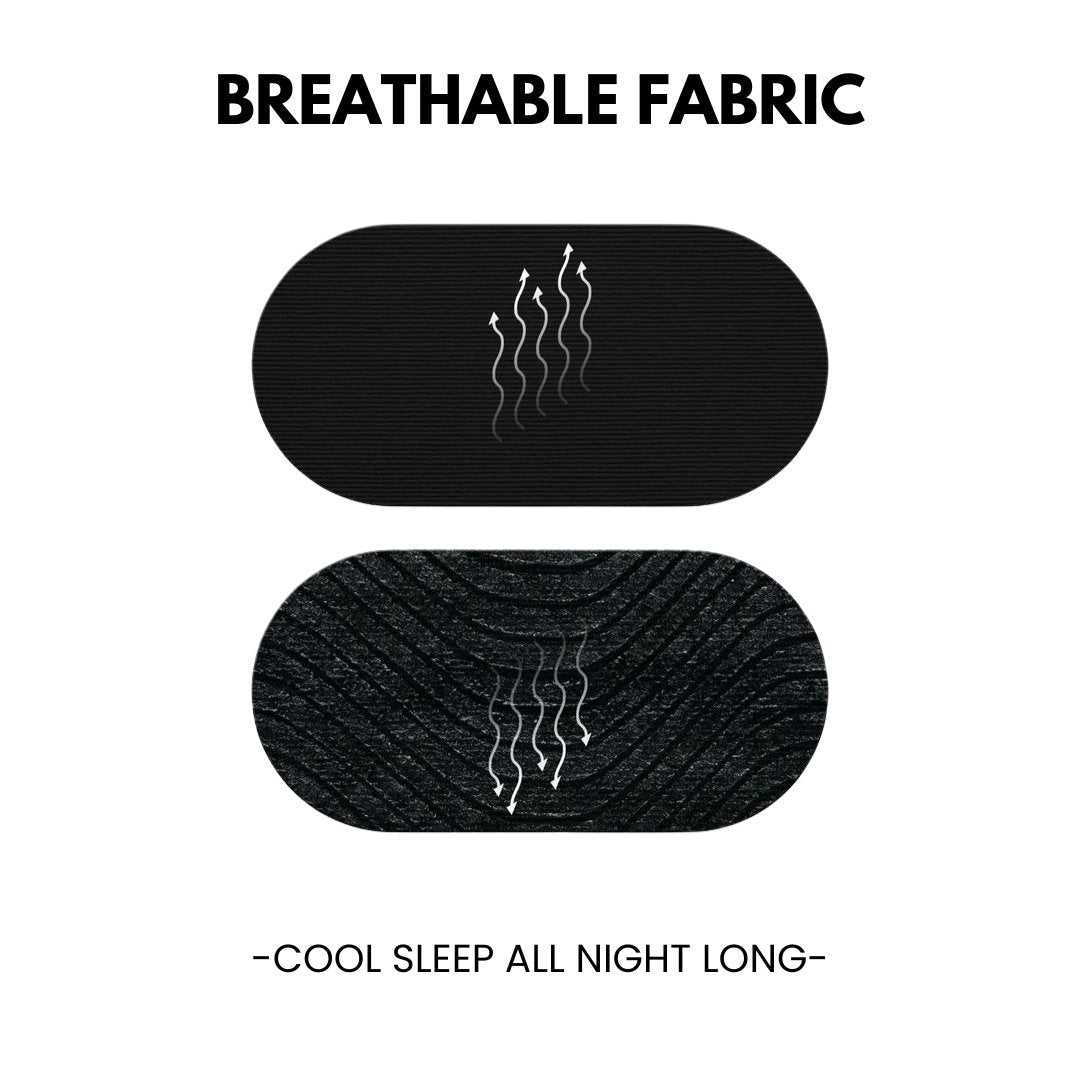
- Material: Bamboo silk is breathable and gentle against skin for long overnight wear, unlike stiffer synthetic materials.
- Adhesive testing: Look for ISO 10993 results, not just a brand's word that it's "gentle" or "skin-safe."
- PFAS testing: Almost no brand publishes this. If a brand has tested and published results, that's a meaningful signal of how seriously they treat product safety.
- Beard compatibility: If you have facial hair, this is a real consideration — not every adhesive is designed to hold through stubble or release without pulling.
- Residue: A well-formulated tape should come off clean, without sticky residue left behind.
Titan Mouth Tape
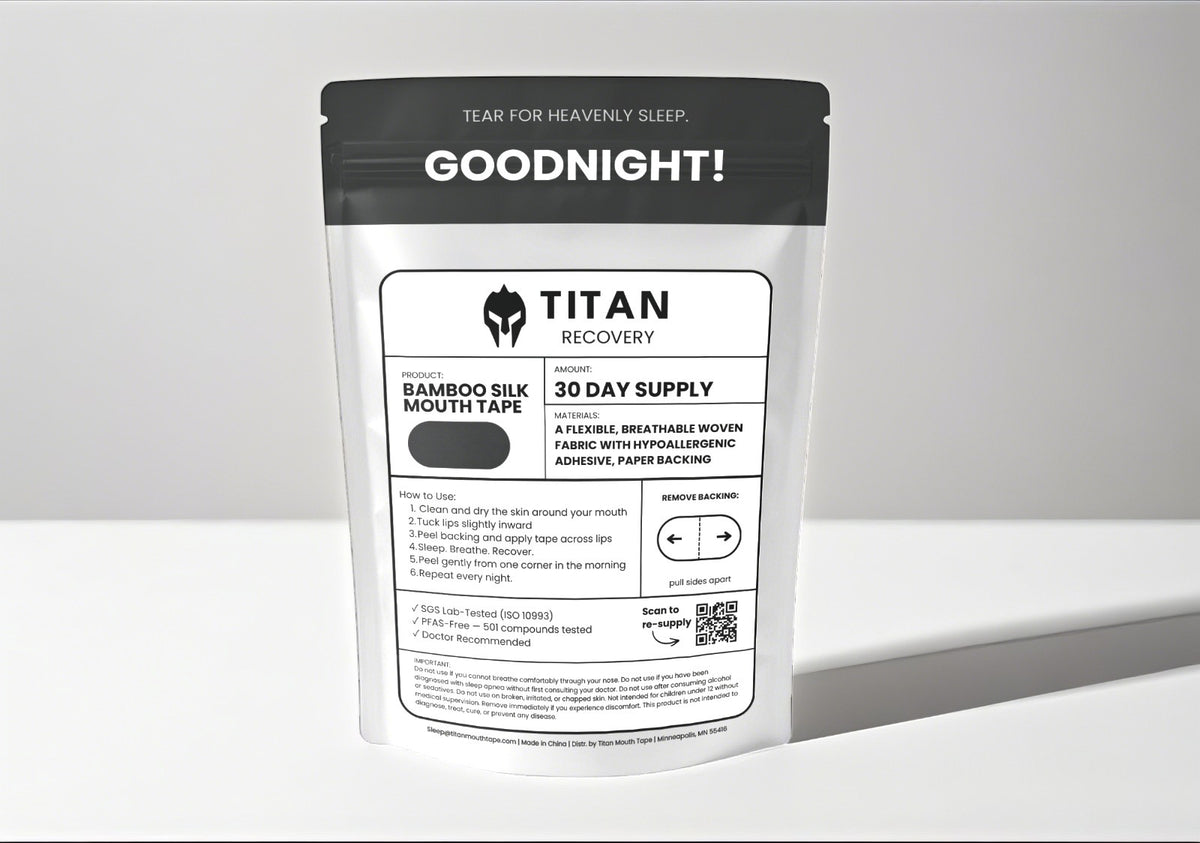
Titan Mouth Tape is built around these exact criteria. Bamboo silk material with our proprietary SilkSeal adhesive, independently tested to ISO 10993 medical device standards — non-cytotoxic, non-sensitizing, and scoring 0.0 out of 8.0 on the irritation scale. It's also been screened for 501 PFAS compounds with zero detected. It's designed to work through beards and stubble without pulling, and removes cleanly with no residue.
"As a maxillofacial surgeon and dentist, I recommend Titan Mouth Tape. Nasal breathing during sleep is essential for airway health and deep restorative rest. Titan's bamboo silk design is the most comfortable and effective mouth tape I have tested. If you struggle with snoring, dry mouth, or poor sleep quality, this is the simplest change you can make for your health."
— Dr. Francois P., MD, DDS, Maxillofacial Surgeon
Frequently Asked Questions
How long does it take to get used to mouth taping?
Most people adjust within 2–3 nights. The first night or two can feel slightly unfamiliar, but it typically becomes a non-issue quickly.
Can I mouth tape every night?
Yes, for most healthy adults this is intended for nightly use. Skip it on nights when you're significantly congested and can't breathe through your nose.
Will it pull my facial hair?
A well-formulated adhesive shouldn't. If you have a beard, this is worth checking specifically — not every mouth tape is designed with facial hair in mind.
Is mouth taping the same as a treatment for sleep apnea?
No. Mouth tape is a wellness product, not a medical treatment. If you have or suspect sleep apnea, that requires evaluation and treatment from a sleep specialist.
What's the difference between mouth tape and nasal strips?
Mouth tape closes the mouth. Nasal strips widen the nasal passages to make nasal breathing easier. They address different parts of the same goal and are often used together. Need help choosing a tape? See our comparison of the 7 best mouth tapes.
Doctor Recommended
"As a maxillofacial surgeon and dentist, I recommend Titan Mouth Tape. Nasal breathing during sleep is essential for airway health and deep restorative rest. Titan's bamboo silk design is the most comfortable and effective mouth tape I have tested."
— Dr. Francois P., MD, DDS, Maxillofacial Surgeon
Independently Lab-Tested
- Cytotoxicity (ISO 10993-5): 95% cell viability — non-cytotoxic
- Skin Sensitization (ISO 10993-10): 0% reaction rate — non-sensitizing
- Skin Irritation (ISO 10993-10): 0.0/8.0 — negligible irritant
- PFAS (WEIPU): 501 compounds tested, zero detected
Read the full PFAS testing breakdown → · View all lab results →
Start Tonight
Bamboo silk mouth tape. Beard-friendly. Zero residue. 30-Night Better Sleep Guarantee. Free US shipping.
Shop Titan Mouth Tape →
If you're new to mouth taping generally, our complete guide covers safety, technique, and what to look for in a tape.
If snoring is the main concern, you may also want to compare mouth tape to chin straps before deciding.
Doctor Recommended: “As a maxillofacial surgeon and dentist, I recommend Titan Mouth Tape. Nasal breathing during sleep is essential for airway health and deep restorative rest. Titan’s bamboo silk design is the most comfortable and effective mouth tape I have tested. If you struggle with snoring, dry mouth, or poor sleep quality, this is the simplest change you can make for your health.” — Dr. Francois P., MD, DDS — Maxillofacial Surgeon
Lab-Tested Safety: Titan’s SilkSeal™ adhesive is independently tested to ISO 10993 medical device standards. Non-toxic (95% cell viability). Non-allergenic (0% reaction rate). Non-irritating (score 0.0/8.0). PFAS-free — 501 compounds tested, zero detected. See full test results →
Try it tonight. Bamboo silk. SilkSeal™ adhesive. Beard-friendly. No logo on the tape. Free shipping. 30-night Better Sleep Guarantee. Shop Titan Mouth Tape → · Shop TitanAir →
Related reading
- How Does Mouth Tape Work? The Mechanism Explained
- Sleep Divorce: Is Sleeping Apart the Answer?
- Mouth Taping for Weight Loss: Does It Really Help?
- Sleep Stages Explained: REM, Deep, and Light
Want the tape built for this? Try bamboo silk mouth tape from Titan — bamboo silk, beard-friendly, PFAS-free, with a 30-Night Better Sleep Guarantee.