7 Best Mouth Tapes for Sleeping in 2026 (Tested and Compared)
Share
Mouth tape went from niche biohacker trick to mainstream sleep product in about three years. The problem now isn't finding mouth tape -- it's figuring out which one to trust. There are over a dozen brands on the market in 2026, and they range from purpose-built bamboo silk strips with independent lab testing to rolls of surgical tape from the pharmacy shelf. The materials are different. The safety testing is different. The prices vary by more than 10x per night.
Our full pick: Best Mouth Tape to Buy in 2026
We bought and tested seven of the most popular mouth tapes available right now. We compared them across the categories that actually matter: what the tape is made from, whether it's been independently tested for biocompatibility and chemicals, how it feels to wear and remove, whether it has a breathing vent, and what it costs per night. We also included an honorable mention for a product that takes a fundamentally different approach.
Here's what we found.
Our Top Picks
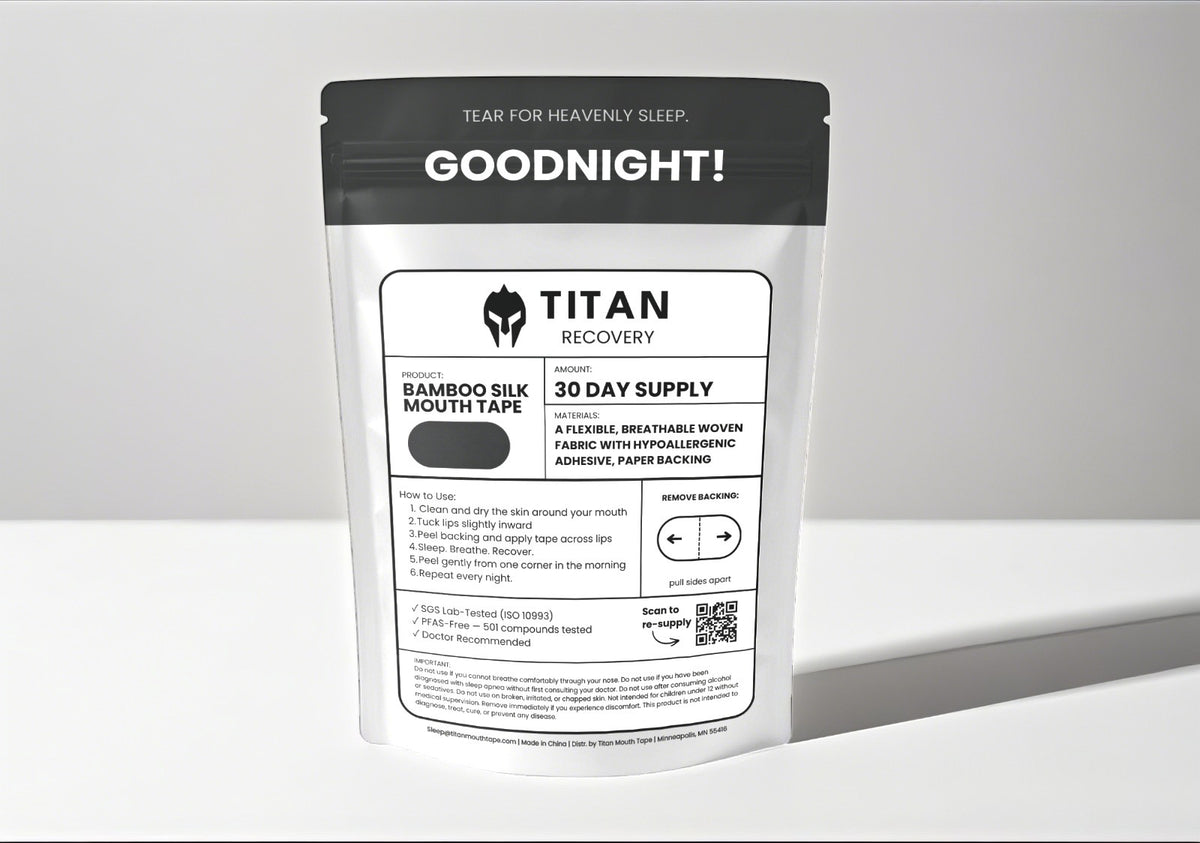
Best Overall: Titan Mouth Tape -- The most transparent product on the market. Bamboo silk, ISO 10993 biocompatibility testing, and independent PFAS screening for 501 compounds. Premium price, but you know exactly what you're putting on your face.
Budget Option: 3M Micropore Tape -- Seven cents a night. It's surgical tape, not mouth tape, but it works well enough for people who want to try mouth taping without spending $25 on their first pack.
Comparison Table: All 7 Mouth Tapes
| Product | Material | ISO 10993 | PFAS-Free | Vent | Price/30 | Per Night (Best) | Our Rating |
|---|---|---|---|---|---|---|---|
| Titan Mouth Tape | Bamboo silk | ✓ | ✓ | No | $26.95 | $0.76 | 9.2 |
| SomniFix | Undisclosed | ✓ | Not tested | ✓ | $25.99 | $0.64 | 8.8 |
| Dream Recovery | Organic bamboo silk | No | ✓* | No | $24.25-$27.95 | $0.81 | 8.2 |
| VIO2 | Cotton | No | ✓ | No | $29.95/48 | $0.52 | 7.8 |
| Hostage Tape | Kinesiology fabric | No | Not tested | No | $24.95 | $0.55 | 6.5 |
| Dryft Sleep | Undisclosed | No | Not tested | ✓ | $26.99 | $0.55 | 7.0 |
| 3M Micropore | Paper (surgical) | N/A | N/A | No | $4.50-$8 | $0.07 | 6.8 |
*Dream Recovery claims PFAS-free but does not specify the scope of testing (number of compounds screened).
1. Titan Mouth Tape -- Best Overall
Full disclosure: we make this product. We're going to be straightforward about what it does well and where it falls short, and you can weigh our review against the independent data we publish.
Titan Mouth Tape is made from bamboo silk with a proprietary SilkSeal adhesive. It's the only mouth tape we've found that combines three things: full material disclosure, ISO 10993 biocompatibility certification, and third-party PFAS testing across 501 individual compounds. The PFAS results came back clean -- zero detected. You can review the documentation on our lab-tested page.
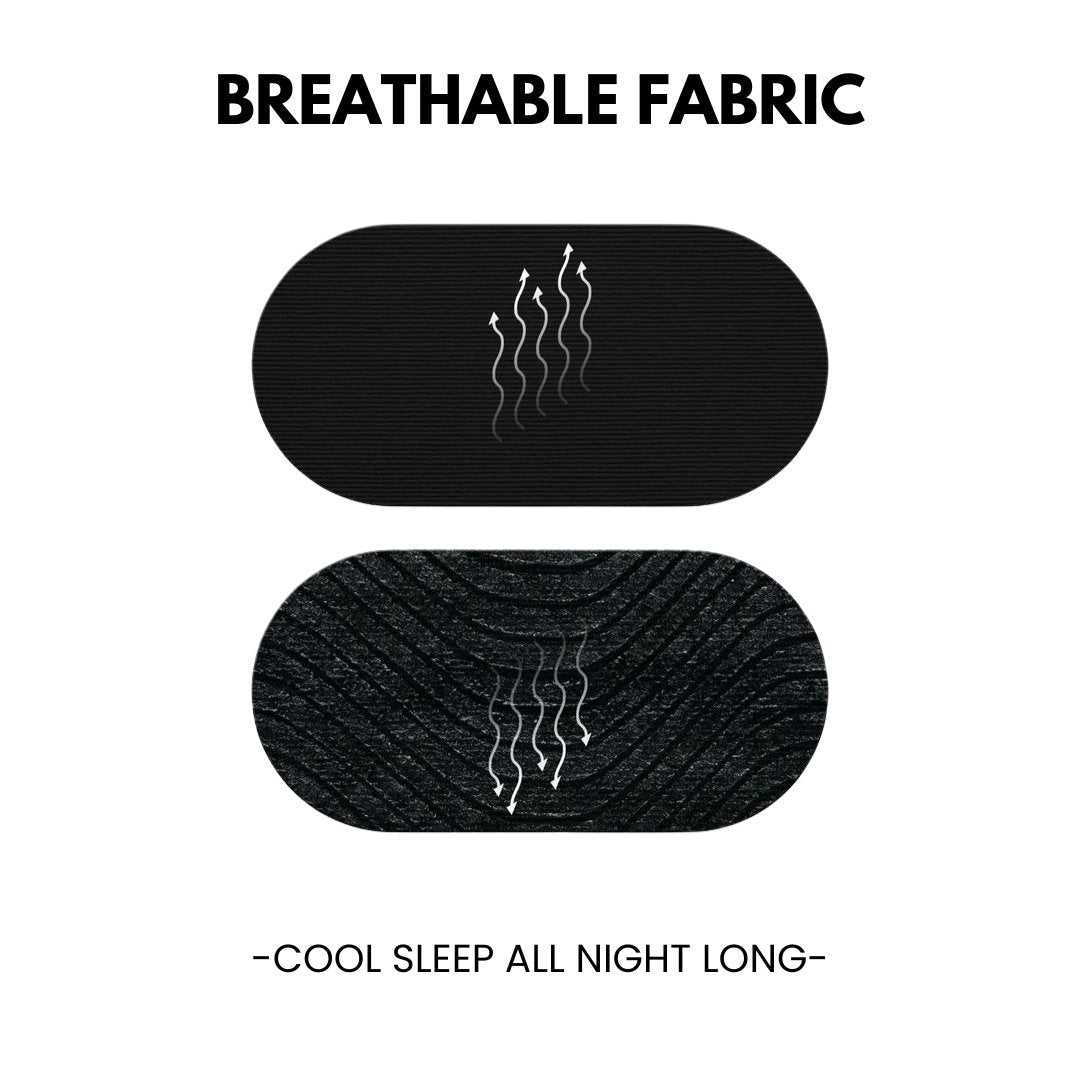
The bamboo silk feels noticeably different from synthetic alternatives. It's soft, breathable, and sits against the skin without that plasticky stiffness you get from kinesiology or foam-based tapes. Removal in the morning is clean -- no residue, no pulling, no red rectangle around your mouth. It works well on facial hair, though we'd still point beard wearers toward our specific beard taping guide for technique tips.
Pros: Most comprehensive safety testing in the category. Full material transparency. Bamboo silk comfort and breathability. Clean removal.
Cons: No breathing vent -- this is a full-seal tape. If you're anxious about not being able to breathe through your mouth at all, you'll want to start with daytime practice or consider a vented option like SomniFix first. The price -- $0.76 to $0.90 per night depending on your subscription tier -- puts it at the higher end of the market.
Marketed toward: People who prioritize knowing exactly what's on their face. Anyone with sensitive or reactive skin. Experienced mouth tapers who want a full seal.
2. SomniFix
SomniFix is the most established name in purpose-built mouth tape. They launched in 2017, appeared on Shark Tank, and have a published clinical study from Harvard Medical School. If name recognition and clinical backing matter to you, SomniFix has more of both than anyone else in the space.
Their standout feature is a patented mesh breathing vent built into each strip. It allows limited airflow through the mouth -- enough to prevent a total seal but not enough for comfortable mouth breathing. It's a genuine safety feature for people who are new to taping or who deal with occasional nighttime congestion. The vent is protected by over 50 patents, and it's the kind of thoughtful engineering that justifies SomniFix's reputation.
SomniFix also carries ISO 10993 biocompatibility certification with published Grade 0 results -- the best possible score across cytotoxicity, sensitization, and irritation. They were early adopters of this testing standard and deserve credit for it.
The gap is on the material side. SomniFix describes their tape as "eco-friendly" and "recyclable" but does not disclose the specific fabric composition. They also haven't published any PFAS testing results. Neither of these is necessarily a safety problem -- but for consumers who want full transparency about what's touching their skin for eight hours, the information simply isn't available.
Pros: Breathing vent (a real differentiator, not a gimmick). ISO 10993 certified. Harvard clinical study. Nearly a decade of market presence.
Cons: Material composition not disclosed. No published PFAS testing. The vent, while useful for beginners, can allow partial mouth breathing that reduces the benefits of taping for experienced users.
Marketed toward: First-time mouth tapers. People nervous about a full seal. Anyone who values clinical validation from a named institution.
3. Dream Recovery
Dream Recovery is probably Titan Recovery's closest competitor on material. They use organic bamboo silk -- the same base material class -- and they've built a large following: over 3 million strips sold and a Made in USA operation. Their product line has expanded to include Dream Tape+ (a version with a skincare-infused adhesive) and multiple coverage options for different face shapes.
They claim PFAS-free, and we have no reason to doubt it. The caveat is that Dream Recovery doesn't specify the scope of their PFAS testing -- how many compounds were screened, which lab performed the analysis, or what methodology was used. This matters because "PFAS-free" can mean anything from "we tested for 20 compounds" to "we tested for 500." The claim itself is encouraging, but the supporting data isn't publicly available for verification.
Dream Recovery does not hold ISO 10993 biocompatibility certification. Their adhesive may be perfectly safe -- and their sales volume suggests most people have no issues -- but the independent lab verification isn't there. For people with reactive skin or chemical sensitivities, that certification provides a level of assurance that marketing claims alone can't match.
Pros: Bamboo silk material (breathable, soft). Subscription pricing brings cost down. Dream Tape+ skincare variant is unique in the category. Large, established customer base. Made in USA.
Cons: No ISO 10993 certification. PFAS-free claim lacks published scope and methodology. Customer service response times have drawn complaints in online reviews.
Marketed toward: People who want bamboo silk at a slightly lower price point and don't need independent lab certifications to feel confident.
4. VIO2
VIO2 takes a different design approach. Created by a doctor, it uses a patented partial-coverage shape that doesn't fully seal the lips. The idea is that it provides enough tension to keep your mouth closed during sleep while leaving a small gap -- reducing the claustrophobic feeling that stops some people from sticking with mouth tape.
The material is cotton, not bamboo silk. Cotton is a fine, well-understood fabric, but it's not as soft or breathable as bamboo silk against the face. The trade-off is price: at $29.95 for 48 strips, VIO2 comes in at $0.52 to $0.62 per night -- the lowest cost per strip among the purpose-built options we reviewed. That makes it a smart entry point for people who want to try a designed product without committing to a higher per-night cost.
VIO2 claims PFAS-free and Made in USA. Like Dream Recovery, the scope of PFAS testing isn't detailed publicly. They do not hold ISO 10993 certification. The brand has earned placement in Goop, which signals a wellness-focused positioning.
The partial-coverage design is both the biggest selling point and the biggest limitation. It works well for people who can't tolerate a full seal, but it doesn't provide the same consistent lip closure that a full-coverage tape delivers. If your mouth tends to fall open significantly during sleep, a partial-coverage strip may not keep up.
Pros: Lowest per-strip cost among purpose-built tapes. Partial coverage helps with claustrophobia and anxiety. Doctor-created. PFAS-free. Made in USA.
Cons: Cotton material (less soft than bamboo silk). No ISO 10993 certification. Partial coverage means a less complete seal -- may not hold for heavy mouth breathers.
Marketed toward: Budget-conscious buyers who want a purpose-built product. People who feel claustrophobic with full-coverage tape.
5. Hostage Tape
Hostage Tape has built one of the loudest brands in the mouth tape space. Their marketing is aggressive, their social media presence is large, and they've specifically targeted the male and beard-wearing demographic with their X-shaped design and BeardFlex adhesive. They're one of the few mouth tapes that accept HSA/FSA payments, which is a genuine plus for people who want to pay with pre-tax dollars.
The tape uses a kinesiology fabric -- the same stretchy material used in sports taping. It's durable and has enough flex to accommodate jaw movement during sleep. The X-shape is designed to anchor on the chin and above the upper lip, creating a seal that's supposed to work even over facial hair.
Here's where Titan pulls ahead. We weren't able to find published ISO 10993 biocompatibility certification or PFAS testing results from Hostage Tape. If you have sensitive skin, that missing safety documentation is worth weighing — and it's exactly the gap Titan's lab-tested, PFAS-free bamboo silk is built to close. Read recent reviews of any tape and check how its adhesive is described before you commit.
As with any brand, it's worth checking recent customer reviews and the company's own materials and testing disclosures before you buy. We weren't able to find published independent safety testing (like ISO 10993) or PFAS results from this brand at the time of writing, so if lab-tested safety documentation matters to you, confirm what's currently available directly.
Pros: HSA/FSA eligible. Specifically designed for beards. Bulk pricing available. Strong brand presence.
Cons: No published ISO 10993 certification or PFAS testing that we could find. Thicker kinesiology-style feel that some find noticeable. Check current reviews for how the adhesive suits your skin.
Marketed toward: Beard wearers who prioritize the BeardFlex design and HSA/FSA eligibility -- but go in with open eyes about the trade-offs.
6. Dryft Sleep
Dryft Sleep is the lifestyle brand of the group. They've earned coverage in Elle, Vogue, and Cosmopolitan, and their packaging and branding are polished. The product features a breathing vent (similar in concept to SomniFix's) and uses a silicone-based adhesive, which is generally gentler on skin than acrylic alternatives.
The silicone adhesive is a legitimate selling point. Silicone adhesives are well-established in wound care for their low irritation potential and clean removal characteristics. If you've had bad experiences with tapes that leave residue or pull at your skin, Dryft's adhesive approach addresses that directly.
The problem is the same one we flagged with SomniFix: Dryft describes their material as "medical-grade" but does not disclose what it actually is. They carry no ISO 10993 certification and no published PFAS testing. "Medical-grade" has no regulated definition in this context. It's a phrase that sounds reassuring but doesn't come with any verifiable standard.
At $26.99 for 30 strips ($0.55 to $0.89 per night depending on subscription), Dryft is priced in the same range as the category leaders but without the same level of third-party verification.
Pros: Breathing vent. Silicone adhesive (genuinely gentle). Strong press coverage and polished brand experience.
Cons: Material composition not disclosed. No ISO 10993 certification. No PFAS testing. "Medical-grade" claim lacks supporting documentation.
Marketed toward: People drawn to the breathing vent and silicone adhesive who are less concerned about independent lab testing.
7. 3M Micropore Tape
3M Micropore is not a mouth tape. It's a paper surgical tape designed for securing bandages and dressings. But it's also the product that introduced most people to the concept of mouth taping, and it remains the cheapest way to try it.
At $4.50 to $8 per roll, a single purchase gives you months of supply at roughly $0.07 per night. You tear off a strip, press it over your lips, and go to sleep. It works. Millions of people have started their mouth taping practice this way, and there's nothing wrong with that.
The limitations are real, though. Micropore tape is paper -- it can get soggy from moisture overnight, especially if you drool or live in a humid climate. It has no shaping, no chin anchor, and no design considerations for facial contours. It wasn't tested for extended facial skin contact in the way purpose-built mouth tapes are. And because it's a generic medical tape, there's no product-specific PFAS testing or biocompatibility data for the mouth taping use case.
Think of Micropore as training wheels. It's a fine way to find out if mouth taping works for you. If it does, graduating to a purpose-built product -- one that's actually designed, shaped, and tested for this specific use -- is the logical next step.
Pros: By far the cheapest option. Available at every pharmacy. Sufficient to test whether mouth taping helps your sleep.
Cons: Not designed for mouth taping. No shaping or facial contour features. Can get soggy overnight. No mouth-taping-specific safety testing.
Marketed toward: People who want to try mouth taping for the first time with minimal financial commitment.
Honorable Mention: MyoTape
MyoTape deserves a mention because it represents a fundamentally different approach to the problem. Created by Patrick McKeown (author of The Oxygen Advantage), MyoTape is a cotton strip that surrounds the mouth with an open hole in the center. It doesn't seal the lips -- it encourages lip closure through gentle elastic tension.
The philosophy is that your body should learn to keep your mouth closed on its own, with the tape serving as a training tool rather than a physical barrier. At around $17 to $18 for 30 strips, it's moderately priced.
We didn't include MyoTape in our main comparison table because it's solving a different problem. If you want a full seal to ensure nasal breathing all night, MyoTape isn't that product. If you want to retrain your mouth closure habit with less restriction, it's worth considering. It's not better or worse -- it's a different category.
How We Evaluated
Every mouth tape on this list was assessed across five categories. Here's what we weighed and why.
Material transparency (25%). We checked whether each brand publicly discloses what their tape is made from -- the specific fabric and adhesive composition. Consumers have a right to know what they're applying to their face for eight hours every night, and brands that publish this information earned higher marks than brands that don't. Read more about why material transparency matters.
Safety testing (25%). We looked for two specific certifications: ISO 10993 biocompatibility testing (the international standard for evaluating skin contact safety) and third-party PFAS screening. Products with both scored highest. Products with one scored moderately. Products with neither scored lowest. Marketing language like "hypoallergenic" or "medical-grade" without supporting lab data did not count. Our science page explains why we prioritize these standards.
Comfort and usability (20%). How does the tape feel against the skin? Does it stay put all night? Does it remove cleanly in the morning without residue or irritation? We factored in material feel, adhesive quality, and design features like vents or partial coverage that affect the wearing experience.
Price and value (15%). We calculated the per-night cost at both single-purchase and best available subscription pricing. A higher price is justified by better materials and testing. A lower price is valuable if the product delivers adequate performance.
Brand trust and track record (15%). How long has the brand been selling, and what do recent customers say? We looked at customer reviews across multiple platforms and how openly each brand discloses its materials and safety testing.
Frequently Asked Questions
Is mouth tape safe?
For most healthy adults who can breathe through their nose, yes. Mouth tape promotes nasal breathing during sleep, which supports better oxygen filtration, humidity regulation, and nitric oxide production. If you have untreated sleep apnea, severe nasal obstruction, or a condition that makes nasal breathing unsafe, consult your doctor first. The research behind nasal breathing is well-established.
What's the difference between mouth tape with and without a breathing vent?
A vent allows limited airflow through the mouth even when the tape is applied. It's a safety feature for people who are worried about nose blockage during the night. The trade-off is that vented tapes allow some mouth breathing, which partially defeats the purpose of taping. If you're new to mouth taping and anxious about it, a vent provides peace of mind. If you're experienced and want a complete seal for maximum benefit, a ventless tape delivers that.
Why do some mouth tapes cost $0.90 per night while surgical tape costs $0.07?
Purpose-built mouth tapes use materials selected for extended facial skin contact, adhesives engineered for secure hold with clean removal, and shapes designed to fit facial contours. Many invest in independent lab testing for biocompatibility and chemical safety. Surgical tape does none of these things -- it's designed to hold a bandage in place for a few hours. The price difference reflects the difference in design intent, materials, and testing.
Does mouth tape work with a beard?
It depends on the tape and the beard. Most full-coverage tapes struggle with thick facial hair because the adhesive can't make consistent contact with skin. Products like Hostage Tape are specifically designed for beards, and Titan Mouth Tape's SilkSeal adhesive grips well over moderate stubble and short beards. We have a full guide on mouth taping with a beard.
What does "PFAS-free" actually mean on a mouth tape?
PFAS (per- and polyfluoroalkyl substances) are synthetic chemicals used in many adhesive and coating products. They don't break down in the body. "PFAS-free" should mean the product has been independently tested and no PFAS compounds were detected. The rigor of that claim varies: some brands test for a handful of compounds, others test for hundreds. Look for brands that publish the number of compounds tested, the lab that performed the analysis, and the methodology used. Titan Recovery tests for 501 individual PFAS compounds.
Can I use mouth tape if I have sensitive skin?
Yes, but choose carefully. Look for tapes with ISO 10993 biocompatibility certification and natural materials like bamboo silk. Do a patch test on your wrist before using any tape on your face. Avoid products with undisclosed materials or no independent safety testing, as you'll have no way to predict how your skin will react.
Should I start with cheap surgical tape or invest in a purpose-built product?
If you've never tried mouth taping and you're unsure whether it's for you, a roll of 3M Micropore is a low-risk way to find out. If you know you want to mouth tape regularly, move to a purpose-built product that's been designed, shaped, and tested for nightly facial use. The comfort difference alone is significant, and the safety testing gives you confidence about what you're putting on your skin long-term.
The Bottom Line
The mouth tape market in 2026 is crowded, but the products are not all the same. The differences that matter most -- material composition, independent safety testing, and chemical screening -- are exactly the ones that are hardest to evaluate from a product page. Too many brands rely on language like "medical-grade" or "hypoallergenic" without publishing the lab data to back it up.
If you want the most transparent, thoroughly tested option available, Titan Mouth Tape leads the field on material disclosure, ISO 10993 certification, and PFAS testing. SomniFix is a well-known alternative, with its own ISO 10993 results and a breathing vent that genuinely helps beginners. If you just want to try mouth taping cheaply, 3M Micropore works well enough to answer the "does this help my sleep?" question for less than a dollar.
Whatever you choose, pay attention to what the brand does and doesn't tell you about their product. The best mouth tape for sleeping is the one you can verify is safe -- not the one with the loudest marketing.
Ready to start? Shop Titan silk mouth tape — soft, beard-friendly, PFAS-free, and backed by a 30-Night Better Sleep Guarantee.