Nasal Breathing Exercises to Train Better Breathing
Share
A few simple exercises retrain nasal breathing over a few weeks: nasal humming to build awareness and nitric oxide, slow diaphragmatic belly breathing, alternate-nostril breathing to balance airflow, and gentle breath-holds to raise your CO2 tolerance and calm air hunger. Practice daily, keep your lips together while resting, and lock the habit in overnight with mouth tape.
If you default to your mouth for air, the fix is training, not willpower. Your nose is built to filter, warm, humidify, and pace your breathing, but if you have spent years bypassing it, the pattern feels foreign at first. The exercises below rebuild that habit deliberately, starting with awareness and ending with the CO2 tolerance that stops nasal breathing from feeling like you are short of air. None require equipment, and most take a few minutes a day.
What are the best nasal breathing exercises?
The most useful nasal breathing exercises fall into four groups, and each trains a different part of the habit. Awareness comes first, then mechanics, then balance, then tolerance. You do not need all of them every day, but working through the sequence over a few weeks is what makes nose breathing feel automatic.
- Nasal humming builds awareness of airflow and boosts nitric oxide production in the sinuses.
- Diaphragmatic breathing teaches you to breathe low and slow through the nose instead of shallow through the chest.
- Alternate-nostril breathing balances airflow between both sides and calms the nervous system.
- Gentle breath-holds raise your tolerance to carbon dioxide, which is what reduces the constant urge to open your mouth.
How do you do nasal humming?
Humming is the easiest way to start because it forces air through your nose and gives you something to focus on. The vibration also stimulates the sinuses, and research has linked humming to a sharp increase in nasal nitric oxide, a molecule that helps widen blood vessels and supports oxygen uptake.
- Sit upright with your shoulders relaxed and your lips closed.
- Breathe in slowly and quietly through your nose.
- As you exhale, hum a steady, low note with your mouth closed so all the air leaves through your nose.
- Feel the vibration in your face and sinuses; keep the note soft, not strained.
- Repeat for five to ten breaths, once or twice a day.
Because humming is impossible through your mouth, it is a quick way to reconnect with nasal airflow. Use it as a reset whenever you catch yourself mouth breathing during the day.
How do you do diaphragmatic breathing?
Diaphragmatic breathing, or belly breathing, retrains you to breathe deep and slow instead of high and shallow. Shallow chest breathing pulls air quickly and tends to pull it through the mouth. Slow nasal breaths that expand the belly are calmer and far easier to sustain through the nose.
- Lie on your back or sit comfortably. Place one hand on your chest and one on your belly.
- Close your lips and breathe in slowly through your nose for about four seconds, directing the air low so your belly hand rises while your chest hand stays still.
- Exhale gently through your nose for about six seconds, letting the belly fall.
- Keep the breath quiet and smooth, no gasping or forcing.
- Continue for five minutes, aiming for a slow, even rhythm.
The longer, slower exhale is doing real work. Extending the out-breath nudges your nervous system toward its rest-and-digest state, which is why this doubles as one of the more reliable breathing exercises for sleep. Practiced before bed, it sets up the nasal rhythm you want to carry into the night.
How do you do alternate-nostril breathing?
Alternate-nostril breathing, known in yoga as nadi shodhana, balances airflow between your two nostrils and is deeply calming. Your nose naturally favors one side at a time throughout the day; this exercise consciously works both, sharpening your awareness of nasal airflow.
- Sit upright and rest your left hand in your lap. Bring your right hand toward your nose.
- Use your right thumb to gently close your right nostril. Inhale slowly through the left nostril.
- Close your left nostril with your ring finger, release your thumb, and exhale through the right nostril.
- Inhale through the right nostril, then close it, release the left, and exhale through the left.
- That is one full round. Continue for five to ten rounds, keeping every breath slow and unforced.
Keep the pressure on your nostrils light, and never pinch hard enough to strain. If one side feels blocked, do not force air through it. This is best treated as a calm, seated practice, not something rushed.
How do gentle breath-holds build CO2 tolerance?
The reason nasal breathing feels like "not enough air" is usually a low tolerance to carbon dioxide, not a real shortage of oxygen. Your urge to breathe is driven mainly by rising CO2, so if you are sensitive to it, you breathe fast and open your mouth. Gentle breath-holds gradually raise that tolerance so slow nasal breathing feels comfortable.
- Sit down and breathe normally through your nose for a minute.
- After a normal, quiet exhale, pinch your nose gently and hold your breath.
- Hold only until you feel the first clear urge to breathe, never to the point of gasping or discomfort.
- Release, then breathe calmly through your nose, letting your breathing settle fully before the next hold.
- Repeat three to five times, and over the weeks you will notice the comfortable hold gradually lengthening.
Safety note: keep every hold gentle and stop the moment you feel real air hunger. Do not practice breath-holds while driving, in water, or standing where a dizzy spell could cause a fall. If you are pregnant, or have a cardiac condition, high blood pressure, epilepsy, or any respiratory illness, skip breath-holds unless your doctor has cleared them. These are training cues, not a test of endurance.
How do you retrain yourself to breathe through your nose?
The exercises build capacity, but the habit changes in the ordinary hours between them. Retraining is mostly about defaulting to your nose all day, then holding that default through the night.
- Fix your resting posture. Throughout the day, keep your lips together, teeth slightly apart, and tongue resting gently on the roof of your mouth. This is the resting state of a nose breather.
- Breathe through your nose on light walks. During easy activity like walking or gentle chores, keep your mouth closed and breathe only through your nose. It feels like less air at first; that fades as you adapt.
- Clear the nose so it can do the work. If congestion keeps pushing you to your mouth, a saline rinse helps, and a mechanical nasal strip lifts the sides of the nose open when it feels narrow. See how nasal strips work.
- Lock the habit in overnight. Sleep is the hardest window, because your conscious control switches off and your jaw relaxes open.
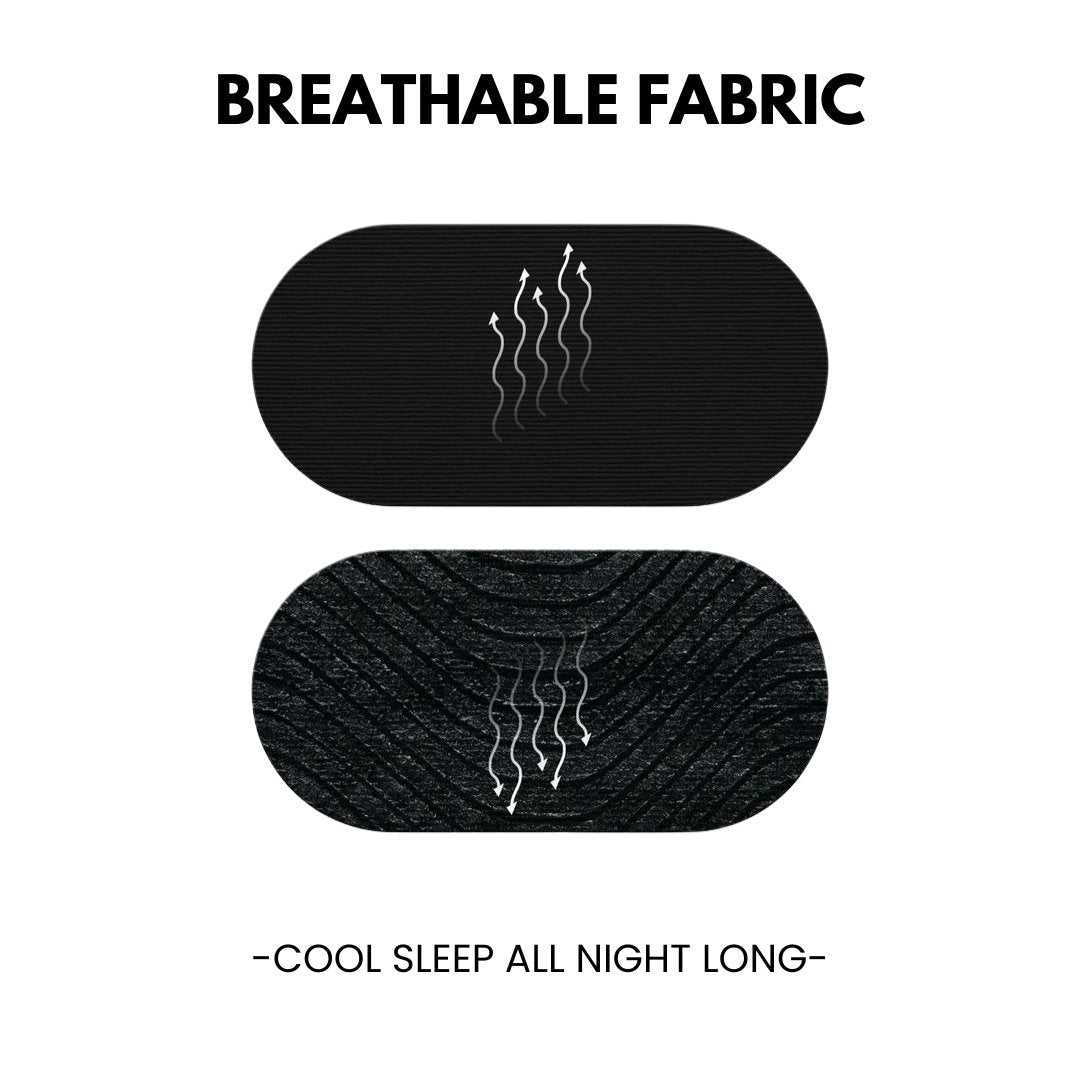
That last point is why gentle mouth tape is such a useful companion to breathing exercises. It holds your lips closed while you sleep so nasal breathing stays the default through the hours you cannot control. The daytime exercises train the skill; the tape keeps it running overnight. If congestion is part of your picture, pairing tape with strips, the idea behind the Deep Sleep Bundle, opens both ends of the airway. New to it? Start with our step-by-step guide to mouth taping, and see breathing through your nose while sleeping for more.
How long until it becomes automatic?
Expect a few weeks for the daytime habit and immediate help at night. The two timelines run separately, and it helps to hold them apart.
The conscious daytime habit, remembering to close your lips and breathe through your nose without thinking, generally takes two to four weeks of consistent practice to feel automatic. CO2 tolerance builds on a similar curve; breath-holds that felt short in week one usually feel comfortable by week three. The more reps you get during the day, the faster it sticks.
The nighttime side works right away, because tape does the holding for you rather than relying on a habit. Many people notice less dry mouth the first morning, since that effect is purely mechanical. Improvements in snoring and how rested you feel tend to build over two to three weeks as nasal breathing becomes your overnight rhythm. For the mechanism, see how mouth tape works.
Frequently Asked Questions
Which nasal breathing exercise should I start with?
Start with nasal humming and diaphragmatic breathing. Humming is the simplest way to reconnect with nasal airflow, and belly breathing teaches the slow, low rhythm that makes nose breathing sustainable. Add alternate-nostril breathing and gentle breath-holds once those two feel natural, usually after a week or so.
How often should I practice nasal breathing exercises?
Daily is ideal, but even a few minutes counts. A practical routine is five minutes of diaphragmatic breathing plus a short round of humming or alternate-nostril breathing, once in the morning and once before bed. Consistency matters far more than long sessions.
Why does breathing through my nose feel like I can't get enough air?
That feeling is usually low carbon dioxide tolerance rather than a real oxygen shortage. Your urge to breathe is driven mostly by rising CO2, so if you are sensitive to it, slow nasal breathing feels restrictive. Gentle breath-holds raise that tolerance over a few weeks, and the sensation fades as you adapt.
Are breath-holds safe for everyone?
No. Keep them gentle and stop at the first real urge to breathe. Avoid them while driving or near water, and skip them entirely if you are pregnant or have a cardiac condition, high blood pressure, epilepsy, or a respiratory illness, unless your doctor has cleared you. The other exercises here, like humming and belly breathing, are gentle enough for almost anyone.
Can nasal breathing exercises help me sleep better?
They can help set the stage. Slow diaphragmatic breathing before bed calms your nervous system and lowers your heart rate, which makes falling asleep easier. The catch is that any pre-sleep exercise stops when you fall asleep, so pairing it with gentle mouth tape keeps nasal breathing going all night rather than just at bedtime.
Do I still need mouth tape if I practice these exercises?
Not necessarily, but it helps most people. The exercises train nasal breathing while you are awake and aware; tape holds the habit through sleep, when conscious control disappears and the mouth tends to fall open. Many use tape as a bridge while the daytime habit takes hold.
The Bottom Line
Nasal breathing is a trainable skill, and a handful of exercises cover the whole job. Nasal humming rebuilds awareness and boosts nitric oxide, diaphragmatic breathing teaches the slow low rhythm your nose is built for, alternate-nostril breathing balances and calms, and gentle breath-holds raise the CO2 tolerance that stops nose breathing from feeling like a struggle. Practice daily, keep your lips together and your tongue on the roof of your mouth during the day, and clear congestion so the nose can actually do the work.
Give the daytime habit two to four weeks, and treat breath-holds with respect, gentle only, and cleared with a doctor first if you are pregnant or have a heart, blood pressure, or respiratory condition. Then hold the habit overnight with gentle mouth tape, and add a nasal strip if congestion narrows the airway. The exercises build the skill; keeping your mouth closed at night is what makes it stick.
Doctor Recommended: "As a maxillofacial surgeon and dentist, I recommend Titan Mouth Tape. Nasal breathing during sleep is essential for airway health and deep restorative rest. Titan's bamboo silk design is the most comfortable and effective mouth tape I have tested. If you struggle with snoring, dry mouth, or poor sleep quality, this is the simplest change you can make for your health." — Dr. Francois P., MD, DDS — Maxillofacial Surgeon
Lab-Tested Safety: Titan's adhesive is independently tested to ISO 10993 medical device standards. Non-toxic (95% cell viability). Non-allergenic (0% reaction rate). Non-irritating (score 0.0/8.0). PFAS-free — 501 compounds tested, zero detected. See full test results →
Try the complete system tonight. Titan Mouth Tape (bamboo silk, SilkSeal™ adhesive) + TitanAir Nasal Strips. Free shipping. 30-night Better Sleep Guarantee. Shop Titan Mouth Tape → · Shop TitanAir Nasal Strips →