Can You Suffocate from Mouth Tape? The Truth
Share
It's the first question almost everyone asks before trying mouth tape: can you suffocate from mouth tape while you sleep? The short answer is no. Sleep-grade mouth tape is porous and breathable, your body's survival reflexes remain fully active during sleep, and you can open your mouth through the tape if you need to. This is not the same as sealing your airway shut.
But the fear is reasonable. The idea of taping your mouth closed before falling unconscious sounds alarming until you understand what sleep mouth tape actually is, how it differs from the tape in your garage, and what your body does to protect itself when airflow is restricted. Let's walk through the real safety picture — honestly and completely.
Sleep Mouth Tape Is Not Duct Tape
The suffocation concern comes from imagining a strong, airtight seal across the mouth — which is exactly what sleep mouth tape is designed not to create. Medical-grade mouth tape intended for sleep use is fundamentally different from industrial tape, packing tape, or even standard first-aid tape.
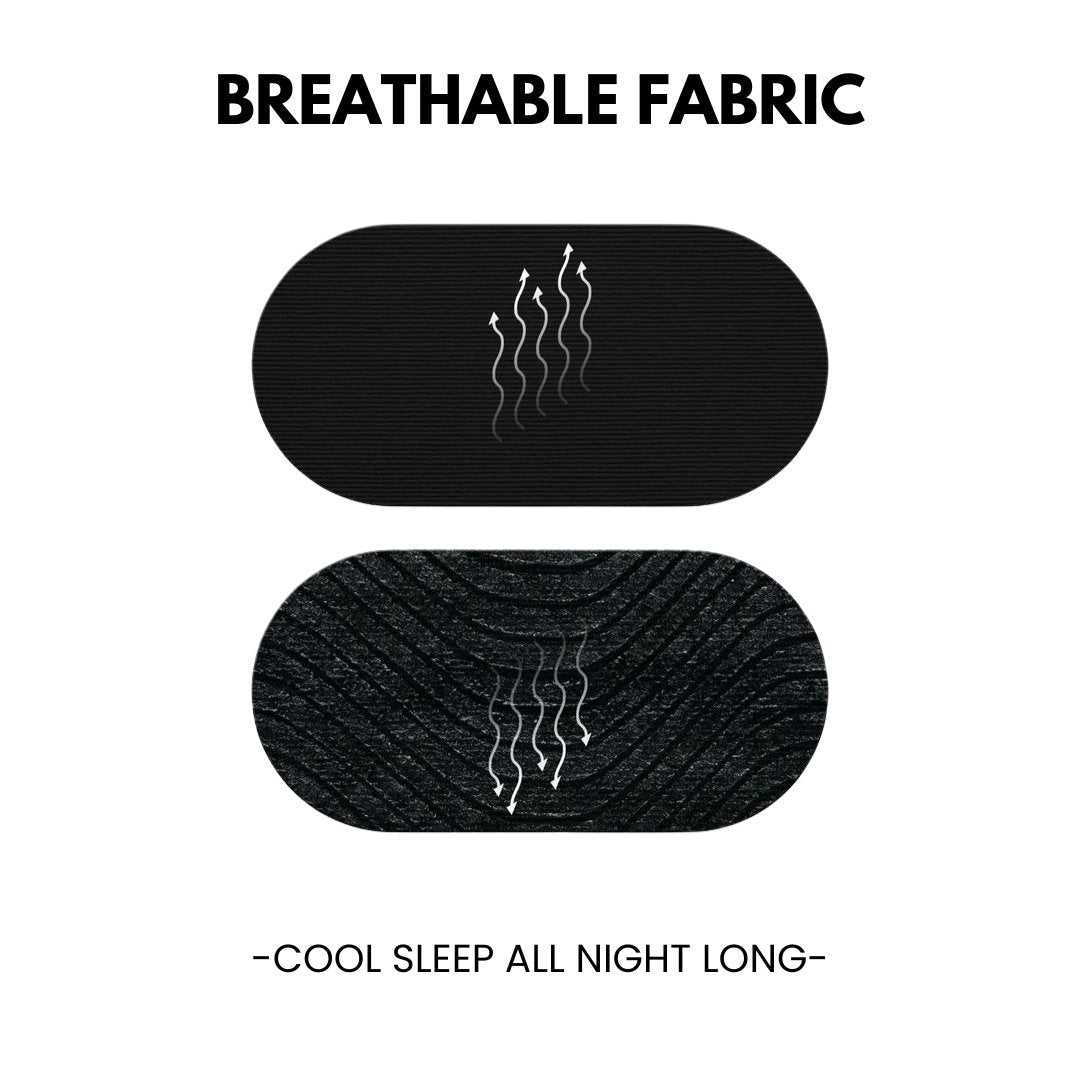
Porosity. Sleep-grade tapes are made from breathable materials — woven fabrics, microporous films, or natural fibers like bamboo silk. Air passes through the tape itself. Even with the tape applied, you're not creating an airtight seal over your lips. The material allows limited airflow through the weave, which means even in a worst-case scenario where your nose becomes completely blocked during the night, some air can still move through the tape.
Adhesive strength. The adhesive on sleep tape is calibrated to stay in place under normal sleeping conditions but release under deliberate pressure. It's a gentle, skin-safe adhesive — not the aggressive bonding you'd get from duct tape or athletic tape. You can open your mouth through the tape. It stretches, peels at the edges, or releases from the skin entirely when you push against it with your jaw or tongue. This is by design.
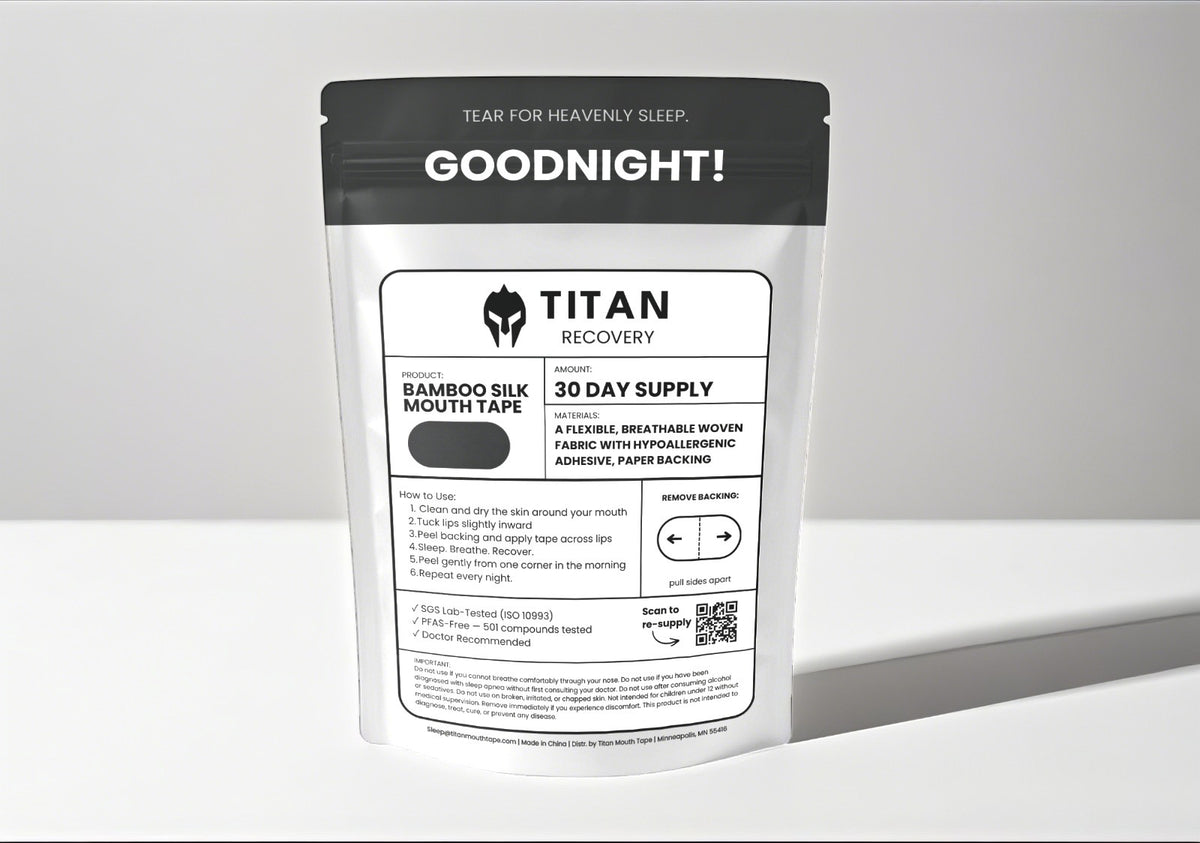
Coverage area. Most sleep tapes cover only the center of the lips, not the entire mouth and surrounding skin. Titan Mouth Tape uses a vertical strip design that holds the lips gently together without creating a hermetic seal across the full mouth area. The corners of the lips remain partially uncovered, providing another route for emergency airflow if needed.
Your Body's Built-In Safety System
The most important reason you cannot suffocate from sleep mouth tape is biological, not mechanical. Your body has deeply wired survival reflexes that operate independently of conscious awareness — and they don't turn off when you fall asleep.
The arousal response. When blood oxygen levels drop or carbon dioxide levels rise beyond a threshold, your brainstem triggers an arousal response. This is the same mechanism that wakes you if a pillow covers your face or if you develop an airway obstruction during sleep. You don't need to be awake to detect breathing difficulty — your autonomic nervous system monitors respiratory chemistry continuously. A rise in CO2 triggers increasingly urgent signals: deeper breathing effort first, then movement, then full awakening. This happens before oxygen levels drop to any dangerous level.
The mouth-opening reflex. If nasal airflow becomes insufficient during sleep — because of congestion, position change, or any other reason — your jaw relaxes and your mouth opens. This is an involuntary reflex. When mouth tape is present, this reflex generates enough force to break the adhesive seal or stretch the tape enough for air to pass. Your jaw muscles are strong. Sleep tape adhesive is deliberately weak. The math favors your airway every time.
The cough and gag reflexes. If something triggers your airway — mucus, saliva, or any other irritant — your cough reflex fires with substantial force, more than enough to break through any sleep-grade tape. These reflexes are active during all sleep stages, including deep sleep.
What the Research Shows
Studies examining the safety of mouth taping during sleep have not identified suffocation as a realistic risk in healthy adults. Research published in sleep medicine journals has measured blood oxygen saturation in mouth-taping participants and consistently found levels within normal ranges throughout the night. Participants who experienced nasal congestion during the study period simply opened their mouths through the tape — exactly as the reflexes described above would predict.
Millions of people worldwide now use mouth tape nightly, and the practice has been recommended by dentists, ENTs, and sleep specialists. The absence of suffocation incidents in this large population of users is itself meaningful evidence. The broader safety profile of mouth taping is well-documented and reassuring for the vast majority of users.
The Difference Between Uncomfortable and Unsafe
One thing worth separating is the distinction between feeling uncomfortable and being in danger. The first few nights with mouth tape can feel unusual. You're changing a breathing pattern that your body has defaulted to for years — potentially decades. There's a psychological adjustment period where the sensation of having your mouth closed feels restrictive, even though your nasal airway is completely open and functioning normally.
This is discomfort, not danger. If you can breathe through your nose with your mouth closed while awake — lying down, relaxed — then your airway is adequate for mouth taping. The discomfort you might feel initially is your nervous system adjusting to a new pattern, not a sign that you're running low on oxygen.
If you're nervous about starting, a practical approach is to wear the tape for 30 minutes while reading or watching TV before bed. This lets you experience the sensation while fully awake and conscious, which typically resolves the anxiety before sleep enters the equation.
Who Should Actually Avoid Mouth Tape
While suffocation risk from mouth tape is essentially zero for healthy adults, there are specific groups who should not use it — not because the tape itself is dangerous, but because their underlying conditions make restricting any breathing route inadvisable.
Severe nasal obstruction. If you cannot breathe through your nose at all — due to severe deviated septum, nasal polyps, acute sinusitis, or complete congestion — mouth tape removes your only functional airway. Don't tape until the obstruction is treated or resolved. Partial nasal obstruction is a different story: pairing mouth tape with a nasal strip can compensate for mild to moderate restriction.
Intoxication or heavy sedation. Alcohol, sedatives, and certain medications suppress the arousal response — the same reflex that wakes you when breathing becomes difficult. If that reflex is significantly dampened, the safety margin narrows. If you've been drinking heavily or are on medications that cause deep sedation, skip the tape for the night.
Undiagnosed or untreated severe sleep apnea. If you have significant obstructive sleep apnea that hasn't been evaluated by a sleep specialist, mouth tape is not the right starting point. Sleep apnea involves airway collapse at the throat level, which is a different problem from mouth breathing. Get a diagnosis and appropriate treatment first — then discuss mouth taping with your provider as a potential complement.
Children under the age of supervised use. Mouth tape is an adult product. Children's airways are smaller, their sleep patterns differ, and they may not have the motor coordination to remove tape if needed. Do not use mouth tape on young children.
Severe nausea or active vomiting. If you're ill with a stomach bug, dealing with severe GERD, or have any condition that makes nighttime vomiting likely, skip the tape until the episode passes. While the tape can be opened by the force of vomiting, this is a situation where removing a variable is the responsible choice.
Why People Use It Despite the Fear
If the idea of mouth taping seems extreme, consider what happens without it. Chronic mouth breathing during sleep is associated with dry mouth (which accelerates tooth decay and gum disease), snoring, disrupted sleep architecture, reduced deep sleep time, and morning fatigue. Research on nasal versus oral breathing consistently shows that nasal breathing delivers humidified, filtered, nitric-oxide-enriched air to the lungs — benefits that are well-established in respiratory physiology.
People who start mouth taping and stick with it for a few weeks typically report deeper sleep, reduced snoring, less dry mouth, and better morning energy. The initial fear of suffocation fades quickly once you experience a few nights of uneventful, comfortable nasal breathing. The tape becomes a non-event — you apply it, you sleep, you wake up feeling better.
How to Start Safely
If you're ready to try mouth tape but want to minimize any anxiety, here's a practical protocol:
- Test nasal breathing first. Lie down, close your mouth, and breathe through your nose for two minutes. If this feels easy and natural, your nose is clear enough.
- Use a proper sleep tape. Not surgical tape, not athletic tape, not anything from the hardware store. Use a product designed for sleep — breathable, gentle adhesive, appropriate coverage. Titan Mouth Tape is made from bamboo silk with a medical-grade adhesive tested to ISO 10993.
- Add a nasal strip if needed. If nasal breathing feels slightly restricted, a TitanAir Nasal Strip opens the nasal valve mechanically and makes the experience noticeably easier.
- Wear it awake first. Put the tape on 30 minutes before bed while you're doing something relaxing. You'll realize quickly that you can breathe fine — and that you can open your mouth through the tape if you want to.
- Commit to a week. The first night is the hardest because it's unfamiliar. By the third or fourth night, most people stop noticing the tape entirely. Our 7-day mouth tape challenge gives you a structured plan for that first week.
The Bottom Line
You cannot suffocate from sleep-grade mouth tape. The tape is porous and breathable. The adhesive is deliberately gentle enough that your jaw can open through it. Your body's survival reflexes — arousal response, mouth-opening reflex, cough reflex — remain fully active during sleep and override any mild adhesive seal. This is backed by clinical observation and the real-world experience of millions of nightly users worldwide.
The people who should avoid mouth tape are those with severe nasal obstruction, heavy intoxication, undiagnosed severe sleep apnea, or active nausea — not because the tape causes suffocation, but because those conditions already compromise breathing and adding any variable is inadvisable. For everyone else, the fear of suffocation is understandable but unfounded. Try the Titan Deep Sleep Bundle — mouth tape plus nasal strips — and experience for yourself how uneventful a night of nasal breathing actually is.
Doctor Recommended: "As a maxillofacial surgeon and dentist, I recommend Titan Mouth Tape. Nasal breathing during sleep is essential for airway health and deep restorative rest. Titan's bamboo silk design is the most comfortable and effective mouth tape I have tested. If you struggle with snoring, dry mouth, or poor sleep quality, this is the simplest change you can make for your health." — Dr. Francois P., MD, DDS — Maxillofacial Surgeon
Lab-Tested Safety: Titan's adhesive is independently tested to ISO 10993 medical device standards. Non-toxic (95% cell viability). Non-allergenic (0% reaction rate). Non-irritating (score 0.0/8.0). PFAS-free — 501 compounds tested, zero detected. See full test results →
Try the complete system tonight. Titan Mouth Tape (bamboo silk, SilkSeal™ adhesive) + TitanAir Nasal Strips. Free shipping. 30-night Better Sleep Guarantee. Shop Titan Mouth Tape → · Shop TitanAir Nasal Strips →
This article is for informational purposes only and does not constitute medical advice. If you have or suspect a sleep disorder or other medical condition, consult a qualified healthcare provider before making changes to your routine.