Can Mouth Tape Help TMJ? What the Research Says
Share
If you deal with jaw pain, clicking, popping, or stiffness — especially in the morning — you've probably looked into TMJ disorder and wondered what's making it worse. One question that keeps coming up in sleep health circles: can mouth tape help TMJ? The honest answer depends on your situation. Mouth tape is not a treatment for TMJ disorder. But mouth breathing during sleep is a documented contributor to jaw tension, clenching, and grinding — and mouth tape addresses that specific piece of the puzzle. Here's what's actually going on, what the research supports, and where mouth tape fits into the bigger picture.
What TMJ Disorder Actually Is
TMJ stands for temporomandibular joint — the hinge joint that connects your lower jaw (mandible) to your skull, just in front of each ear. You have two of them, one on each side. These joints are responsible for every jaw movement: chewing, talking, yawning, swallowing. When something goes wrong with the joint itself, the surrounding muscles, or both, the result is temporomandibular joint disorder — often shortened to TMJ or TMD.
Common signs include pain or tenderness in the jaw, aching around the ear, difficulty chewing, a clicking or popping sound when opening or closing the mouth, locking of the joint, and facial pain that can radiate to the neck and shoulders. Some people experience tension headaches near the temples that are actually driven by TMJ dysfunction.
TMJ disorder has multiple potential causes: arthritis in the joint, injury or trauma, structural misalignment of the teeth or jaw (malocclusion), habitual clenching or grinding (bruxism), and stress-related muscle tension. In many cases, the cause is multifactorial — several contributing factors combine to sustain the problem. This matters because no single intervention is likely to resolve TMJ disorder entirely. But addressing individual contributing factors can make a meaningful difference in symptom severity.
The Connection Between Mouth Breathing and TMJ
Here is where things get relevant to mouth tape. Mouth breathing during sleep has a documented relationship with jaw positioning, muscle tension, and bruxism. The connection becomes clear when you look at what happens to the jaw when the mouth is open versus closed.
When you breathe through your nose with your mouth closed, the tongue rests against the roof of the mouth (the palate), the teeth are slightly apart or lightly touching, and the jaw muscles are in a relatively relaxed position. This is the resting posture the jaw was designed for. The muscles of mastication — the masseter, temporalis, and pterygoid muscles — are at their lowest activation state, and the joint is under minimal load.
When you breathe through your mouth, the jaw drops open. The tongue moves down and forward, away from the palate. This changes the biomechanics of the entire jaw system. The muscles that control jaw position have to work differently to maintain the airway while the mouth is open. Over the course of a full night of sleep — six to eight hours — this altered positioning can lead to muscle fatigue, tension, and compensatory clenching.
Research in dental and orofacial pain literature has shown that chronic mouth breathers are more likely to exhibit signs of bruxism (teeth grinding and clenching) during sleep. The mechanism appears to involve both the altered jaw position and the body's response to airway instability. When the airway feels compromised — which can happen with mouth breathing, especially in certain sleep positions — the jaw muscles may clench reflexively to stabilize the airway. The result is sustained involuntary muscle contraction that loads the temporomandibular joint and fatigues the surrounding musculature. If you wake up with a sore throat every morning, jaw stiffness, or tooth sensitivity, this pattern may be part of the explanation.
How Bruxism Makes TMJ Worse
Bruxism and TMJ disorder are closely linked, though they are distinct conditions. Bruxism refers to involuntary grinding or clenching of teeth during sleep. TMJ disorder refers to dysfunction of the joint and its surrounding structures. The two frequently coexist and exacerbate each other.
Sleep bruxism places enormous force on the temporomandibular joint. The masseter muscle — the primary clenching muscle — is one of the strongest in the body relative to its size. During bruxism episodes, it generates forces that far exceed normal chewing loads, compressing the articular disc, straining ligaments, and irritating surrounding tissues. Over time, this repeated loading worsens joint inflammation, contributes to clicking and popping, and produces the morning jaw pain and stiffness that TMJ sufferers know well.
If mouth breathing during sleep is contributing to bruxism — and the research supports that connection — then anything that reduces mouth breathing may indirectly reduce one of the mechanical stresses driving TMJ symptoms. That's the case for mouth tape: not as a direct TMJ treatment, but as a tool that addresses a contributing factor upstream.
What Mouth Tape Does (and Does Not Do) for TMJ
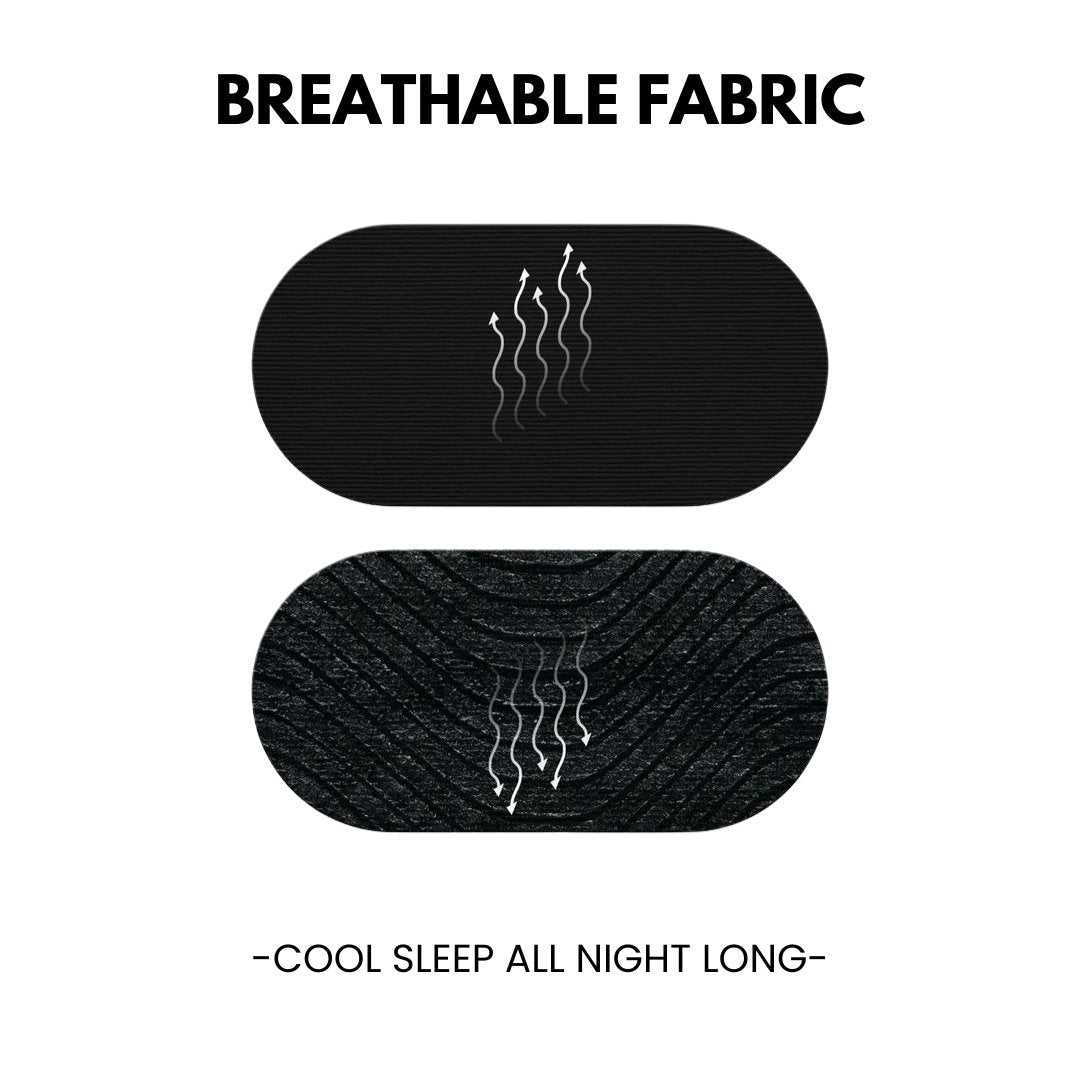
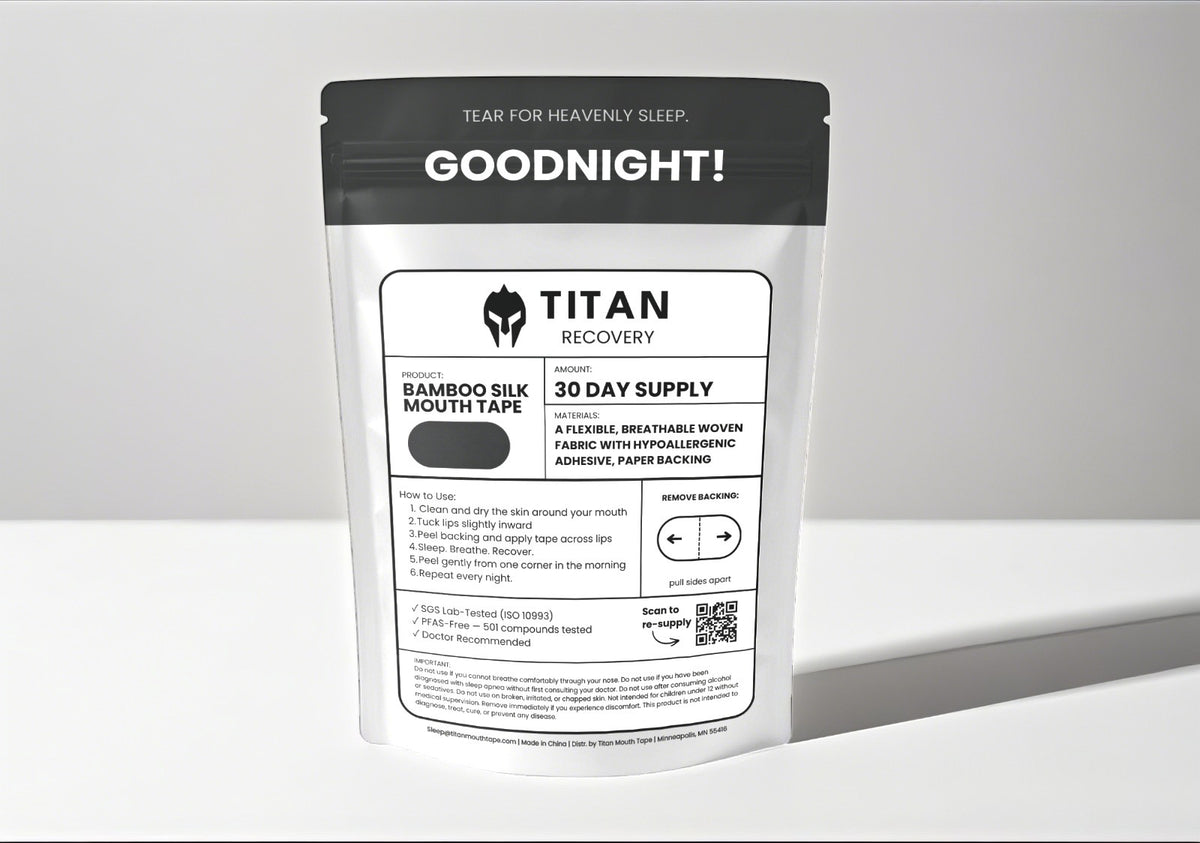
Titan Mouth Tape holds the lips gently together during sleep, routing all breathing through the nose. This simple mechanical change has several downstream effects that are relevant to TMJ disorder.
First, it promotes the closed-mouth resting jaw position. With the lips sealed and breathing routed nasally, the tongue returns to its natural position against the palate, the teeth separate slightly, and the jaw muscles can relax into their lowest-tension state. This is the position that places the least load on the temporomandibular joint.
Second, nasal breathing is inherently slower and more rhythmic than mouth breathing. The increased airflow resistance of the nasal passages naturally slows the respiratory rate, which promotes parasympathetic nervous system activity — the "rest and digest" branch that reduces muscle tension throughout the body, including the jaw. If you're working on how to breathe through your nose while sleeping, mouth tape is the most reliable method for maintaining nasal breathing all night.
Third, by stabilizing the airway through nasal breathing, mouth tape may reduce the reflexive jaw clenching that some researchers believe is an airway-protection response to mouth breathing. If the body isn't sensing airway instability, the trigger for that protective clenching response is removed.
What mouth tape does not do is treat the underlying causes of TMJ disorder. It does not correct joint damage, repair a worn articular disc, fix malocclusion, or eliminate stress. It does not replace professional diagnosis and treatment. If you have TMJ disorder, you should see a dentist, oral surgeon, or TMJ specialist — imaging, bite analysis, and clinical examination are necessary for proper diagnosis and treatment planning.
Mouth tape occupies a specific and limited role: it may help reduce mouth breathing and the jaw tension and bruxism that can accompany it. For some people, that's a meaningful piece of the puzzle. For others, the primary drivers of their TMJ disorder may have nothing to do with mouth breathing, and mouth tape won't make a noticeable difference.
Combining Mouth Tape with a Night Guard
Many people with TMJ disorder use a night guard (occlusal splint) — a custom-fitted dental appliance that prevents the upper and lower teeth from making direct contact during sleep. Night guards reduce the mechanical damage from bruxism and can help redistribute the forces on the temporomandibular joint. They're one of the most common first-line treatments recommended by dentists for TMJ disorder and sleep bruxism.
A common question is whether you can use mouth tape and a night guard at the same time. The answer is yes — and some people find the combination more effective than either one alone. The night guard protects the teeth and joint from grinding forces. The mouth tape promotes nasal breathing and a relaxed jaw position, which may reduce the frequency and intensity of clenching and grinding episodes in the first place. The two tools address different parts of the problem. If you already use a night guard, combining it with mouth tape is straightforward — apply the tape over your lips as usual, with the night guard already in place.
If you're considering this combination, discuss it with your dentist. They can confirm that your specific night guard design is compatible with mouth taping and that nasal breathing is unobstructed when both are in use. For most people, the combination works well, but individual anatomy and appliance design vary.
Is Mouth Tape Safe for People with TMJ?
Mouth tape is generally safe for most adults who can breathe comfortably through their nose. The tape is applied over the lips — it does not affect the jaw joint, the teeth, or the bite in any mechanical way. It does not exert force on the jaw or change the structural position of the temporomandibular joint. Its role is limited to encouraging lip closure and nasal breathing.
That said, there are situations where you should consult a healthcare provider first. If you have severe nasal obstruction (deviated septum, nasal polyps, or chronic congestion) that prevents comfortable nasal breathing, mouth tape may not be appropriate until the obstruction is addressed. Pairing mouth tape with TitanAir Nasal Strips can help open the nasal passages, but significant structural obstruction may need medical evaluation. If you have been diagnosed with obstructive sleep apnea, talk to your sleep medicine provider before adding mouth tape — it is not a substitute for CPAP or other prescribed treatments. For more on safety considerations, see our guide on whether mouth taping is safe.
When to See a Specialist
Mouth tape may help you sleep with a more relaxed jaw and reduce one factor that contributes to TMJ symptoms. But TMJ disorder is a medical condition that warrants professional evaluation, especially if your symptoms are persistent, worsening, or significantly affecting your quality of life.
See a dentist or TMJ specialist if you experience chronic jaw pain lasting more than a few days, clicking or popping with pain or limited range of motion, jaw locking, headaches originating near the temples, ear pain with no diagnosed ear condition, or teeth that show visible grinding damage. A specialist can determine the cause and recommend treatment — which may include a custom night guard, physical therapy, medication, stress management, bite adjustment, or in rare cases, surgery.
Mouth tape is not a substitute for any of those treatments. It's a sleep hygiene tool that addresses one contributing factor — mouth breathing and its downstream effects on jaw tension and bruxism. Used alongside professional care, it can be a useful part of a broader strategy. Used in place of professional care, it's not enough.
Disclaimer: This article is for informational purposes only and does not constitute medical advice. Mouth tape is not a medical device and is not intended to diagnose, treat, cure, or prevent any disease or medical condition, including TMJ disorder. If you experience jaw pain, clicking, locking, or other symptoms of TMJ dysfunction, consult a qualified dentist, oral surgeon, or TMJ specialist for proper evaluation and treatment.
Doctor Recommended: "As a maxillofacial surgeon and dentist, I recommend Titan Mouth Tape. Nasal breathing during sleep is essential for airway health and deep restorative rest. Titan's bamboo silk design is the most comfortable and effective mouth tape I have tested. If you struggle with snoring, dry mouth, or poor sleep quality, this is the simplest change you can make for your health." — Dr. Francois P., MD, DDS — Maxillofacial Surgeon
Lab-Tested Safety: Titan's SilkSeal™ adhesive is independently tested to ISO 10993 medical device standards. Non-toxic (95% cell viability). Non-allergenic (0% reaction rate). Non-irritating (score 0.0/8.0). PFAS-free — 501 compounds tested, zero detected. See full test results →
Try it tonight. Bamboo silk. SilkSeal™ adhesive. Beard-friendly. No logo on the tape. Free shipping. 30-night Better Sleep Guarantee. Shop Titan Mouth Tape → · Shop TitanAir →
Doctor Recommended: "As a maxillofacial surgeon and dentist, I recommend Titan Mouth Tape. Nasal breathing during sleep is essential for airway health and deep restorative rest. Titan's bamboo silk design is the most comfortable and effective mouth tape I have tested. If you struggle with snoring, dry mouth, or poor sleep quality, this is the simplest change you can make for your health." — Dr. Francois P., MD, DDS — Maxillofacial Surgeon
Lab-Tested Safety: Titan's adhesive is independently tested to ISO 10993 medical device standards. Non-toxic (95% cell viability). Non-allergenic (0% reaction rate). Non-irritating (score 0.0/8.0). PFAS-free — 501 compounds tested, zero detected. See full test results →
Try the complete system tonight. Titan Mouth Tape (bamboo silk, SilkSeal™ adhesive) + TitanAir Nasal Strips. Free shipping. 30-night Better Sleep Guarantee. Shop Titan Mouth Tape → · Shop TitanAir Nasal Strips →