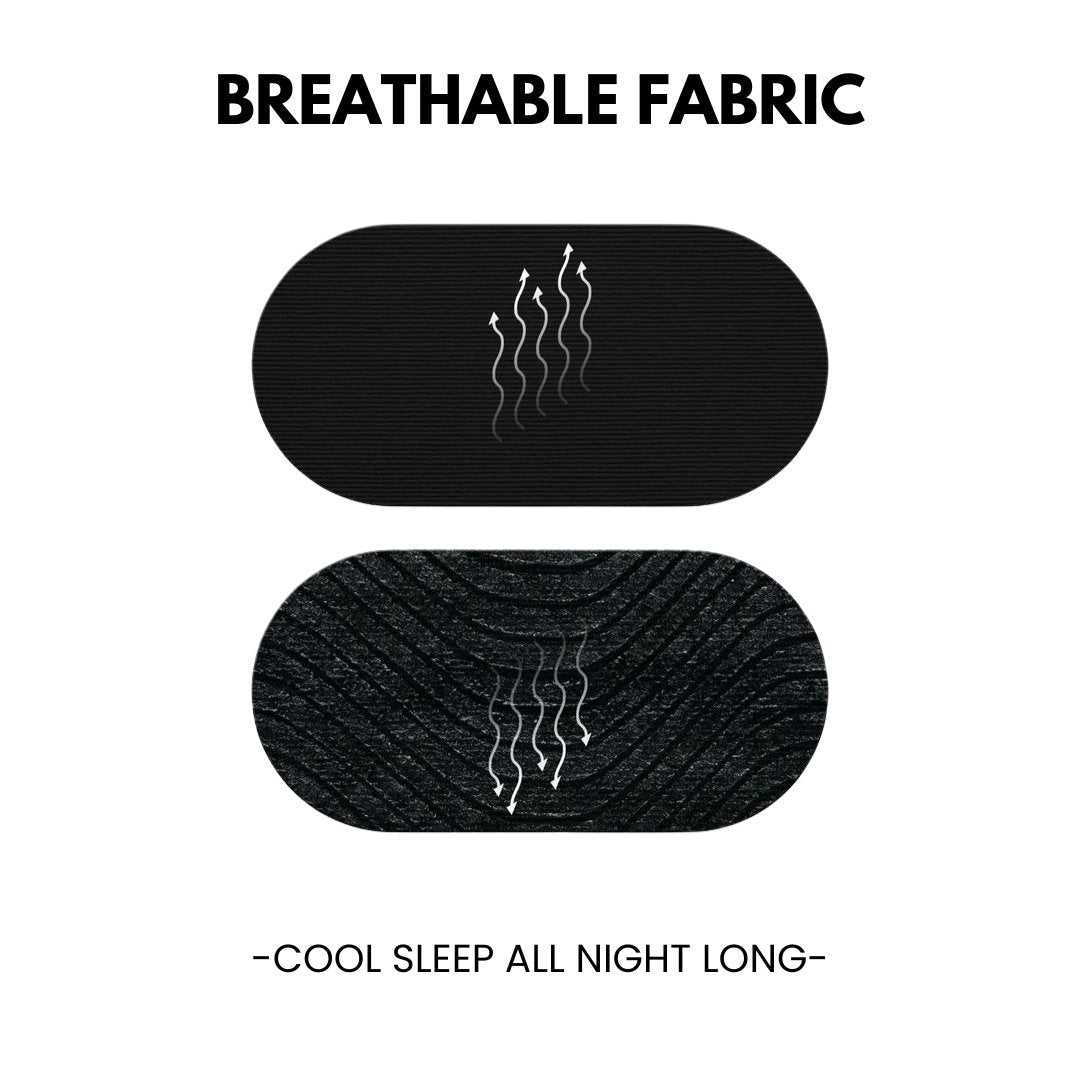
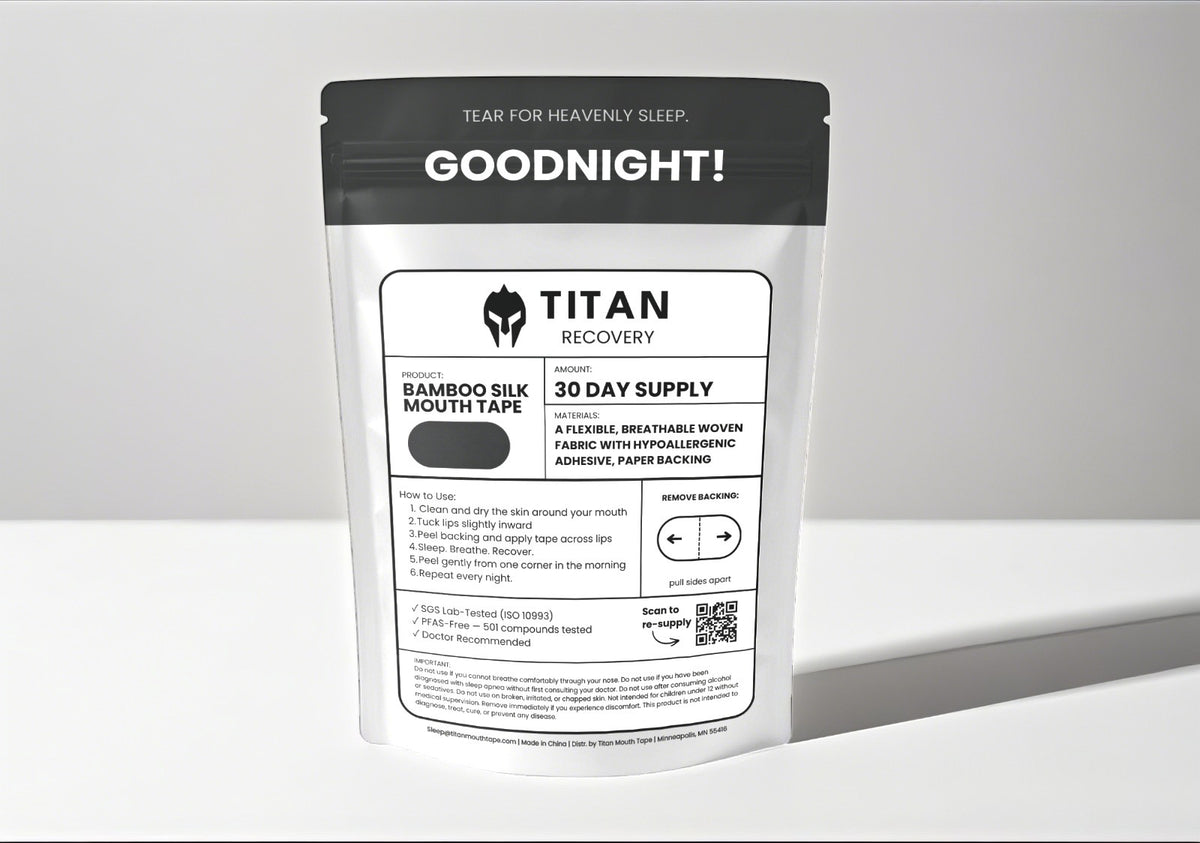
Best Sleep Tracker for Mouth Taping
Share
Mouth taping works. But if you're not tracking, you're guessing. The shift from mouth breathing to nasal breathing produces measurable changes in heart rate variability, deep sleep duration, respiratory rate, and resting heart rate. A sleep tracker turns those changes into data -- proof the habit is working, and motivation to stick with it past the first awkward week. So what's the best sleep tracker for mouth taping? The Oura Ring Gen 3 gives you the most relevant metrics with the least disruption to your sleep. But several other options work well depending on budget and priorities.
Why Tracking Matters When You Mouth Tape
Most people try mouth tape because they heard it helps with snoring, dry mouth, or deep sleep. And it does. But without data, you're relying on how you feel -- and subjective sleep assessment is notoriously unreliable. People overestimate or underestimate their sleep quality by 20-30%.
A sleep tracker gives you an objective record. You can see HRV climb, deep sleep jump from 45 to 70 minutes, resting heart rate drop by 3 BPM. Those numbers answer the question does mouth taping actually work -- not with someone else's anecdote, but with your own data.
The data also helps you troubleshoot. If your sleep tracker mouth tape results show no improvement after two weeks, maybe you need nasal strips to open a congested airway. If deep sleep improves but total sleep doesn't, maybe your bedtime is the real problem.
Five Metrics That Matter for Mouth Taping
Not all sleep data is equally useful. When you're trying to measure mouth tape benefits, these are the numbers to watch.
Heart rate variability (HRV). The single most responsive metric. Nasal breathing activates the parasympathetic nervous system through vagus nerve stimulation, raising HRV. Most people see a 5-15 ms improvement within two to four weeks. Higher HRV means better recovery and deeper rest.
Deep sleep percentage. Mouth breathing causes micro-arousals that pull you out of slow wave sleep. Nasal breathing reduces these interruptions by maintaining stable oxygen and CO2 levels. Look for an increase of 10-30 minutes of deep sleep per night.
Respiratory rate. Nasal breathing slows your breathing rate -- most people drop from 14-18 breaths per minute to 8-12 during sleep. A tracker that logs respiratory rate confirms you're nasal breathing all night, not just at the start.
Resting heart rate (RHR). The same parasympathetic activation that raises HRV lowers RHR. Even a 2-3 BPM drop is significant. This metric responds fastest -- often visible within the first week.
Sleep score. Most trackers compute a composite sleep score from the above metrics plus sleep duration and consistency. It's a useful snapshot, but dig into the components -- a higher score from more deep sleep is a direct mouth-taping benefit, while a higher score from sleeping longer is a bedtime benefit.
Sleep Tracker Comparison for Mouth Taping
Here's how the major trackers stack up for tracking mouth taping progress specifically -- not general fitness, not step counting, just the metrics that change when you switch from mouth breathing to nasal breathing.
| Tracker | Sleep Stages | HRV | Respiratory Rate | Sleep Comfort | App Quality | Price |
|---|---|---|---|---|---|---|
| Oura Ring Gen 3 | Excellent | Excellent | Yes | Excellent | Excellent | $299+ / $6/mo |
| Whoop 4.0 | Very Good | Excellent | Yes | Good | Very Good | $30/mo (subscription) |
| Apple Watch Ultra/Series | Good | Good | Yes | Fair | Good | $399-$799 |
| Garmin Venu/Fenix | Good | Very Good | Yes | Fair | Good | $300-$900 |
| Fitbit Sense 2/Charge 6 | Good | Good | Yes (Premium) | Good | Good | $150-$300 |
| Samsung Galaxy Watch 6 | Good | Fair | Yes | Fair | Good | $280-$450 |
Oura Ring leads for mouth taping because it tracks all five key metrics, exports data easily, and is barely noticeable while sleeping. At about 6 grams, it's the most comfortable option for nightly use. If you already own an Oura, we've covered the specific metrics to watch in our breakdown of what happens to your Oura score when you start mouth taping.
Whoop is the strongest option for recovery-focused users. Its HRV tracking during slow wave sleep is excellent, and the journal feature lets you tag "mouth tape" as a behavior and correlate it with recovery scores automatically.
Apple Watch, Garmin, Fitbit, and Samsung all track sleep stages, heart rate, and respiratory rate -- enough for a clean before/after experiment. The main trade-off is sleep comfort: watches are bulkier in bed than a ring or slim band.
Best Free Alternative: Phone-Based Sleep Apps
If you don't own a wearable, phone apps can still help you track mouth taping progress on a budget.
SnoreLab (free tier available) records audio overnight and scores your snoring intensity. It's the most direct sleep app for mouth taping because snoring reduction is one of the most immediate effects. Record a few nights without tape, then a few with tape, and compare scores.
Sleep Cycle (free tier available) uses your phone's accelerometer or microphone to estimate sleep stages. Less precise than a wearable, but the trend data over weeks is directionally useful.
Phone apps can't measure HRV or resting heart rate, so they're a starting point. But SnoreLab plus consistent Titan Mouth Tape usage gives you a clear signal within a week.
How to Run Your Own Before/After Experiment
Regardless of which tracker you use, the protocol is the same. Isolate mouth taping as the single variable so you can trust the results.
Step 1: Baseline (7-14 nights). Wear your tracker consistently. Keep bedtime and alcohol intake consistent. Record average HRV, RHR, deep sleep minutes, respiratory rate, and sleep score.
Step 2: Tape every night (21-30 nights). Use Titan Mouth Tape every night -- don't alternate. Mark the first 3-5 nights as adaptation and exclude them from analysis. If you ramp up gradually, the adaptation period may be shorter.
Step 3: Compare averages. After 14-21 clean taping nights, compare each metric to baseline. Weekly averages smooth out night-to-night noise. Look at direction and magnitude of change across all five metrics.
Step 4: Stack if needed. If results are positive but modest, try adding TitanAir Nasal Strips for another 14 nights. Combining mouth tape with nasal strips addresses both the oral airway and nasal resistance. The Titan Deep Sleep Bundle includes both.
What the Data Typically Shows After 30 Days
Based on patterns reported across Oura, Whoop, and Garmin communities, here's what consistent mouth tapers typically see after 30 nights:
HRV: Up 5-15 ms on average. Heavier mouth breathers see the larger end of that range.
Deep sleep: Up 10-30 minutes per night. This is the metric most people notice subjectively -- they feel more rested, and the data confirms it.
Respiratory rate: Down 2-4 breaths per minute, with less variability overnight.
RHR: Down 2-5 BPM. Often visible within the first week.
Sleep score: Composite scores typically improve 5-15 points. Users stuck in the "fair" zone often move into "good" or "optimal" territory.
The degree of improvement depends on how much mouth breathing you were doing before. Heavy mouth breathers see dramatic changes. Partial mouth breathers -- who only open up during REM or deep sleep -- see real but subtler gains.
Frequently Asked Questions
Do I need an expensive tracker to see mouth taping results?
No. A free app like SnoreLab can show you snoring reduction within the first week, which is the most immediate and obvious effect of taping. For deeper metrics like HRV and sleep staging, a wearable gives you better data, but even a mid-range Fitbit Charge tracks enough to run a meaningful before/after comparison.
Which tracker is most comfortable to sleep with?
The Oura Ring. It weighs about 6 grams and most people forget they're wearing it. Whoop's band is the next most comfortable. Watches are usable but noticeably present, especially for side sleepers.
How long should I track before judging whether mouth tape works?
Give it 30 days of consistent use, with the first 3-5 nights excluded as adaptation. Two weeks of clean data is the minimum to see trends in HRV and deep sleep. Four weeks gives you a clearer picture because it smooths out weekly cycles in stress and training load.
Can I use two trackers at the same time for better data?
Yes. A common pairing is Oura Ring for sleep metrics plus Whoop for recovery and strain context. The two platforms track HRV slightly differently, so having both gives you a more complete picture.
The Bottom Line
If you're going to mouth tape, track the results. Any tracker that logs sleep stages and HRV works. Oura gives you the best combination of relevant metrics and sleep comfort. Whoop gives you the deepest recovery analysis. Phone apps like SnoreLab give you a useful signal for free.
Pick whichever fits your budget, establish a baseline, then start taping every night with Titan Mouth Tape and let the numbers build the case. Save 11% with Subscribe and Save and run the experiment for a full month. Your own data is more convincing than anyone else's review.
Doctor Recommended: "As a maxillofacial surgeon and dentist, I recommend Titan Mouth Tape. Nasal breathing during sleep is essential for airway health and deep restorative rest. Titan's bamboo silk design is the most comfortable and effective mouth tape I have tested. If you struggle with snoring, dry mouth, or poor sleep quality, this is the simplest change you can make for your health." — Dr. Francois P., MD, DDS — Maxillofacial Surgeon
Lab-Tested Safety: Titan's adhesive is independently tested to ISO 10993 medical device standards. Non-toxic (95% cell viability). Non-allergenic (0% reaction rate). Non-irritating (score 0.0/8.0). PFAS-free — 501 compounds tested, zero detected. See full test results →
Try the complete system tonight. Titan Mouth Tape (bamboo silk, SilkSeal™ adhesive) + TitanAir Nasal Strips. Free shipping. 30-night Better Sleep Guarantee. Shop Titan Mouth Tape → · Shop TitanAir Nasal Strips →