Is Mouth Taping Safe? What the Scare Articles Don't Tell You
Share
If you googled "is mouth taping safe," you probably found a wall of articles from dentists, orthodontists, and medical websites telling you it's risky, unproven, or dangerous.
Here's what those articles have in common: none of them test a product. They evaluate mouth taping as a concept — and they evaluate it against the worst-case scenario (someone with undiagnosed sleep apnea using duct tape). Then they conclude it's dangerous.
That's like evaluating running by asking whether it's safe to sprint across a highway blindfolded.
The real safety question isn't whether mouth taping as a concept is safe. It's whether the specific product you're putting on your face — the material, the adhesive, the design — has been tested for the way you're using it: 8 hours a night on permeable skin in warm, moist conditions, repeated nightly for months or years.
Almost no one is asking that question. Here's the answer.
What the Negative Articles Get Right
Before we address what they get wrong, credit where it's due — the safety concerns raised by medical professionals are not baseless:
Mouth taping is not a treatment for sleep apnea. This is correct and critical. Sleep apnea is a medical condition involving repeated airway closure during sleep. It requires diagnosis via a sleep study and treatment with CPAP, oral appliances, or surgery. Mouth tape does not treat sleep apnea and should not be used as a substitute for medical evaluation if you suspect you have it.
You should be able to breathe through your nose. Also correct. If you have severe nasal obstruction — from a deviated septum, polyps, chronic sinusitis, or untreated allergies — taping your mouth closed without addressing the nasal issue first is not appropriate. You need a clear nasal airway before mouth taping.
People with certain conditions should not mouth tape. Correct. This includes people who have consumed excessive alcohol or sedatives, people at risk of vomiting during sleep, and children under 12 without medical supervision.
These are legitimate safety boundaries. Any responsible mouth tape brand should communicate them clearly — and any user should understand them before starting.
What the Negative Articles Get Wrong
Where the scare articles fall apart is in their failure to distinguish between the practice and the product — and their complete silence on the question that actually matters.
They evaluate "mouth taping" as if all tape is the same. Duct tape, athletic tape, medical paper tape, and purpose-built bamboo silk tape are not the same product. They don't have the same adhesive. They don't have the same material. They don't have the same safety profile. Saying "mouth taping is dangerous" because someone used duct tape is like saying "driving is dangerous" because someone drove without brakes.
They never ask what's in the adhesive. This is the most glaring omission. The adhesive is the part that contacts your skin. It sits on the perioral area — among the thinnest, most permeable skin on the body — for 7-8 hours in warm, moist conditions. Every night. For months or years. And the vast majority of articles about mouth tape safety never once ask: has this adhesive been tested for biocompatibility? Has it been screened for PFAS? Is there published data?
They dismiss the practice instead of setting standards for it. Millions of people are mouth taping. The trend is growing, not shrinking. Rather than helping consumers choose tested products, most medical articles simply say "don't do it" — which doesn't help the people who are going to do it anyway. What would actually help: telling people what to look for in a safe product.
The Safety Questions That Actually Matter
If you're going to put something on your face every night, here's what you should be asking:
1. Has the adhesive been tested for biocompatibility?
The international standard for evaluating materials that contact human skin is ISO 10993. It's the same standard used for surgical tape, wound dressings, and medical devices. Three tests matter:
Cytotoxicity (ISO 10993-5): Is the adhesive toxic to living cells? A passing result means 70%+ of cells survive exposure.
Skin sensitization (ISO 10993-10): Does the adhesive cause allergic reactions with repeated exposure? You want a 0% reaction rate.
Skin irritation (ISO 10993-10): Does the adhesive cause redness, swelling, or inflammation? Scored 0-8. You want 0.0-0.4 (negligible).
If the brand you're considering has been tested under ISO 10993 by an independent lab and publishes the results, the adhesive has been evaluated to the same standard as medical-grade skin-contact materials. That's a meaningful safety signal.
If the brand hasn't been tested — regardless of what their marketing says — you don't know what's in the adhesive you're pressing into your skin every night.
2. Has the product been screened for PFAS?
PFAS ("forever chemicals") have been found in adhesive products across consumer categories. They don't break down in the body. They accumulate with every exposure. A comprehensive screen tests for 500+ individual compounds.
If the brand hasn't screened for PFAS, you're trusting that the adhesive is clean without any evidence. For a product with this exposure profile — prolonged, nightly, on permeable skin — "probably fine" is not a safety standard.
3. Is the material breathable?
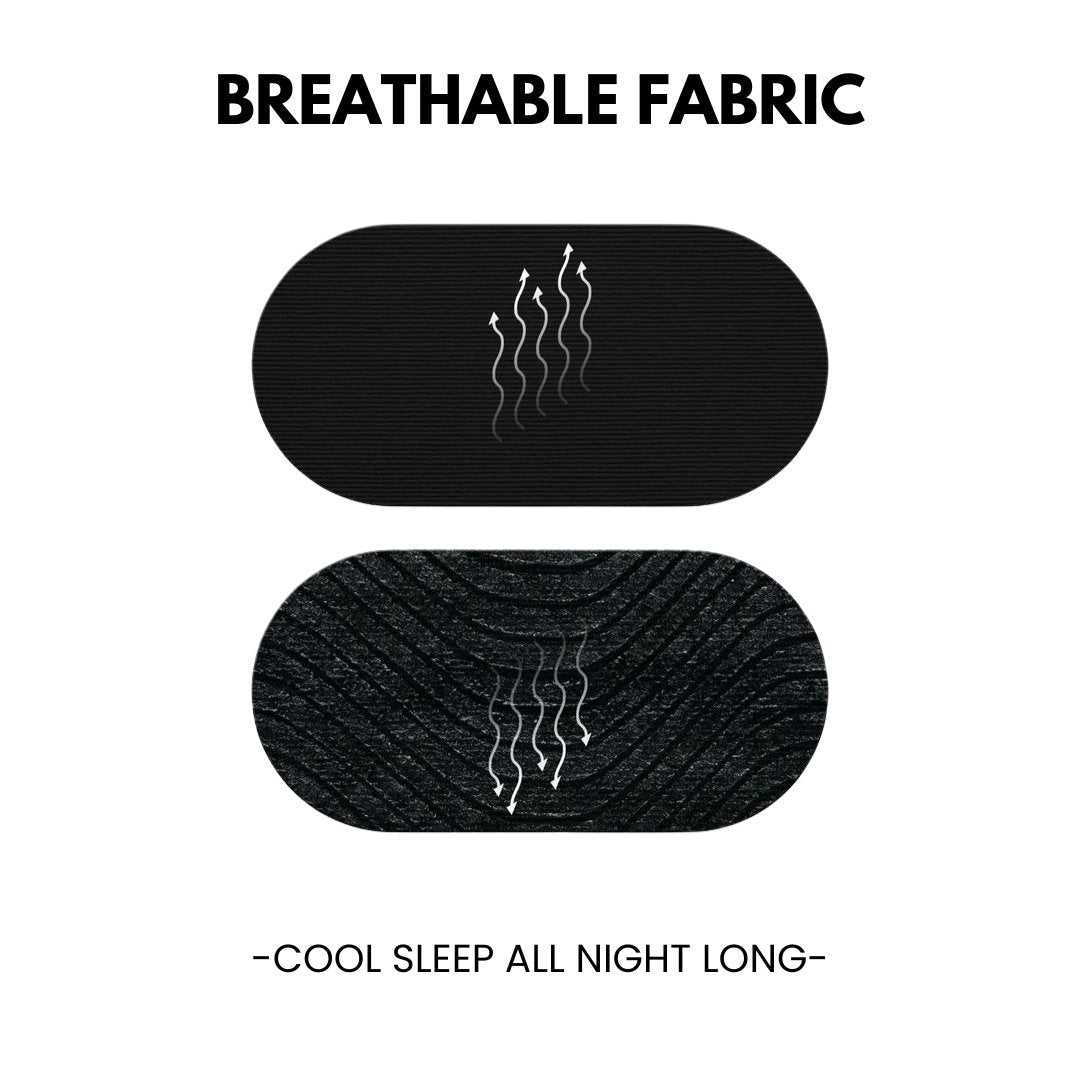
Non-breathable materials (plastic, synthetic film) trap moisture against the skin, creating conditions that can promote irritation and bacterial growth. Breathable materials (bamboo silk, woven fabrics) allow airflow through the tape, reducing moisture buildup and irritation risk.
4. Can you remove it easily?
Purpose-built mouth tape should release cleanly from one corner with gentle pressure. If the tape requires pulling, tugging, or leaves residue and redness, the adhesive is too aggressive for overnight facial use. You should be able to open your mouth and break the seal at any time during the night if needed — this is a critical safety feature.
What Titan's Testing Shows
We asked the same safety questions the medical articles should be asking — and then we got the answers tested by an independent lab.
Titan's SilkSeal adhesive was tested under ISO 10993:
Cytotoxicity (ISO 10993-5): 95% cell viability. The pass threshold is 70%. Our adhesive exceeded the standard by 25 percentage points. Classification: non-cytotoxic.
Skin sensitization (ISO 10993-10): 0% allergic reaction rate across all test subjects at all time points. Classification: non-sensitizing.
Skin irritation (ISO 10993-10): Score of 0.0 out of 8.0. The lowest possible result. Classification: negligible irritant.
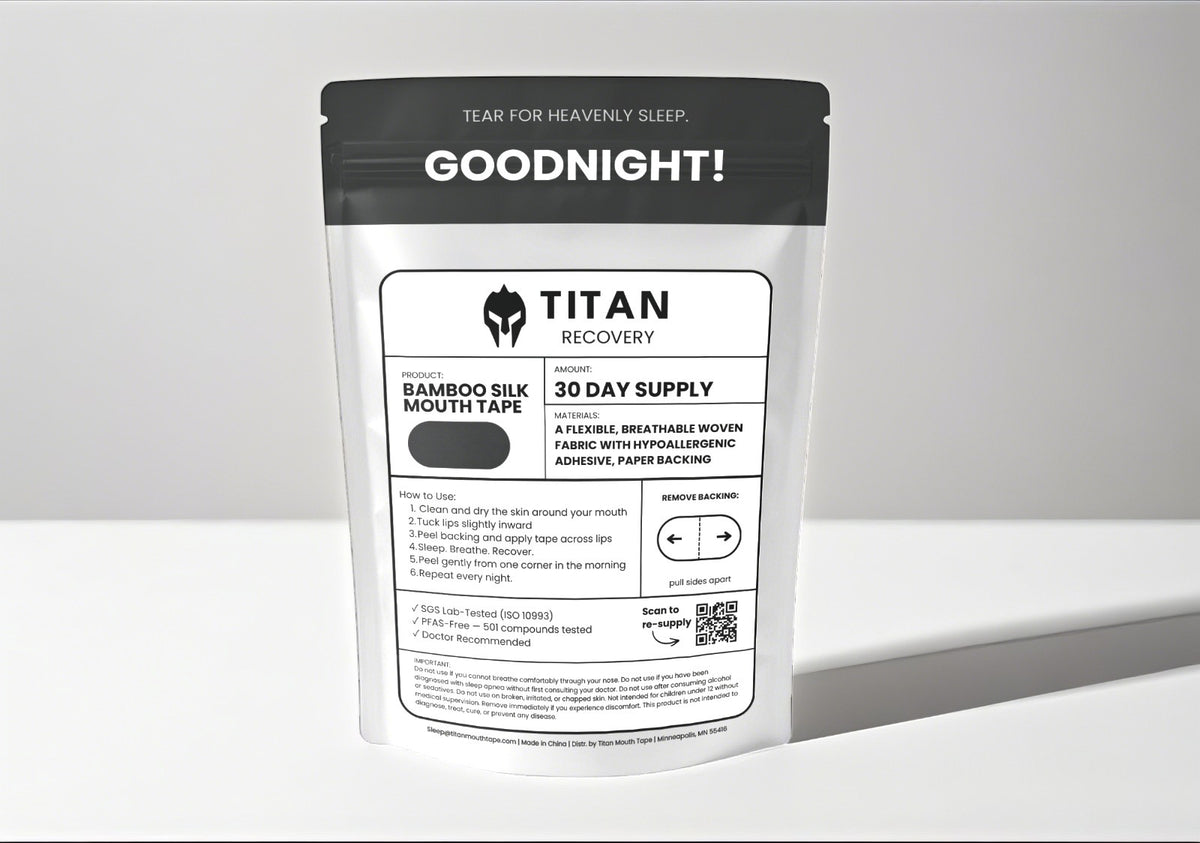
The finished tape was also screened for 501 individual PFAS compounds. Result: zero detected. Every compound returned N.D. (Not Detected).
Full test results are published here →
Most mouth tape brands haven't done this testing. Most of the articles telling you mouth taping is dangerous haven't asked whether the brands have done this testing. That's the gap.
Who Should Not Mouth Tape
We're transparent about this because safety matters more than sales:
People who cannot breathe comfortably through their nose. If your nasal passages are blocked from congestion, polyps, or structural issues, address that first. A nasal strip can help with mild restriction. Severe obstruction requires medical evaluation.
People diagnosed with moderate to severe obstructive sleep apnea. Mouth tape is not a treatment for sleep apnea. If you've been diagnosed, follow your doctor's treatment plan. If you suspect sleep apnea (witnessed breathing pauses, gasping, extreme daytime sleepiness), get a sleep study before trying mouth tape.
People who have consumed excessive alcohol or sedatives. These substances suppress the arousal reflexes that protect you during sleep.
People at risk of vomiting during sleep.
Children under 12 without medical supervision.
If none of these apply to you — if you can breathe comfortably through your nose, you don't have diagnosed sleep apnea, and you're a healthy adult — mouth taping with a tested product is generally considered a low-risk practice by the sleep medicine community.
How to Evaluate Any Mouth Tape for Safety
Before you buy any mouth tape, ask these four questions:
1. Has the adhesive been independently tested under ISO 10993? By whom? Are the results published?
2. Has the product been screened for PFAS? How many compounds? Were the results published?
3. Is the material breathable (woven fabric) or non-breathable (plastic, synthetic film)?
4. Does the tape release easily — can you open your mouth and break the seal without effort?
Any brand that answers all four transparently is one you can evaluate with confidence. Any brand that can't answer them is asking you to trust their marketing — on a product you wear on the most absorbent skin on your body for a third of your life.
The Bottom Line
Is mouth taping safe? For healthy adults using a tested product with a clear nasal airway — the evidence and millions of nightly users suggest it's a low-risk practice.
Is mouth taping safe with untested adhesive, on someone with undiagnosed sleep apnea, using duct tape from the hardware store? No. Obviously not.
The question was never "is mouth taping safe." The question is: is the specific product you're using safe? And the only way to answer that is with data — not marketing language, not "hypoallergenic" labels, not influencer testimonials.
Test the adhesive. Screen for PFAS. Publish the results. That's the standard. If your mouth tape brand meets it, use it with confidence. If it doesn't, ask why.
Doctor Recommended: "As a maxillofacial surgeon and dentist, I recommend Titan Mouth Tape. Nasal breathing during sleep is essential for airway health and deep restorative rest. Titan's bamboo silk design is the most comfortable and effective mouth tape I have tested. If you struggle with snoring, dry mouth, or poor sleep quality, this is the simplest change you can make for your health." — Dr. Francois P., MD, DDS — Maxillofacial Surgeon
Lab-Tested Safety: Titan's adhesive is independently tested to ISO 10993 medical device standards. Non-toxic (95% cell viability). Non-allergenic (0% reaction rate). Non-irritating (score 0.0/8.0). PFAS-free — 501 compounds tested, zero detected. See full test results →
Try it tonight. Bamboo silk. SilkSeal™ adhesive. Beard-friendly. No logo on the tape. Free shipping. 30-night Better Sleep Guarantee. Shop Titan Mouth Tape → · Shop TitanAir →
This article is for informational purposes only and does not constitute medical advice. If you have or suspect a sleep disorder or other medical condition, consult a qualified healthcare provider before making changes to your routine.