Mouth Tape for Dry Mouth at Night
Share
If you wake up every morning with a mouth that feels like sandpaper, you already know the drill — reach for water before your eyes are even open, peel your tongue off the roof of your mouth, and wonder why this keeps happening. Mouth tape for dry mouth at night works because it addresses the root cause directly: your mouth is falling open while you sleep, and the airflow passing over your oral tissues is drying them out. Keep the mouth closed, and the dryness stops. It really is that straightforward.
Dry mouth during sleep isn't just uncomfortable. It creates an environment where bacteria thrive, enamel erodes faster, and gum tissue gets irritated. The fix doesn't require medication or special rinses — it requires keeping your lips sealed so your saliva can do the job it was designed to do.
Why Your Mouth Gets Dry at Night
Saliva production naturally drops during sleep. Your salivary glands slow down as part of normal circadian rhythm, which means there's less moisture being produced to begin with. During the day, that's fine — you swallow, you drink, you keep things moving. During sleep, the reduced saliva output means your mouth is already working with a smaller buffer. Add mouth breathing on top of that, and the math stops working entirely.
Mouth breathing is the primary driver. When your mouth falls open during sleep, room air flows across your tongue, palate, gums, and throat. That airflow evaporates the thin layer of saliva that normally protects those surfaces. Within minutes, the tissue starts to dry out. Over a full night of mouth breathing — six, seven, eight hours — the cumulative moisture loss is significant. You wake up with that sticky, parched feeling because there's almost no saliva left coating your oral surfaces.
Nasal congestion forces the switch. Even people who breathe through their nose during the day can become mouth breathers at night. When you lie down, blood pools in the nasal turbinates (the tissue inside your nose), causing them to swell. Add allergies, a deviated septum, or seasonal congestion, and nasal resistance increases enough that your body switches to mouth breathing as the path of least resistance. You fall asleep breathing through your nose and wake up with a bone-dry mouth because the switch happened after you lost conscious control.
Medications make it worse. Antihistamines, antidepressants, blood pressure medications, and muscle relaxants all list dry mouth as a side effect. These drugs reduce saliva production systemically, so you're starting with even less moisture at bedtime. Combine medication-induced reduced saliva with mouth breathing, and you get the worst dry mouth — the kind that wakes you up at 3 a.m. desperate for water.
Alcohol and caffeine contribute. Both are mild diuretics that reduce overall hydration, and alcohol specifically relaxes the muscles of the jaw and throat, making it more likely that your mouth will fall open during sleep. A glass of wine at dinner followed by mouth breathing all night is a reliable recipe for waking up with dry mouth.
How Mouth Tape Stops Dry Mouth at Night
The mechanism is simple and physical. Mouth tape holds your lips gently closed, which means air can only enter and exit through your nose. No airflow across the oral tissues means no evaporation. The saliva your glands produce — even at the reduced nighttime rate — stays in your mouth instead of being carried away by open-mouth airflow.
That's the entire principle. There's no drug, no special coating, no chemical action. The tape creates a sealed environment where your mouth's natural moisture regulation can function normally.
What makes this different from other dry mouth while sleeping remedies — sprays, rinses, lozenges, humidifiers — is that those approaches add moisture from the outside while the actual cause (mouth breathing) continues. A bedside humidifier adds moisture to the room air, which helps slightly, but humidified air flowing through an open mouth still causes net evaporation. Dry mouth sprays and gels coat the tissue temporarily, but they wear off within an hour or two. Mouth tape stops the problem at the source.
Nasal breathing also has a built-in humidification system. The nasal passages warm and humidify air before it reaches the throat and lungs. So not only does mouth tape prevent moisture loss from the mouth — it routes all your breathing through the body's own air conditioning system. The air that reaches your throat is already warm and moist instead of cold and dry.
What Changes and When
The timeline for dry mouth relief is faster than almost any other benefit of mouth taping because the mechanism is so direct.
First night. The difference is immediate. You wake up and your mouth feels normal — not parched, not sticky, not desperate for water. For people who have dealt with nighttime dry mouth for years, this is often the most surprising part. The change is dramatic and it happens right away. Your tongue isn't stuck to anything. Your throat isn't raw. You might not reach for the water glass on your nightstand for the first time in months.
First week. As mouth taping becomes routine, you start noticing secondary improvements. Morning breath is less severe because the bacterial overgrowth that causes it needs a dry environment to flourish — keep the mouth moist and the bacteria stay in check. Your throat feels less scratchy in the morning. If you were waking up mid-night for water, those wake-ups decrease or stop entirely, which means less fragmented sleep.
First month and beyond. Sustained nasal breathing during sleep allows the oral tissue to recover from chronic dryness. Gum tissue that was inflamed from dryness calms down. People who've been told by their dentist that they have "dry mouth damage" to their enamel are giving their teeth the best overnight environment possible. The long-term dental and gum health benefits compound over time — consistent use is what drives the deeper results.
Who Benefits Most
Chronic mouth breathers. If you've been breathing through your mouth at night for years — maybe decades — you've normalized waking up dry. You think everyone reaches for water first thing. They don't. Mouth tape breaks the cycle, and the dry mouth relief is immediate and consistent.
People on drying medications. If you take antihistamines, SSRIs, blood pressure meds, or any other medication with dry mouth as a side effect, mouth tape won't increase your saliva production. But it will prevent the saliva you do produce from evaporating. That distinction matters — you're working with a smaller supply, so losing it to open-mouth airflow hits harder. Keeping the mouth sealed preserves what you have.
Allergy and congestion sufferers. Seasonal allergies and chronic congestion force mouth breathing at night even when you prefer nasal breathing during the day. Pairing TitanAir Nasal Strips with Titan Mouth Tape tackles both sides — the strips open the nasal passages, the tape keeps the mouth closed. The combination gives allergy sufferers the best shot at nasal breathing even during high-pollen seasons.
Snorers and their partners. Dry mouth and snoring share the same root cause — mouth breathing during sleep. If you snore and wake up with dry mouth, mouth tape solves both problems with one strip. Snoring often drops on the first night, and the dry mouth disappears alongside it.
Older adults. Saliva production naturally decreases with age, and many older adults take multiple medications that compound the drying effect. Mouth tape is a non-pharmaceutical, zero-side-effect way to stop dry mouth at night without adding another prescription to the list.
What to Look for in a Mouth Tape
Not all tapes are equal for dry mouth specifically. The tape needs to stay on all night to prevent moisture loss, and it needs to be comfortable enough that you'll actually use it every night.
Adhesive that lasts until morning. If the tape peels off at 2 a.m., you're mouth breathing from 2 a.m. to 7 a.m., which means you still wake up with dry mouth. The adhesive needs to hold through position changes, beard hair, and the natural oils your skin produces overnight. A tape that falls off isn't protecting you.
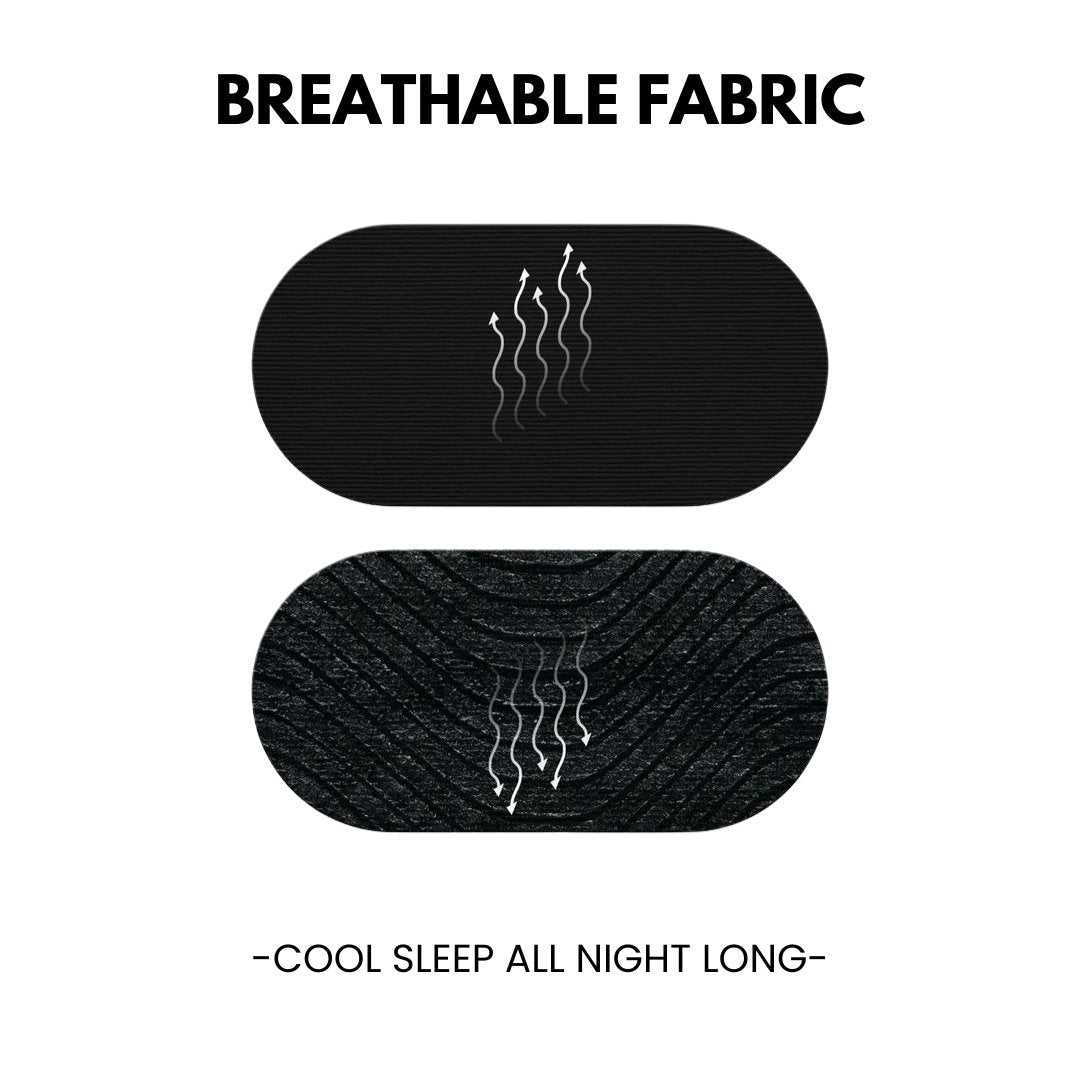
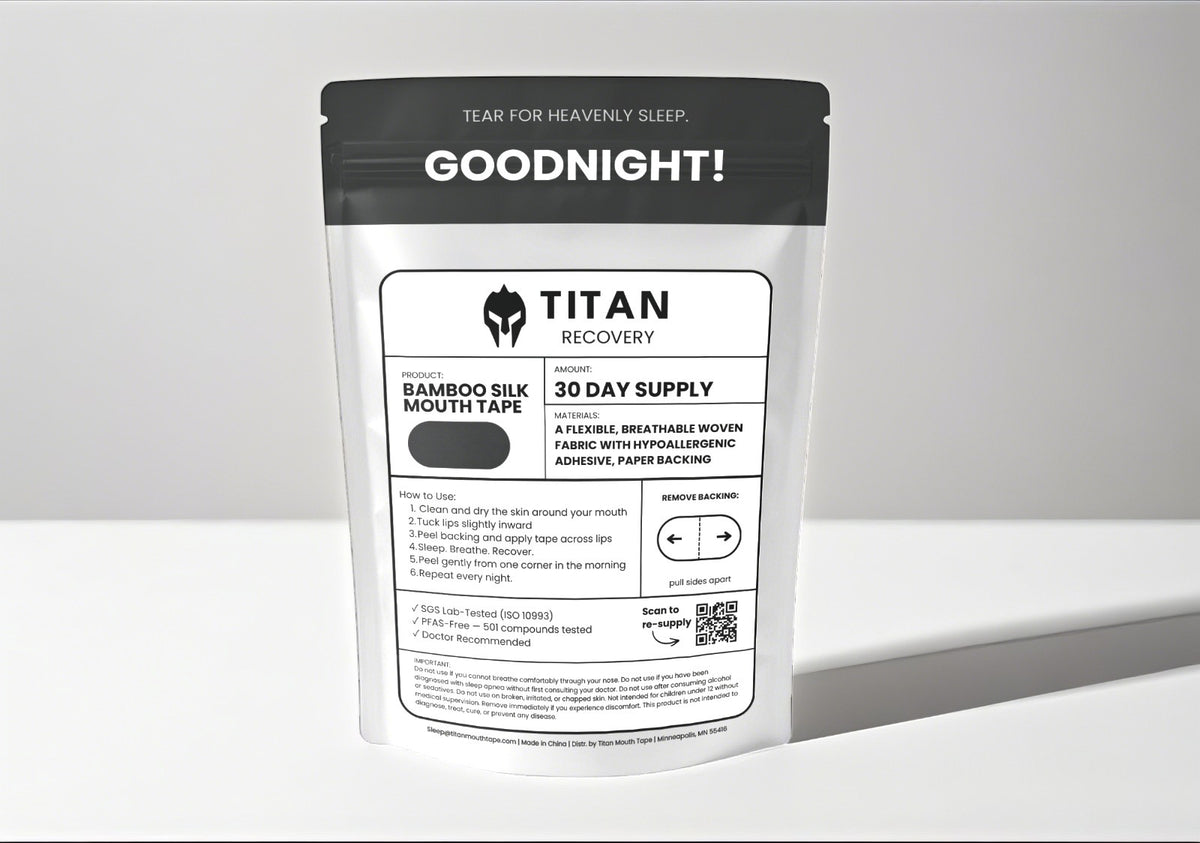
Comfortable material. Dry mouth is a nightly problem, which means the solution needs to be a nightly practice. Stiff, plasticky tape or aggressive adhesive that hurts to remove will make you skip nights — and skipping nights means waking up dry again. Look for soft, flexible material that moves with your face. Titan Mouth Tape uses a bamboo silk material that's thin enough to forget it's there but strong enough to stay sealed.
Safe, skin-friendly adhesive. You're applying this to your face every single night. The adhesive should be medical-grade, hypoallergenic, and designed for repeated skin contact. Irritation, rashes, or breakouts from cheap adhesive will end your mouth taping practice fast. Look for tapes that are specifically designed for sensitive facial skin.
Full lip coverage. Small vertical strip tapes work for some people, but for dry mouth specifically, a full-coverage tape that seals both lips completely provides the most reliable seal. Any gap where air can leak through means some evaporation continues. Full lip seal equals full moisture retention.
Frequently Asked Questions
Can mouth tape replace dry mouth sprays and rinses?
For most people whose dry mouth is caused by mouth breathing, yes. Sprays and rinses add temporary moisture to a mouth that keeps losing it. Mouth tape stops the loss. If your dry mouth is caused by a medical condition like Sjogren's syndrome that reduces saliva production regardless of breathing pattern, mouth tape helps preserve the moisture you have but may not fully replace prescription treatments. Talk to your doctor if you suspect a systemic cause.
What if I can't breathe through my nose well enough to tape?
If nasal congestion is forcing you to mouth breathe, start with TitanAir Nasal Strips to open the nasal passages. The Titan Sleep System combines both. If you still can't breathe comfortably through your nose with nasal strips, see an ENT before starting mouth taping — you may have a structural issue that needs to be addressed first. Our starter guide walks through the process for beginners.
Will mouth tape help dry mouth caused by medication?
Mouth tape won't increase saliva production — that's the medication's effect. But it will prevent the saliva you do produce from evaporating through open-mouth breathing. For many people on drying medications, that preservation is enough to eliminate the worst symptoms: the 3 a.m. wake-ups, the morning sandpaper feeling, the throat soreness. You're making the most of a reduced supply by keeping the environment sealed.
How is mouth taping different from using a humidifier?
A humidifier adds moisture to room air. That helps if the air in your bedroom is very dry, but if your mouth is open, humidified air flowing across oral tissue still causes net evaporation — just slower evaporation. Mouth tape closes the system entirely. No airflow across the mouth means no evaporation. You can use both — a humidifier for room comfort and mouth tape for dry mouth prevention — but the tape does the heavy lifting.
The Bottom Line
Mouth tape for dry mouth at night works because it addresses the actual cause: mouth breathing that evaporates saliva faster than your glands can replace it. The relief is immediate — most people notice it the first morning — and the benefits compound over time as your oral tissue recovers from chronic dryness. Titan Mouth Tape is designed for nightly use with a soft bamboo silk material and medical-grade adhesive that stays on until morning. Pair with TitanAir Nasal Strips if congestion is part of your problem. A 30-day supply starts at $34.95 — or save 11% with Subscribe and Save. Free shipping and a Better Sleep Guarantee on every order.
Doctor Recommended: "As a maxillofacial surgeon and dentist, I recommend Titan Mouth Tape. Nasal breathing during sleep is essential for airway health and deep restorative rest. Titan's bamboo silk design is the most comfortable and effective mouth tape I have tested. If you struggle with snoring, dry mouth, or poor sleep quality, this is the simplest change you can make for your health." — Dr. Francois P., MD, DDS — Maxillofacial Surgeon
Lab-Tested Safety: Titan's adhesive is independently tested to ISO 10993 medical device standards. Non-toxic (95% cell viability). Non-allergenic (0% reaction rate). Non-irritating (score 0.0/8.0). PFAS-free — 501 compounds tested, zero detected. See full test results →
Try the complete system tonight. Titan Mouth Tape (bamboo silk, SilkSeal™ adhesive) + TitanAir Nasal Strips. Free shipping. 30-night Better Sleep Guarantee. Shop Titan Mouth Tape → · Shop TitanAir Nasal Strips →
Related reading
- How to Wake Up Refreshed
- Mouth Tape Side Effects: What to Know
- The Comprehensive Guide to Mouth Taping: Benefits, Safety, and Key ...
- Does Mouth Tape Cause Acne, Rashes, or Irritation?
- Mouth Taping and Oral Health: Preventing Dry Mouth and Tooth Decay
Want the tape built for this? Try bamboo silk mouth tape from Titan — bamboo silk, beard-friendly, PFAS-free, with a 30-Night Better Sleep Guarantee.