Waking Up With Dry Mouth
Share
If you wake up with a dry mouth every morning, you already know how miserable it is. The sticky, cotton-ball feeling on your tongue. Cracked, peeling lips. A sore throat that takes twenty minutes and two glasses of water to shake. That stale taste that toothpaste barely covers. It is one of the most common sleep complaints, and most people just accept it as normal. For singers and voice professionals, the impact is especially serious -- see our guide on mouth tape for singers and vocal health.
It is not normal. Waking up with dry mouth is a signal that something about the way you breathe at night needs to change. And the fix is simpler than you probably expect.
Why you wake up with dry mouth
The most common cause of morning dry mouth is mouth breathing during sleep. When you sleep with your mouth open, air passes directly over your tongue, gums, cheeks, and soft palate for hours, evaporating the saliva that normally keeps everything moist, balanced, and protected. Your mouth was not designed to be an airway. It has no turbinates to regulate flow, no mucous membranes to humidify air, and no mechanism to prevent drying. It is simply an opening, and when air rushes through it all night, everything dries out.
Saliva does far more than keep your mouth comfortable. It neutralizes the acids that attack tooth enamel, washes away bacteria that cause cavities and gum disease, remineralizes weakened enamel surfaces, and maintains the pH balance that supports healthy oral tissue. When your mouth is open all night and saliva production effectively shuts down, all of those protective functions stop working. This is why chronic mouth breathers have higher rates of cavities, gum inflammation, and persistent bad breath, even when their brushing and flossing habits are good. The problem is not hygiene. The problem is airflow.
Other causes worth ruling out
While mouth breathing accounts for the vast majority of morning dry mouth cases, several other factors can contribute or make it worse:
- Medications — antihistamines, antidepressants, blood pressure medications, muscle relaxants, and decongestants can all reduce saliva production as a side effect. If you started a new medication around the time dry mouth appeared, check the drug information or ask your pharmacist.
- Alcohol before bed — alcohol is a diuretic that dehydrates your tissues, and it also relaxes the muscles in your throat and jaw, making mouth breathing significantly more likely during sleep.
- Low bedroom humidity — dry winter air, aggressive air conditioning, or forced-air heating can worsen the drying effect dramatically, especially if you are already mouth breathing. This is why dry mouth often gets worse seasonally.
- Sjogren's syndrome — an autoimmune condition that attacks the glands that produce saliva and tears. If you have persistently dry eyes along with dry mouth during the day, not just in the morning, mention it to your doctor.
- Aging — saliva production decreases naturally with age, but this alone rarely causes severe morning dry mouth. It usually amplifies an existing mouth breathing problem.
For most people, though, the root cause is straightforward. You are sleeping with your mouth open, and your body is drying out as a result.
How to tell if you mouth breathe at night
Beyond the dry mouth itself, several other signs point to nighttime mouth breathing. Waking up with a sore or scratchy throat that clears within an hour. Morning bad breath that persists despite thorough brushing before bed. Lip chapping concentrated on the inner edges where air flows across them. Drool stains on your pillow, which paradoxically coexists with dry mouth because your open mouth creates both drooling and drying at different points. And snoring, which is almost always a mouth breathing symptom.
If two or more of those apply to you, mouth breathing is almost certainly part of your night. Partners are often the most reliable diagnostic tool here. If yours has ever mentioned that you snore, gasp, or sleep with your mouth hanging open, that is your definitive answer.
The fix: keep your mouth closed while you sleep
The most effective and direct solution is mouth taping. A small strip of breathable tape across your lips gently encourages your jaw to stay closed, redirecting all airflow through your nose where it belongs. Your saliva production continues normally, your mouth stays moist, and you wake up without the dry, sticky misery that has become your normal.
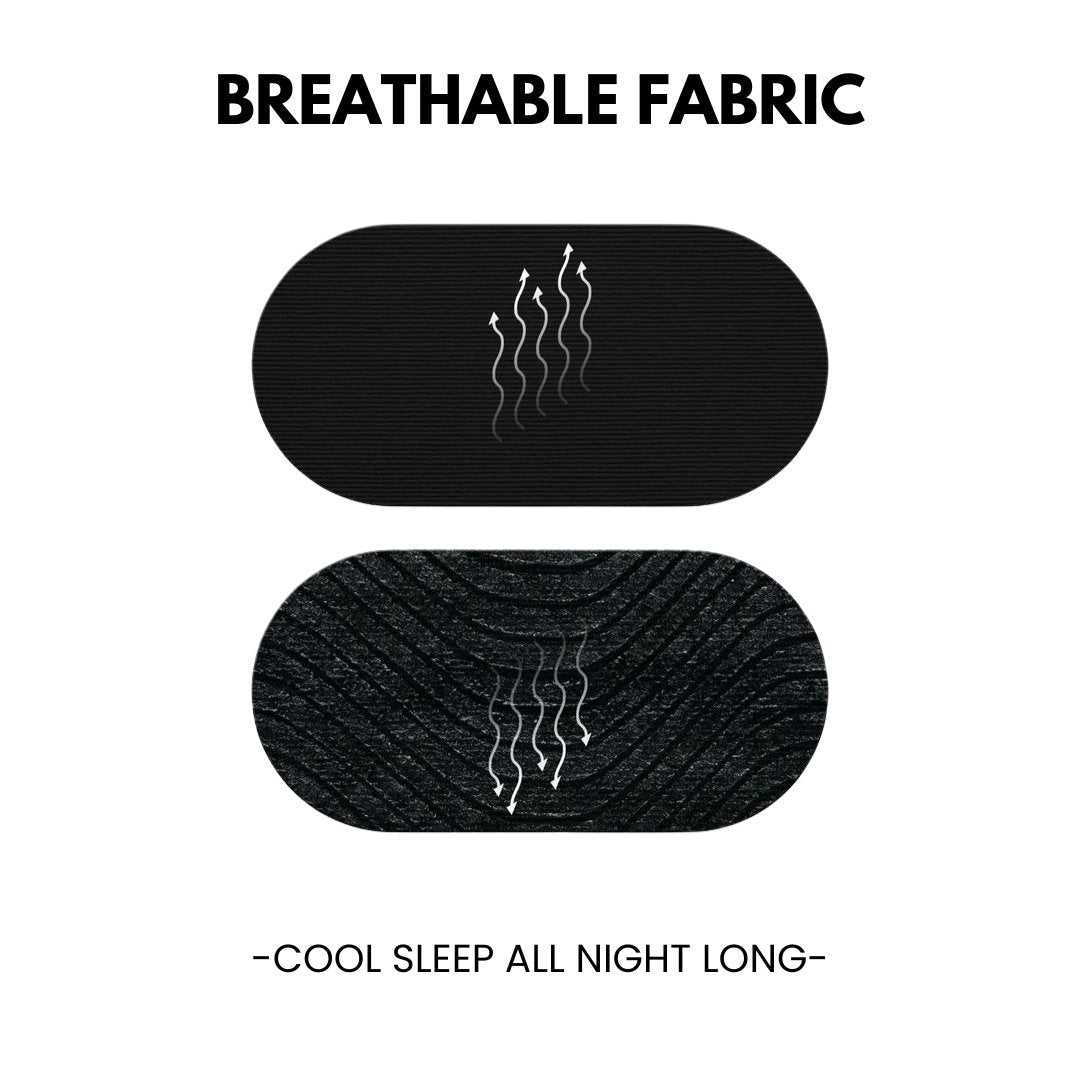
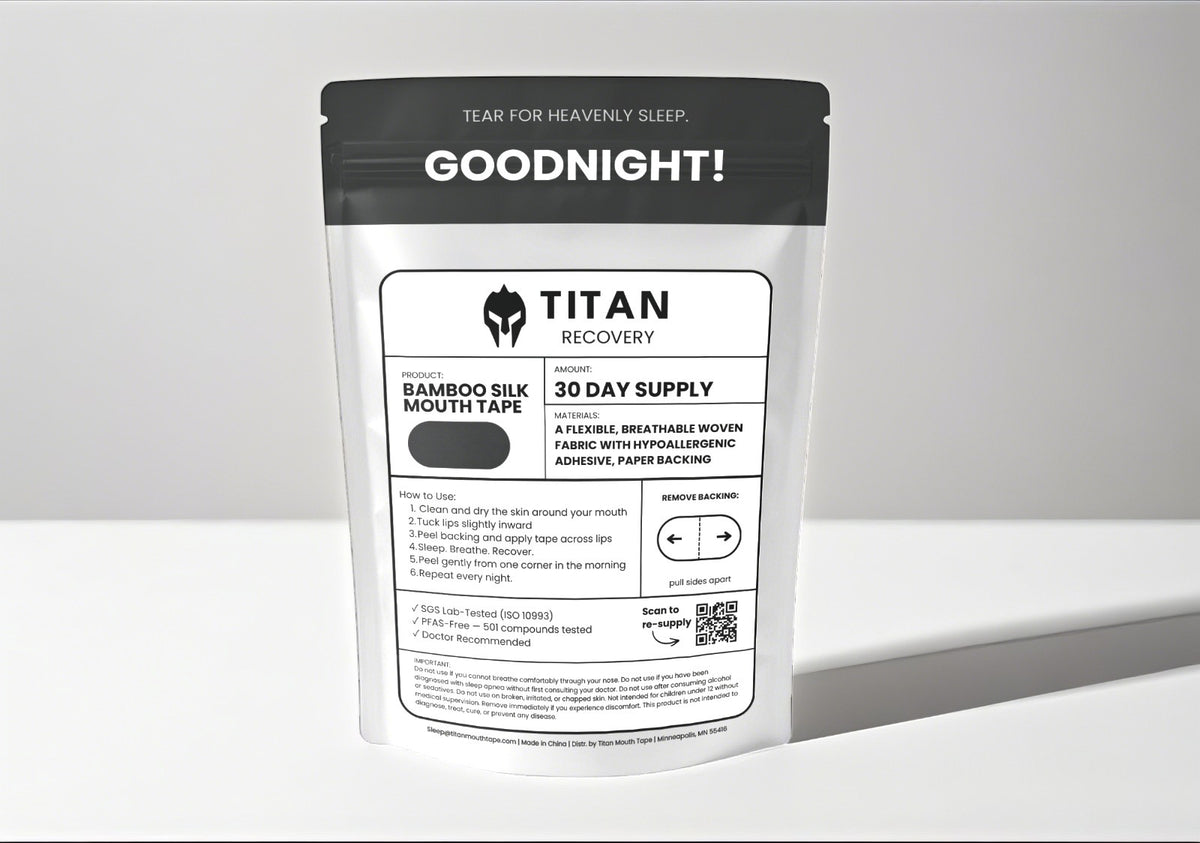
Titan Mouth Tape is made from bamboo silk with a medical-grade SilkSeal adhesive that holds comfortably without pulling or irritating your skin. It is porous, so moisture does not build up underneath, and it releases easily and cleanly if you need to open your mouth. The adhesive is tested to ISO 10993 medical device standards, hypoallergenic, and PFAS-free. Most people stop waking up with dry mouth within the first two or three nights of taping.
If nasal congestion makes nose breathing difficult or uncomfortable, pairing the tape with TitanAir Nasal Strips opens your nasal passages mechanically so airflow feels natural and unrestricted. This combination is especially useful during allergy season or if you have a slightly deviated septum. For more on how the pairing works, see our post on using mouth tape and nasal strips together.
Supporting habits that accelerate improvement
Mouth taping solves the root cause directly, but these supporting habits make the transition smoother and the results more dramatic:
- Hydrate before bed — not so much that you wake up multiple times to use the bathroom, but enough that you start the night well-hydrated. A glass of water 30 to 60 minutes before bed is usually the right amount.
- Use a humidifier — keeping bedroom humidity between 40 and 60 percent reduces the drying effect on all your airways and makes nasal breathing more comfortable. This matters most in winter and in climates with dry air.
- Limit alcohol close to bedtime — even one or two drinks within three hours of sleep relaxes jaw muscles and increases the likelihood of mouth breathing. If you notice dry mouth is worse on nights you drink, this is why.
- Elevate your head slightly — a gentle incline reduces nasal congestion from gravity and makes nose breathing easier throughout the night.
- Review your medications — if you take anything on the list above and dry mouth is persistent, ask your doctor or pharmacist if an alternative with fewer drying side effects is available.
Why this matters beyond morning discomfort
Chronic dry mouth is more than an annoyance you power through with water. Over time, the loss of saliva's protective functions leads to measurable dental consequences. Cavity rates increase because acid is not being neutralized. Gum tissue becomes inflamed because bacteria are not being washed away. Oral infections become more common because the mouth's immune defenses are compromised. The bacteria that thrive in a dry oral environment produce more volatile sulfur compounds, which means persistent bad breath that mouthwash only masks temporarily.
Fixing the airflow fixes the environment. When your mouth stays closed and saliva production runs normally through the night, your oral health improves without any additional products, rinses, or routines. Your dentist may even notice the difference at your next cleaning. For a deeper understanding of the underlying science, our guide to how mouth tape works covers the mechanism in more detail.
The Bottom Line
Waking up with dry mouth is almost always caused by sleeping with your mouth open, and mouth taping is the most direct and effective fix. It keeps your lips gently closed, lets your nose handle breathing the way it was designed to, and preserves the saliva flow that protects your teeth, gums, and throat. Most people see results within the first two or three nights.
Titan Mouth Tape costs under $0.75 per night, is hypoallergenic and independently lab-tested, and works even if you have facial hair. If dry mouth has been a constant in your mornings, this is the change that actually solves it instead of just managing it.
Doctor Recommended: “As a maxillofacial surgeon and dentist, I recommend Titan Mouth Tape. Nasal breathing during sleep is essential for airway health and deep restorative rest. Titan’s bamboo silk design is the most comfortable and effective mouth tape I have tested. If you struggle with snoring, dry mouth, or poor sleep quality, this is the simplest change you can make for your health.” — Dr. Francois P., MD, DDS — Maxillofacial Surgeon
Lab-Tested Safety: Titan’s SilkSeal™ adhesive is independently tested to ISO 10993 medical device standards. Non-toxic (95% cell viability). Non-allergenic (0% reaction rate). Non-irritating (score 0.0/8.0). PFAS-free — 501 compounds tested, zero detected. See full test results →
Try it tonight. Bamboo silk. SilkSeal™ adhesive. Beard-friendly. No logo on the tape. Free shipping. 30-night Better Sleep Guarantee. Shop Titan Mouth Tape → · Shop TitanAir →