How Long Until Mouth Tape Works?
Share
You taped your mouth for the first night and you're wondering: is this actually doing anything? Or you haven't started yet and you want to know how long you need to commit before you can judge whether mouth taping is worth it. Both are fair questions, and the answer has more nuance than most sources let on.
How long until mouth tape works? Some benefits are immediate — less dry mouth, reduced snoring — while the deeper improvements in sleep quality and habit formation typically take 4 to 8 weeks of consistent nightly use. The key word is consistent. Wearing mouth tape two or three nights a week won't produce the same results as wearing it every night.
Night One: What You'll Actually Notice
The first night with mouth tape is more about awareness than transformation. You're going to notice things you normally don't — primarily how much you've been breathing through your mouth during sleep.
Less dry mouth in the morning. This is the most immediate and noticeable change. If you normally wake up with a dry, sticky mouth and reach for water before your feet hit the floor, mouth tape addresses that on the very first night. By keeping your mouth closed, the tape prevents the airflow that dries out your oral tissues. Most people wake up with a mouth that feels normal — not parched, not sticky — and it surprises them how much of a difference it makes.
Reduced or eliminated snoring. If your snoring is caused by mouth breathing — which accounts for a significant portion of non-apnea snoring — mouth tape may reduce it from the first night. Your partner might notice before you do. The mechanism is straightforward: when the mouth is closed, the jaw stays forward, the tongue stays in position, and the soft tissue at the back of the throat doesn't collapse into the airway the same way it does during mouth breathing.
Some adjustment discomfort. Let's be honest about this part. The first night often involves a period of heightened awareness where you're conscious of the tape and may feel the urge to breathe through your mouth. This usually passes within 15 to 30 minutes as you relax and your body settles into nasal breathing. Some people sleep great the first night. Others take a few nights to stop noticing the tape. Neither response means it's working or not working — it just means your nervous system is adjusting.
Week One: Your Body Adjusts
During the first week, the main shift is that mouth taping starts to feel normal. Nights two through seven are about your body learning that nasal breathing during sleep is the default, not an exception.
The psychological adjustment completes. By night three or four, most people stop thinking about the tape. You apply it, lie down, and fall asleep without the heightened awareness that characterized the first night. This is when the tape transitions from something you're doing to something that's just part of your sleep routine — like turning off the light or setting your alarm.
Nasal passages begin to adapt. This is an underappreciated part of the timeline. When you consistently breathe through your nose overnight, the nasal tissues respond. The turbinates — the structures inside your nose that regulate airflow — begin to function more efficiently with regular use. People who have been chronic mouth breathers often have nasal passages that are slightly deconditioned from underuse. A week of consistent nasal breathing starts to reverse that pattern.
Morning throat soreness decreases. If you've been waking up with a sore or scratchy throat — a common symptom of nighttime mouth breathing — this typically improves noticeably within the first week. The throat tissue heals quickly once it's no longer exposed to hours of dry, unfiltered air.
Weeks Two Through Four: Consistent Improvement
This is where the benefits start compounding. You've moved past the adjustment phase, and the nightly habit is established. Now the physiological changes start to show up in ways you can measure or clearly feel.
Sleep quality improves. By the second or third week, many users report feeling more rested in the morning. Nasal breathing supports more stable oxygen saturation during sleep, reduces micro-arousals from airway turbulence, and supports better sleep architecture — more time in the deep and REM stages that actually restore your body and brain.
Snoring improvements become consistent. First-night snoring reduction can be hit-or-miss. By week two or three, the pattern stabilizes. Your body has learned to keep the mouth closed throughout the night, and the reduction becomes reliable.
Oral health begins to recover. Chronic mouth breathing dries out the oral cavity, reduces saliva flow, and lets bacteria thrive. Two to four weeks of consistent taping allows saliva production to normalize, which supports tooth enamel, gum tissue, and noticeably reduces morning breath.
Energy levels may improve. Somewhere in the two-to-four-week window, many people notice more consistent daytime energy — less fatigue, fewer afternoon slumps, better focus. These aren't magic; they're the downstream effects of actually getting restorative sleep.
Weeks Four Through Eight: Long-Term Benefits Emerge
If you've made it to week four with consistent nightly use, you've built a habit. The tape is no longer an experiment — it's part of how you sleep. This is where the deeper, longer-term changes become apparent.
Habit formation completes. Research on habit formation suggests new behaviors take an average of 66 days to become automatic. By four to eight weeks, the practice is ingrained enough that you'll feel odd sleeping without it. Many long-term users report they can feel themselves starting to mouth-breathe on nights they forget the tape.
Nasal breathing capacity improves. After several weeks of consistent nasal breathing during sleep, many people find their daytime nasal breathing also improves. The science behind nasal breathing suggests that regular nasal airflow may support better nasal tone and reduced congestion over time. People who felt like they "couldn't breathe through their nose" often find that sustained nighttime nasal breathing opens up the pathway enough that daytime breathing becomes natural.
Sleep becomes measurably better. If you use a sleep tracker, you may start to see objective improvements around this timeframe — higher sleep scores, more deep sleep, fewer wake-ups, lower resting heart rate. These metrics reflect the cumulative effect of breathing correctly, night after night.
What Can Slow Down Your Results
Not everyone follows this timeline, and there are specific factors that can delay the benefits.
Inconsistent use. This is the most common reason people don't see results. Wearing mouth tape three nights a week and skipping four doesn't give your body enough consistent nasal breathing to build the habit or produce the physiological changes. Treat it like any health practice — the results come from consistency, not occasional use.
Untreated nasal congestion. If your nose is chronically congested — from allergies, a deviated septum, or chronic rhinitis — mouth tape alone may not be enough. Pair it with an external nasal strip to open the nasal valve, and address the underlying congestion with your doctor if it persists. Mouth tape works best when the nasal airway is functional.
The tape falls off overnight. If your tape isn't staying on all night, you're not getting the full benefit. This is usually a skin prep issue — lip balm, moisturizer, or facial oils preventing adhesion — or a tape quality issue. Proper application technique and the right tape solve this for most people.
Unrealistic expectations. Mouth tape is not a sleep drug. It won't knock you out, and it won't fix sleep problems caused by stress, poor sleep hygiene, caffeine, or an underlying sleep disorder like sleep apnea. What it does is ensure you breathe correctly during sleep. That's a meaningful upgrade, but it works within the context of your overall sleep health, not as a replacement for it.
How to Know It's Working
You don't need a sleep lab to track progress. Pay attention to these signals:
- Dry mouth in the morning: Should improve from night one. If your mouth feels normal when you wake up, the tape is doing its job.
- Snoring: Ask your partner or use a snoring app to track. Should decrease within the first week and stabilize by week three.
- Morning energy: Subjective, but real. If you feel less groggy and need less time to "wake up," your sleep quality is improving.
- Tape still in place in the morning: If the tape is on your lips when you wake up, you've been nasal breathing all night. If it's on your pillow, you need to revisit your application technique or tape choice.
- Less throat irritation: Sore throats, dry throat, and morning hoarseness should fade within a week or two.
The Bottom Line
Mouth tape starts working the first night you use it — you'll breathe through your nose, and your mouth will stay closed. But the real benefits stack up over time. Give it a full week to get past the adjustment phase, a month to feel the consistent improvement in sleep quality, and two months to build the kind of deeply ingrained habit that makes nasal breathing your body's automatic default.
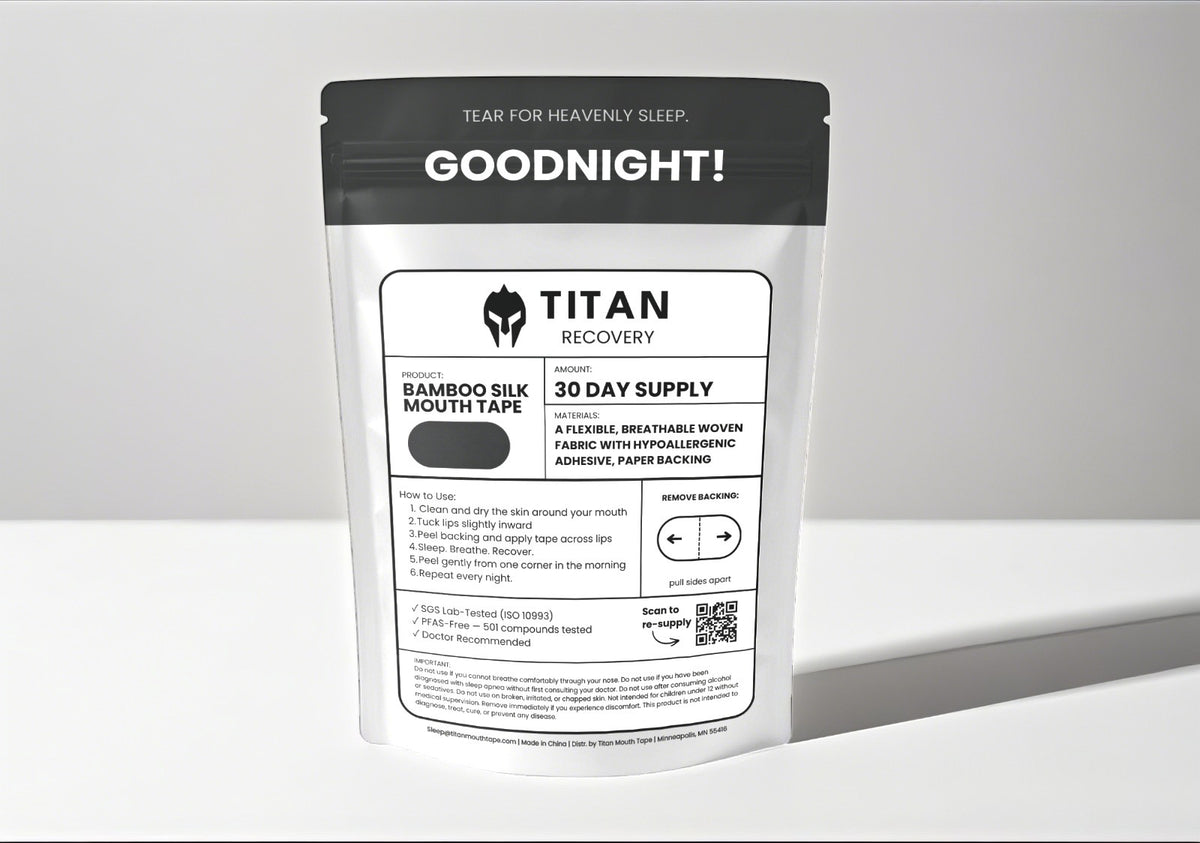
The commitment isn't complicated. Apply Titan Mouth Tape every night before bed, keep your lips clean and dry before application, and don't skip nights. That's it. The Deep Sleep Bundle pairs the mouth tape with nasal strips for complete airway support from day one. Set a realistic timeline, stay consistent, and let the results build.
Doctor Recommended: “As a maxillofacial surgeon and dentist, I recommend Titan Mouth Tape. Nasal breathing during sleep is essential for airway health and deep restorative rest. Titan’s bamboo silk design is the most comfortable and effective mouth tape I have tested. If you struggle with snoring, dry mouth, or poor sleep quality, this is the simplest change you can make for your health.” — Dr. Francois P., MD, DDS — Maxillofacial Surgeon
Lab-Tested Safety: Titan’s SilkSeal™ adhesive is independently tested to ISO 10993 medical device standards. Non-toxic (95% cell viability). Non-allergenic (0% reaction rate). Non-irritating (score 0.0/8.0). PFAS-free — 501 compounds tested, zero detected. See full test results →
Try it tonight. Bamboo silk. SilkSeal™ adhesive. Beard-friendly. No logo on the tape. Free shipping. 30-night Better Sleep Guarantee. Shop Titan Mouth Tape → · Shop TitanAir →
This article is for informational purposes only and does not constitute medical advice. If you have or suspect a sleep disorder or other medical condition, consult a qualified healthcare provider before making changes to your routine.