Why Does My Mouth Tape Fall Off at Night?
Share
You went to bed with mouth tape on. You woke up and it's on your pillow, stuck to your cheek, or just gone. This is the most common frustration new mouth tapers report, and it's almost always fixable. The tape isn't defective and the concept isn't flawed — something specific is preventing the adhesive from doing its job.
Why does mouth tape fall off at night? In the vast majority of cases, the answer is skin prep. Lip balm, moisturizer, facial oils, or residual moisture on the lips and surrounding skin prevents the adhesive from forming a secure bond. Fix the surface, and the tape stays on. Beyond skin prep, the wrong tape size, weak adhesive, facial hair interference, and sleeping position can all contribute.
Cause #1: Lip Balm and Moisturizer (The Usual Suspect)
This is the number one reason mouth tape falls off, and it accounts for the majority of complaints. Here's why it's so common: most people apply lip balm or moisturizer as part of their nighttime routine, often without even thinking about it. It's automatic. Then they apply mouth tape directly on top of a greasy, slippery surface and wonder why it doesn't hold.
Adhesive needs a clean, dry surface to bond. Lip balm creates a barrier between the adhesive and your skin — the tape sticks to the balm, not to your lips. When you move in your sleep, the balm shears and the tape slides right off. The same applies to night creams, moisturizers, serums, and oils anywhere near the mouth.
The fix: Wash the area around your mouth with water and a gentle cleanser. Pat it completely dry. If you use lip balm, apply it earlier in the evening and wipe the residue off before taping. Your lips should feel clean and slightly tacky — that's the right surface for adhesive.
Cause #2: Moisture on the Skin
Even without products, moisture alone can prevent adhesion — water from washing your face, sweat from a warm bedroom, or the natural moisture around the mouth. Think about putting a sticker on a wet surface. Even a thin film of moisture significantly reduces bond strength.
The fix: After washing your face, wait a minute, then pat the area dry with a clean towel. Press, don't dab. If your bedroom runs warm, lower the temperature or run a fan. Pressing a tissue against your lips right before application removes the last bit of surface moisture.
Cause #3: Wrong Tape or Weak Adhesive
Not all mouth tapes are equal, and not all adhesives are designed for overnight wear on facial skin. Some products on the market use adhesives that are so gentle they can barely hold for a few hours of still sleep, let alone a full night of tossing and turning.
The adhesive needs to hold for seven to nine hours through position changes and jaw movement, while being gentle enough for facial skin. Cheap tapes often use adhesives designed for short-term daytime use. Athletic tape holds well but can irritate delicate skin. Purpose-built sleep mouth tape uses a medical-grade adhesive calibrated for exactly this use case.
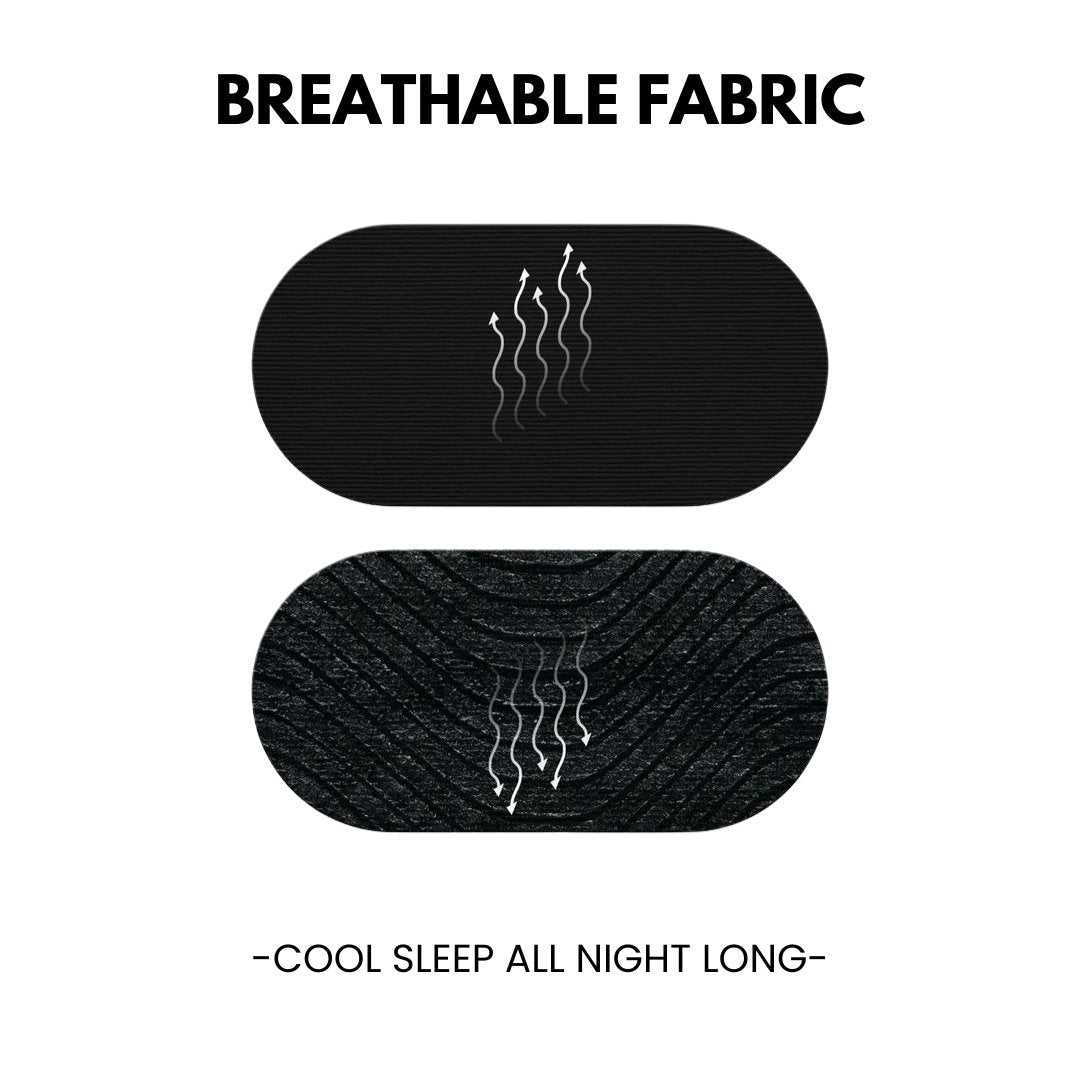
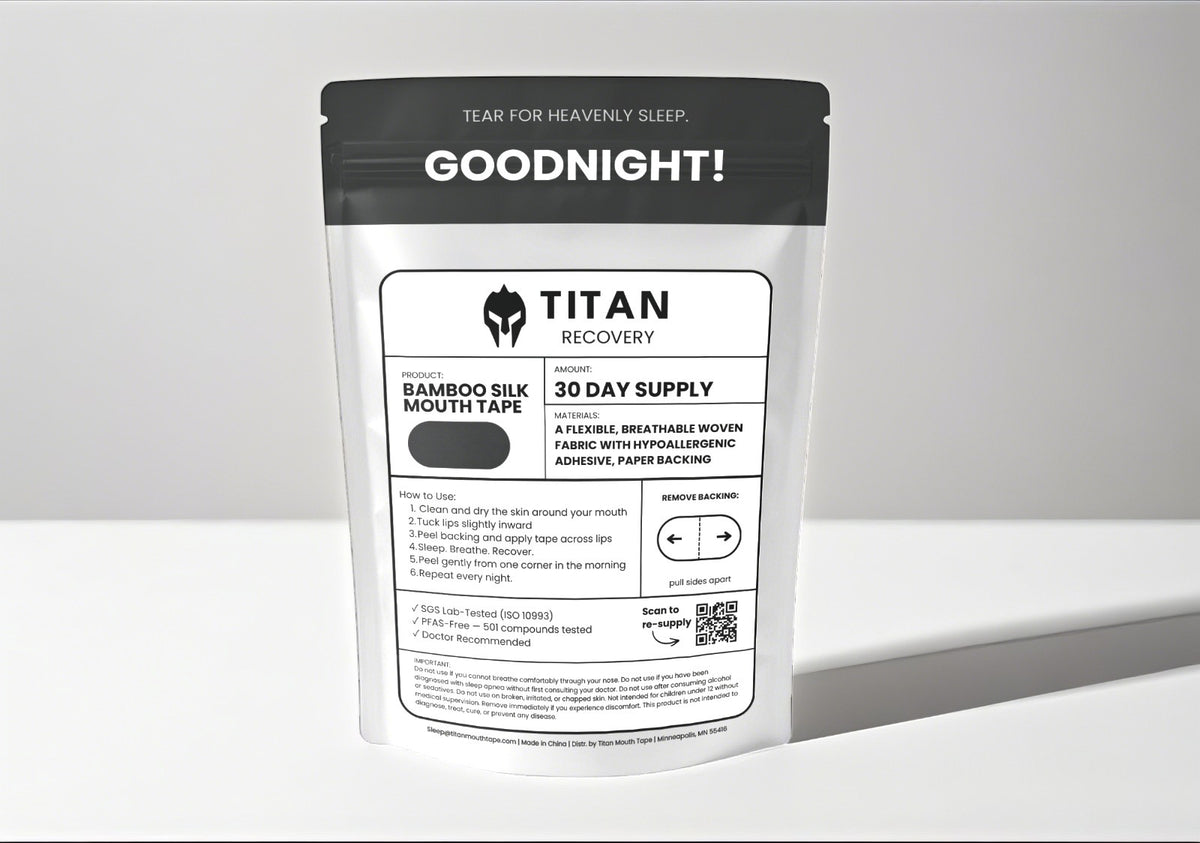
The fix: If you're using tape that was designed for a different purpose — athletic tape, surgical tape, generic drugstore tape — switch to a tape specifically made for sleep. Titan Mouth Tape uses a bamboo silk fabric with a medical-grade adhesive that's been tested for all-night adhesion on facial skin. It's strong enough to stay on through the night and gentle enough to remove without pain in the morning.
Cause #4: The Tape Is Too Small
Coverage matters. A tiny strip of tape in the center of the lips has less adhesive surface area contacting the skin, which means less total holding force. When your jaw relaxes during deep sleep — and it will — the downward pull of the lower jaw concentrates on that small contact area, and the tape peels away.
This is particularly true for people with larger mouths or fuller lips. A strip that works fine for someone with thin lips may not have enough coverage for someone whose anatomy requires more adhesive contact.
The fix: Make sure the tape you're using adequately covers your lips. For a horizontal full-seal application, the tape should extend slightly past the corners of your mouth on both sides. If you're using a vertical strip method, the tape should reach from just below your nose to your chin. If your current tape feels too small, you may need a wider or longer product — or you can try the X-pattern method, which uses two strips for added coverage and multi-directional hold.
Cause #5: Facial Hair Interference
Beards and mustaches create a real adhesion challenge. The tape needs to contact skin to form a bond. If the adhesive is landing on hair instead of skin, the hold is dramatically weaker — the tape grips the hair, which moves freely, and the whole thing comes loose.
A full beard around the mouth essentially eliminates the smooth skin surface that adhesive needs. A mustache can interfere with the upper edge of horizontally applied tape. Even stubble can reduce adhesion if the tape is landing on rough, hair-covered skin rather than the smoother surface of the lips themselves.
The fix: Apply the tape to the lips themselves, not the surrounding skin. The lips are smooth and hair-free regardless of your facial hair situation. A vertical strip method works particularly well because it lands on the lips and the strip of skin between the nose and upper lip, avoiding the bearded areas on the cheeks and chin. If you have a thick mustache, trim the area directly adjacent to the lip line to give the adhesive a clean landing zone. For more detail, check our guide on mouth tape for beards.
Cause #6: Sleeping Position
Face-down and side sleepers put more physical stress on mouth tape than back sleepers. When your face is pressed into a pillow, the friction and pressure can gradually peel the tape away from one edge. Side sleeping creates asymmetric forces — the tape is pressed on the pillow side and pulled on the opposite side as gravity draws the lower jaw open.
This doesn't mean side and stomach sleepers can't use mouth tape. It means the tape needs to be properly applied with adequate coverage and good adhesion to withstand those forces.
The fix: Use the full-seal horizontal method for the strongest hold. Press the tape firmly for a full ten seconds after application — most people give it a quick press and move on, but the extra time allows the adhesive to activate more fully. If you're a stomach sleeper whose face is regularly pressed into the pillow, consider a contoured or cutout pillow that reduces direct pressure on the mouth area.
Cause #7: Not Pressing Firmly Enough
Pressure-sensitive adhesives don't just stick on contact — they bond more strongly when you press them against the skin and hold for several seconds. The pressure causes the adhesive to flow into the microscopic texture of the skin surface, creating a mechanical bond. Most people give the tape a light press and move on, leaving adhesion strength on the table.
The fix: After placing the tape, press firmly along every part that contacts skin. Start in the center, work outward, and hold for a full ten seconds. Pay special attention to the edges, which are where peeling typically starts.
A Practical Pre-Bed Checklist
If your tape is falling off, run through this list before tonight:
- Wash the area around your mouth with water and a gentle cleanser.
- Pat the area completely dry — no residual moisture.
- Make sure there's no lip balm, moisturizer, or night cream on or near the taping area.
- Apply the tape with your lips relaxed and closed.
- Press firmly along the full surface of the tape for ten seconds, working from center to edges.
- Make sure the tape extends beyond the edges of your lips for full coverage.
- If you have facial hair, apply the tape to the lip surfaces themselves or use a vertical strip.
If you go through this checklist and your tape still falls off, the tape itself may not be up to the job. Sleep-specific tape with a medical-grade adhesive is meaningfully different from repurposed athletic or surgical tape.
The Bottom Line
Mouth tape falling off at night is a solvable problem, and the solution is almost always simpler than people expect. Clean, dry skin. No lip balm. Firm pressure for ten seconds. Adequate coverage. That's the checklist, and for most people, addressing just the first two items — clean skin and no lip balm — eliminates the issue entirely.
If you've been struggling with tape adhesion, try the Titan Deep Sleep Bundle — the bamboo silk tape is engineered specifically for all-night facial adhesion, with a medical-grade adhesive that holds through the night without irritating the skin. Pair it with proper skin prep, and you'll find the tape is right where you left it when you wake up.
Doctor Recommended: “As a maxillofacial surgeon and dentist, I recommend Titan Mouth Tape. Nasal breathing during sleep is essential for airway health and deep restorative rest. Titan’s bamboo silk design is the most comfortable and effective mouth tape I have tested. If you struggle with snoring, dry mouth, or poor sleep quality, this is the simplest change you can make for your health.” — Dr. Francois P., MD, DDS — Maxillofacial Surgeon
Lab-Tested Safety: Titan’s SilkSeal™ adhesive is independently tested to ISO 10993 medical device standards. Non-toxic (95% cell viability). Non-allergenic (0% reaction rate). Non-irritating (score 0.0/8.0). PFAS-free — 501 compounds tested, zero detected. See full test results →
Try it tonight. Bamboo silk. SilkSeal™ adhesive. Beard-friendly. No logo on the tape. Free shipping. 30-night Better Sleep Guarantee. Shop Titan Mouth Tape → · Shop TitanAir →