Should You Mouth Tape After Drinking? What Alcohol Does to Your Airway
Share
You had two glasses of wine at dinner. Maybe three beers at the barbecue. You crawl into bed, fall asleep fast, and within fifteen minutes your partner is nudging you because the snoring is unbearable. This is not a coincidence and it's not in their head. Alcohol fundamentally changes how your airway behaves during sleep, and the effect is dramatic enough that even people who never snore can become heavy snorers after a few drinks.
If you normally use mouth tape for sleep, the question becomes practical: should you still tape after drinking? The answer depends on how much you drank, how recently, and whether you understand what alcohol is actually doing to the muscles in your throat. Here's the full picture.
What Alcohol Does to Your Airway
Alcohol is a central nervous system depressant and a muscle relaxant. It doesn't just relax the muscles you can see — it relaxes the muscles you can't see, including the genioglossus (the main tongue muscle), the soft palate, and the pharyngeal dilator muscles that hold your airway open during sleep. These muscles are already less active during sleep than during wakefulness. Alcohol pushes them further toward collapse.
The mechanism is straightforward. During normal sleep, the muscles surrounding the upper airway maintain enough tone to keep the airway patent — open enough for smooth, unobstructed airflow. Alcohol reduces that tone. The soft palate drops lower. The tongue falls further back toward the posterior pharyngeal wall. The airway narrows. Air moving through a narrowed passage accelerates and creates turbulence, and that turbulence vibrates the relaxed soft tissues. That vibration is snoring.
Research published in sleep medicine journals has consistently demonstrated that alcohol increases both the frequency and intensity of snoring. A 2020 meta-analysis of alcohol's effects on sleep-disordered breathing found that alcohol consumption roughly doubled the odds of obstructive sleep events in the average person and significantly worsened existing conditions. The effect is dose-dependent — more alcohol means more muscle relaxation means more airway compromise — and it peaks approximately two to three hours after the last drink, when blood alcohol concentration is declining and the sedative effect on muscle tone is at its maximum.
This timing matters. If you have your last drink at 10 PM and go to bed at midnight, the peak muscle relaxation hits around 12:30 to 1:00 AM. That's when snoring is worst, when airway resistance is highest, and when the risk of obstructive events is greatest. If you've ever noticed that alcohol-related snoring is heaviest in the first half of the night and then eases, that's the pharmacokinetic curve you're observing.
Why Your Partner Always Knows When You've Been Drinking
Alcohol-induced snoring is often louder and more irregular than baseline snoring. The relaxed tissues vibrate with greater amplitude because they're floppier than usual, and the increased airway resistance creates more turbulent airflow. The sound can go from a soft rhythmic rumble to something that sounds like fabric tearing. Partners of moderate drinkers can often identify the drinking nights by sound alone — the snoring has a different character.
But snoring is just the audible symptom of a deeper problem. Behind the sound, the airway is partially obstructing. Each partial obstruction reduces airflow, which reduces oxygen delivery, which triggers a micro-arousal — a brief, unconscious awakening that restores muscle tone just enough to reopen the airway. These micro-arousals fragment sleep architecture, reducing time in deep sleep and REM sleep. This is why you can sleep for eight hours after drinking and wake up feeling like you slept for four. The sleep was physiologically shallow and constantly interrupted, even if you don't remember waking up.
Snoring is a breathing problem, and alcohol makes it measurably worse. Understanding this is the foundation for answering the mouth tape question.
The Safety Question: Is Mouth Tape Safe After Drinking?
This deserves a direct and honest answer. The concern is reasonable: alcohol depresses the central nervous system and reduces respiratory drive. If your breathing is already somewhat compromised, does taping your mouth closed add risk?
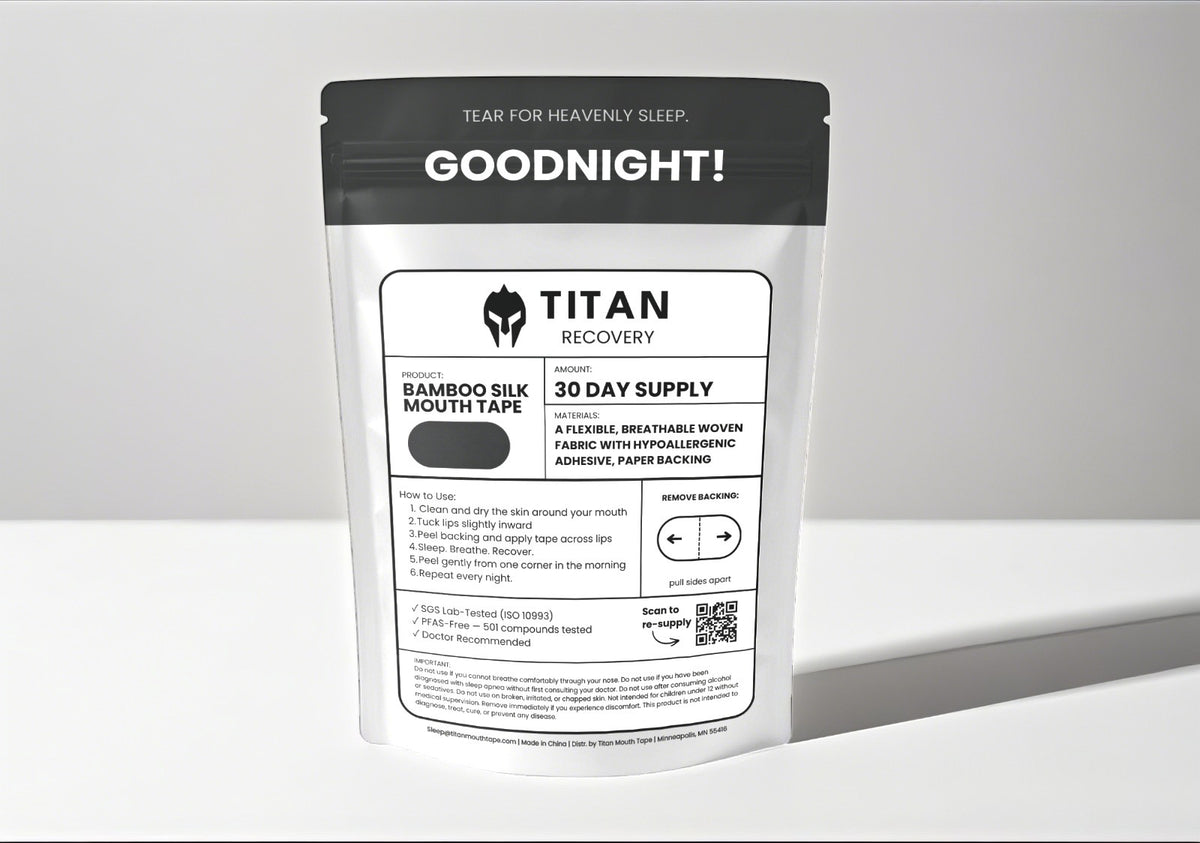
First, the clarification that applies whether or not alcohol is involved: mouth tape does not seal your mouth shut. Products designed for sleep, like Titan Mouth Tape, use a gentle adhesive that holds the lips in a relaxed closed position. If your body needs to open your mouth — for a cough, a yawn, or a forced exhale — the tape releases or displaces. It is not duct tape. It is not creating an airtight seal. This is a fundamental point that applies to every mouth tape safety question, and it's especially relevant here.
Now, the alcohol-specific considerations:
Moderate drinking (1-3 standard drinks, last drink 2+ hours before bed): For most healthy adults who can breathe comfortably through their nose, mouth tape is generally fine after moderate alcohol consumption. In fact, mouth tape may be specifically helpful on these nights because it counteracts one of alcohol's main effects — the tendency to fall into mouth breathing as the jaw relaxes and the mouth drops open. By maintaining nasal breathing, mouth tape ensures that incoming air is humidified, filtered, and delivered with the nitric oxide that nasal breathing provides. It also reduces the snoring that would otherwise fragment your sleep further.
Heavy drinking (4+ standard drinks, or drinking up to bedtime): Skip the tape. Heavy intoxication significantly depresses both muscle tone and respiratory drive. While mouth tape is not an airtight seal and you can still breathe through your mouth if the tape displaces, this is not the night to introduce any additional variable to your breathing mechanics. Your body's protective reflexes — the ones that would cause you to open your mouth or shift position if breathing becomes obstructed — are blunted by heavy alcohol intake. Err on the side of caution. Sleep without the tape, accept that the snoring will be bad, and resume your normal routine the next night.
If you have sleep apnea or suspect you do: Alcohol worsens obstructive sleep apnea significantly. If you have diagnosed sleep apnea and use CPAP, use your CPAP — mouth tape is not a substitute for prescribed sleep apnea treatment on any night, and especially not after drinking. If you suspect you have sleep apnea but haven't been evaluated, read the full discussion on mouth tape and sleep apnea and talk to your doctor.
How Mouth Tape Counteracts Alcohol's Effects on Breathing
On moderate-drinking nights, mouth tape works against several of alcohol's specific effects. Here's the mechanism:
Alcohol opens the mouth during sleep. The jaw muscles relax, the mouth drops open, and breathing shifts from nasal to oral. This is one of the earliest and most consistent effects of alcohol on sleep breathing. Mouth tape holds the lips together, maintaining the nasal breathing pathway even as the jaw muscles lose tone. The tape doesn't need to fight the jaw open — it just needs to keep the lips sealed so that the path of least resistance remains the nose.
Alcohol dries the airway. Alcohol is a diuretic — it increases urine output and reduces systemic hydration. On top of that, mouth breathing dries the oral and pharyngeal mucosa directly. The combination of dehydration and mouth breathing creates an airway that's drier than usual, which increases tissue vibration (worsening snoring) and creates the dry mouth, sore throat, morning-after feeling that's partly hangover and partly the result of breathing through an open mouth for hours. Nasal breathing, maintained by mouth tape, humidifies incoming air to near 100% relative humidity, significantly reducing airway desiccation.
Alcohol reduces nitric oxide delivery. When you mouth breathe, you bypass the paranasal sinuses where nitric oxide is produced. NO is a vasodilator and bronchodilator — it widens blood vessels and opens airways. After drinking, your blood vessels are already affected by alcohol's vasodilatory properties, but the nitric oxide from nasal breathing serves a different function: it improves oxygenation at the alveolar level in the lungs. Better oxygenation means your body can maintain adequate oxygen saturation even with the slightly compromised breathing mechanics that alcohol creates.
Alcohol fragments sleep. The micro-arousals caused by airway obstruction and snoring are more frequent after drinking. By reducing snoring through maintained nasal breathing, mouth tape can reduce the frequency of these micro-arousals, leading to more consolidated sleep. The sleep is still affected by alcohol's direct effects on sleep architecture (reduced REM in the first half, REM rebound in the second half), but at least the breathing-related disruptions are minimized.
Practical Tips for Drinking Nights
Stop drinking 2-3 hours before bed. This allows your blood alcohol to begin declining before you fall asleep, reducing the peak muscle relaxation effect. The worst snoring happens when you fall asleep at or near peak blood alcohol concentration. Creating a buffer between your last drink and bedtime is the single most effective thing you can do for your sleep quality on a drinking night.
Hydrate between drinks and before bed. Alcohol's diuretic effect contributes to airway dryness. Matching each alcoholic drink with a glass of water, and drinking a full glass before bed, helps maintain systemic hydration. This doesn't eliminate the effect of mouth breathing on airway moisture, but it reduces the severity.
Consider pairing mouth tape with a nasal strip. Alcohol can cause nasal congestion through vasodilation of the nasal mucosa — the blood vessels in the nasal passages swell, partially blocking airflow. If you notice that your nose feels slightly stuffed after drinking, a TitanAir Nasal Strip can mechanically open the nasal valve and ensure adequate nasal airflow despite the alcohol-related swelling. Using both together addresses the problem from two angles: the nasal strip opens the nasal airway, and the mouth tape ensures that airway gets used.
Sleep on your side. Supine sleeping (on your back) is already the worst position for snoring because gravity pulls the tongue and soft palate backward into the airway. Alcohol makes this effect worse by reducing the muscle tone that normally counteracts gravity. Side sleeping reduces tongue-base obstruction significantly. If you're a back sleeper by habit, a drinking night is a good night to use a body pillow or other positional strategy to keep yourself on your side.
If you normally tape and had a heavy night, just skip it. This bears repeating. The tape will be there tomorrow. One night without mouth tape is not going to undo your progress. The goal is long-term consistent nasal breathing during sleep, and the overall practice is far more important than any single night. Use good judgment. If you're impaired enough that you're questioning your own judgment, that's your answer — skip the tape.
The Morning After
Even with mouth tape, a night after moderate drinking won't produce your best sleep. Alcohol directly suppresses REM sleep in the first half of the night and causes a REM rebound in the second half, often accompanied by vivid dreams and early-morning waking. These effects are pharmacological — they happen regardless of how you breathe.
What mouth tape does affect is the breathing-related damage. Without tape, a post-drinking night often produces severe morning dry mouth, sore throat, headache (partly from dehydration, partly from oxygen desaturation events), and a feeling of having slept hard but rested poorly. With mouth tape maintaining nasal breathing, the dry mouth and sore throat are significantly reduced, the snoring is diminished, and the breathing-related sleep fragmentation is minimized.
This doesn't make mouth tape a hangover cure. It makes it a tool that prevents alcohol from compounding its own damage through your breathing mechanics. The alcohol still affects your sleep. But the breathing doesn't make it worse.
What the Pattern Tells You
If your snoring is only bad after drinking, that tells you something specific. It tells you that your baseline airway muscle tone is adequate for quiet breathing during sleep, but alcohol pushes it past the threshold where obstruction occurs. This is common and, for occasional drinkers, it's manageable with the strategies above.
If your snoring is bad every night and becomes terrible after drinking, that tells you something different. It suggests that your baseline airway is already compromised and alcohol is making an existing problem dramatically worse. In that case, mouth tape and nasal strips are reasonable interventions for the baseline snoring, but the alcohol nights might be revealing a pattern that's worth discussing with a sleep specialist.
Choosing the right mouth tape matters for consistency. The tape you use needs to work well enough that you actually use it on regular nights, building the habit that carries through to the occasional drinking night where the benefit is most noticeable.
The Bottom Line
Alcohol relaxes your throat muscles, narrows your airway, and makes snoring worse — often dramatically worse. Mouth tape after drinking alcohol is a reasonable strategy for moderate consumption: it holds the nasal breathing pathway open, reduces airway dryness, and minimizes the snoring that fragments your sleep. For heavy drinking nights, skip the tape and let your body's reflexes operate without additional variables. And for every other night, consistent mouth taping builds the foundation of nasal breathing that serves you whether there's a drink in your hand or not.