How to Build a Sleep Optimization Stack That Actually Works
Share
You can buy every sleep gadget on the market and still wake up tired. The problem is usually not a missing product — it's a missing framework. A sleep optimization stack works like a training program: each layer builds on the one below it, and skipping a foundational step makes the advanced ones less effective.
The most effective sleep stacks are simple. They start with the basics that cost nothing (light, temperature, timing), add one or two targeted interventions (nasal breathing, stress management), and only then layer in tracking and fine-tuning. Here's how to build one that actually moves the needle.
What Is a Sleep Optimization Stack?
A sleep optimization stack is a layered system of habits, environmental controls, and tools designed to improve sleep quality. The concept comes from the biohacking and performance communities, but the best stacks are grounded in sleep science rather than trends.
The team at The Natural Sleep Lab breaks sleep optimization into clear, evidence-based categories — circadian rhythm, nasal breathing, HRV and recovery, and environmental factors. That framework is useful because it forces you to address the foundations before reaching for supplements or devices.
Layer 1: Light and Circadian Timing
Every credible sleep researcher says the same thing: light exposure is the single most powerful input to your sleep system. Morning sunlight within 30-60 minutes of waking anchors your circadian clock. Evening light — especially blue-spectrum light from screens — delays melatonin onset and pushes your sleep window later.
What to do:
- Get 10-15 minutes of direct sunlight within an hour of waking. Overcast days count — outdoor light intensity still far exceeds indoor lighting.
- Dim overhead lights after sunset. Switch to warm-toned lamps or use blue-light filtering if you need screens.
- Keep a consistent wake time, even on weekends. Your circadian clock doesn't know it's Saturday.
For a deeper look at how your internal clock drives sleep quality, The Natural Sleep Lab's circadian rhythm guide covers the mechanisms behind light timing and melatonin regulation.
Layer 2: Sleep Environment
Your bedroom should be cold, dark, and quiet. This isn't new advice, but most people half-commit. "Dark" means blackout dark — not dim. "Cold" means 65-68°F, not "a little cooler than the living room."
The non-negotiables:
- Temperature: 65-68°F (18-20°C). Core body temperature needs to drop 2-3 degrees for sleep onset. A hot room fights that process directly.
- Darkness: Cover LEDs, use blackout curtains, or wear a sleep mask. Any light — even a charging indicator — can suppress melatonin.
- Sound: Consistent background noise (a fan, white noise) is fine. Intermittent noise (traffic spikes, a partner's phone) is the problem. Address the intermittent sources.
Layer 3: Nasal Breathing
This is where most people's stacks have a gap. You can optimize your light exposure and bedroom temperature perfectly, but if you're mouth breathing for 7-8 hours every night, you're undermining all of it.
Mouth breathing during sleep leads to dry mouth, increased snoring, and reduced oxygen exchange efficiency. Nasal breathing filters, warms, and humidifies incoming air. It also produces nitric oxide in the nasal passages, which dilates blood vessels and improves oxygen absorption in the lungs.
Two interventions that work together:
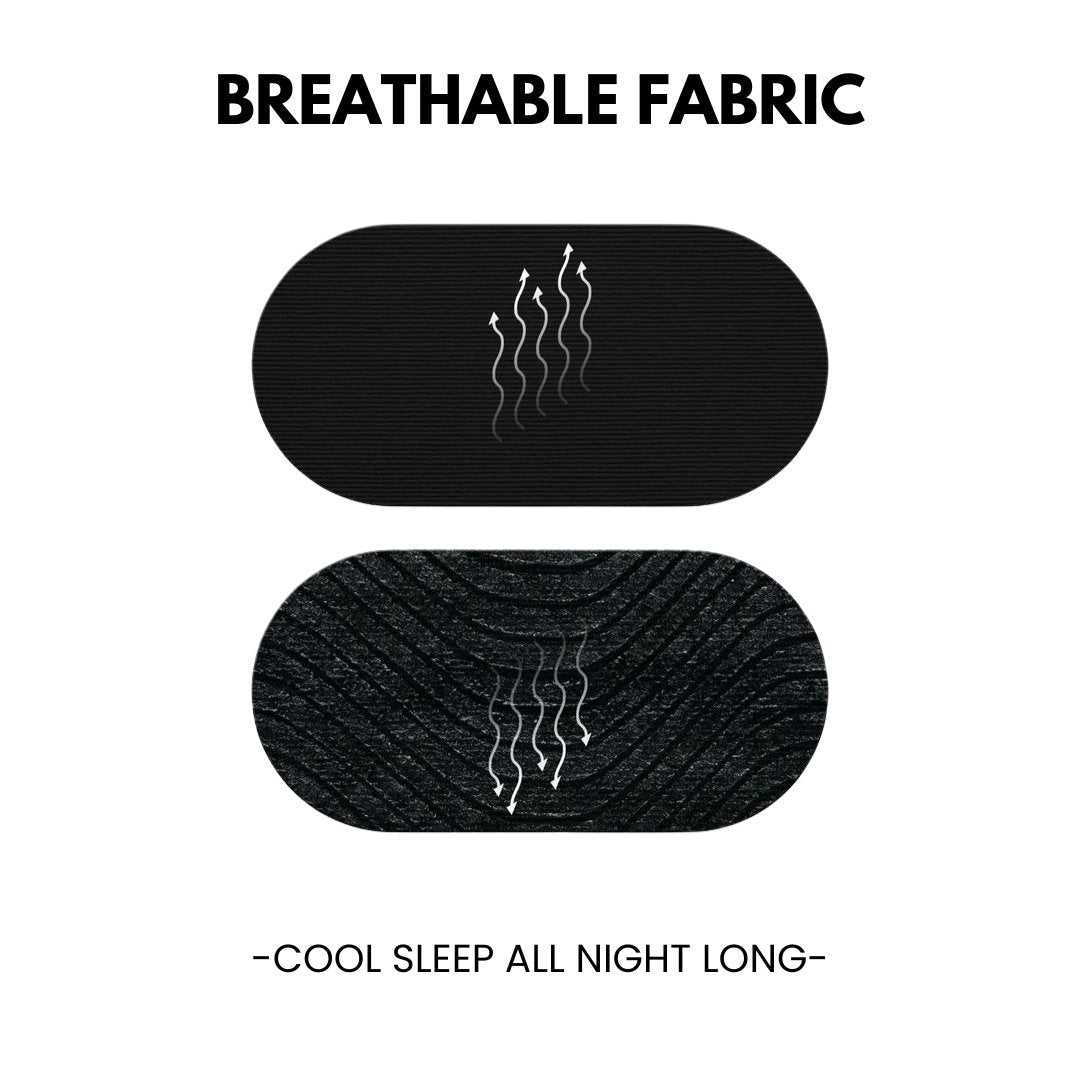
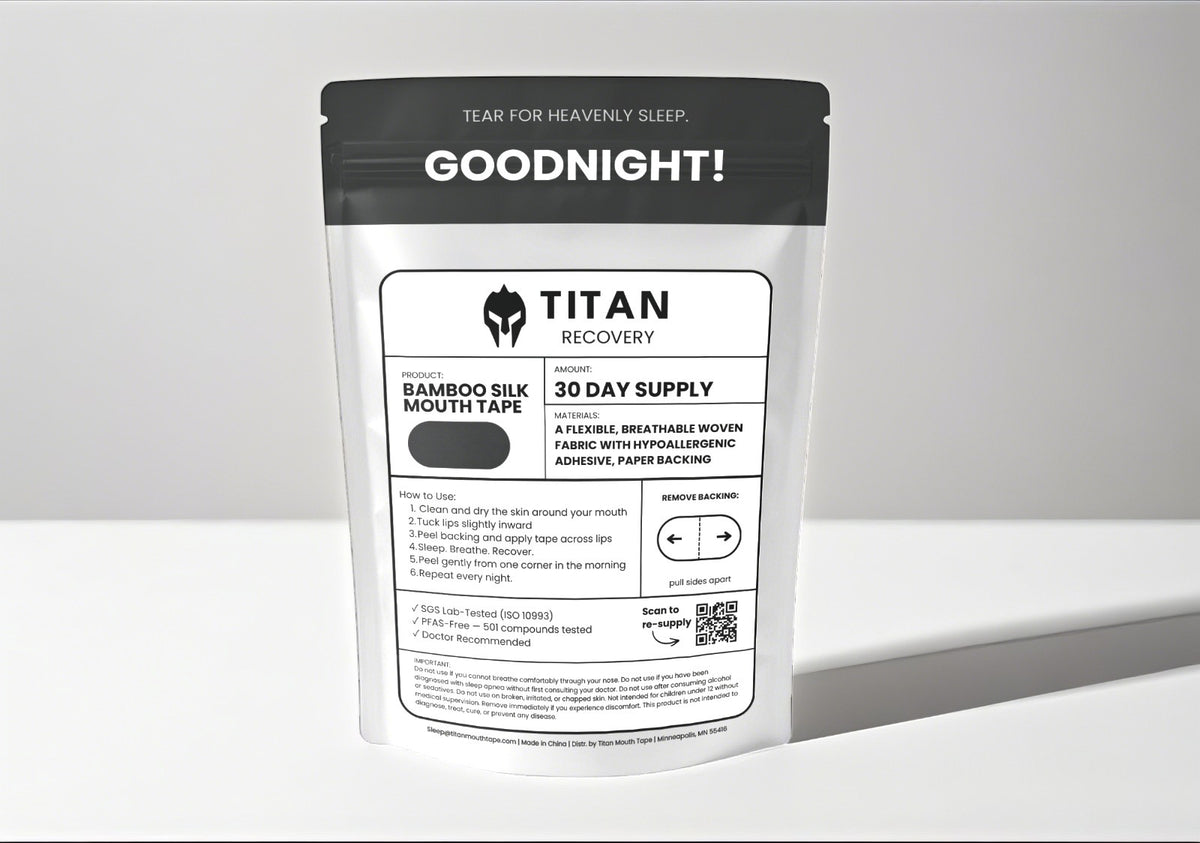
- Mouth tape: Titan Mouth Tape keeps your lips sealed during sleep, training nasal breathing passively. The bamboo silk material is breathable and hypoallergenic — important when something is on your face for 8 hours.
- Nasal strips: TitanAir Nasal Strips mechanically open the nasal valve, reducing airway resistance. Combining both addresses the two sides of the breathing equation — closing the mouth and opening the nose.
The nasal breathing section at The Natural Sleep Lab has a library of articles on the physiology, from how nitric oxide production works during nasal breathing to why athletes are adopting mouth taping for recovery.
Layer 4: Pre-Sleep Wind-Down
The hour before bed is not the time to answer emails, watch intense content, or have difficult conversations. Your nervous system needs a runway to shift from sympathetic (alert, active) to parasympathetic (rest, recovery) mode.
Effective wind-down habits:
- Stop screens 30-60 minutes before bed. If you can't, use aggressive blue-light filtering and keep content low-stimulation.
- Do 5-10 minutes of box breathing or slow nasal breathing. Exhale-dominant patterns (inhale 4 seconds, exhale 6-8 seconds) directly activate the parasympathetic nervous system.
- Read physical books, stretch, or journal. Anything that doesn't require a screen and doesn't spike your heart rate.
Layer 5: Tracking and Iteration
You don't need a tracker to sleep well. But if you're building a stack, tracking helps you identify what's working and what isn't. The key metric to watch is heart rate variability (HRV) — it reflects your autonomic nervous system's recovery state and correlates strongly with subjective sleep quality.
What to track:
- HRV trend (not daily number). A rising 7-day average means your recovery is improving. A single bad night is noise.
- Sleep latency. If you're consistently taking more than 20 minutes to fall asleep, something in layers 1-4 needs adjustment.
- Wake events. Frequent mid-night waking often points to breathing issues, temperature, or alcohol consumption.
For a full breakdown of how HRV connects to sleep quality and recovery, The Natural Sleep Lab's HRV and recovery section covers the research and practical application.
Common Mistakes That Undermine Your Stack
Skipping the basics and buying gadgets. A $300 sleep tracker won't help if your room is 74°F and you're scrolling your phone until midnight. Fix the free stuff first.
Inconsistent timing. Sleeping 10pm-6am on weekdays and 1am-10am on weekends creates social jet lag. Your circadian system can't adapt to a schedule that shifts by 3 hours every 5 days.
Ignoring breathing. People spend hundreds on mattresses and supplements but never address the fact that they mouth-breathe all night. Nasal breathing is one of the highest-leverage interventions in a sleep stack, and it costs under a dollar per night.
Over-supplementing. Melatonin is a timing signal, not a sedative. Taking 5-10mg when you need 0.3-0.5mg disrupts your natural production cycle. Most people don't need melatonin supplements if their light exposure is right.
A Simple Stack to Start Tonight
You don't need to implement all five layers at once. Start with the highest-leverage changes and add from there:
- Tonight: Drop your bedroom temperature to 67°F. Cover any light sources.
- This week: Start morning sunlight walks (10-15 minutes, no sunglasses). Set a consistent wake time.
- Next week: Add mouth tape to close the breathing loop. If you have nasal congestion, pair it with nasal strips.
- Ongoing: Introduce a wind-down routine. Track HRV weekly if you want data to iterate on.
The goal isn't perfection — it's consistency. A basic stack executed every night will outperform a complex one you follow half the time.
Frequently Asked Questions
What is the most important part of a sleep optimization stack?
Light exposure and timing. Morning sunlight and evening darkness set the foundation for everything else. Without proper circadian alignment, supplements, trackers, and sleep gadgets have limited impact.
How does nasal breathing improve sleep quality?
Nasal breathing filters and humidifies air, produces nitric oxide for better oxygen absorption, and reduces snoring. Mouth breathing leads to dry mouth, disrupted sleep architecture, and lower blood oxygen levels. Mouth tape is the simplest way to maintain nasal breathing during sleep.
Do I need a sleep tracker to optimize my sleep?
No. A tracker helps you identify patterns and measure progress, but the core interventions (light, temperature, breathing, timing) work without one. Start with the fundamentals and add tracking later if you want data to fine-tune your routine.
How long does it take to see results from a sleep stack?
Most people notice improved sleep quality within 3-7 days of consistent changes to light exposure, room temperature, and nasal breathing. HRV trends typically show measurable improvement within 2-3 weeks. The key variable is consistency — sporadic changes produce sporadic results.
Where can I learn more about the science behind sleep optimization?
The Natural Sleep Lab publishes evidence-based articles covering sleep science, nasal breathing, circadian rhythm, and HRV and recovery. It's a solid resource for going deeper on any of the layers covered in this guide.
Doctor Recommended: "As a maxillofacial surgeon and dentist, I recommend Titan Mouth Tape. Nasal breathing during sleep is essential for airway health and deep restorative rest. Titan's bamboo silk design is the most comfortable and effective mouth tape I have tested. If you struggle with snoring, dry mouth, or poor sleep quality, this is the simplest change you can make for your health." — Dr. Francois P., MD, DDS — Maxillofacial Surgeon
Lab-Tested Safety: Titan's adhesive is independently tested to ISO 10993 medical device standards. Non-toxic (95% cell viability). Non-allergenic (0% reaction rate). Non-irritating (score 0.0/8.0). PFAS-free — 501 compounds tested, zero detected. See full test results →
Try the complete system tonight. Titan Mouth Tape (bamboo silk, SilkSeal™ adhesive) + TitanAir Nasal Strips. Free shipping. 30-night Better Sleep Guarantee. Shop Titan Mouth Tape → · Shop TitanAir Nasal Strips →