Sleep for New Parents: Quality When Quantity Is Gone
Share
Sleep for new parents comes down to a hard truth: you cannot control how much sleep you get, so the entire game becomes maximizing the quality of the hours you do get. When a newborn dictates your schedule, chasing eight unbroken hours is a losing battle. But you can make each fragment count -- falling asleep faster, protecting the deep stages, and recovering more from less. That shift, from quantity to quality, is the single most useful reframe for surviving the newborn months.
This isn't about willpower or "sleeping when the baby sleeps." New parent sleep deprivation is a real physiological state, not a character flaw. The goal here is practical: given a sleep window you don't control, how do you extract the most recovery possible from it? Here's what the science says, and what actually works at 3 AM.
Why Fragmented Sleep Hits So Hard
The exhaustion new parents feel isn't just about total hours lost. It's about how those hours get broken apart. Understanding the mechanism explains why quality matters more than ever when quantity is low.
Sleep runs in cycles. A full sleep cycle lasts roughly 90 minutes and moves through light sleep, deep sleep, and REM. Deep sleep -- the physically restorative stage where growth hormone releases and the body repairs -- is concentrated in the earlier cycles of the night. REM, critical for mood regulation and memory, builds toward morning. When you're woken every two to three hours, you rarely complete the sequence your body is trying to run.
Every wake-up costs more than the minutes lost. When a feeding or cry pulls you out of sleep, you don't resume where you left off -- you restart the cycle from light sleep and descend all over again. Two hours interrupted twice can deliver far less deep sleep than two uninterrupted hours. This is why you can spend seven hours "in bed" and still feel destroyed.
Deep sleep is what your body prioritizes. Here's the hopeful part: when you're sleep-deprived, your brain front-loads deep sleep, grabbing restorative sleep aggressively the moment you're under. That biological bias is exactly why optimizing quality pays off so well for parents -- your system is primed to make the most of any clean sleep window you protect.
Make Every Window Count
When your sleep opportunities are short and unpredictable, the priority is getting to sleep fast and staying in the deep stages while you're there. Three levers matter most.
Fall asleep faster. A tired parent lying awake for 25 minutes has just lost a fifth of a two-hour window. Cut the runway to sleep: keep the room fully dark, avoid screens during night wakings (use the dimmest possible light for feeds and changes), and don't check the clock -- knowing "it's 3:47" only spikes anxiety. If your mind races, a slow exhale-focused breathing pattern downshifts the nervous system within a few minutes. Our guide to sleep hacks backed by science covers several fast-onset techniques worth having ready.
Protect deep sleep with nasal breathing. How you breathe while asleep directly affects how much restorative sleep you get. Mouth breathing is linked to snoring, airway vibration, and micro-arousals -- brief awakenings you won't remember but that pull you out of the deep stages. For someone sleeping eight hours, those disruptions are partly absorbed by sheer time. For an exhausted parent working with a three-hour window, every self-inflicted micro-arousal is stealing from an already thin margin. Keeping your mouth closed and breathing through your nose helps you stay in deep sleep longer and wake feeling more recovered.
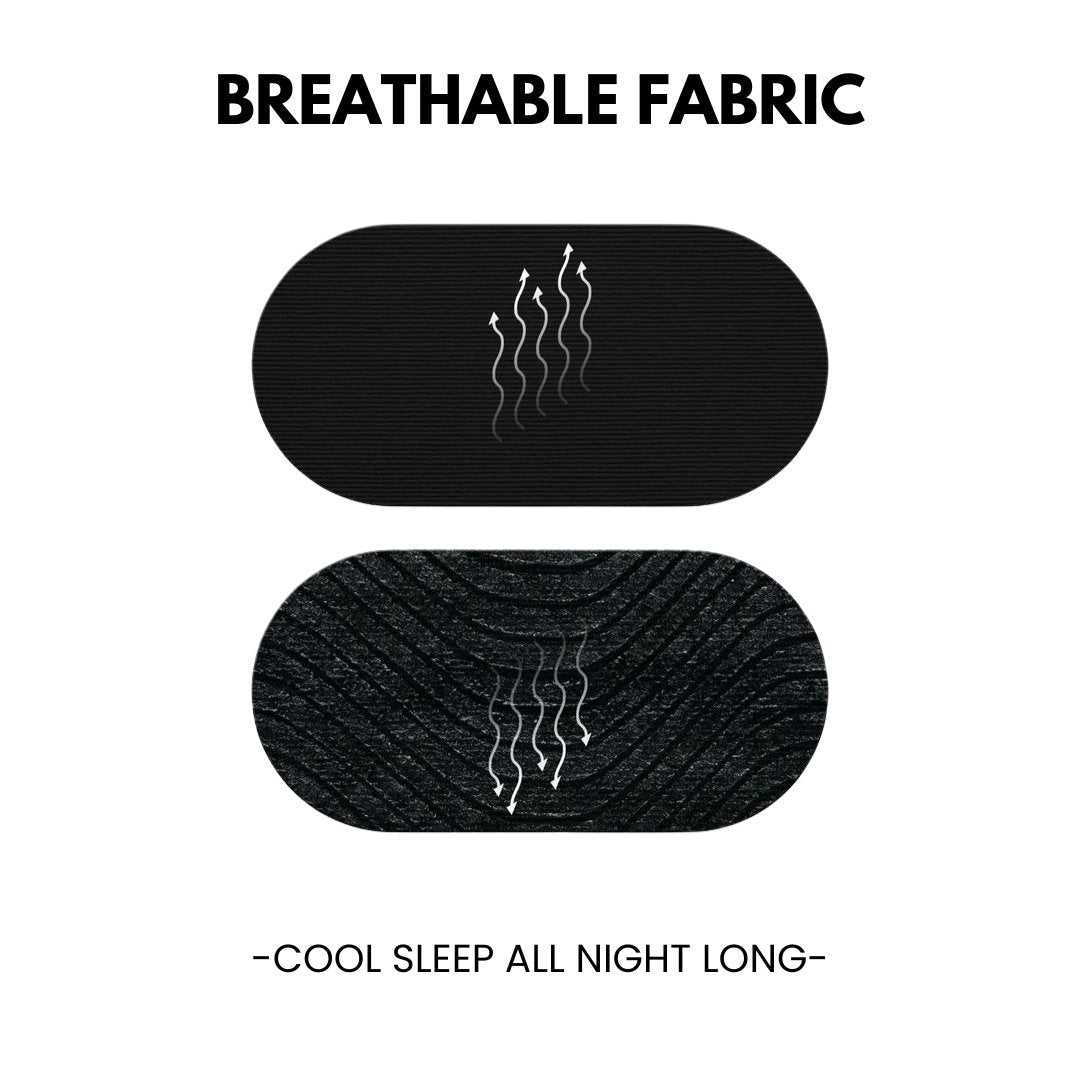
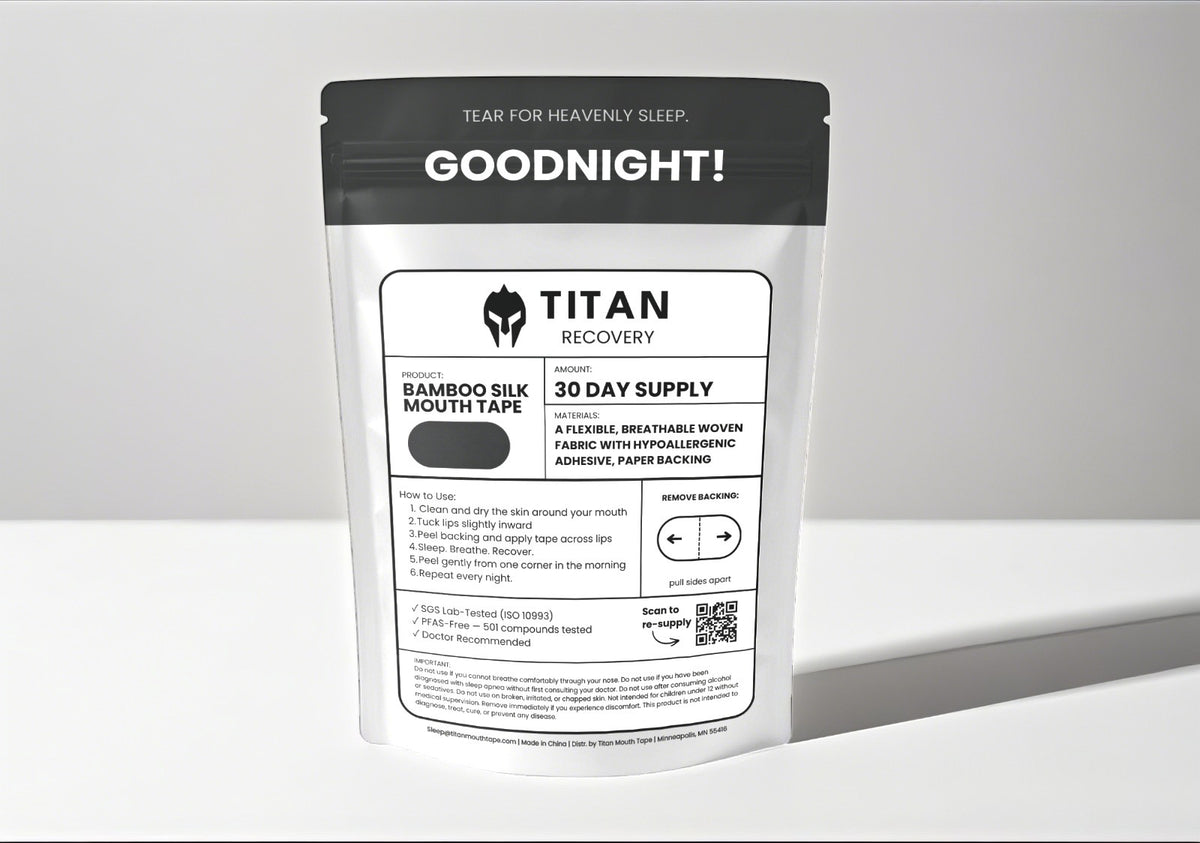
This is where mouth tape earns its place in a new parent's routine. A small strip that keeps your lips gently sealed encourages nasal breathing all night without any conscious effort, and it takes about ten seconds to apply. Nasal breathing also promotes nitric oxide production in the sinuses, improving oxygen uptake, and naturally slows your breath to activate the parasympathetic "rest and recover" state. When you can't add hours, adding depth to the ones you have is the next best thing -- here's how mouth tape supports deep sleep.
Cool, dark, and quiet. Your core body temperature needs to drop to trigger and maintain deep sleep, so keep the bedroom at 65-67 degrees. Blackout curtains or a sleep mask matter even more for parents, since you'll often sleep at odd hours when light is leaking in. A white noise machine masks household sounds and can blur the smaller baby noises that don't actually require you -- so you only wake for the ones that do.
Nap Like It's Part of the Job
For new parents, napping isn't indulgence -- it's how you reclaim sleep the night stole. But duration determines whether a nap helps or leaves you groggier than before.
Twenty minutes or ninety -- avoid the middle. A 20-minute nap keeps you in light sleep and delivers an alertness boost without grogginess. A 90-minute nap completes a full cycle, including deep and REM sleep, and lets you wake during a lighter stage. The trap is the 45-minute nap: long enough to drop you into deep sleep, short enough to yank you out mid-cycle. That's sleep inertia, and it can leave you foggier than if you hadn't napped at all.
Match the nap to the gap. If you have 20-25 minutes of certainty, take the short nap and set an alarm. If a partner is covering a longer stretch, or the baby reliably sleeps 90 minutes-plus, go for the full cycle. The same nasal-breathing setup that helps at night makes daytime naps more restorative too -- quality rules don't clock out when the sun's up.
Tag-Team Sleep With Your Partner
If you're parenting with a partner, the most powerful strategy available is dividing the night so each person gets at least one protected, unbroken block.
Split the night into shifts. Rather than both of you waking for every disturbance, assign shifts. One parent is "on call" from, say, 9 PM to 2 AM while the other sleeps hard behind a closed door with earplugs or white noise, then you swap. Each of you gets one clean stretch long enough to complete multiple full cycles -- worth far more than two people each getting fragmented, shallow sleep.
Make the off-duty block truly off. The parent who's sleeping should be genuinely unreachable -- separate room if possible, phone silenced, trusting that the on-call partner has it handled. Half-sleeping with one ear open produces almost no deep sleep. The whole point of tag-teaming is that protected time; guard it fiercely.
If you're feeding, still divide labor. Even when one parent handles feeds, the other can take changes, settling, and early-morning duty so the feeding parent gets a longer consolidated block. The math favors specialization over both-of-you-awake.
Bank Recovery When You Can
You can't fully "catch up" on chronic sleep loss, but you can meaningfully repay recent debt and take pressure off the worst nights.
Use weekends and helping hands. When a partner, grandparent, or friend can take the baby for a morning, use that window for a real 90-minute-plus recovery sleep rather than chores. One or two longer sleeps a week measurably reduce the toll of sleep debt. The kitchen will wait.
Anchor a consistent wake time when possible. Even amid chaos, a roughly stable wake time and morning light exposure help stabilize your circadian rhythm, improving the quality of whatever sleep you do get. Aim for a center of gravity, not perfection.
Support nasal breathing every time you lie down. Whether it's a 20-minute nap, a tag-team block, or a weekend recovery sleep, the quality multipliers stack. Pairing mouth tape with nasal strips keeps your airway open and your breathing nasal, so short and broken windows still deliver more deep sleep per minute. For the science on getting more of that stage, see our guide on how to increase deep sleep.
Frequently Asked Questions
How do new parents survive on so little sleep?
The parents who cope best stop trying to control quantity and focus on quality and strategy: falling asleep fast, protecting deep sleep through environment and nasal breathing, taking 20- or 90-minute naps, and tag-teaming nights with a partner so each person gets one unbroken block. Your body also helps -- when sleep-deprived, it prioritizes restorative deep sleep, so clean, protected windows deliver more recovery than usual.
Is sleep quality really more important than quantity for new parents?
When you can't control quantity, quality is where all your leverage is. Two uninterrupted hours of mostly deep sleep can be more restorative than four hours broken into fragments, because each interruption restarts the sleep cycle from the beginning. Optimizing the depth and continuity of the sleep you can get is the most practical strategy available. Our breakdown of why you're still tired after eight hours explains why fragmentation matters so much.
Can mouth taping help me feel more rested on broken sleep?
Yes. Mouth taping encourages nasal breathing, which reduces snoring and micro-arousals that pull you out of deep sleep. When your total sleep is already limited, cutting those self-inflicted disruptions means more of your window is spent in the restorative stages. It's a ten-second setup that costs nothing per night. If you can breathe comfortably through your nose while awake, you can use it while you sleep.
What's the best nap length when the baby finally sleeps?
Twenty minutes for a quick alertness boost with no grogginess, or 90 minutes for a full restorative cycle if you have the time. Avoid the 45-minute range -- it drops you into deep sleep and wakes you mid-cycle, leaving you groggier than before. Match the nap to how much protected time you realistically have.
When will my sleep go back to normal?
Most babies begin consolidating nighttime sleep between three and six months, though it varies widely. The quality-first habits you build now -- especially nasal breathing and a protected sleep environment -- keep paying off long after the night wakings end.
The Bottom Line
New parent sleep deprivation is one of the genuinely hard chapters of life, and it deserves to be met with strategy rather than guilt. You can't dictate when your baby sleeps, so the entire game becomes making the hours you get as restorative as possible -- falling asleep faster, protecting deep sleep, napping smart, and dividing the night with a partner so each of you banks a real block.
When quantity is out of your hands, quality is the lever you still control. Keeping your breathing nasal through every sleep window reduces the micro-arousals that steal deep sleep and helps a three-hour stretch feel more like real rest. It's the highest-return, lowest-effort change a tired parent can make.
The Titan Deep Sleep Bundle pairs mouth tape with nasal strips for complete nasal breathing support -- gentle adhesive, all-night hold, and a Better Sleep Guarantee. You're running on less than you need and still showing up for the most important job there is. Give the hours you do get every advantage.
Doctor Recommended: "As a maxillofacial surgeon and dentist, I recommend Titan Mouth Tape. Nasal breathing during sleep is essential for airway health and deep restorative rest. Titan's bamboo silk design is the most comfortable and effective mouth tape I have tested. If you struggle with snoring, dry mouth, or poor sleep quality, this is the simplest change you can make for your health." — Dr. Francois P., MD, DDS — Maxillofacial Surgeon
Lab-Tested Safety: Titan's adhesive is independently tested to ISO 10993 medical device standards. Non-toxic (95% cell viability). Non-allergenic (0% reaction rate). Non-irritating (score 0.0/8.0). PFAS-free — 501 compounds tested, zero detected. See full test results →
Try the complete system tonight. Titan Mouth Tape (bamboo silk, SilkSeal™ adhesive) + TitanAir Nasal Strips. Free shipping. 30-night Better Sleep Guarantee. Shop Titan Mouth Tape → · Shop TitanAir Nasal Strips →