Is Titan Recovery Safe? Testing and Side Effects
Share
Putting adhesive on your face every night raises a fair question: is Titan Recovery safe? The answer is yes — and we can back it with independent lab data, not just marketing claims. Titan Mouth Tape is tested to medical device safety standards, free of every harmful compound we've been able to screen for, and designed specifically for nightly use on sensitive facial skin.
Here's the full breakdown — what's in it, how it's tested, what side effects are possible, and what to watch for.
What Titan Mouth Tape Is Made Of
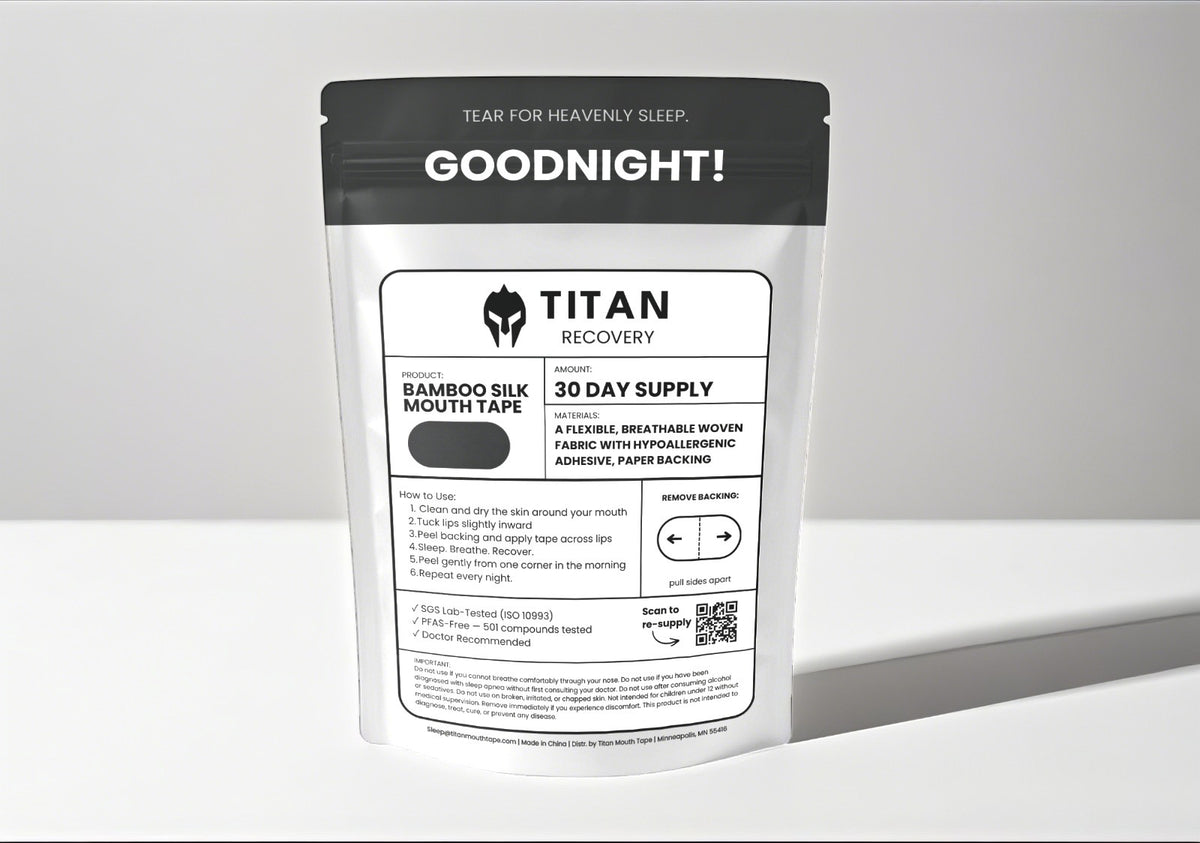
Titan Mouth Tape uses two materials: a bamboo silk fabric and a medical-grade adhesive we call SilkSeal.
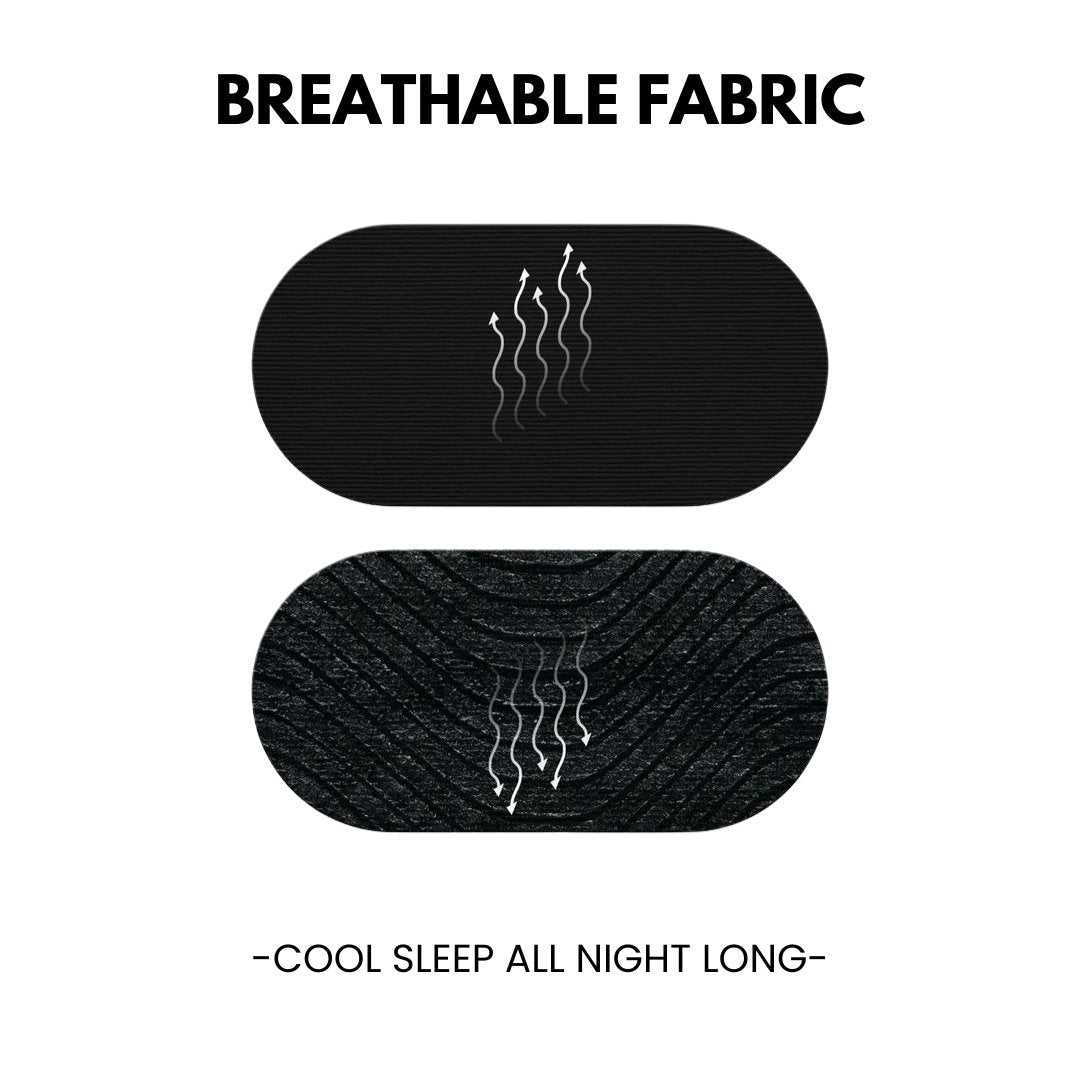
Bamboo silk fabric. The tape itself is woven from bamboo-derived fibers processed into a silk-like textile. Bamboo fiber is naturally hypoallergenic, breathable, and softer than cotton or synthetic alternatives. It's the reason the tape doesn't feel like surgical tape or packing tape on your lips — it moves with your skin, stretches slightly, and doesn't create the rigid, uncomfortable seal that drives people to rip cheaper tapes off in their sleep.
SilkSeal adhesive. The adhesive is a medical-grade, latex-free formulation designed for prolonged skin contact. It's strong enough to stay on all night — including through beard hair — but peels off cleanly in the morning without pulling skin or leaving residue. No solvents, no latex, no formaldehyde-based bonding agents.
That's the full ingredient list. Two components: fabric and adhesive. No drugs, no chemicals that absorb into your skin, no active ingredients. The tape is purely mechanical — it holds your mouth closed so you breathe through your nose. Nothing enters your bloodstream.
Independent Lab Testing
We don't ask you to trust marketing copy. Titan's adhesive has been independently tested by a third-party laboratory to ISO 10993 medical device biocompatibility standards — the same framework used to evaluate surgical implants, wound dressings, and any device that contacts human tissue.
Here's what the testing found:
Skin sensitization (ISO 10993-10): Non-allergenic. Zero percent reaction rate. The adhesive was tested on human subjects following standardized sensitization protocols. No allergic reactions were observed in any test subject. This doesn't mean no human on earth will ever react — individual sensitivities exist — but it means the adhesive has no inherent allergenic properties.
Skin irritation (ISO 10993-10): Non-irritating. Scored 0.0 on a scale of 0 to 8.0, where 0 is no irritation and 8 is severe irritation. A perfect score. The adhesive caused zero measurable skin irritation in any test subject during the evaluation period.
PFAS screening: Zero detected. 501 individual PFAS compounds were tested for. None were detected. PFAS — per- and polyfluoroalkyl substances, sometimes called "forever chemicals" — are found in a surprising number of consumer products, including some adhesive tapes and cosmetics. We tested for all 501 known compounds because "PFAS-free" should mean actually free, not "we didn't test for the ones most likely to be there." Full test results are published on our site.
Possible Side Effects
No product is completely without side effects for every person. Here's what's possible with Titan Mouth Tape, ranked from most common to least:
Mild skin dryness or redness (uncommon). Some users notice slight dryness or pinkness where the tape sat after removing it in the morning. This typically resolves within 30 minutes and is caused by the adhesive seal preventing the skin area from its normal moisture exchange overnight. It's cosmetic, not harmful, and usually diminishes as your skin adjusts over the first week of use. Applying a light, fragrance-free moisturizer to the area after removal can prevent it entirely.
Anxiety or discomfort during adjustment (common initially, resolves quickly). Some first-time users feel uneasy about having their mouth covered. This is psychological, not physical — the tape is porous enough that you could breathe through it in an emergency, and it peels off with minimal effort. The discomfort almost always resolves within three to five nights as the sensation becomes familiar. Practicing during the day while you're awake and in control helps accelerate this adjustment.
Adhesive sensitivity (rare). Despite the 0% reaction rate in sensitization testing, individual allergies exist. If you have known adhesive allergies — from bandages, medical tape, or other adhesive products — test Titan Mouth Tape on the back of your hand for 30 minutes before using it on your face. If you see redness, swelling, or itching that doesn't resolve quickly, don't use the product on your lips.
Jaw tension (rare, and not caused by the tape). A small number of users report jaw tension or mild TMJ discomfort when they start mouth taping. This isn't caused by the tape itself — it's caused by the tongue repositioning against the palate during nasal breathing, which engages jaw muscles differently than mouth breathing. It typically resolves within a week as the muscles adapt. If you have existing TMJ issues, consult your dentist before starting.
Who Should Not Use Mouth Tape
Titan Recovery is safe for the vast majority of adults, but there are a few situations where mouth taping is not appropriate:
- Severe nasal obstruction. If you genuinely cannot breathe through your nose — from severe polyps, a fully deviated septum, or complete congestion — closing your mouth creates a breathing problem. TitanAir Nasal Strips can help with mild to moderate obstruction, but severe cases need medical evaluation before mouth taping.
- Active nausea or vomiting risk. If you've been drinking heavily, have a stomach illness, or are on medications that may cause vomiting, don't tape your mouth shut during sleep.
- Children under 12. Mouth taping for children should only be done under the guidance of a pediatric dentist or ENT specialist.
- Undiagnosed sleep apnea. If you suspect you have sleep apnea — loud snoring with gasping or choking, observed breathing pauses, excessive daytime sleepiness — get a sleep study first. Mouth tape is not a treatment for obstructive sleep apnea.
How Titan Recovery Compares on Safety
Not all mouth tapes are tested the same way. Some brands use generic adhesives designed for packaging or industrial use, adapted for skin contact without formal biocompatibility testing. Others use medical-grade adhesives but don't publish their test results.
Titan Recovery is one of the few mouth tapes that publishes full ISO 10993 test data and comprehensive PFAS screening results. We do this because "trust us, it's safe" isn't good enough for something you're putting on your face every night for years. The data should be accessible, specific, and verifiable.
The bamboo silk material is also a meaningful differentiator on comfort and skin health. Synthetic tapes trap heat and moisture against the skin, which can contribute to irritation over long-term nightly use. Bamboo silk breathes, which keeps the skin under the tape drier and healthier over months and years of use.
Frequently Asked Questions
Can you suffocate from Titan Mouth Tape?
No. The tape is applied over the lips only and is porous — air can pass through the material in an emergency. It also peels off easily with minimal effort. If your body needs to mouth breathe during the night, the tape will either allow air through or come off. Suffocation from mouth tape has never been documented in medical literature.
Is Titan Recovery FDA approved?
Mouth tape is classified as a general wellness product, not a medical device, so it doesn't require FDA approval. However, Titan's adhesive is tested to ISO 10993 standards — the same biocompatibility framework used for FDA-regulated medical devices. The testing is equivalent even though the regulatory pathway is different.
Can I use Titan Mouth Tape with a CPAP machine?
Yes. Many CPAP users tape their mouth to prevent air from leaking through the mouth, which reduces CPAP effectiveness. The tape keeps the seal intact so the pressurized air stays in the nasal airway where it's supposed to be. Consult your sleep specialist if you have questions about combining therapies.
Does Titan Mouth Tape contain latex?
No. The SilkSeal adhesive is completely latex-free. It's also free of formaldehyde, BPA, and all 501 tested PFAS compounds.
The Bottom Line
Titan Recovery mouth tape is independently tested to ISO 10993 medical device standards, scoring non-toxic (95% cell viability), non-allergenic (0% reaction rate), and non-irritating (0.0/8.0). It's PFAS-free across all 501 tested compounds, latex-free, and made from breathable bamboo silk. The most common "side effect" is mild adjustment anxiety that resolves within a few nights. For the vast majority of adults, it's one of the safest changes you can make to your sleep routine — and the Better Sleep Guarantee means you can try it risk-free.
Doctor Recommended: "As a maxillofacial surgeon and dentist, I recommend Titan Mouth Tape. Nasal breathing during sleep is essential for airway health and deep restorative rest. Titan's bamboo silk design is the most comfortable and effective mouth tape I have tested. If you struggle with snoring, dry mouth, or poor sleep quality, this is the simplest change you can make for your health." — Dr. Francois P., MD, DDS — Maxillofacial Surgeon
Lab-Tested Safety: Titan's adhesive is independently tested to ISO 10993 medical device standards. Non-toxic (95% cell viability). Non-allergenic (0% reaction rate). Non-irritating (score 0.0/8.0). PFAS-free — 501 compounds tested, zero detected. See full test results →
Try the complete system tonight. Titan Mouth Tape (bamboo silk, SilkSeal™ adhesive) + TitanAir Nasal Strips. Free shipping. 30-night Better Sleep Guarantee. Shop Titan Mouth Tape → · Shop TitanAir Nasal Strips →