Napping Too Long: Why It Wrecks Your Sleep
Share
Naps are not the enemy. Long naps are. A well-timed 20-minute nap can clear mental fatigue, sharpen your focus, and carry you through the rest of the day without touching your nighttime sleep. But stretch that nap to 60 or 90 minutes and you're no longer borrowing energy from the afternoon — you're stealing deep sleep from the night ahead. The grogginess you feel waking up from a long nap has a name: sleep inertia. And it's your body's way of telling you that you just woke up from the wrong stage of sleep at the wrong time of day. If you find yourself napping too long on a regular basis, the nap isn't fixing the problem. It's covering for one.
How Sleep Pressure Works (And How Long Naps Break It)
Your body runs on a chemical sleep timer. From the moment you wake up, a molecule called adenosine accumulates in your brain. The longer you stay awake, the more adenosine builds, and the sleepier you feel. By evening, the pressure is high enough that falling asleep feels natural. This is sleep pressure — the primary driver behind your ability to fall asleep quickly and stay asleep through the night.
A short nap — 10 to 20 minutes — clears a small amount of that adenosine. Enough to take the edge off afternoon fatigue without denting the pressure you've been building all day. Your nighttime sleep drive stays intact.
A long nap does the opposite. When you sleep for 60 or 90 minutes in the afternoon, your brain discharges a significant chunk of accumulated adenosine. The sleep pressure you spent all day building gets partially reset. So when 10 p.m. arrives, you don't feel tired enough to fall asleep — because your brain already cashed in some of that sleep debt hours ago. This is why long naps and sleep quality have an inverse relationship: the longer the nap, the worse the night that follows.
The Ideal Nap Length: 10 to 20 Minutes
The research on how long should a nap be points consistently to the same window: 10 to 20 minutes. That range is enough time to cycle through the lightest stages of sleep — stage one and the beginning of stage two — where your brain can clear some fatigue and reset alertness without dropping into deeper territory.
At the 10-minute mark, studies show measurable improvements in reaction time, mood, and cognitive performance. At 20 minutes, those benefits hold strong. But once you cross the 30-minute threshold, you start entering slow-wave deep sleep — and that's where the trouble begins.
Set an alarm. The "I'll just close my eyes for a few minutes" approach almost always turns into a 90-minute crash, because once your body enters deep sleep, it doesn't want to come back out. An alarm at 20 minutes keeps you in the recovery zone without crossing into territory that wrecks your evening.
Why Long Naps Leave You Feeling Worse
If you've ever woken up from a long afternoon nap feeling confused, groggy, and somehow more tired than before you lay down, that's sleep inertia. It happens because you woke up from deep sleep — specifically, slow-wave sleep in stage three — before your brain was ready to surface.
During deep sleep, your brain waves slow dramatically, body temperature drops, and neurochemistry shifts to support restoration. When an alarm yanks you out of that state prematurely, your brain needs time to reboot. The prefrontal cortex — responsible for decision-making and clear thinking — is the slowest region to come back online after deep sleep interruption.
That's why why long naps make you tired isn't a contradiction. You got more sleep, but you woke up at the worst possible moment in the cycle. The result is 30 to 60 minutes of impaired function — slower thinking, irritability, a heavy feeling behind your eyes — that can persist into the evening. A 20-minute nap skips this entirely because you never enter deep sleep in the first place.
The Timing Rule: Before 3 PM
Even a perfectly timed 20-minute nap can backfire if you take it too late in the day. The general rule is simple: nap before 3 p.m., and ideally between 1 and 2 p.m., when your circadian rhythm naturally dips.
After 3 p.m., any nap — regardless of length — starts competing with your nighttime sleep pressure. Your body is working toward a specific bedtime, and a late-afternoon nap shaves hours off the adenosine buildup that makes that bedtime possible. Do that a few days in a row and you've created a cycle: late nap, late bedtime, poor sleep, tired the next day, another late nap.
The relationship between nap length and nighttime sleep is tightest in the late afternoon. A 20-minute nap at 1 p.m. barely registers on your nighttime sleep quality. That same nap at 5 p.m. can push your bedtime by an hour.
When Longer Naps Are Actually Fine
The 10-to-20-minute rule applies to people who are getting adequate nighttime sleep and using naps as a performance supplement. There are specific situations where a longer nap is the right call:
Acute sleep deprivation. If you got four hours last night because of a red-eye flight, a sick kid, or a deadline, a 90-minute nap lets your brain complete one full sleep cycle — deep sleep and some REM. In this case, the adenosine discharge is appropriate. You have a genuine sleep debt to repay.
Illness. When you're sick, your body's sleep demand increases. Immune function is tightly linked to deep sleep, and restricting naps to 20 minutes during illness is counterproductive.
Shift workers. People who work night shifts or rotating schedules live in a state of chronic circadian disruption. For shift workers trying to maintain sleep quality, strategic longer naps before or after a shift can be the only way to accumulate enough total sleep in a 24-hour period.
Outside of these exceptions, a nap that regularly exceeds 30 minutes is a symptom, not a solution.
Why You Need Long Naps in the First Place
If you consistently need a 60-minute nap just to function through the afternoon, what does that say about the sleep you're getting at night?
Chronic daytime sleepiness — the kind that makes a 20-minute nap feel insufficient — almost always traces back to poor nighttime sleep quality. You may be logging seven or eight hours, but if those hours are filled with fragmented cycles, suppressed deep sleep, and frequent micro-arousals, you wake up carrying a debt the night didn't repay. Waking up tired after a full night is one of the clearest signals that your sleep quantity and sleep quality are two different numbers.
One of the most common causes of fragmented nighttime sleep is mouth breathing. When your mouth falls open during sleep, your body shifts from nasal breathing — which supports deep sleep — to oral breathing, which triggers mild sympathetic activation. Heart rate stays elevated. Cortisol output increases. Your brain cycles through lighter sleep stages instead of dropping into the deep, restorative phases it needs. You don't remember any of this. But your afternoon energy level tells the story.
Fix the Night, Fix the Nap
If chronic napping is a fixture of your daily routine, the goal isn't to nap better. The goal is to make the nap unnecessary by fixing what's happening at night.
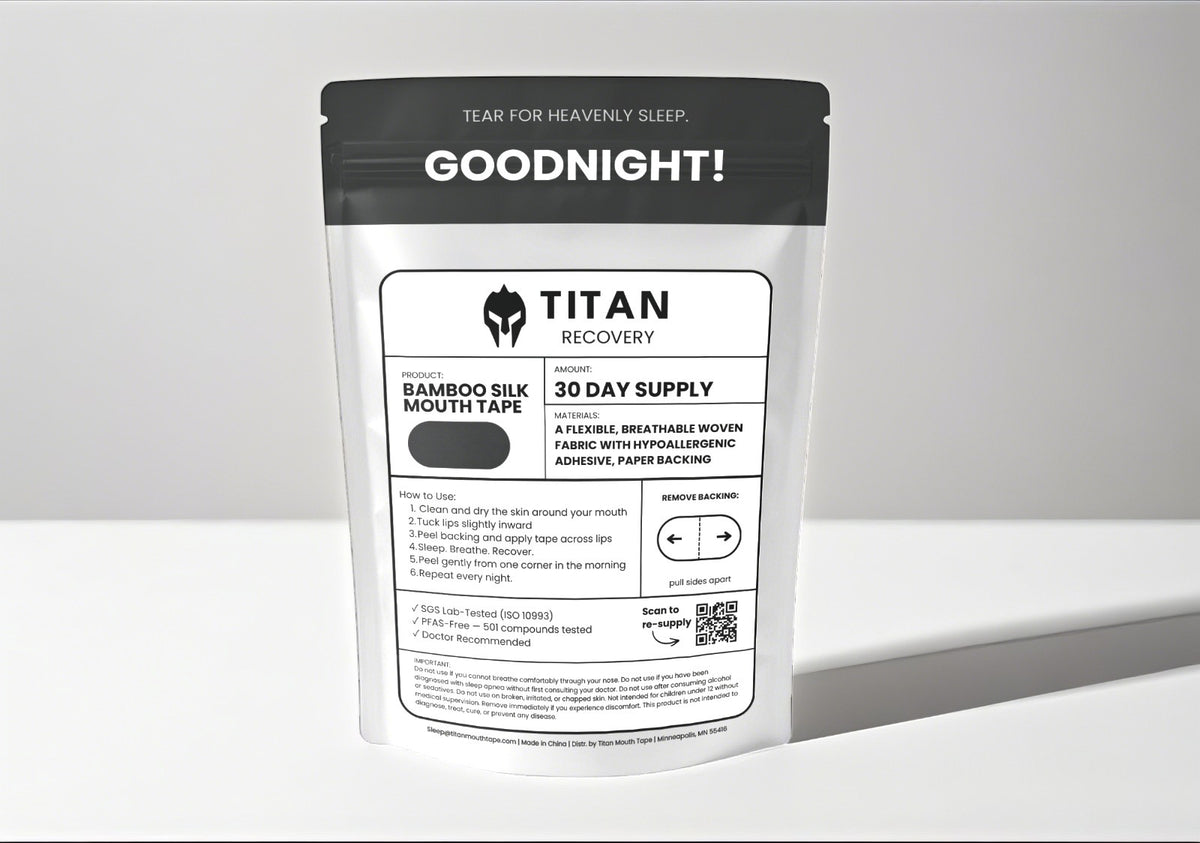
Mouth taping is the most direct way to address nighttime mouth breathing. Titan Mouth Tape keeps your lips gently sealed during sleep, routing all breathing through the nose. Nasal breathing produces nitric oxide, lowers heart rate, and allows your nervous system to fully shift into recovery mode. The result is more time in deep sleep, fewer micro-arousals, and mornings where you actually feel restored.
If nasal congestion makes nose breathing difficult, pairing mouth tape with TitanAir Nasal Strips opens the nasal valve mechanically so the airway stays clear all night. When your nighttime sleep quality improves, the afternoon crash fades — and the need for a compensatory 90-minute nap disappears with it.
Frequently Asked Questions
Is a 90-minute nap better than a 20-minute nap because it completes a full sleep cycle?
Only if you're severely sleep-deprived. A 90-minute nap completes a full cycle through deep sleep and REM, which reduces sleep inertia compared to waking mid-cycle at the 45-minute mark. But for someone who slept adequately the night before, a 90-minute nap discharges too much sleep pressure and will likely delay your bedtime. A 20-minute nap gives you the alertness boost without the tradeoff.
Why do I feel more tired after napping?
You're almost certainly waking up from deep sleep. If your nap lasts 30 to 60 minutes, you've entered slow-wave sleep but haven't completed the cycle. Waking up mid-cycle triggers sleep inertia — that heavy, confused, worse-than-before feeling. The fix is to either keep your nap under 20 minutes (so you never reach deep sleep) or extend it to a full 90 minutes (so you complete the cycle). For most people on most days, shorter is the better option.
Can napping every day become a problem?
A daily 15-to-20-minute nap taken before 3 p.m. is fine for most people and carries genuine cognitive benefits. It becomes a problem when the nap keeps getting longer, when you can't function without it, or when it starts affecting your ability to fall asleep at night. If your nap has crept past 30 minutes on a regular basis, treat that as a signal to investigate your nighttime sleep quality rather than a habit to optimize.
Does caffeine before a nap actually work?
The "coffee nap" — drinking coffee immediately before a 20-minute nap — has some research support. Caffeine takes about 20 minutes to hit peak levels in your bloodstream, so it kicks in right as you wake up, compounding the alertness benefit. If caffeine helps you limit the nap to 20 minutes and avoid oversleeping into deep sleep territory, it's a reasonable strategy — just keep it before early afternoon so the caffeine doesn't interfere with nighttime sleep.
The Bottom Line
Naps are a legitimate tool when used correctly — short, early in the afternoon, and as a supplement to solid nighttime sleep rather than a substitute. The problems start when naps get long. A 90-minute afternoon nap drains the sleep pressure you need to fall asleep at night, triggers sleep inertia that leaves you groggier than before, and creates a cycle where poor nights lead to long naps that lead to worse nights. If you're stuck in that loop, the nap isn't the thing to fix. Your nighttime breathing is. Seal the mouth, breathe through the nose, and give your body the deep, unbroken sleep it's been missing.
Doctor Recommended: "As a maxillofacial surgeon and dentist, I recommend Titan Mouth Tape. Nasal breathing during sleep is essential for airway health and deep restorative rest. Titan's bamboo silk design is the most comfortable and effective mouth tape I have tested. If you struggle with snoring, dry mouth, or poor sleep quality, this is the simplest change you can make for your health." — Dr. Francois P., MD, DDS — Maxillofacial Surgeon
Lab-Tested Safety: Titan's adhesive is independently tested to ISO 10993 medical device standards. Non-toxic (95% cell viability). Non-allergenic (0% reaction rate). Non-irritating (score 0.0/8.0). PFAS-free — 501 compounds tested, zero detected. See full test results →
Try the complete system tonight. Titan Mouth Tape (bamboo silk, SilkSeal™ adhesive) + TitanAir Nasal Strips. Free shipping. 30-night Better Sleep Guarantee. Shop Titan Mouth Tape → · Shop TitanAir Nasal Strips →