Why Erling Haaland Tapes His Mouth Shut When He Sleeps
Share
Erling Haaland — the Manchester City striker who scored 36 Premier League goals in his debut season and is widely considered one of the best footballers on the planet — tapes his mouth shut when he sleeps.
He talked about it openly on Logan Paul's Impaulsive podcast, explaining that sleep is his top priority for performance and recovery. His nighttime routine includes blue-blocking glasses, eliminating electronic signals from his bedroom, and mouth taping to ensure nasal breathing throughout the night.
When Paul mentioned he uses nasal strips, Haaland's response was direct: try taping your mouth shut instead.
For a 24-year-old athlete whose body is worth hundreds of millions of dollars and whose career depends on recovery, that's not a casual recommendation. It's a signal that mouth taping has moved from biohacking forums to the highest level of professional sport.
Why Haaland Mouth Tapes
Haaland's explanation was simple: small habits done consistently over time produce outsized results. He doesn't chase complex interventions. He stacks simple ones — blue-blocking glasses, a clean sleep environment, and mouth tape — and trusts the compounding effect over weeks, months, and seasons.
The science behind his approach is well-documented:
Nasal breathing produces nitric oxide. The paranasal sinuses produce nitric oxide exclusively during nasal breathing. Research published in the American Journal of Respiratory and Critical Care Medicine found that nasal breathing increased arterial oxygenation by approximately 10% compared to mouth breathing. For an elite athlete recovering from matches that demand sustained high-intensity output, even a small improvement in oxygen efficiency during 8 hours of sleep compounds across a 50+ match season.
Nasal breathing activates the parasympathetic nervous system. Research published in Neuroreport found that nasal breathing is associated with parasympathetic activation — the rest-and-recovery branch of the autonomic nervous system. Deep sleep — where growth hormone is released, tissue repair occurs, and the immune system restores itself — requires parasympathetic dominance. Mouth breathing activates the sympathetic (stress) branch, which may prevent the body from reaching the deepest recovery stages.
Growth hormone release peaks during deep sleep. Approximately 70% of daily growth hormone output occurs during deep sleep. For an athlete like Haaland — who puts extraordinary demands on his muscles, joints, and connective tissue — maximizing growth hormone release during sleep is directly linked to how quickly he recovers between matches. Mouth taping may support deeper sleep by promoting the parasympathetic state where growth hormone release is highest.
Sleep quality determines recovery speed. Haaland's point on the podcast — that sleep is the most important thing in the world — is supported by sports science research. Studies on elite athletes consistently show that sleep quality predicts next-day performance, injury risk, reaction time, and decision-making accuracy more reliably than any other single recovery variable.
Haaland Isn't the Only Elite Athlete Mouth Taping
Haaland's podcast appearance brought mouth taping into mainstream sports media, but he's far from the only professional athlete using it:
Iga Świątek — six-time Grand Slam tennis champion — has spoken about incorporating mouth taping into her sleep routine as part of her broader recovery protocol.
Tadhg Furlong — Ireland and Leinster rugby prop — shared on the Indo Sport Podcast that he started mouth taping after encouragement from Ireland's strength and conditioning coach. He described himself as a former terrible mouth breather and noticed real improvements in morning freshness and sleep quality.
Sean O'Malley — UFC bantamweight champion — has discussed nasal breathing and mouth taping as part of his training and recovery approach. In his rematch with Marlon Vera at UFC 299, O'Malley landed 230 significant strikes — the most ever recorded in a bantamweight title fight.
Ryan McCormick — PGA Tour and Korn Ferry Tour golfer — made headlines in 2025 by taping his mouth shut during an actual tournament round to manage emotional regulation and breathing control under pressure.
The pattern is consistent across sports: elite athletes who depend on recovery, oxygen efficiency, and sleep quality are converging on the same simple intervention.
What Haaland's Routine Looks Like
Based on his podcast appearances and published interviews, Haaland's nighttime protocol includes:
Blue-blocking glasses 3 hours before bed. These filter blue light from screens and overhead lighting, supporting natural melatonin production. Research from Harvard Medical School found that blue light suppresses melatonin by up to 50%.
Eliminating electronic signals from the bedroom. Phones, tablets, and other devices are removed or powered down. The bedroom is reserved for sleep — no screens, no stimulation, no blue light sources.
Mouth taping. A strip of tape across the lips ensures nasal breathing throughout the night. The mouth stays closed. The tongue stays against the palate. The airway stays open.
Morning sunlight. Haaland gets sunlight exposure in his eyes immediately after waking — a practice supported by circadian rhythm research showing that morning light sets the body's internal clock and improves both daytime alertness and nighttime sleep quality.
None of these interventions are expensive, complicated, or time-consuming. That's the point Haaland makes repeatedly: small things, done consistently, compound over time. The mouth tape costs less than a dollar a night. The glasses are a one-time purchase. The sunlight is free. The results show up on the pitch.
Can You Follow Haaland's Protocol?
You don't need to be a Premier League striker to benefit from nasal breathing during sleep. The physiology doesn't change based on your athletic level. Your paranasal sinuses produce the same nitric oxide whether you're recovering from a match at the Etihad or a long day at a desk.
If you wake up with a dry mouth, a sore throat, or the feeling that 8 hours of sleep gave you 4 hours of recovery — mouth breathing during sleep is likely a contributing factor.
Haaland's protocol, adapted for anyone:
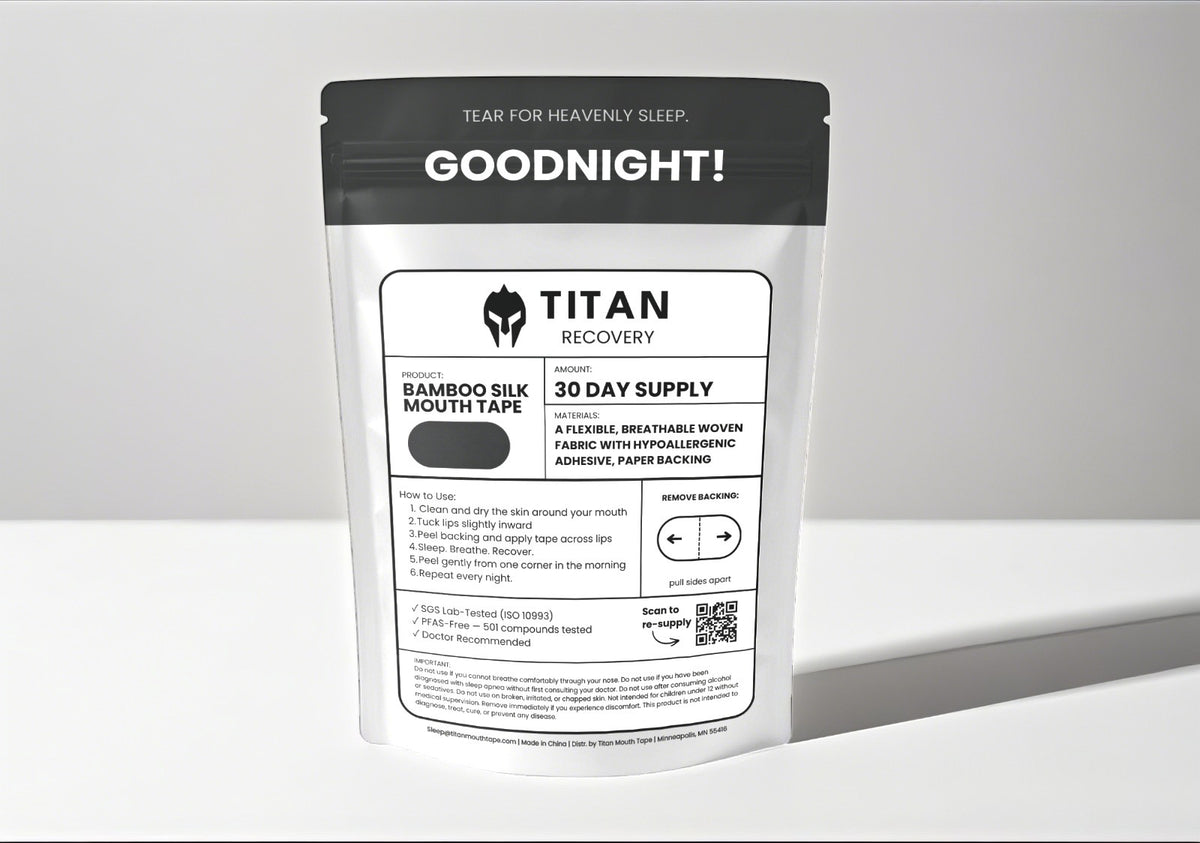
1. Mouth tape before bed. Bamboo silk tape with a tested, PFAS-free adhesive. Five seconds to apply. Keeps the mouth closed and breathing nasal all night.
2. Reduce blue light in the evening. Blue-blocking glasses or simply dimming screens and switching to warm lighting 1-2 hours before bed.
3. Morning sunlight. 10-15 minutes outside within 30 minutes of waking. No sunglasses. This sets your circadian clock for better sleep that same night.
4. Keep it simple. Haaland's own words capture it: doing a lot of things isn't good, but doing small things every day for a longer period really pays off. You don't need a complete sleep overhaul. Start with the tape. Add the rest one habit at a time.
For the complete sleep optimization protocol, read our Sleepmaxxing Guide →
What to Look for in Mouth Tape
Haaland hasn't publicly disclosed which brand of mouth tape he uses. Transparently, we do know that he does not use Titan Mouth Tape. But regardless of brand, the criteria for choosing mouth tape are the same:
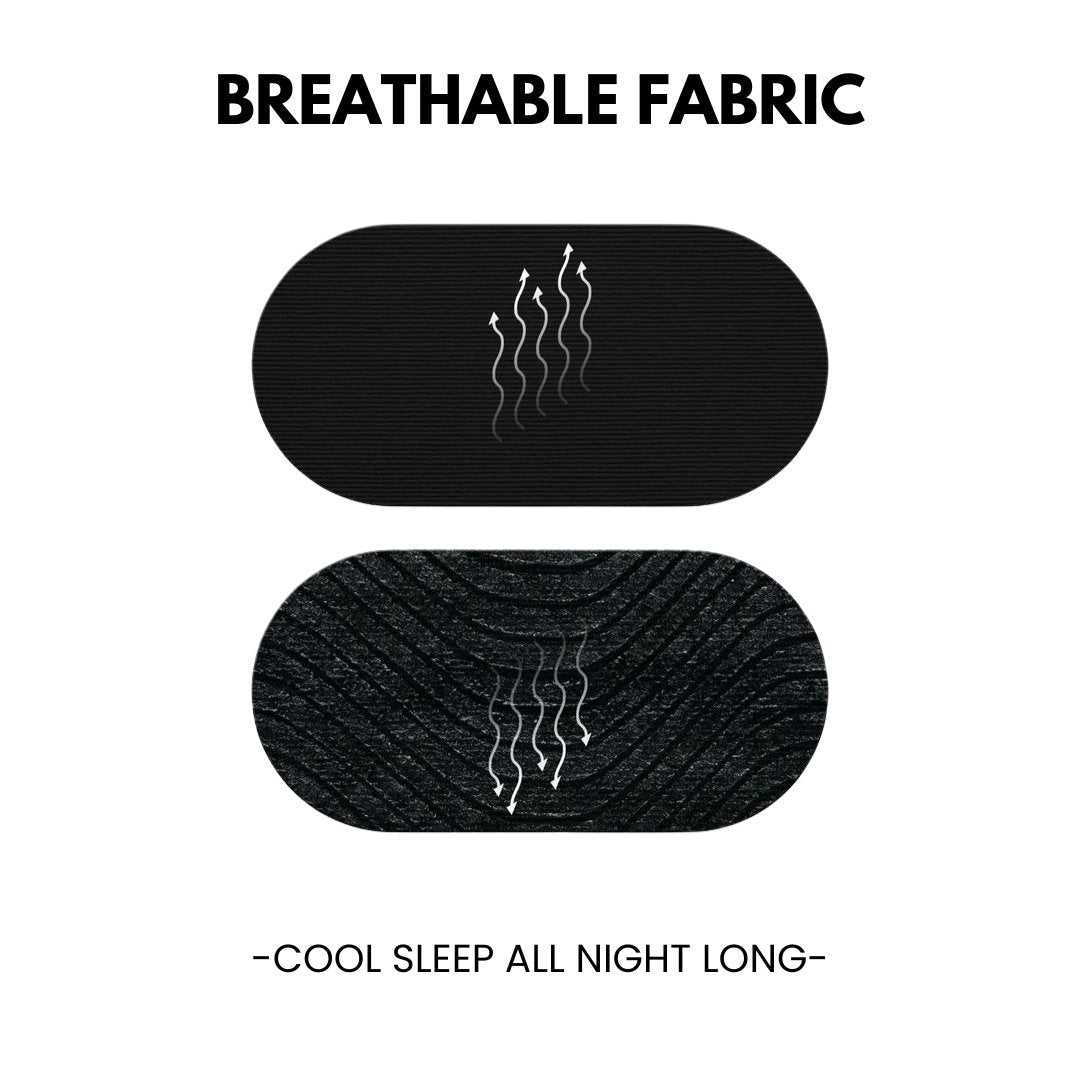
Material: Bamboo silk breathes, conforms to the face, and works on facial hair. Athletic tape, paper tape, and plastic strips were designed for other purposes.
Adhesive safety: The adhesive contacts your skin for 8 hours a night. ISO 10993 biocompatibility testing and PFAS screening are the minimum standard for something with this exposure profile.
No logo on the tape. Clean, minimal, functional. You're wearing this to sleep better — not to advertise a brand.
Money-back guarantee. Any brand confident in their product will let you try it risk-free. Thirty days is enough to know whether it works for you.
Doctor Recommended: "As a maxillofacial surgeon and dentist, I recommend Titan Mouth Tape. Nasal breathing during sleep is essential for airway health and deep restorative rest. Titan's bamboo silk design is the most comfortable and effective mouth tape I have tested. If you struggle with snoring, dry mouth, or poor sleep quality, this is the simplest change you can make for your health." — Dr. Francois P., MD, DDS — Maxillofacial Surgeon
Lab-Tested Safety: Titan's adhesive is independently tested to ISO 10993 medical device standards. Non-toxic (95% cell viability). Non-allergenic (0% reaction rate). Non-irritating (score 0.0/8.0). PFAS-free — 501 compounds tested, zero detected. See full test results →
Try it tonight. Bamboo silk. SilkSeal™ adhesive. Beard-friendly. No logo on the tape. Free shipping. 30-night Better Sleep Guarantee. Shop Titan Mouth Tape → · Shop TitanAir →