How to Pick the Right Mouth Tape: A 9-Step Buyer's Guide
Share
There are over 50 mouth tape brands on the market right now. Amazon alone lists hundreds of options. Some cost $0.05 a night. Some cost over $1.00. Some are made from bamboo silk. Some are kinesiology tape in a sleep-themed box.
They all claim to work. Most of them don't tell you what they're made of.
If you're going to put something on your face every night for months or years, the decision deserves more than a quick scroll through Amazon reviews. Here's how to evaluate mouth tape like someone who actually understands what matters — and what doesn't.
Step 1: Check the Material
The tape material determines how it feels on your skin, whether it breathes during the night, and whether you'll actually wear it consistently. This is the single biggest factor in whether mouth taping becomes a nightly habit or something you try once and quit.
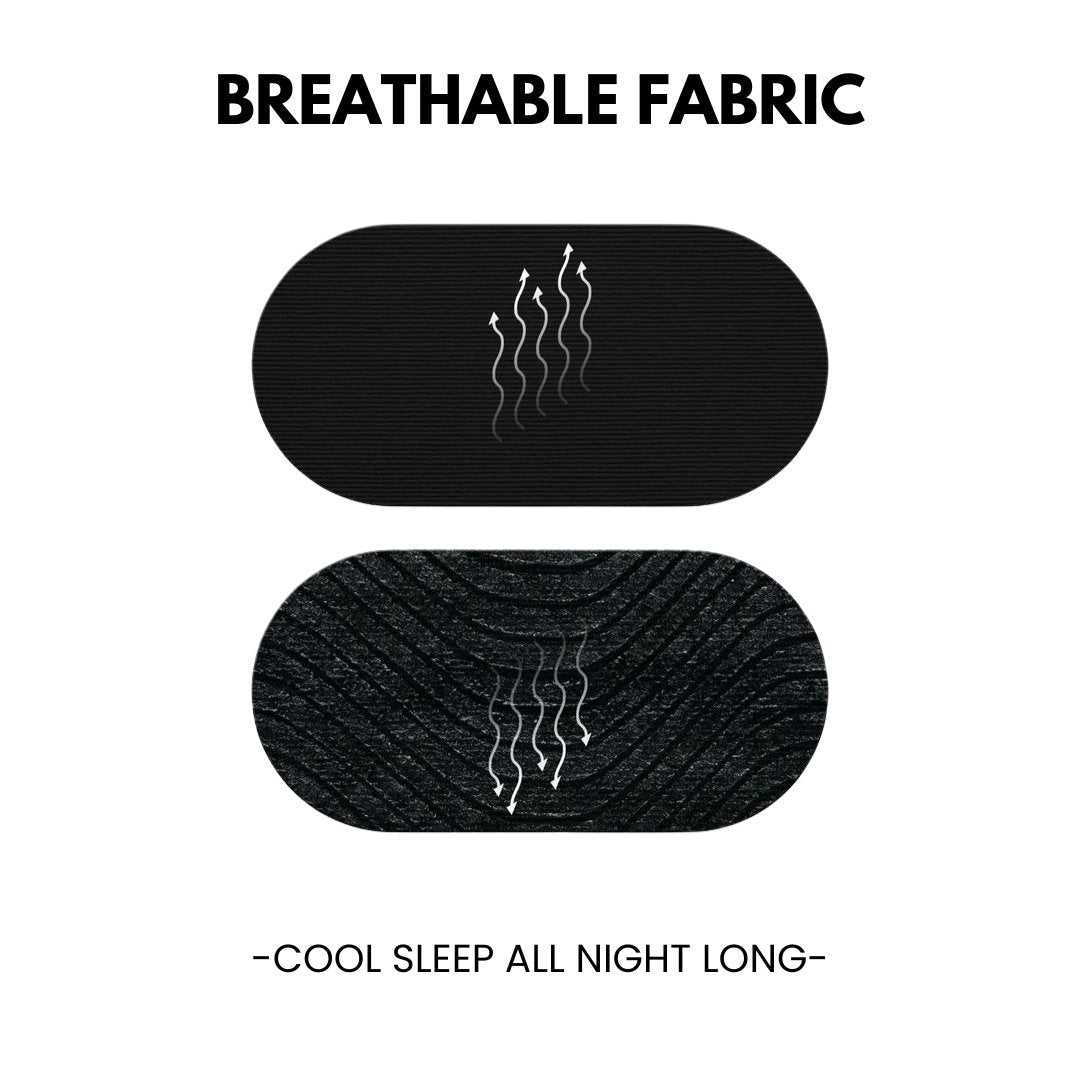
Bamboo silk — the best option currently available. Woven bamboo fiber that's breathable, naturally antibacterial, and soft enough to forget you're wearing it. Bamboo silk conforms to facial contours — including beards — rather than fighting them. It doesn't trap moisture, doesn't curl at the edges, and doesn't feel like a foreign object on your face.
Kinesiology tape — athletic tape repurposed for sleep. Strong adhesive, but it was designed for knees and shoulders, not the delicate skin around your lips. Common complaints: skin irritation, residue on removal, and painful hair pulling. If your mouth tape came in a package that looks like athletic supplies, it's probably this.
Medical paper tape — the drugstore option. Hypoallergenic and cheap, but weak adhesion. Falls off during the night for most people, especially anyone with facial hair. Fine for testing whether mouth taping works for you. Not a long-term solution.
Plastic/synthetic strips — rigid, non-breathable, and uncomfortable. Traps moisture against the skin. Curls at the edges. Feels exactly like plastic stuck to your face, because that's what it is.
Silicone patches — gentle on skin but often too weak to hold all night. Thicker and more noticeable than fabric-based options. Some include a breathing vent, which may reduce the effectiveness of mouth closure.
The test: Can you forget you're wearing it within 5 minutes of application? If not, you won't use it consistently. And consistency is where the results come from.
Step 2: Check the Adhesive Safety Data
This is the step most people skip — and it's arguably the most important one.
The adhesive is what touches your skin. Not the tape surface. The adhesive. It sits on some of the thinnest, most absorbent skin on your body for 7-8 hours every night in warm, moist conditions. Whatever is in that adhesive is making prolonged, intimate contact with your skin — repeatedly, for months or years.
The question to ask: has this adhesive been independently tested for safety?
The international standard is ISO 10993 — the same standard used for surgical tape, wound dressings, and medical devices that contact human skin. Three tests matter:
Cytotoxicity (ISO 10993-5): Is the adhesive toxic to living cells? A passing result means 70%+ of cells survived exposure. A strong result is 90%+.
Skin sensitization (ISO 10993-10): Does the adhesive cause allergic reactions with repeated exposure? You want a 0% reaction rate.
Skin irritation (ISO 10993-10): Does the adhesive cause redness, swelling, or inflammation? Scored 0-8. You want 0.0-0.4 ("negligible").
If a brand publishes these results from a third-party lab, they're serious about safety. If they don't, they haven't done the testing — regardless of what their marketing says.
"Hypoallergenic" is not a test result. It's not regulated for consumer adhesive products. Anyone can put it on a label. Lab data is a test result. Marketing language is a claim.
Step 3: Check for PFAS Screening
PFAS (per- and polyfluoroalkyl substances) are synthetic chemicals used in adhesives, coatings, and consumer products. They're called "forever chemicals" because they don't break down in the environment or in your body. They accumulate over time with every exposure.
Adhesive products are one of the categories where PFAS have historically been found. A comprehensive PFAS screening tests for 500+ individual compounds.
Ask the brand: has your product been screened for PFAS? How many compounds were tested? Were the results published?
If the answer is no — or if they don't respond — you don't know what's in the adhesive you're pressing into your skin every night. That matters more than most people realize.
Step 4: Check Beard Compatibility
If you have any facial hair — a full beard, a goatee, stubble, or a mustache — this is non-negotiable. Most mouth tapes fail on beards. They either fall off because the adhesive can't bond through hair, or they stick too aggressively and rip out hair on removal.
The material matters here. Woven fabrics (bamboo silk) drape around facial hair and allow the adhesive to contact skin between and beneath hairs. Rigid materials (plastic, kinesiology tape) sit on top of hair and either compress it flat (painful removal) or can't make a seal (falls off).
The test: Check reviews specifically from men with facial hair. Generic 5-star reviews don't tell you whether the tape works on beards. If the brand doesn't have beard-specific reviews, the product probably wasn't designed for it.
Step 5: Check the Design
Small details that matter more than you'd expect:
Logo on the tape. Some brands print their logo directly on the tape strip. This means you're wearing a brand name across your mouth while you sleep — and anytime someone sees you wearing it. Clean, unbranded tape looks intentional and minimal. Branded tape looks like advertising on your face.
Strip size and shape. The tape should cover your lips fully without extending unnecessarily onto your cheeks or chin. Too small and it won't create a seal. Too large and it's uncomfortable and wasteful.
Breathing vent. Some tapes include a small hole or mesh vent in the center. This may help anxious first-timers feel more comfortable, but it also allows some mouth breathing — which may reduce the benefits. If you're comfortable with full mouth closure (most people are by night 2-3), a vent is unnecessary.
Step 6: Check the Price (Per Night, Not Per Box)
Mouth taping is a nightly practice. The relevant number isn't the box price — it's the per-night cost over months and years.
Here's how the market breaks down:
Under $0.15/night: Drugstore medical tape (medical-grade Micropore). Cheap but weak adhesion, not designed for overnight facial use. Fine for testing the concept.
$0.50-0.90/night: Most purpose-built mouth tapes (other brands, other tapes, Dream Recovery, Titan Recovery). This is the range where material quality, adhesive testing, and design start to differentiate brands.
Over $1.00/night: Premium pricing that's hard to justify unless the brand offers something meaningfully different — published safety data, unique material, or superior beard performance.
The value calculation: Compare the per-night cost to what you're spending on sleep supplements ($1-3/night for a typical stack), a night guard ($300-700 every few years), or the cognitive and health costs of chronic poor sleep. At $0.50-0.80 per night, mouth tape is one of the cheapest health interventions available.
Also check whether bulk pricing is available. Many brands offer multi-month supplies at significantly lower per-night costs. Subscribe-and-save options can drop the price another 10-15%.
Step 7: Check the Guarantee
A brand that offers a money-back guarantee is telling you they're confident in their product. A brand that doesn't is hoping you won't return it.
Look for a guarantee that's at least 30 days (long enough to evaluate the product fairly), requires no complicated return process, and applies to your first order at minimum.
If the brand doesn't offer a guarantee, ask yourself why. The product costs a few dollars per night. If they won't stand behind it, that tells you something.
Step 8: Check the Reviews
Reviews matter — but the source matters more than the number.
Verified purchase reviews (through platforms like Judge.me, Trustpilot, or Yotpo) are significantly more reliable than unverified reviews. These platforms confirm that the reviewer actually bought the product.
Amazon reviews are useful but mixed with incentivized and fake reviews. Look for verified purchase badges and detailed reviews that describe specific experiences — not generic 5-star praise.
Review count matters. A brand with 500+ verified reviews has meaningful data. A brand with 12 reviews could be anyone.
What to look for in reviews: Does it stay on all night? Does it work on facial hair? Does it irritate skin? Does it leave residue? Does it feel comfortable enough to use every night? These specific questions tell you more than any overall rating.
Step 9: Check for a Doctor Endorsement
Not all endorsements are equal. An influencer saying "I love this tape" is marketing. A physician — ideally one whose specialty is relevant to mouth taping (dentist, ENT, sleep specialist, maxillofacial surgeon) — evaluating and recommending the product based on clinical experience is meaningfully different.
Look for: the doctor's full credentials (MD, DDS, DO — not just "Dr."), their specialty (is it relevant to sleep, breathing, or oral health?), and whether their endorsement is published on the brand's website with their name and title.
A doctor endorsement doesn't guarantee the product will work for every individual. But it does indicate that a qualified professional evaluated it and considered it worth recommending.
The Checklist
Before you buy any mouth tape, run it through these nine checks:
1. Material — is it bamboo silk, or something cheaper?
2. Adhesive testing — has it been ISO 10993 tested by a third-party lab?
3. PFAS screening — has the product been screened for 500+ forever chemicals?
4. Beard compatibility — do men with facial hair confirm it works?
5. Design — no logo on the tape, appropriate size, no unnecessary vents?
6. Price per night — does it make sense for nightly use over months?
7. Guarantee — does the brand stand behind the product?
8. Reviews — are they verified, detailed, and numerous?
9. Doctor endorsement — is a relevant specialist recommending it?
Any brand that checks all nine is worth trying. Any brand that checks fewer than five is selling you marketing, not a tested product. For the full brand-by-brand breakdown, see our side-by-side comparison of the 7 best mouth tapes.
See how the major brands compare across all nine criteria →
Doctor Recommended: "As a maxillofacial surgeon and dentist, I recommend Titan Mouth Tape. Nasal breathing during sleep is essential for airway health and deep restorative rest. Titan's bamboo silk design is the most comfortable and effective mouth tape I have tested. If you struggle with snoring, dry mouth, or poor sleep quality, this is the simplest change you can make for your health." — Dr. Francois P., MD, DDS — Maxillofacial Surgeon
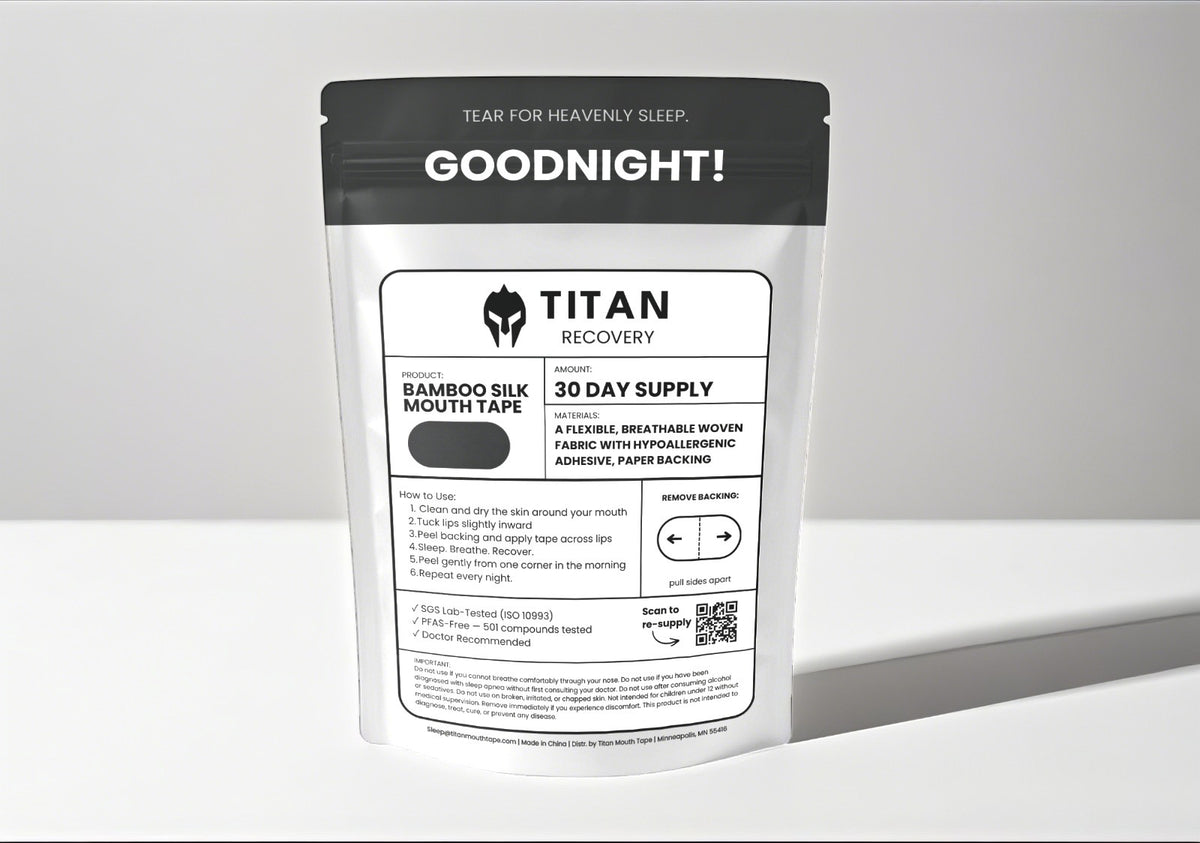
Lab-Tested Safety: Titan's SilkSeal™ adhesive is independently tested by an independent, globally accredited laboratory to ISO 10993 medical device standards. Non-toxic (95% cell viability). Non-allergenic (0% reaction rate). Non-irritating (score 0.0/8.0). PFAS-free — 501 compounds tested, zero detected. compliant with European chemical safety standards — 250 toxic substances screened, all clear. See full test results →
Try it tonight. Bamboo silk. SilkSeal™ adhesive. Beard-friendly. No logo on the tape. Free shipping. 30-night Better Sleep Guarantee. Shop Titan Mouth Tape →