How to Improve Deep Sleep: The Complete Guide to Getting More Slow-Wave Sleep
Share
You're sleeping enough hours. Your sleep tracker says you got 7.5 hours last night. But your deep sleep number is 20 minutes — maybe 30 on a good night — and you wake up feeling like you got hit by a bus.
Deep sleep is where your body does the work that makes sleep worth having. Without enough of it, the hours don't matter. Here's what deep sleep actually is, why yours might be low, and how to get more of it — starting tonight.
What Deep Sleep Is (And Why It Matters More Than Total Sleep)
Deep sleep — also called slow-wave sleep or Stage 3 NREM — is the phase where your body shifts into its most restorative state. It's characterized by delta brain waves, the slowest and highest-amplitude waves your brain produces.
During deep sleep, several critical processes occur simultaneously:
Growth hormone release. The pituitary gland releases approximately 70% of its daily growth hormone output during deep sleep. Growth hormone drives tissue repair, muscle recovery, bone density maintenance, and cellular regeneration. Without adequate deep sleep, this release is significantly reduced — which is why poor sleepers often report slower recovery from workouts, injuries, and illness.
Immune restoration. Research published in the journal Sleep found that even modest reductions in deep sleep suppress immune function. During deep sleep, your body produces cytokines — proteins that target infection and inflammation. People who consistently get less deep sleep are measurably more susceptible to common illnesses.
Brain detoxification. The glymphatic system — your brain's waste clearance pathway — is most active during deep sleep. Research from the University of Rochester, published in Science, showed that the space between brain cells expands by approximately 60% during sleep, allowing cerebrospinal fluid to flush metabolic waste including beta-amyloid, the protein associated with Alzheimer's disease. This clearance occurs primarily during deep sleep stages.
Memory consolidation. While REM sleep is associated with emotional and procedural memory, deep sleep is where declarative memories — facts, events, and learned information — are consolidated from short-term to long-term storage. Research from the University of California, Berkeley found that deep sleep quality predicted memory performance the following day more accurately than total sleep duration.
The average adult needs 1-2 hours of deep sleep per night — roughly 15-25% of total sleep time. If your tracker shows consistently less than 45 minutes, your body isn't completing the recovery processes it needs.
Why Your Deep Sleep Is Low
Deep sleep is the most fragile sleep stage. It's the first one your body sacrifices when conditions aren't right. Here are the most common reasons it drops — and most people have more than one.
1. You're Breathing Through Your Mouth
This is the factor most people never consider — and potentially the highest-leverage one to fix.
When your mouth falls open during sleep, research suggests your nervous system shifts toward sympathetic (stress) activation. Deep sleep requires parasympathetic dominance — the rest-and-recovery branch. If your breathing route is keeping your nervous system in a low-grade stress state, your body may not be able to descend into the slow-wave stages where deep sleep occurs.
Research published in the journal Neuroreport found that nasal breathing activates parasympathetic pathways, while mouth breathing activates sympathetic pathways. This is a direct, measurable effect on the autonomic state that governs sleep architecture.
Additionally, mouth breathing may fragment sleep through microarousals — brief awakenings you don't remember but that prevent you from maintaining the sustained slow-wave state that deep sleep requires. You sleep 8 hours but your brain never stays in deep sleep long enough for it to count.
2. Your Bedroom Is Too Warm
Your core body temperature needs to drop by 2-3°F to initiate and maintain deep sleep. Research from the National Sleep Foundation shows that a bedroom above 68°F (20°C) interferes with this temperature drop, reducing time spent in deep sleep stages.
This effect is dose-dependent — the warmer the room, the less deep sleep you get. Even 2-3 degrees above optimal can measurably reduce slow-wave sleep duration.
3. Alcohol
Alcohol is the most common deep sleep killer that people actively choose to consume. A study published in the journal Alcoholism: Clinical and Experimental Research found that alcohol consumed within 4 hours of bed significantly reduced deep sleep in the second half of the night — even at moderate doses (2 drinks).
Alcohol initially acts as a sedative, which is why people feel it helps them fall asleep. But sedation is not sleep. As alcohol metabolizes (typically 3-4 hours after consumption), it triggers a rebound arousal effect that fragments the sleep stages where deep sleep normally occurs. The result: you fall asleep fast and sleep terribly.
4. Caffeine
Caffeine has a half-life of 5-7 hours. A coffee at 2 PM means roughly half the caffeine is still in your system at 9 PM. Research published in the Journal of Clinical Sleep Medicine found that caffeine consumed 6 hours before bed reduced deep sleep by up to 20% — even when subjects reported that they fell asleep normally and didn't feel the caffeine's effects.
This is the insidious part: caffeine can reduce deep sleep without affecting your ability to fall asleep or your perception of sleep quality. You feel fine. Your deep sleep is silently suppressed.
5. Screens Before Bed
Blue light from screens suppresses melatonin production — the hormone that signals your body to prepare for sleep. Research from Harvard Medical School found that screen use before bed shifted circadian rhythm by up to 90 minutes and reduced deep sleep duration compared to reading a printed book.
The effect isn't just about the light. The cognitive stimulation from scrolling social media, watching intense content, or reading work emails activates your prefrontal cortex — exactly the brain region that needs to quiet down for slow-wave sleep to begin.
6. Stress and Cortisol
Cortisol is the anti-deep-sleep hormone. Elevated cortisol keeps the hypothalamic-pituitary-adrenal (HPA) axis active, maintaining sympathetic tone and preventing the parasympathetic shift required for deep sleep. Research published in Experimental Neurobiology found that chronic stress is one of the most significant predictors of reduced slow-wave sleep.
The cruelest part of this cycle: poor deep sleep itself elevates cortisol the following day, which further reduces deep sleep the next night. Without intervention, the cycle compounds.
7. Eating Too Close to Bed
Digestion raises core body temperature and diverts blood flow to the gastrointestinal system — both of which interfere with the conditions required for deep sleep. Research published in the British Journal of Nutrition found that eating within 2 hours of bed reduced sleep quality and increased nighttime awakenings.
8. Inconsistent Sleep Schedule
Your circadian clock determines when deep sleep occurs within your sleep architecture. Deep sleep is frontloaded — most of it happens in the first 3-4 hours of the night. If your bedtime varies by more than 30-60 minutes, your circadian clock can't reliably schedule the deep sleep window, and you may miss it entirely on irregular nights.
How to Increase Deep Sleep — Ranked by Impact
Tier 1: Highest Impact (Do These First)
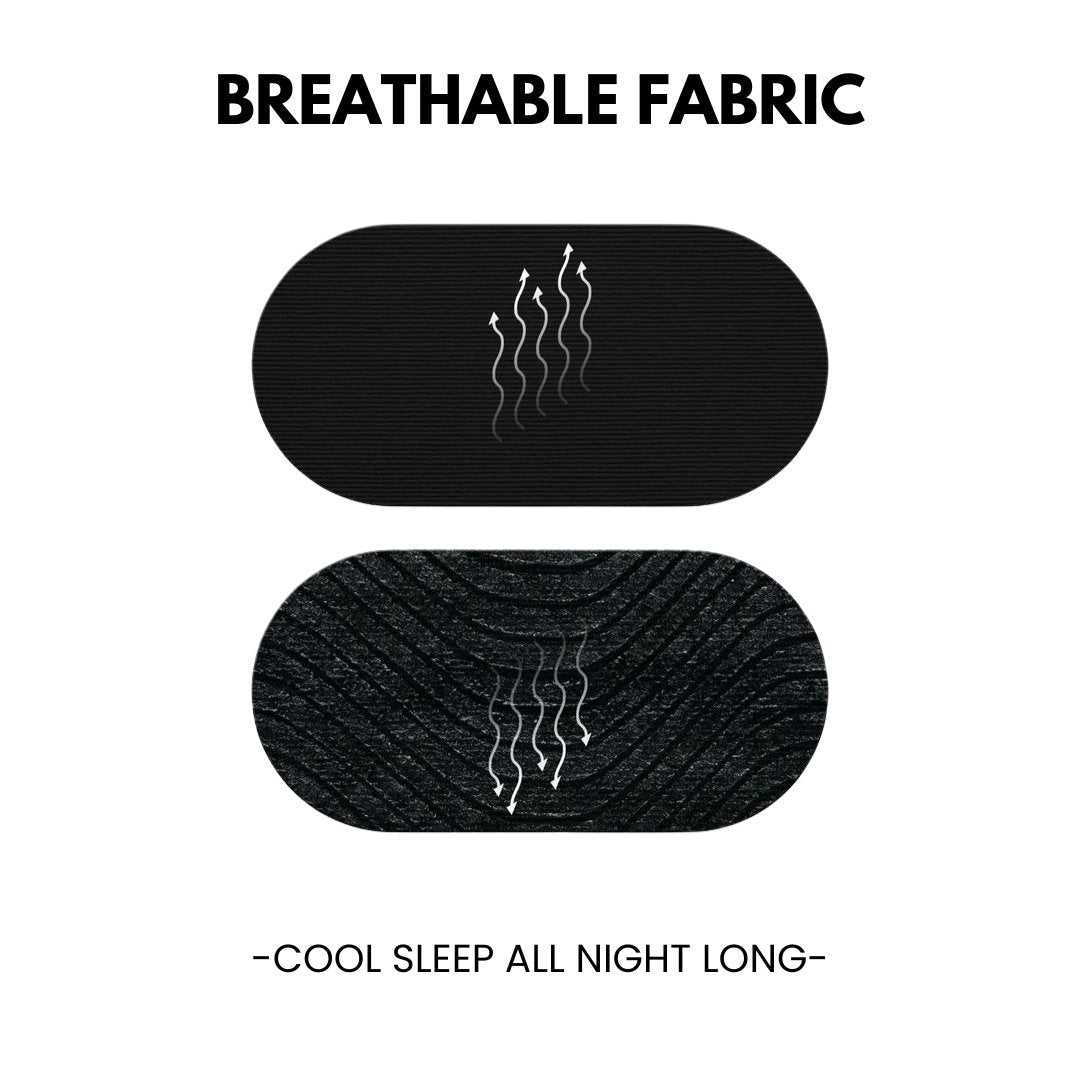
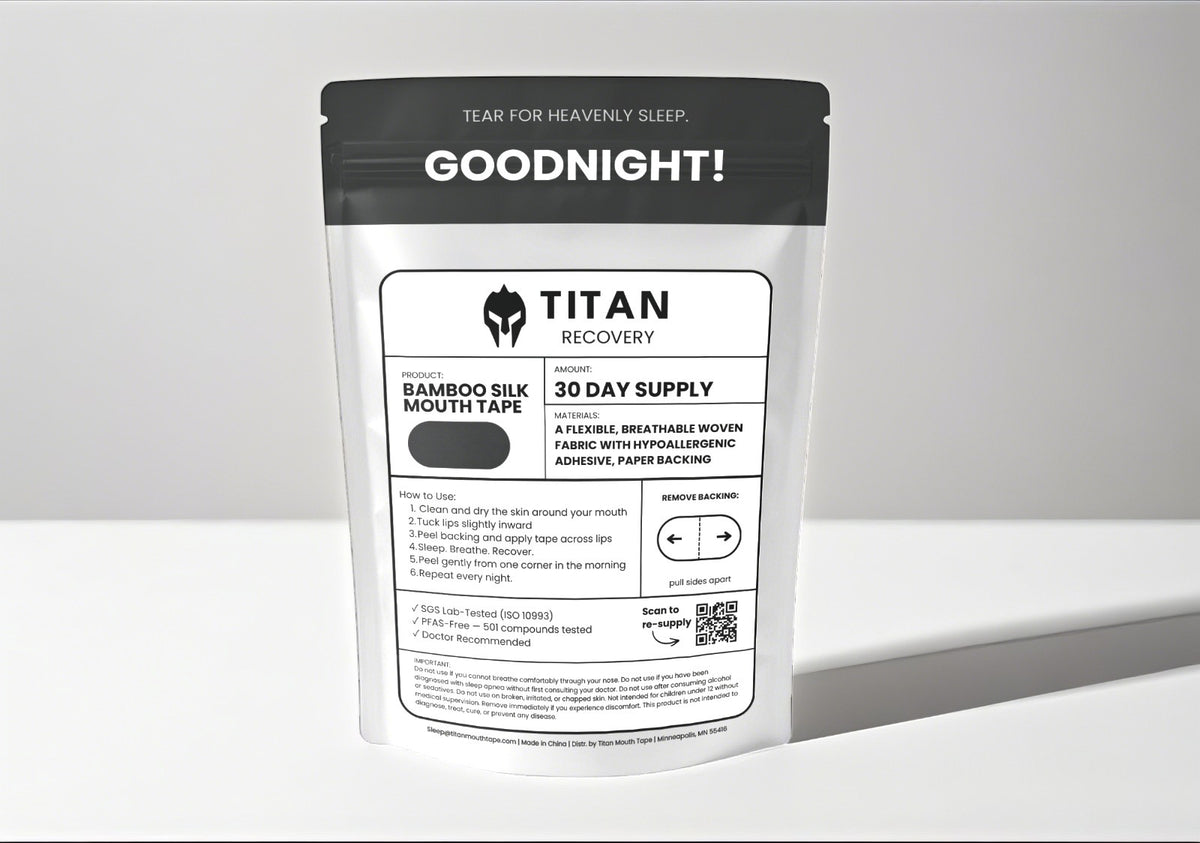
Close your mouth during sleep. A strip of mouth tape across your lips before bed keeps your mouth closed, promotes nasal breathing, and may help your nervous system shift into the parasympathetic state where deep sleep occurs. This is the intervention with the most immediate measurable impact on sleep tracker data — many users report deep sleep increases of 15-30 minutes per night within the first week. It costs less than a dollar per night and takes 5 seconds to apply.
Cool your bedroom to 65-68°F. This is the single most well-supported environmental intervention for deep sleep. If you can only change one thing about your sleep environment, lower the temperature.
Stop alcohol 4+ hours before bed. If you drink, finish your last drink at least 4 hours before sleep. The longer the gap, the less alcohol interferes with deep sleep architecture. Even one night of alcohol-free sleep produces measurably more deep sleep than one night with a nightcap.
Tier 2: High Impact (Add These Next)
Cut caffeine after noon. Not 2 PM — noon. If your deep sleep is consistently low and you consume caffeine in the afternoon, this is the most likely hidden cause. Switch to decaf or herbal tea after 12 PM for two weeks and compare your deep sleep numbers.
Stop screens 60 minutes before bed. Replace with reading, stretching, or a wind-down routine. If screens are unavoidable, use blue light filtering — though this only partially mitigates the effect.
Keep a consistent bedtime. Within a 30-minute window, every night, including weekends. Your circadian clock rewards consistency with more reliable deep sleep scheduling.
Tier 3: Supportive (Fine-Tune With These)
Get morning sunlight within 30 minutes of waking. 10-15 minutes of outdoor light sets your circadian clock and begins the 14-16 hour countdown to melatonin release. This improves sleep onset AND deep sleep architecture that same night.
Stop eating 2-3 hours before bed. Give your body time to finish active digestion before sleep. A small protein snack is less disruptive than a full meal if you're hungry close to bedtime.
Exercise — but time it right. Research shows regular exercise increases deep sleep duration by 10-15% on average. But intense exercise within 2-3 hours of bed can elevate core temperature and cortisol, temporarily reducing deep sleep. Morning or early afternoon exercise produces the best deep sleep results.
Manage stress before bed. A 10-minute wind-down routine — writing tomorrow's to-do list, 4-7-8 breathing, gentle stretching — can lower cortisol enough to improve the transition into deep sleep. Research from the Journal of Experimental Psychology found that writing a to-do list before bed reduced sleep onset latency by 9 minutes compared to journaling about completed tasks.
Block all light. Even dim ambient light (a charging indicator, streetlight through curtains) can suppress melatonin and fragment deep sleep. Blackout curtains or a sleep mask make a measurable difference.
How to Track Whether It's Working
Consumer sleep trackers (Oura Ring, Whoop, Apple Watch, Fitbit) estimate deep sleep using heart rate variability, movement, and respiratory rate. These estimates aren't clinical-grade — but they're directional. They're useful for tracking trends over weeks, not for diagnosing individual nights.
Deep sleep duration: Track your 7-day average, not individual nights. An upward trend of 10-20 minutes after implementing changes is meaningful.
HRV (heart rate variability): Higher HRV during sleep indicates parasympathetic dominance — the state where deep sleep occurs. An upward HRV trend correlates with improved deep sleep.
Resting heart rate: Lower morning resting heart rate generally indicates better recovery, which tracks with more deep sleep.
Respiratory rate: Nasal breathing typically produces a lower respiratory rate (12-14 breaths/min) compared to mouth breathing (16-18 breaths/min). If your respiratory rate drops after you start mouth taping, the nasal breathing intervention is working.
If you don't have a tracker, use subjective measures: morning alertness (1-10), time to feel fully awake, afternoon energy crash severity, and whether you can wake up without an alarm. These correlate with deep sleep quality more reliably than most people expect.
The One Variable Most People Miss
You can optimize temperature, caffeine timing, alcohol, screens, exercise, stress, light exposure, and sleep schedule. All of these matter.
But if your mouth falls open the moment you lose consciousness — and for 50-60% of adults, it does — every other optimization may be undermined by 7 hours of sympathetic-dominant mouth breathing that prevents your brain from sustaining the slow-wave state where deep sleep lives.
A strip of tape across your lips. Five seconds. Less than a dollar. And your body may finally reach the sleep stage that makes all the other hours worth having.
Fix the breathing first. Then optimize everything else on top of it.
Doctor Recommended: "As a maxillofacial surgeon and dentist, I recommend Titan Mouth Tape. Nasal breathing during sleep is essential for airway health and deep restorative rest. Titan's bamboo silk design is the most comfortable and effective mouth tape I have tested. If you struggle with snoring, dry mouth, or poor sleep quality, this is the simplest change you can make for your health." — Dr. Francois P., MD, DDS — Maxillofacial Surgeon
Lab-Tested Safety: Titan's SilkSeal™ adhesive is independently tested by an independent, globally accredited laboratory to ISO 10993 medical device standards. Non-toxic (95% cell viability). Non-allergenic (0% reaction rate). Non-irritating (score 0.0/8.0). PFAS-free — 501 compounds tested, zero detected. compliant with European chemical safety standards — 250 toxic substances screened, all clear. See full test results →
Try it tonight. Bamboo silk. SilkSeal™ adhesive. Beard-friendly. No logo on the tape. Free shipping. 30-night Better Sleep Guarantee. Shop Titan Mouth Tape →