Why You Wake Up With a Sore Throat Every Morning (And It's Not a Cold)
Share
Every morning, the same thing. Your throat is scratchy, raw, and dry. You swallow and it hurts. You clear your throat three or four times before you can speak normally. You drink water and it burns on the way down.
You're not sick. You don't have a cold. It's not allergies — or at least, the allergy meds aren't fixing it. It happens every single morning and goes away by mid-morning. Then it comes back the next day.
If this sounds familiar, you probably don't have a throat problem. You have a breathing problem.
Why Your Throat Hurts Every Morning
The most common cause of a recurring morning sore throat — one that appears every day and resolves within a few hours — is mouth breathing during sleep.
Here's the mechanism: when your mouth falls open at night, you breathe unfiltered, unhumidified air directly through your mouth and across your throat for 7-8 hours. Your nasal passages normally filter particles, warm cold air, and add moisture before air reaches your throat. Mouth breathing bypasses all three functions.
The result is 8 hours of dry, raw air flowing across throat tissue that's designed to be moist. The tissue dries out. The mucosal lining becomes irritated. By morning, your throat feels like you've been breathing desert air all night — because functionally, you have been.
This isn't the same as the sore throat you get with a cold or infection. An infection-related sore throat is caused by inflammation and immune response. A mouth-breathing sore throat is caused by mechanical desiccation — your throat tissue literally drying out from airflow.
That's why it goes away by mid-morning. Once you're awake and nasal breathing again, saliva flow returns, moisture is restored, and the tissue recovers. Then you go to sleep, your mouth opens again, and the cycle repeats.
How to Tell If Mouth Breathing Is the Cause
The pattern is usually obvious once you know what to look for:
The sore throat is worst immediately upon waking and improves within 1-2 hours without treatment.
You also wake up with a dry mouth. Your tongue sticks to the roof of your mouth. Your lips are dry or cracked. You reach for water before your eyes are fully open.
Your partner reports snoring. Snoring requires an open mouth (or at least partially open airway through the mouth). If you snore, your mouth is open.
You drool on your pillow. If saliva is coming out, air is going in. Both require an open mouth.
The sore throat doesn't respond to cold medicine or lozenges. Because it's not caused by infection or inflammation — it's caused by dryness. Treating it like a cold won't help.
It happens every day regardless of season. Allergies are seasonal. Infections are temporary. A mouth-breathing sore throat is chronic and daily because the cause repeats every night.
Other Causes to Rule Out
While mouth breathing is the most common cause of a daily morning sore throat, other factors can contribute:
Acid reflux (GERD/LPR). Stomach acid can travel up the esophagus and reach the throat during sleep, especially when lying flat. This causes a different type of irritation — often described as a burning sensation rather than dryness. If you also experience heartburn, a sour taste in your mouth, or the sensation of a lump in your throat, reflux may be a contributing factor. See your doctor.
Dry bedroom air. Low humidity (common in winter with heating systems running) can dry out throat tissue even in nasal breathers. A hygrometer can measure your bedroom humidity — ideal is 40-60%. A humidifier can help if your air is consistently below 30%.
Post-nasal drip. Mucus draining from your sinuses into your throat during sleep can cause irritation and a scratchy feeling in the morning. This is often allergy-related and may improve with antihistamines or nasal corticosteroid sprays.
Sleep apnea. Obstructive sleep apnea causes repeated airway closures and reopenings during sleep, which can irritate throat tissue. If your sore throat is accompanied by loud snoring, witnessed breathing pauses, gasping during sleep, or extreme daytime sleepiness, get evaluated by a sleep specialist.
If your morning sore throat is accompanied by fever, swollen lymph nodes, white patches on your tonsils, or pain that persists throughout the day, see a doctor — these may indicate infection.
How to Fix It
If mouth breathing is the cause — and for most people with a daily morning sore throat, it is — the fix is keeping your mouth closed during sleep.
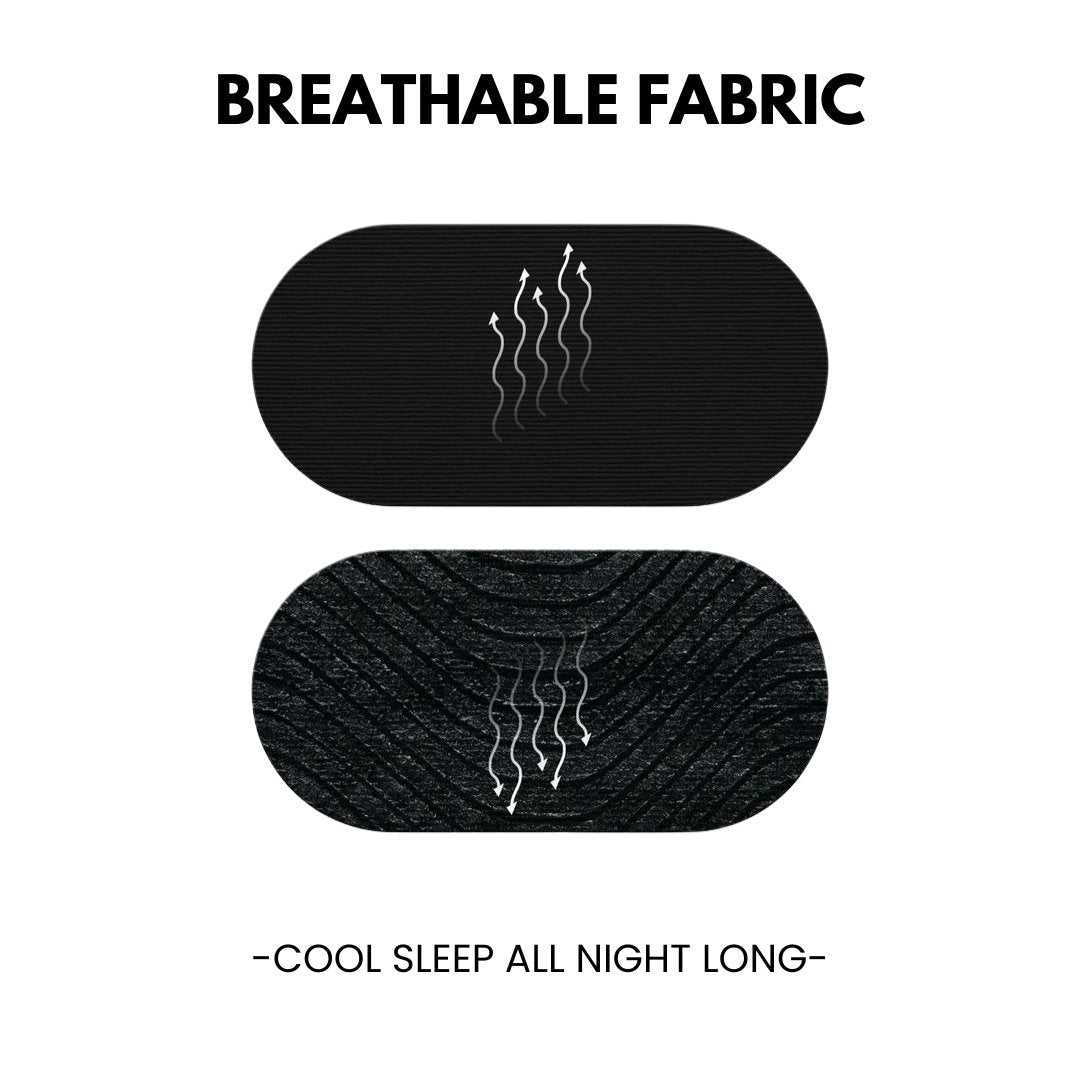
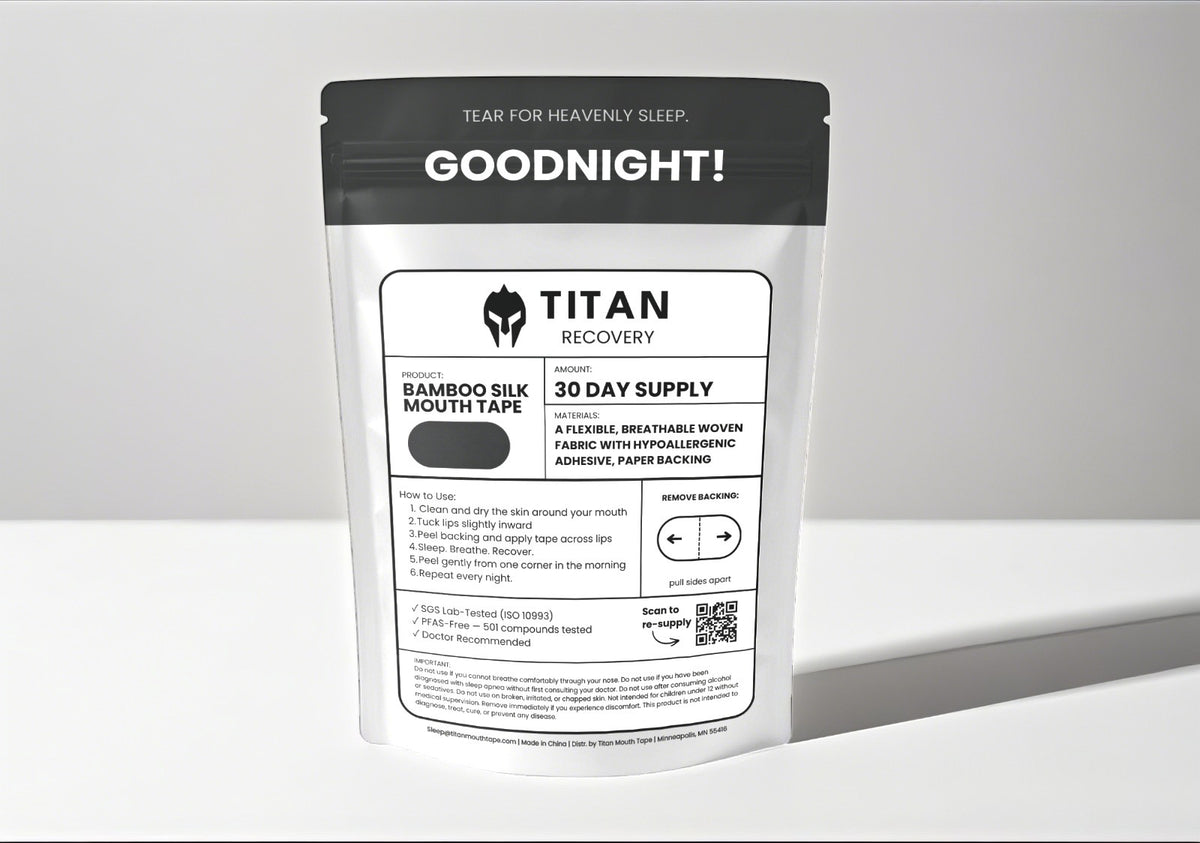
Mouth tape. A strip of tape across your lips before bed holds your mouth gently closed so air flows through your nose instead. Your throat stays moist all night because it's no longer exposed to 8 hours of dry airflow. Most users report the morning sore throat disappears on night one — because the mechanical cause (dry air across throat tissue) is eliminated.
Nasal strip. If nasal congestion is making it hard to breathe through your nose, an external nasal strip like TitanAir can physically open your nasal passages. This makes nasal breathing easier and reduces the likelihood that your body will switch to mouth breathing as a compensatory mechanism.
Humidifier. Adding moisture to bedroom air helps — especially in winter or in dry climates. A cool-mist humidifier set to maintain 40-60% humidity reduces the drying effect of whatever air does reach your throat.
Elevate your head. If acid reflux is contributing, sleeping with your head elevated 4-6 inches (using a wedge pillow, not just extra pillows) reduces the likelihood of acid reaching your throat during sleep.
What to Expect When You Fix It
Night 1: If you tape your mouth, you'll likely wake up without the sore throat for the first time in months — or years. Your mouth will be moist. Your throat won't hurt. You won't need water immediately. This is the most dramatic and immediate change most mouth tapers experience.
Week 1: The daily pattern breaks. No more morning throat clearing. No more scratchy voice for the first hour. No more wondering if you're getting sick.
Month 1: You forget that morning sore throats were ever part of your routine. The one night you forget to tape, it comes back — and that contrast confirms what was causing it all along.
The Simplest Test
Tonight, put a strip of tape across your lips before bed. Tomorrow morning, check two things: is your throat sore? Is your mouth dry?
If both answers change from yes to no, you found the cause — and the fix.
Doctor Recommended: "As a maxillofacial surgeon and dentist, I recommend Titan Mouth Tape. Nasal breathing during sleep is essential for airway health and deep restorative rest. Titan's bamboo silk design is the most comfortable and effective mouth tape I have tested. If you struggle with snoring, dry mouth, or poor sleep quality, this is the simplest change you can make for your health." — Dr. Francois P., MD, DDS — Maxillofacial Surgeon
Lab-Tested Safety: Titan's SilkSeal™ adhesive is independently tested by an independent, globally accredited laboratory to ISO 10993 medical device standards. Non-toxic (95% cell viability). Non-allergenic (0% reaction rate). Non-irritating (score 0.0/8.0). PFAS-free — 501 compounds tested, zero detected. compliant with European chemical safety standards — 250 toxic substances screened, all clear. See full test results →
Try it tonight. Bamboo silk. SilkSeal™ adhesive. Beard-friendly. No logo on the tape. Free shipping. 30-night Better Sleep Guarantee. Shop Titan Mouth Tape →
This article is for informational purposes only and does not constitute medical advice. If you have or suspect a sleep disorder or other medical condition, consult a qualified healthcare provider before making changes to your routine.