Mouth Tape for Sleeping: Does It Work, How to Choose, and How to Start
Share
You're here because you want to try mouth tape for sleeping. You've heard it helps with snoring, dry mouth, or waking up tired. You're not sure which one to buy or whether it actually works.
This page answers every question you have — quickly, without the fluff.
What Is Mouth Tape for Sleeping?
Mouth tape for sleeping is a strip of adhesive tape you place across your lips before bed. It holds your mouth gently closed so you breathe through your nose all night.
That's it. No technology. No drugs. No devices. A strip of tape that keeps your mouth shut while you sleep.
The purpose is to prevent the switch from nasal breathing to mouth breathing that happens unconsciously during sleep. Research suggests an estimated 60% of adults mouth breathe during some portion of the night — often without knowing it.
Why People Use Mouth Tape for Sleeping
Dry mouth every morning. If you reach for water before your eyes are fully open, your mouth was open all night. Saliva evaporated. Mouth tape keeps your mouth closed so saliva stays where it belongs.
Snoring. When your mouth falls open during sleep, your tongue drops back toward your throat. This narrows the airway. Air vibrating through that narrowed space is what creates the sound. Keeping the mouth closed may help keep the tongue forward and the airway more open.
Waking up tired despite sleeping enough hours. Mouth breathing during sleep is associated with sympathetic nervous system activation — the fight-or-flight branch. Research suggests your body may need parasympathetic dominance to reach the deep sleep stages where actual recovery happens. Nasal breathing may help promote that shift.
Bad breath that doesn't respond to brushing. Chronic bad breath is often caused by dry mouth from overnight mouth breathing — not poor dental hygiene. When saliva flow stops for 7-8 hours, odor-causing bacteria flourish.
Gum inflammation and dental issues. Dentists increasingly recognize that dry mouth from nighttime mouth breathing contributes to gum disease, cavities, and enamel erosion. Saliva is your teeth's natural defense system. Mouth breathing shuts it off for a third of your life.
Does Mouth Tape for Sleeping Actually Work?
The practice of encouraging nasal breathing during sleep is supported by research. The specific claims depend on the individual:
Dry mouth: Most users report improvement on night one. This is the most immediate and consistent benefit — when your mouth stays closed, saliva doesn't evaporate. It's mechanical, not pharmacological.
Snoring: Many users report significant reduction or elimination of snoring. Research supports the connection between mouth closure, tongue position, and airway patency. Individual results vary based on the cause and severity of snoring.
Sleep quality: Subjective reports of improved sleep quality are common but harder to measure. Users who track sleep with Oura, Whoop, or Apple Watch often report improvements in deep sleep duration, HRV, and recovery scores — though these are consumer-grade estimates, not clinical measurements.
What mouth tape doesn't do: It doesn't treat sleep apnea. It doesn't cure any medical condition. It doesn't replace medical evaluation if you suspect a sleep disorder. It's a wellness practice — not a medical intervention.
How to Choose Mouth Tape for Sleeping
Not all mouth tape is the same. Here's what to look for:
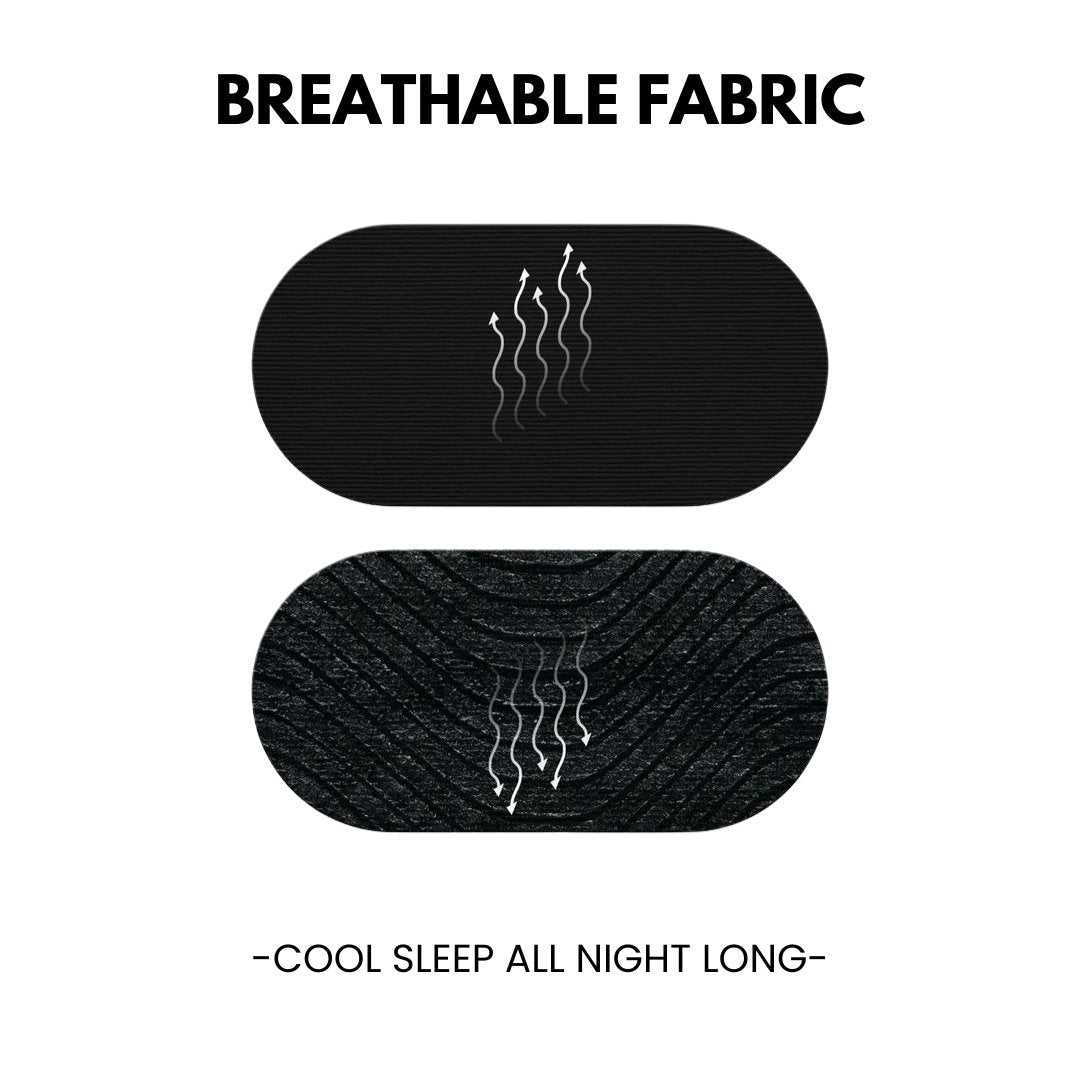
Material: Bamboo silk is the best option — breathable, soft, naturally antibacterial. Avoid kinesiology tape (too aggressive), paper tape (too weak), and plastic strips (not breathable).
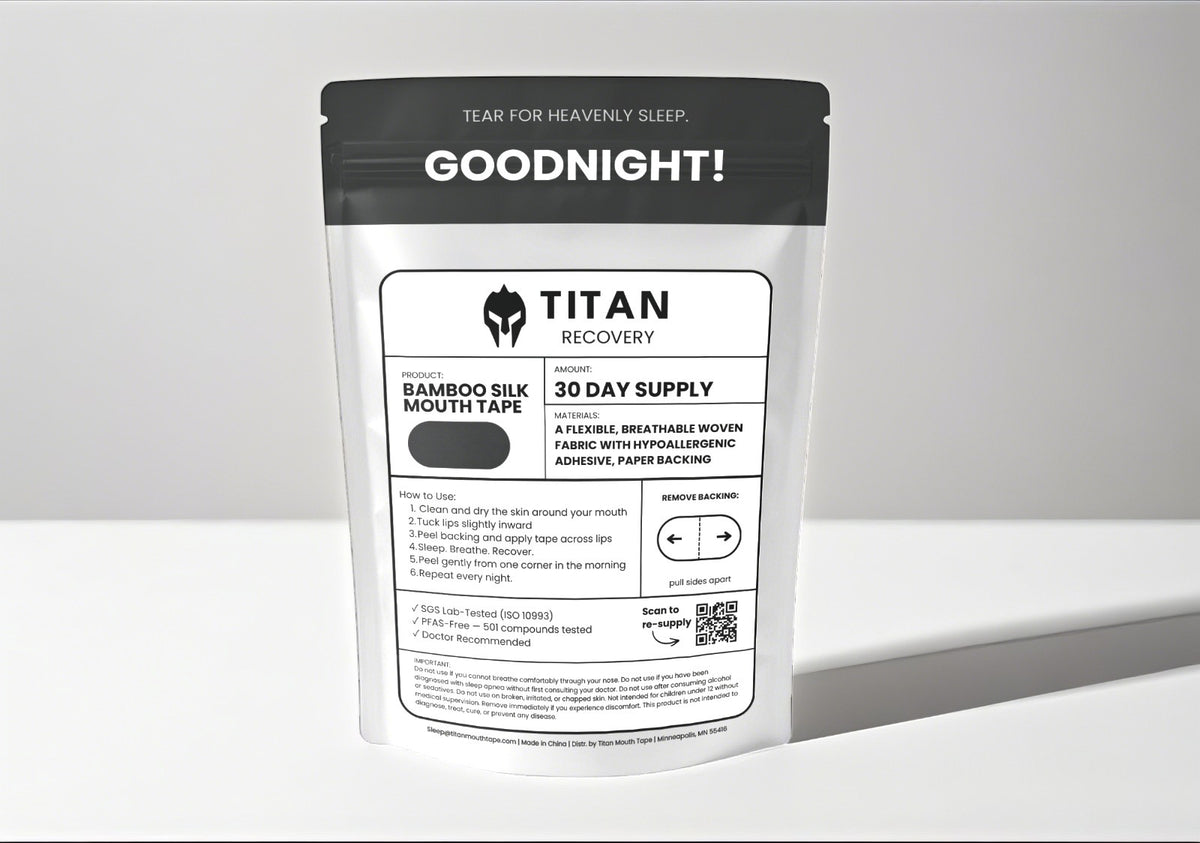
Adhesive safety: The adhesive contacts your skin for 8 hours a night. Look for ISO 10993 testing (cytotoxicity, skin sensitization, skin irritation) by a third-party lab. If the brand doesn't publish results, they haven't done the testing.
PFAS screening: PFAS ("forever chemicals") have been found in adhesive products. A comprehensive screen tests for 500+ compounds. If the brand hasn't screened, you don't know what's in the adhesive.
Beard compatibility: If you have facial hair, you need a tape designed for it. Most tapes either fall off beards or rip out hair on removal.
No logo on the tape: Some brands print their name across the strip. Clean, unbranded tape looks intentional. Branded tape looks like advertising on your face.
How to Use Mouth Tape for Sleeping
Five steps. Thirty seconds total.
1. Make sure you can breathe comfortably through your nose. If your nose is congested, address that first — try a nasal strip, saline rinse, or decongestant. Don't tape your mouth if you can't nasal breathe.
2. Clean and dry the skin around your mouth.
3. Tuck your lips slightly inward.
4. Peel the backing and place the tape across your lips. Press gently for 5-10 seconds.
5. Sleep. In the morning, peel gently from one corner.
For a complete first-timer guide with week-by-week expectations, read this →
What to Expect Your First Week
Night 1: Feels unfamiliar but not uncomfortable. You'll be aware of the tape. Most people fall asleep within their normal timeframe. Morning: no dry mouth.
Nights 2-3: The awareness fades. The tape becomes part of the routine. Your partner may notice you're not snoring.
Nights 4-7: You stop noticing the tape entirely. Mornings feel different — less groggy, more alert. By night seven, the pattern is clear enough to decide whether it's for you.
Who Should Not Use Mouth Tape for Sleeping
People who cannot breathe comfortably through their nose. People diagnosed with moderate to severe obstructive sleep apnea without first consulting a doctor. People who have consumed excessive alcohol or sedatives. People at risk of vomiting during sleep. Children under 12 without medical supervision.
Mouth tape for sleeping is not a treatment for sleep apnea or any other medical condition. If you suspect you have sleep apnea, see a sleep specialist before trying mouth tape.
Try It Tonight
Titan Mouth Tape is bamboo silk with a lab-tested SilkSeal adhesive. independently tested under ISO 10993. PFAS-free (501 compounds screened). Beard-friendly. No logo on the tape. Free US shipping. 30-Night Better Sleep Guarantee — if it doesn't work, you pay nothing.
Doctor Recommended: "As a maxillofacial surgeon and dentist, I recommend Titan Mouth Tape. Nasal breathing during sleep is essential for airway health and deep restorative rest. Titan's bamboo silk design is the most comfortable and effective mouth tape I have tested. If you struggle with snoring, dry mouth, or poor sleep quality, this is the simplest change you can make for your health." — Dr. Francois P., MD, DDS — Maxillofacial Surgeon
Lab-Tested Safety: Titan's SilkSeal™ adhesive is independently tested to ISO 10993 medical device standards. Non-toxic (95% cell viability). Non-allergenic (0% reaction rate). Non-irritating (score 0.0/8.0). PFAS-free — 501 compounds tested, zero detected. compliant with European chemical safety standards — 250 toxic substances screened, all clear. See full test results →
Try it tonight. Bamboo silk. SilkSeal™ adhesive. Beard-friendly. No logo on the tape. Free shipping. 30-night Better Sleep Guarantee. Shop Titan Mouth Tape → · Shop TitanAir →