The 7-Day Mouth Tape Challenge: A Beginner's Day-by-Day Protocol
Share
You've read the articles. You've seen the before-and-after sleep scores. You bought a pack of mouth tape, and it's sitting on your nightstand -- still sealed. The idea makes sense to you. The execution is what's stalling you out.
That hesitation is normal. The people who stick with mouth taping didn't white-knuckle their way through the first night on pure willpower. They eased into it. They gave their nervous system proof that nasal breathing was safe before asking it to perform under pressure.
This 7-day mouth tape challenge is the protocol we recommend to every beginner. It moves you from your first tentative 30 minutes with tape on your lips to a full night of nasal breathing, one day at a time. No skipping ahead. No forcing it. Just a structured ramp that lets your body and brain adjust at a pace that actually sticks.
Before You Start: What You Need
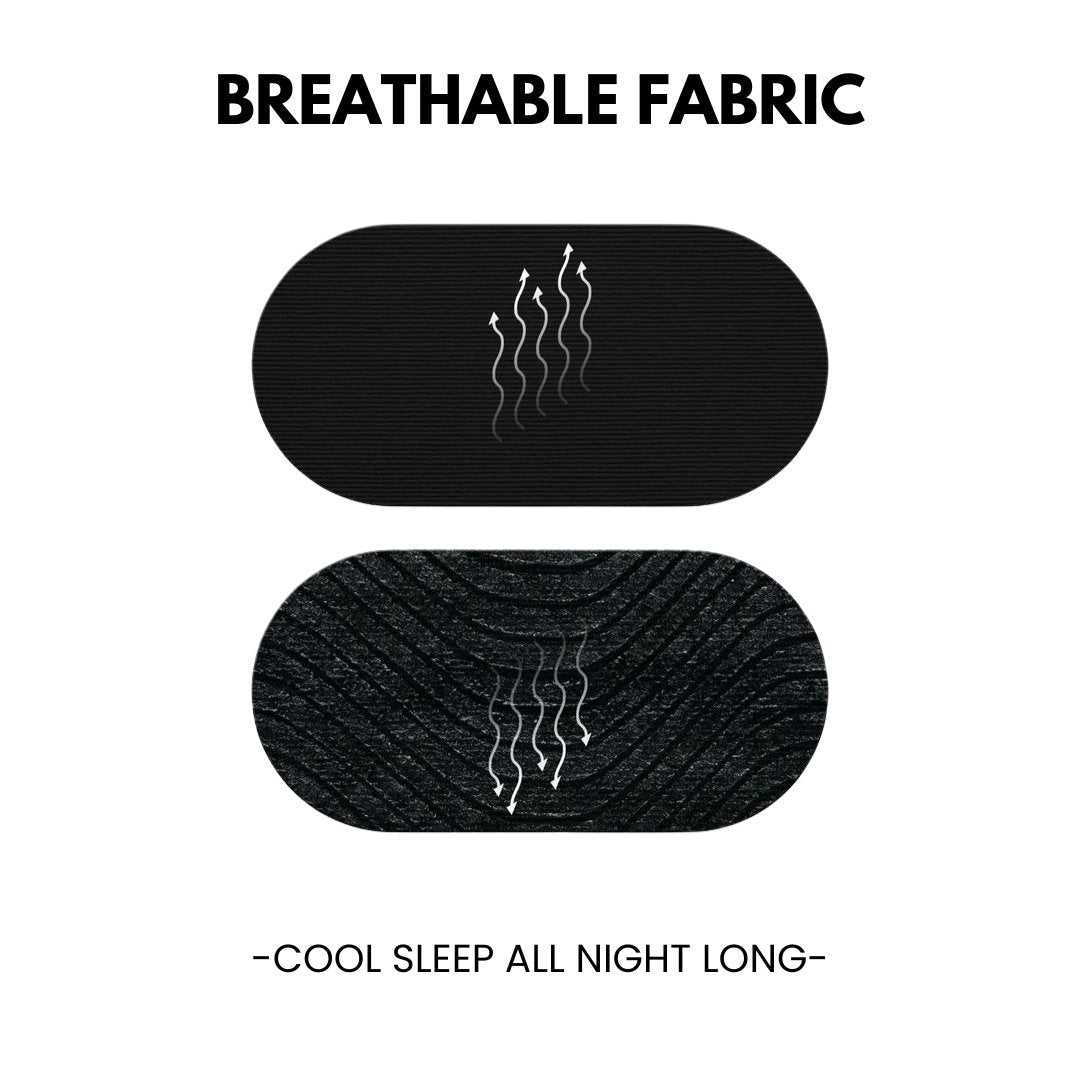
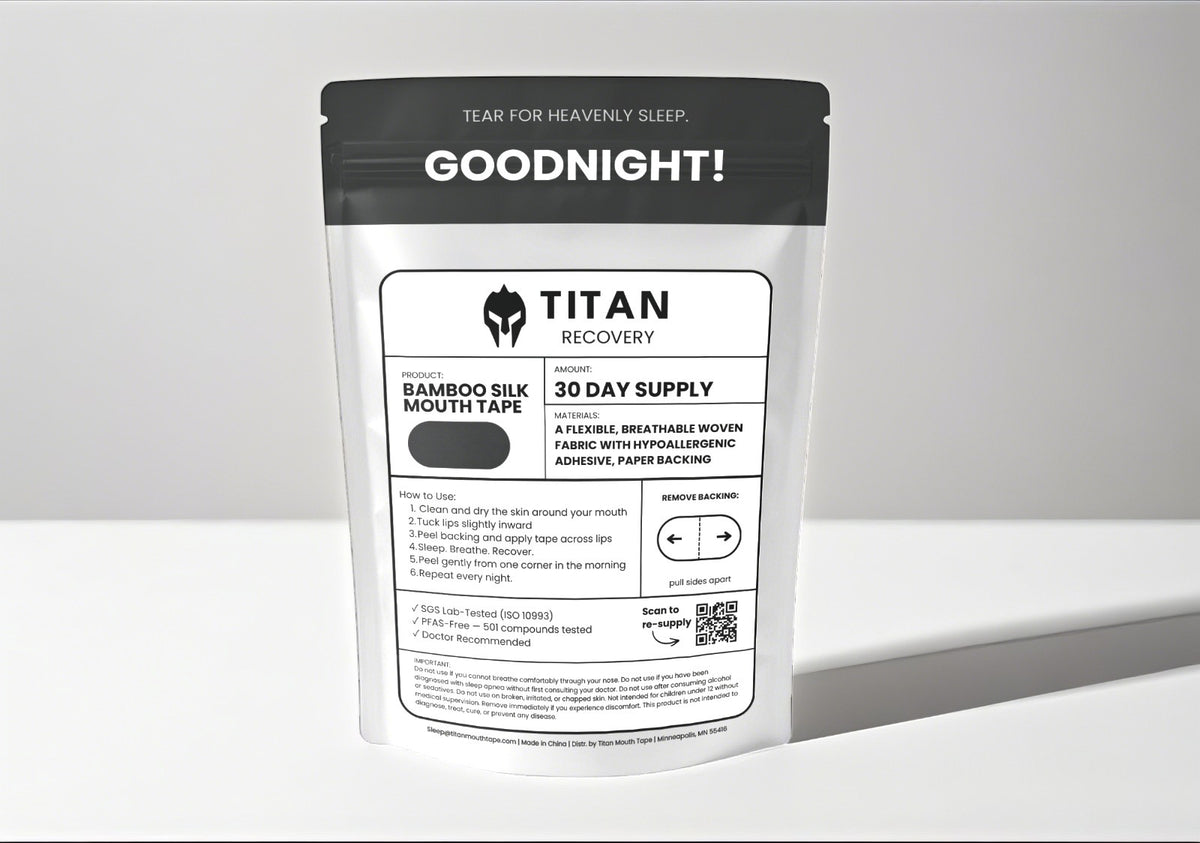
The right tape matters more than you think. This challenge is about building trust between you and the tape, and that trust erodes fast if the adhesive irritates your skin, the tape falls off at 2 AM, or you're worried about what chemicals are sitting on your lips for eight hours. Use a tape designed for overnight facial use -- not athletic tape, not micropore from the pharmacy. Titan Mouth Tape is made from bamboo silk with medical-grade adhesive that's been independently tested for biocompatibility, which matters when the tape is touching one of the most sensitive areas on your body.
Check your nasal breathing first. Close your mouth and breathe through your nose for two minutes. If that's comfortable, you're good to go. If one or both nostrils are significantly blocked, address the congestion first. TitanAir Nasal Strips can open restricted nasal passages, and pairing them with mouth tape is a strong combination -- especially during the first week when you want every advantage.
A note on safety: if you have untreated sleep apnea, severe nasal obstruction, or any condition that affects your ability to breathe through your nose, talk to your doctor before starting. Mouth tape is for people whose noses work but whose mouths default to open during sleep. It is not a treatment for breathing disorders. Read our guide on whether you can suffocate from mouth tape -- the short answer is no, but the longer answer is worth understanding.
Day 1: 30 Minutes While Watching TV
Goal: Get used to the sensation while fully awake and distracted.
Clean your lips and the skin around your mouth. Dry the area. Apply the tape and then forget about it. Put on a show, scroll your phone, read a book -- anything that diverts your attention away from the strip on your lips.
What you'll notice: the first five minutes feel strange. Your brain registers the tape and starts monitoring it. That's the hardest window. After about ten minutes, the sensation fades into the background. By minute twenty, most people forget the tape is there until they try to say something.
If you feel an urge to rip it off, pause. Take a slow breath in through your nose, hold for a count of two, and exhale through your nose. The urge will usually pass. If it doesn't -- if you feel genuine panic or can't get enough air -- remove the tape. No judgment. Try again tomorrow.
After 30 minutes, remove the tape and note how it felt. Most people describe this session as "way less weird than I expected." You're building data that your nervous system will reference later in the week. Daytime practice is the foundation the rest of this challenge builds on.
Day 2: A 20-Minute Nap
Goal: Experience tape during light sleep.
Start with another short daytime session if you need it -- 15 to 20 minutes while reading or working. Then, at some point during the day, apply the tape and take a 20-minute nap. Set an alarm so you're not worried about oversleeping.
Napping with mouth tape is easier than overnight use for two reasons. First, nap sleep is lighter, so you stay closer to conscious awareness and feel more in control. Second, it's brief enough that even if you're slightly uncomfortable, you know the endpoint is close.
Some people remove the tape during the nap without realizing it. That's fine -- your body did what it does on autopilot. If you wake up and the tape is still on, you just proved to yourself that you can sleep with it. That proof is more powerful than any article you'll read.
Day 3: Apply at Bedtime, Remove If Needed
Goal: Your first overnight attempt -- with permission to bail.
This is the night you go to bed with the tape on. But here's the key: give yourself unconditional permission to remove it at any point. If you wake up at midnight and want it off, take it off. No failure. No reset. You slept with mouth tape on for however many hours you managed, and that counts.
Before bed, clean and dry your face. Apply the tape. If you're using nasal strips, put those on first. Get into your normal sleeping position and breathe naturally through your nose. Don't think about it harder than that.
Common experiences on night one: falling asleep normally but waking up 2-4 hours later with the urge to remove the tape. Some people wake because they briefly mouth-breathed and the seal broke their sleep. Others wake from habit -- they've always had their mouth open, and the closed position triggers a low-grade alertness.
If you wake up feeling panicked, remove the tape immediately. Sit up, breathe normally for a minute, and assess. You'll almost certainly realize you were breathing fine -- the panic was psychological, not respiratory. The restriction is real, but the danger isn't.
Days 4-5: Full Night Attempts
Goal: Build consecutive nights of nasal breathing.
By now you have two or three days of positive data. Your brain has evidence that the tape doesn't suffocate you, that nasal breathing provides enough air, and that the sensation is manageable. Nights four and five are about reinforcing that evidence with repetition.
Apply the tape at bedtime each night. Same routine: clean, dry, apply, sleep. If you removed the tape partway through the night on Day 3, see if you can push further. If you made it the whole night, do it again.
What to expect on these nights: your sleep quality may already be noticeably different. People who track with wearables often see changes in these metrics by night four or five:
- Less waking during the night
- Lower resting heart rate during sleep
- Reduced snoring (if a partner can confirm, or if your tracker captures audio)
- A mouth and throat that don't feel like sandpaper in the morning
The dry mouth improvement is usually the first thing people notice. If you've been mouth breathing at night, you've been drying out your oral tissues for years. Nasal breathing keeps the mouth closed and saliva doing its job. That single change -- keeping your mouth closed -- affects dental health, breath quality, and how your face feels when you wake up.
If you're still removing the tape midway through the night, don't force it. Some people need more than five days to sleep through the full night with tape. That's not a failure -- it's a normal adaptation curve. The pattern that matters is whether each night gets slightly easier than the last.
Days 6-7: Assess and Refine
Goal: Evaluate your results and decide what comes next.
By the end of day seven, you have a week of data. Now it's time to look at it honestly.
Ask yourself these questions:
- Am I waking up with my mouth closed and the tape intact?
- Has my morning dry mouth improved?
- Do I feel more rested, even slightly?
- Has my partner noticed less snoring?
- Am I comfortable enough to keep going without thinking about it?
If most of those answers are yes, you've built the habit. The challenge did its job. From here, mouth taping becomes part of your sleep routine the same way brushing your teeth is -- something you do automatically because you know what happens when you don't.
If you're still struggling, that's information too. Here's what to troubleshoot:
Tape keeps falling off: This usually means your skin isn't clean or dry enough at application. Oil, moisturizer, and lip balm are the most common culprits. Wash your face, skip the night cream around your mouth, and make sure your lips are dry before applying. If it still won't stay, read our guide on the best mouth tapes for sleeping for alternatives.
Can't breathe comfortably through your nose: Nasal congestion is the most common barrier to mouth taping. It gets worse when you lie down because blood pools in the nasal tissues. TitanAir Nasal Strips physically open the nasal valve and can make the difference between "I can barely breathe" and "I didn't even notice." If congestion is chronic, see an ENT -- there may be structural factors like a deviated septum that need attention before mouth taping becomes comfortable.
Panic or anxiety every night: Some people need a longer daytime ramp. Go back to the Day 1-2 protocol and extend it. Wear the tape for an hour while cooking dinner. Wear it during your evening routine. Take multiple naps with it. There's no rush to get to overnight use, and forcing it when your nervous system is genuinely alarmed is counterproductive. Our step-by-step guide has a slower progression for people who need more time.
Skin irritation: If you're getting redness or itching where the tape sits, you may be sensitive to the adhesive. This is uncommon with medical-grade adhesives like the one on Titan Mouth Tape, but skin chemistry varies. Try applying the tape to your inner forearm for 24 hours to confirm it's a true reaction and not just normal redness from removing adhesive.
What Happens After the Challenge
Seven days is enough to build the habit. It's not enough to see the full range of benefits. The research on nasal breathing and sleep quality suggests that meaningful physiological changes -- improved HRV, deeper sleep architecture, better CO2 tolerance -- take weeks to develop. If you tracked your Oura score or similar wearable data during this challenge, keep tracking for the next month. The trend line matters more than any single night.
People who commit beyond the initial week tend to hit a point around days 10-14 where the tape stops being something they think about. It goes on, the lights go off, and they sleep. That's the real milestone -- not the first night you make it through, but the first night you forget the tape is there.
If you want to take the practice further, consider pairing mouth tape with breathwork. Techniques like Buteyko breathing complement mouth taping by training nasal breathing patterns during the day, reinforcing the habit across more hours than sleep alone.
For a longer-term perspective on what consistent mouth taping actually changes, read about what happened when one person mouth taped every night for 30 days. The week-one experience is just the beginning.
When to Stop the Challenge
Not everyone should mouth tape, and this challenge is designed to help you find out early if it's not for you. Stop and consult a doctor if:
- You can't breathe through your nose even with nasal strips
- You experience chest tightness or significant shortness of breath with the tape on
- You have a diagnosed or suspected sleep breathing disorder and haven't discussed mouth taping with your physician
- You develop a skin reaction that doesn't resolve within a day of removing the tape
- You wake up gasping, choking, or in distress multiple nights in a row
These are not signs of normal adjustment. They're signals that something else needs professional attention before you put tape on your face again. Mouth taping works when nasal breathing works. If your nasal breathing isn't functional, fixing the underlying obstruction comes first. For more on how mouth taping interacts with conditions like sleep apnea, check out our complete guide to mouth taping.
The Bottom Line
The 7-day mouth tape challenge works because it respects the adaptation your body needs. Day one is not about sleeping with tape. Day one is about sitting on your couch for 30 minutes and proving to yourself that having your mouth closed isn't dangerous. Everything after that builds on that proof.
Most people who quit mouth taping quit because they tried to go from zero to a full overnight on their first attempt. That's like learning to swim by jumping into the deep end -- some people manage it, but most don't come back to the pool. This challenge is the shallow end. It's boring and gradual and it works.
Grab a pack of Titan Mouth Tape, set aside seven days, and follow the protocol. By the end of the week, you'll have your answer -- and if you're like most people who try it, the answer is that you sleep better with your mouth closed. You just needed a system to get there.