Sleepmaxxing: The Complete Guide to Optimizing Every Dimension of Your Sleep
Share
Sleepmaxxing is the practice of optimizing every variable that affects your sleep — environment, timing, temperature, light, breathing, supplementation, and tracking — to extract the maximum recovery from every hour you spend in bed.
It's not about sleeping more. It's about making the sleep you get actually count.
The term exploded on TikTok and Reddit in 2025-2026, but the science behind it has been building for decades. What changed is that consumer sleep trackers (Oura Ring, Whoop, Apple Watch) made the data visible. For the first time, people could see their deep sleep, HRV, respiratory rate, and recovery scores — and realize that 8 hours in bed didn't mean 8 hours of quality sleep.
Sleepmaxxing is the response: if the data shows your sleep is broken, fix it systematically.
Here's the complete protocol — ranked by impact, backed by research, and built to produce measurable changes on your tracker within the first week.
The 5 Dimensions of Sleepmaxxing
Every sleepmaxxing variable falls into one of five categories. Most people optimize one or two and wonder why their scores aren't moving. The protocol works when you address all five.
Dimension 1: Airway (Highest Impact)
This is the dimension most sleepmaxxers miss — and it's the one with the highest leverage.
Your breathing route during sleep determines which branch of your nervous system dominates. Research published in Neuroreport found that nasal breathing activates the parasympathetic nervous system (rest and recovery), while mouth breathing activates the sympathetic nervous system (stress). Deep sleep requires parasympathetic dominance. If your mouth is open, your nervous system may be stuck in stress mode all night — regardless of how dark, cool, and quiet your room is.
An estimated 50-60% of adults mouth breathe during some portion of the night without knowing it. The signs: dry mouth every morning, snoring, drool on your pillow, sore throat when you wake up, and feeling tired despite sleeping enough hours.
The Sleepmaxxing Airway Protocol
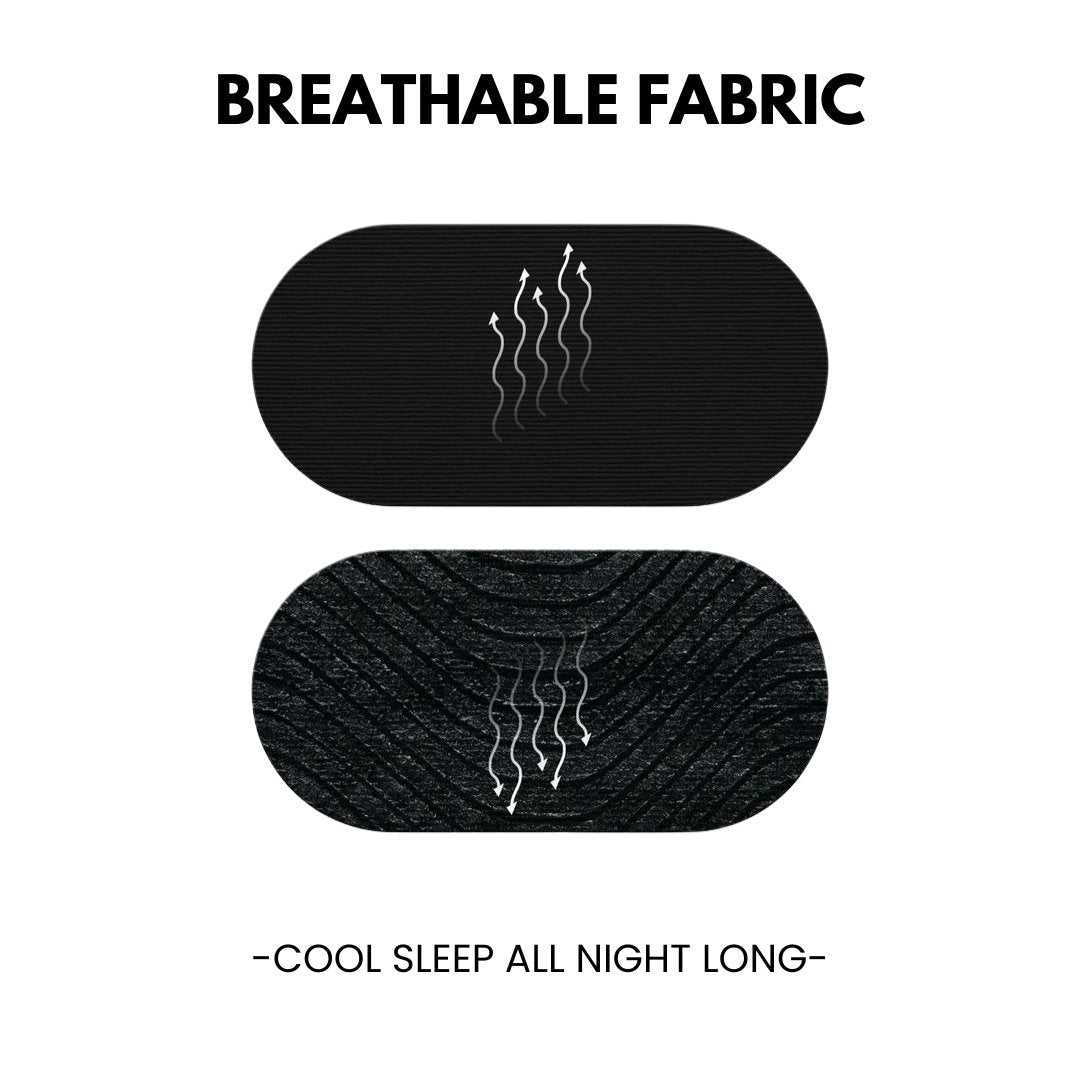
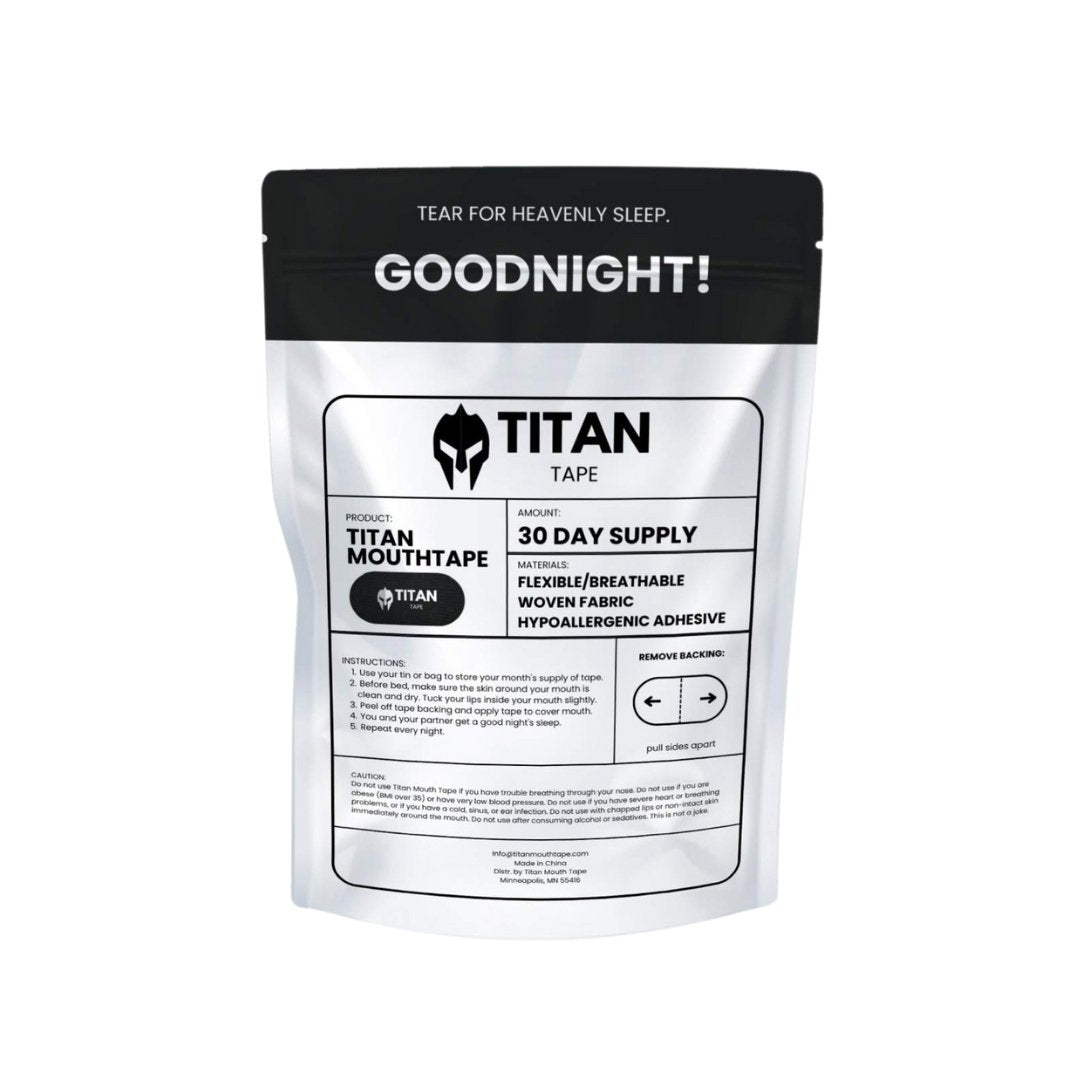
Step 1: Close your mouth. Apply a strip of mouth tape across your lips before bed. This is the single highest-impact sleepmaxxing intervention because it directly shifts your nervous system from sympathetic to parasympathetic and produces measurable changes on night one. Use bamboo silk tape with a tested, PFAS-free adhesive — you're wearing this on the most absorbent skin on your body for 8 hours a night. Material and adhesive safety matter.
Step 2: Open your nose. An external nasal strip physically lifts and widens your nasal passages, reducing airflow resistance. Mouth tape closes the mouth. A nasal strip opens the nose. Together they create a complete nasal breathing system — all airflow goes through the nasal pathway where nitric oxide is produced, air is filtered and humidified, and parasympathetic activation occurs.
Step 3: Sleep on your side. Back sleeping allows gravity to pull the tongue and soft palate backward, narrowing the airway. Side sleeping reduces this effect. Use a body pillow to maintain position throughout the night.
What to expect on your tracker: Lower respiratory rate (12-14 breaths/min nasal vs. 16-18 mouth breathing), higher HRV, lower resting heart rate, and increased deep sleep duration. Most users see changes within the first 3-5 nights.
Dimension 2: Circadian Rhythm
Your circadian clock determines when your body produces melatonin, when it schedules deep sleep, and when it initiates waking. Sleepmaxxing your circadian rhythm means giving your body the signals it needs to time these processes correctly.
The Sleepmaxxing Circadian Protocol
Morning sunlight within 30 minutes of waking. 10-15 minutes of outdoor light (no sunglasses) sets your circadian clock and begins the 14-16 hour countdown to melatonin release. Research from Stanford neuroscientist Andrew Huberman has demonstrated this is the most powerful circadian signal available. Overcast days still work — they deliver 10,000+ lux, which is 50x brighter than indoor lighting. Do this every day, including weekends.
Consistent bedtime within a 30-minute window. Your body frontloads deep sleep in the first 3-4 hours of the night. If your bedtime shifts by an hour or more, you may miss the deep sleep window entirely. Research from the journal Sleep found that irregular sleep schedules are independently associated with reduced sleep quality and cardiovascular risk. Consistency is the most underrated sleepmaxxing variable.
No screens 60 minutes before bed. Blue light from screens suppresses melatonin by up to 50% (Harvard Medical School data). Replace with reading, stretching, or a simple wind-down routine. If screens are unavoidable, use Night Shift / blue light filters — but these only partially mitigate the effect.
Dim lights after sunset. Bright overhead lighting in the evening delays melatonin onset. Switch to warm, low lighting (lamps, candles, salt lamps) in the 2 hours before bed. Your brain interprets bright light as daytime — don't send it the wrong signal.
Dimension 3: Thermal Environment
Your core body temperature needs to drop 2-3°F to initiate and maintain deep sleep. If your bedroom is too warm, this temperature drop doesn't happen — and deep sleep is the first casualty.
The Sleepmaxxing Temperature Protocol
Bedroom at 65-68°F (18-20°C). Research from the National Sleep Foundation confirms this range is optimal for sleep onset and deep sleep maintenance. Even 2-3 degrees above this range measurably reduces slow-wave sleep.
Warm shower 90 minutes before bed. Counterintuitive but well-supported: a warm shower raises skin temperature, which triggers rapid peripheral cooling afterward. This accelerates the core temperature drop that initiates sleep. Research published in Sleep Medicine Reviews found this hack reduced sleep onset latency by an average of 10 minutes.
Breathable bedding. Cotton or linen sheets regulate temperature better than synthetic materials. If you overheat during the night, moisture-wicking sheets or a cooling mattress pad can help maintain the thermal window.
No socks (unless your feet are cold). Cold extremities can delay sleep onset by constricting blood vessels and preventing core heat from dissipating. If your feet are cold in bed, lightweight socks help — they dilate blood vessels in the feet, which paradoxically helps your core temperature drop faster.
Dimension 4: Neural Calming
Your brain can't descend into deep sleep if your nervous system is still in activation mode. Cortisol — the stress hormone — directly inhibits slow-wave sleep. Sleepmaxxing your neural state means actively transitioning from stress to calm before bed.
The Sleepmaxxing Neural Protocol
Brain dump before bed. Write tomorrow's to-do list before you lie down. Research from the Journal of Experimental Psychology found that writing a to-do list reduced sleep onset latency by 9 minutes compared to journaling about completed tasks. The act of externalizing tomorrow's tasks stops your brain from ruminating about them while you're trying to sleep.
4-7-8 breathing. Inhale for 4 seconds, hold for 7, exhale for 8. This activates the vagus nerve, which triggers parasympathetic activation. 3-5 cycles is enough to measurably lower heart rate and transition your nervous system toward sleep.
No work email or news after 8 PM. Both activate the prefrontal cortex and HPA axis — exactly the systems that need to quiet down for deep sleep. Checking email at 10 PM can delay sleep onset by 30+ minutes even if the content isn't stressful — the cognitive activation alone is enough.
Magnesium glycinate. Research suggests magnesium may support GABA receptor function and melatonin regulation. Glycinate is the most bioavailable form for sleep. 200-400mg taken 30-60 minutes before bed. This is one of the few supplements with consistent directional evidence for sleep quality improvement. Note: supplements are not a substitute for addressing the underlying sleep variables. Fix airway, circadian, and temperature first.
Dimension 5: Environmental Optimization
Your bedroom should be a cave: dark, cool, quiet, and associated with nothing except sleep.
The Sleepmaxxing Environment Protocol
Total darkness. Research from JAMA Internal Medicine found that even moderate ambient light (100 lux — a dim lamp) increased heart rate, reduced HRV, and impaired glucose metabolism during sleep. Cover LED indicators with black tape. Use blackout curtains or a sleep mask. You should not be able to see your hand in front of your face.
White noise or silence. Inconsistent noise (traffic, neighbors, dogs) fragments sleep through microarousals you don't remember. A white noise machine or fan creates consistent background sound that masks disruptions. Some people sleep better in silence — test both and check your tracker data.
No phone in the bedroom. This is the hardest habit for most people and the most impactful environmental change for many. The phone is a light source, a notification source, a dopamine source, and a time-check source (clock-watching at 3 AM destroys sleep). Charge it in another room. Use a dedicated alarm clock.
Reserve your bed for sleep only. Your brain creates contextual associations. If you work, scroll, eat, and watch TV in bed, your brain associates the bed with wakefulness. If you only sleep in bed, your brain associates the bed with sleep. This association builds over weeks and makes sleep onset automatic.
The Sleepmaxxing Stack (In Order)
If you're starting from scratch, implement in this order — one change per week, tracking results between each addition:
Week 1: Mouth tape + nasal strip. This is Dimension 1 and produces the most immediate, measurable change. Most users notice a difference on night one.
Week 2: Morning sunlight + consistent bedtime. This is Dimension 2 and takes 3-5 days to show results as your circadian clock adjusts.
Week 3: Bedroom to 65-68°F + blackout curtains. Dimensions 3 and 5. Immediate impact on deep sleep duration.
Week 4: Brain dump + 4-7-8 breathing + no screens 60 min before bed. Dimension 4. This one builds over time as the routine becomes automatic.
By week 4, all five dimensions are active. Compare your tracker data from week 1 (baseline) to week 4. The changes should be visible across deep sleep, HRV, respiratory rate, and resting heart rate.
What Sleepmaxxing Is Not
It's not orthosomnia. Orthosomnia — an unhealthy obsession with perfect sleep scores — is the dark side of sleep tracking. Sleepmaxxing is about building consistent habits that improve recovery, not about anxiously checking your Oura Ring every morning. Once you've implemented the protocol and confirmed it's working, you can stop watching the data daily. The habits sustain themselves.
It's not expensive. The core protocol costs almost nothing: morning sunlight (free), consistent bedtime (free), cool room (adjust thermostat), dark room (blackout curtains or a $15 sleep mask), brain dump (pen and paper), and mouth tape ($0.54-0.83/night with free shipping). The supplements and gadgets are optional additions, not requirements.
It's not a replacement for medical evaluation. If you have symptoms of sleep apnea (witnessed breathing pauses, gasping during sleep, extreme daytime sleepiness), see a sleep specialist before sleepmaxxing. Optimizing sleep variables doesn't address underlying medical conditions.
The One Variable Most Sleepmaxxers Skip
Scroll through any sleepmaxxing thread on Reddit or TikTok. You'll see temperature, light blocking, magnesium, sleep trackers, and cold plunges discussed endlessly. You'll rarely see anyone mention how they're breathing.
That's the gap. You can optimize every environmental variable and still wake up exhausted — because your mouth was open all night, your nervous system was in stress mode, and your body never reached the deep sleep stages where recovery happens.
Close the mouth. Open the nose. That's Dimension 1. It's the foundation. Everything else stacks on top of it.
Doctor Recommended: "As a maxillofacial surgeon and dentist, I recommend Titan Mouth Tape. Nasal breathing during sleep is essential for airway health and deep restorative rest. Titan's bamboo silk design is the most comfortable and effective mouth tape I have tested. If you struggle with snoring, dry mouth, or poor sleep quality, this is the simplest change you can make for your health." — Dr. Francois P., MD, DDS — Maxillofacial Surgeon
Lab-Tested Safety: Titan's SilkSeal™ adhesive is independently tested by SGS to ISO 10993 medical device standards. Non-toxic (95% cell viability). Non-allergenic (0% reaction rate). Non-irritating (score 0.0/8.0). PFAS-free — 501 compounds tested, zero detected. REACH compliant — 250 toxic substances screened, all clear. See full test results →
Start your sleepmaxxing stack tonight. Bamboo silk mouth tape + TitanAir nasal strips. Lab-tested. PFAS-free. Beard-friendly. Free shipping. 30-night Better Sleep Guarantee. Shop Titan Mouth Tape → · Shop TitanAir Nasal Strips →