10 Science-Backed Ways to Improve Your Sleep Quality Tonight
Share
Sleep quality matters more than sleep quantity. You can spend 8 hours in bed and wake up feeling like you got 4 — because the quality of those hours determines how much recovery your body actually achieves.
Research suggests that deep sleep (Stage 3 NREM) is where the most critical recovery processes occur: tissue repair, growth hormone release, immune system restoration, and memory consolidation. If you're not reaching adequate deep sleep, the hours don't matter as much as you think.
Here are 10 science-backed ways to improve your sleep quality — starting tonight.
1. Breathe Through Your Nose, Not Your Mouth
Science says: Research published in the journal Neuroreport suggests that nasal breathing activates the parasympathetic nervous system — the rest-and-recovery branch — while mouth breathing is associated with sympathetic (stress) activation. A study in the International Journal of Otolaryngology found that mouth breathing during sleep is associated with reduced oxygen saturation and disrupted sleep architecture.
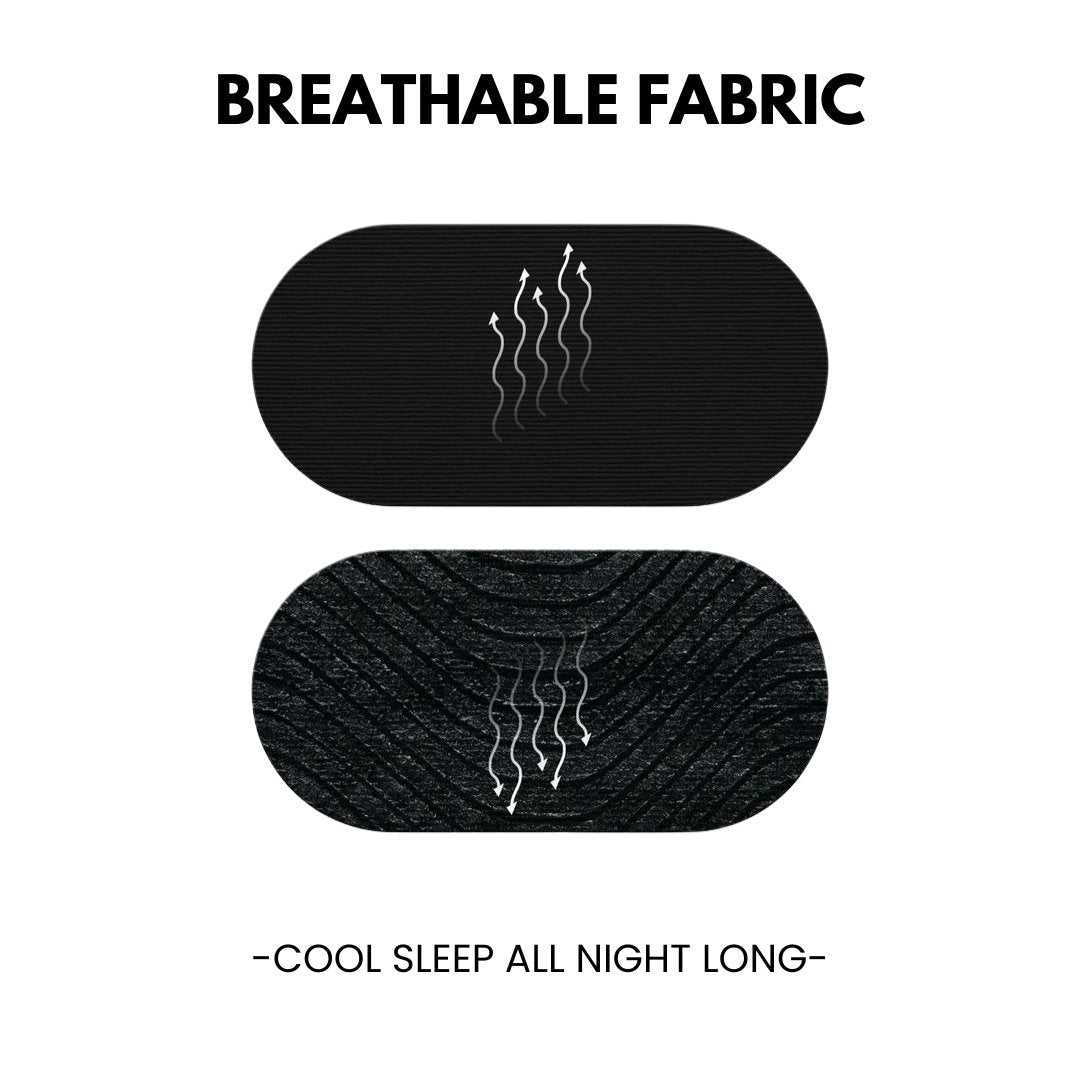
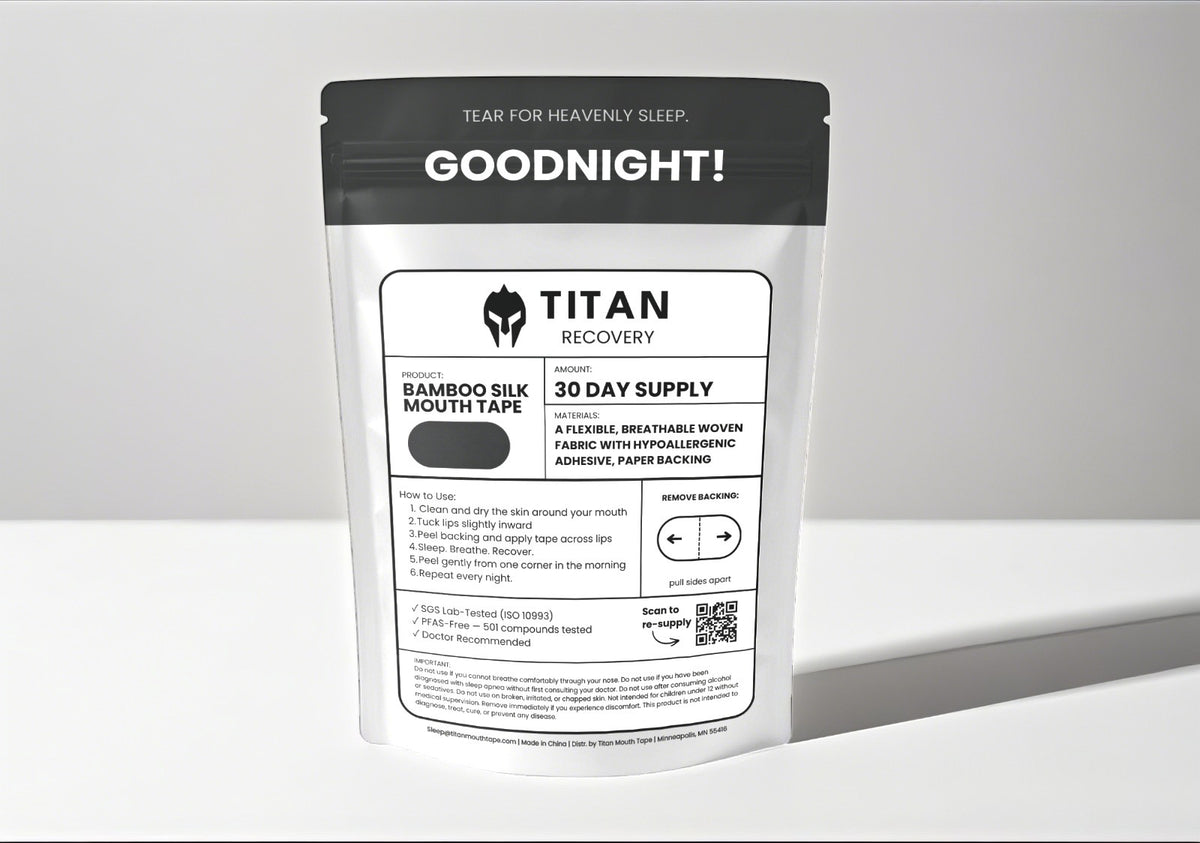
Tip: Apply a strip of mouth tape across your lips before bed to keep your mouth closed during sleep. This encourages nasal breathing, which produces nitric oxide, filters and humidifies air, and may promote deeper sleep stages. Most users notice improved sleep quality within the first week.
2. Keep Your Bedroom at 65-68°F (18-20°C)
Science says: Research from the National Sleep Foundation indicates that your body's core temperature needs to drop by about 2-3°F to initiate sleep. A bedroom that's too warm prevents this temperature drop, delaying sleep onset and reducing time spent in deep sleep stages. A study in the Journal of Physiological Anthropology found that a cooler sleeping environment improved both sleep onset latency and sleep quality.
Tip: Set your thermostat to 65-68°F before bed. If you can't control room temperature, try sleeping with lighter bedding or wearing moisture-wicking sleepwear. A warm shower 90 minutes before bed can also help — the rapid cooling afterward triggers your body's temperature drop.
3. Stop Screens 60 Minutes Before Bed
Science says: Research from Harvard Medical School found that blue light from screens suppresses melatonin production by up to 50% and shifts circadian rhythm by up to 90 minutes. A study in the Proceedings of the National Academy of Sciences showed that iPad readers took longer to fall asleep, had less REM sleep, and felt sleepier the next morning compared to people who read printed books.
Tip: Set a digital curfew 60 minutes before bed. Replace scrolling with reading, stretching, or a simple nighttime routine. If screens are unavoidable, use blue light filtering (Night Shift on iPhone, Night Light on Android) — though this only partially reduces the effect.
4. Eliminate Light From Your Bedroom
Science says: A study published in JAMA Internal Medicine found that sleeping in a room with even moderate ambient light (100 lux, roughly equivalent to a dim lamp) increased heart rate, reduced heart rate variability, and impaired glucose metabolism compared to sleeping in darkness. Even small amounts of light can suppress melatonin and fragment sleep without waking you.
Tip: Use blackout curtains or a sleep mask. Cover LED indicators on electronics with black tape. Remove nightlights. Your bedroom should be dark enough that you can't see your hand in front of your face. This single change can measurably improve deep sleep duration.
5. Keep a Consistent Sleep Schedule
Science says: Research from the journal Sleep found that irregular sleep schedules — varying bedtime and wake time by more than 30-60 minutes — are associated with poorer sleep quality, reduced academic performance, and increased cardiovascular risk. Your circadian clock regulates hormone release, body temperature, and sleep architecture based on consistency. Disrupting it fragments the sleep stages your body relies on for recovery.
Tip: Go to bed and wake up within a 30-minute window every day — including weekends. This is the single most impactful long-term habit for sleep quality. Your body will begin anticipating sleep at the right time, and sleep onset will become faster and more natural.
6. Cut Caffeine After 2 PM
Science says: A study in the Journal of Clinical Sleep Medicine found that caffeine consumed 6 hours before bed reduced total sleep time by more than one hour. Caffeine has a half-life of 5-7 hours — meaning half the caffeine from your 3 PM coffee is still in your system at 10 PM. Even if you fall asleep, caffeine reduces the amount of deep sleep you achieve.
Tip: Set a caffeine cutoff at 2 PM — earlier if you're sensitive. This includes coffee, tea, pre-workout, energy drinks, and chocolate. If you need an afternoon energy boost, try a 10-20 minute power nap instead — research suggests this improves alertness without affecting nighttime sleep.
7. Address Your Snoring
Science says: Snoring indicates partial airway obstruction during sleep. Research from the European Respiratory Journal found that habitual snoring — even without obstructive sleep apnea — is associated with increased daytime sleepiness, reduced cognitive function, and cardiovascular risk. Snoring fragments sleep for both the snorer and their partner.
Tip: Mouth taping is one of the simplest interventions for snoring caused by mouth breathing. When your mouth stays closed, your tongue stays forward, and the airway remains more open. Pairing mouth tape with a nasal strip (to open the nose while closing the mouth) addresses both sides of the airflow equation.
8. Stop Eating 2-3 Hours Before Bed
Science says: Research published in the British Journal of Nutrition found that eating within 2 hours of bed is associated with more nighttime awakenings and reduced sleep quality. Late eating raises core body temperature (from digestion), increases the risk of acid reflux in the supine position, and diverts blood flow to the digestive system when it should be directed toward recovery processes.
Tip: Finish your last meal at least 2-3 hours before bed. If you're hungry close to bedtime, a small protein-rich snack (a handful of nuts, a small piece of cheese) is less disruptive than a full meal or anything high in carbohydrates.
9. Get Morning Sunlight Within 30 Minutes of Waking
Science says: Research from Stanford neuroscientist Andrew Huberman and studies published in the Journal of Biological Rhythms show that morning light exposure (particularly within the first 30-60 minutes of waking) is the most powerful signal for setting your circadian clock. Bright morning light suppresses melatonin, raises cortisol appropriately, and begins the countdown to melatonin release 14-16 hours later — precisely when you want to feel sleepy.
Tip: Spend 10-15 minutes outside within 30 minutes of waking. Don't wear sunglasses during this time — your eyes need the light. Overcast days still work but require longer exposure (20-30 minutes). This single habit improves both sleep onset and sleep quality that same night.
10. Manage Stress Before It Follows You to Bed
Science says: A study in the journal Experimental Neurobiology found that stress activates the hypothalamic-pituitary-adrenal (HPA) axis, elevating cortisol levels that directly interfere with sleep onset and deep sleep. Chronic stress is one of the most common causes of insomnia and poor sleep quality. The issue isn't that you can't sleep — it's that your stress hormones are telling your body it's not safe to sleep.
Tip: Build a 10-minute wind-down routine before bed: write down tomorrow's to-do list (research from the Journal of Experimental Psychology shows this reduces sleep onset latency), practice 4-7-8 breathing (4 seconds inhale, 7 seconds hold, 8 seconds exhale), or do 5 minutes of gentle stretching. The goal isn't to eliminate stress — it's to transition your nervous system from active mode to rest mode before you lie down.
The Foundation Beneath Everything
Notice a pattern across all 10 tips: most of them affect the same underlying system — your nervous system's ability to shift from sympathetic (stress) to parasympathetic (recovery) mode during sleep.
Temperature, light, screens, caffeine, eating, stress — they all either help or hinder this shift. Nasal breathing is the most direct way to activate the parasympathetic branch, which is why it's tip #1. It doesn't replace the other nine — but it's the one most people have never tried, and the one that produces measurable results on the first night.
Start with the tape. Add the others one at a time. Track the changes — even if it's just "how I feel 1-10" each morning. Within two weeks, you'll know which interventions move the needle for you.
Doctor Recommended: "As a maxillofacial surgeon and dentist, I recommend Titan Mouth Tape. Nasal breathing during sleep is essential for airway health and deep restorative rest. Titan's bamboo silk design is the most comfortable and effective mouth tape I have tested. If you struggle with snoring, dry mouth, or poor sleep quality, this is the simplest change you can make for your health." — Dr. Francois P., MD, DDS — Maxillofacial Surgeon
Lab-Tested Safety: Titan's SilkSeal™ adhesive is independently tested by an independent, globally accredited laboratory to ISO 10993 medical device standards. Non-toxic (95% cell viability). Non-allergenic (0% reaction rate). Non-irritating (score 0.0/8.0). PFAS-free — 501 compounds tested, zero detected. compliant with European chemical safety standards — 250 toxic substances screened, all clear. See full test results →
Try it tonight. Bamboo silk. SilkSeal™ adhesive. Beard-friendly. No logo on the tape. Free shipping. 30-night Better Sleep Guarantee. Shop Titan Mouth Tape →
This article is for informational purposes only and does not constitute medical advice. If you have or suspect a sleep disorder or other medical condition, consult a qualified healthcare provider before making changes to your routine.