Why You Drool in Your Sleep (And the One-Night Fix)
Share
You wake up to a wet pillow. Again. A damp spot under your cheek, saliva dried on your chin, and that vaguely embarrassing moment where you flip the pillow over before anyone sees it.
Drooling in your sleep is common — and most people treat it like a quirk, not a symptom. But drooling doesn't happen randomly. It happens for a specific mechanical reason, and understanding that reason may change how you think about your sleep.
Why You Drool in Your Sleep
The short answer: your mouth is open.
When your lips are sealed during sleep, saliva stays inside your mouth. It pools naturally, you swallow periodically (even during sleep), and it cycles through your oral cavity doing what saliva is designed to do — protecting teeth, managing bacteria, and maintaining the pH balance in your mouth.
When your mouth falls open during sleep, gravity takes over. Saliva flows out instead of staying in. The result is a wet pillow, a dry mouth, and an oral environment that's been dehydrated for hours.
Drooling during sleep is almost always a sign that you're mouth breathing. And mouth breathing during sleep may be affecting far more than your pillowcase.
What Mouth Breathing Does While You Drool
The drool is the visible symptom. The invisible effects may be more significant.
Your mouth dries out. While saliva exits through your open lips, the inside of your mouth dehydrates. Your tongue, gums, and throat lining lose their protective moisture layer. This is why you wake up with a sticky tongue, a scratchy throat, and the need to drink water immediately — even if you're not actually dehydrated.
Your teeth lose protection. Saliva is your teeth's primary defense system. It neutralizes acids from bacteria, remineralizes enamel, and washes away food particles. When your mouth is open all night, that defense system shuts off for 7-8 hours. Dentists increasingly recognize nighttime mouth breathing as a contributing factor to cavities, gum inflammation, and enamel erosion.
Your breath suffers. Chronic bad breath that doesn't respond to brushing and flossing is often caused by dry mouth — not poor hygiene. When saliva flow stops, anaerobic bacteria thrive and produce volatile sulfur compounds. That's the smell. Mouthwash masks it temporarily. Keeping your mouth closed at night may address the environment that creates it.
Your airway may narrow. When your mouth opens during sleep, your tongue tends to drop backward toward your throat. This may narrow the airway, which research suggests may contribute to snoring and increased airway resistance. Your body may compensate by increasing respiratory effort — keeping you in lighter sleep stages instead of the deep sleep where recovery happens.
Your nervous system may stay activated. Research suggests mouth breathing is associated with sympathetic nervous system activation — the fight-or-flight branch. Nasal breathing, by contrast, is associated with parasympathetic activation — the rest-and-recovery branch that may help you reach deeper sleep stages.
Why Your Mouth Opens at Night
You breathe through your nose all day without thinking about it. So why does your mouth open when you sleep?
Muscle relaxation. During sleep, your jaw muscles relax. The muscle tone that keeps your mouth closed while you're awake decreases. For many people, this relaxation is enough to allow the jaw to drop open — especially during deeper sleep stages.
Sleep position. Back sleeping increases the likelihood of mouth opening because gravity pulls the jaw downward. Side sleeping may help, but it's not a guarantee — many side sleepers still mouth breathe.
Nasal congestion. If your nose is partially blocked (from allergies, a deviated septum, or chronic inflammation), your body may switch to mouth breathing during sleep as a compensatory mechanism. This is your body prioritizing airflow over breathing route.
Habit. If you've been mouth breathing during sleep for years, your body may default to it even when nasal passages are clear. The pattern becomes automatic.
How to Stop Drooling in Your Sleep
Since drooling is caused by your mouth being open, the fix is straightforward: keep your mouth closed.
Address nasal congestion first. If you can't breathe comfortably through your nose while awake, you need to fix that before addressing mouth breathing during sleep. Try a saline rinse, nasal spray, or allergy treatment. A nasal strip like TitanAir can physically open the nasal passages from the outside, making nasal breathing easier without medication.
Try sleeping on your side. This reduces the gravity pull on your jaw and may help keep your mouth closed. Not a complete solution for most people, but it helps.
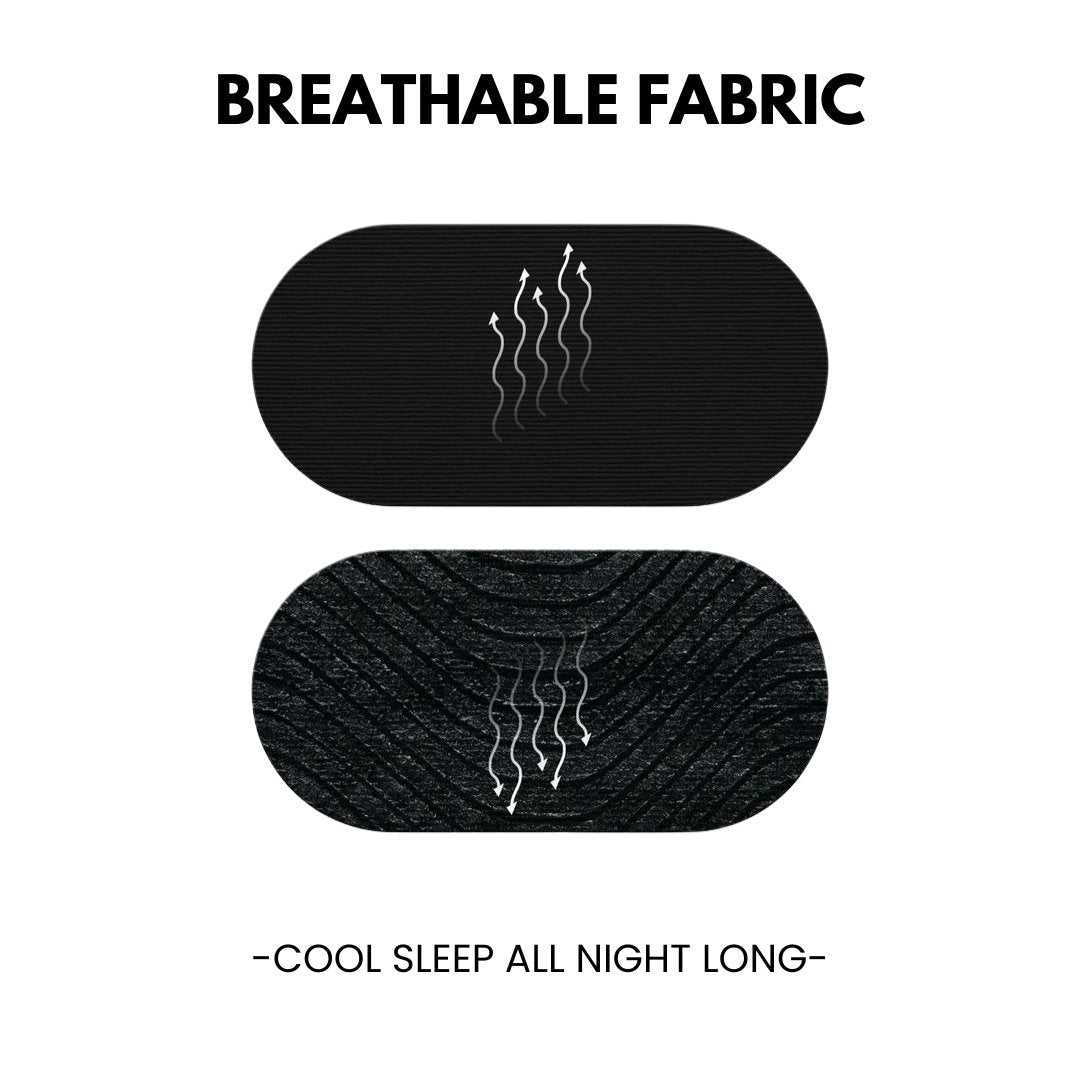
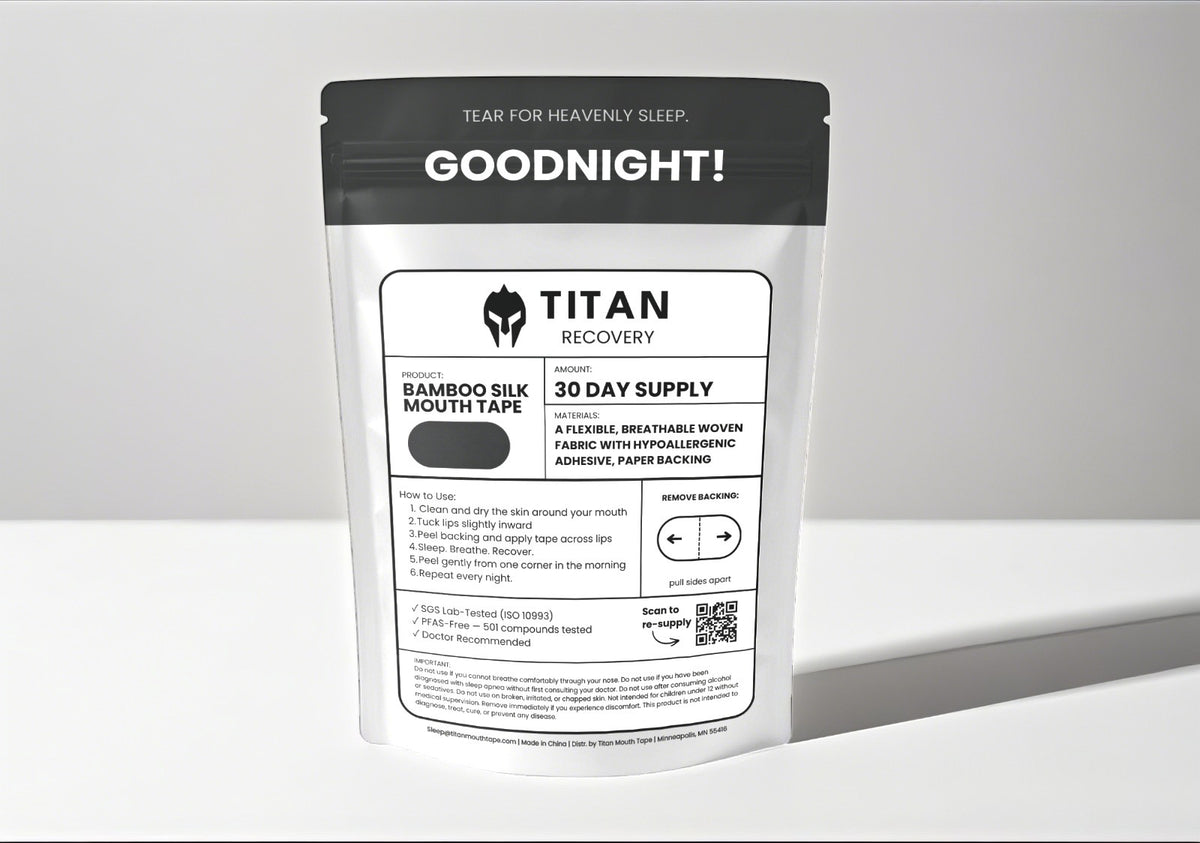
Use mouth tape. Mouth tape is a strip applied across your lips before bed that holds your mouth gently closed during sleep. It's the most direct solution to the problem — if the drooling is caused by your mouth opening, a strip of tape prevents it from opening.
Most people who start mouth taping for drooling notice the improvement on night one. The pillow stays dry. The mouth stays moist. The morning throat soreness disappears. It's one of the most immediate and consistent benefits of mouth taping because the mechanism is purely mechanical — mouth closed = saliva stays inside.
When to See a Doctor
Drooling during sleep is usually benign — just a sign of mouth breathing. But see a doctor if:
The drooling started suddenly and you haven't changed anything about your sleep. You also experience witnessed breathing pauses, gasping, or choking during sleep (these may indicate sleep apnea). The drooling is accompanied by difficulty swallowing while awake. You have excessive drooling during waking hours as well. The drooling is on one side only and accompanied by facial numbness or weakness.
These symptoms may indicate conditions beyond simple mouth breathing that require medical evaluation.
The Pillow Test
Look at your pillow in the morning. If there's a wet spot, your mouth was open. If there's not, it wasn't.
It's that simple. And fixing it may be that simple too.
A strip of bamboo silk tape across your lips before bed. Your mouth stays closed. Your saliva stays where it belongs. Your teeth get protected all night. Your pillow stays dry.
And you stop flipping the pillow before your partner wakes up.
Doctor Recommended: "As a maxillofacial surgeon and dentist, I recommend Titan Mouth Tape. Nasal breathing during sleep is essential for airway health and deep restorative rest. Titan's bamboo silk design is the most comfortable and effective mouth tape I have tested. If you struggle with snoring, dry mouth, or poor sleep quality, this is the simplest change you can make for your health." — Dr. Francois P., MD, DDS — Maxillofacial Surgeon
Lab-Tested Safety: Titan's SilkSeal™ adhesive is independently tested by an independent, globally accredited laboratory to ISO 10993 medical device standards. Non-toxic (95% cell viability). Non-allergenic (0% reaction rate). Non-irritating (score 0.0/8.0). PFAS-free — 501 compounds tested, zero detected. compliant with European chemical safety standards — 250 toxic substances screened, all clear. See full test results →
Try it tonight. Bamboo silk. SilkSeal™ adhesive. Beard-friendly. No logo on the tape. Free shipping. 30-night Better Sleep Guarantee. Shop Titan Mouth Tape →
This article is for informational purposes only and does not constitute medical advice. If you have or suspect a sleep disorder or other medical condition, consult a qualified healthcare provider before making changes to your routine.