How to Stop Mouth Breathing at Night: A Step-by-Step Guide
Share
You breathe through your nose all day. But the moment you fall asleep, your mouth opens, your tongue drops, and you spend the next 7-8 hours breathing through the wrong channel.
You might not even know it's happening. The signs show up in the morning instead: dry mouth, sore throat, snoring, bad breath, brain fog, and the kind of tired that coffee can't fix.
Here's how to stop mouth breathing at night — starting tonight.
Why You Mouth Breathe at Night
Mouth breathing during sleep happens for one of three reasons — and you may have more than one.
Reason 1: Muscle relaxation. During sleep, the muscles that hold your jaw closed relax. Your mouth falls open passively. This happens to an estimated 60% of adults at some point during the night. It's not a conscious choice — it's a consequence of the muscle tone changes that occur naturally during sleep.
Reason 2: Nasal obstruction. If your nasal passages are partially blocked — from allergies, a deviated septum, swollen turbinates, nasal polyps, or chronic inflammation — your body compensates by routing air through your mouth. This is your respiratory system prioritizing airflow over breathing route.
Reason 3: Habit. If you've been mouth breathing at night for years, the pattern becomes default. Even when your nose is clear, your body continues mouth breathing because it's what your neuromuscular system is trained to do during sleep.
Why It Matters
Mouth breathing during sleep isn't just uncomfortable. Research suggests it may affect multiple systems:
Sleep quality. Mouth breathing is associated with sympathetic nervous system activation — the stress response. Your body may struggle to reach the deep sleep stages (Stage 3 and REM) where physical and cognitive recovery happens. You sleep 8 hours but recover for 4.
Nitric oxide. Your paranasal sinuses produce nitric oxide exclusively during nasal breathing. Research suggests nitric oxide may help dilate blood vessels in the lungs and improve oxygen transfer. Mouth breathing bypasses this production entirely.
Oral health. When your mouth is open, saliva evaporates. Teeth lose their protective coating. Gums dry out. Bacteria thrive. Dentists increasingly link nighttime mouth breathing to cavities, gum disease, and chronic bad breath.
Airway stability. An open mouth allows the tongue to fall backward, which may narrow the upper airway. This narrowing is one of the primary mechanical contributors to snoring and may increase resistance to airflow throughout the night.
Facial structure. Long-term mouth breathing has been associated in research with changes in facial structure — including a longer face, less defined jawline, recessed chin, and forward head posture. These effects are most pronounced in children but research suggests soft tissue and postural changes may continue in adults.
How to Stop Mouth Breathing at Night
Step 1: Clear your nose
If you can't breathe comfortably through your nose right now while reading this, start here. You can't stop mouth breathing at night if your nose doesn't work.
For allergies: Identify and treat the underlying allergy. Over-the-counter antihistamines or prescription nasal corticosteroid sprays (like fluticasone) can reduce inflammation and clear nasal passages.
For congestion: A saline nasal rinse (neti pot or squeeze bottle) clears mucus and reduces inflammation. Do this before bed.
For structural issues: A deviated septum, nasal polyps, or swollen turbinates may require evaluation by an ENT. These are common and treatable — but they won't resolve on their own.
For mild restriction: An external nasal strip (like TitanAir) physically lifts the nostrils from the outside, increasing airflow without medication. This works immediately and can be paired with mouth tape for a complete nasal breathing system.
Step 2: Change your sleep position
Back sleeping increases the likelihood of mouth opening because gravity pulls the jaw down. Switching to side sleeping may help — though it's not a complete solution for most people. A body pillow or wedge pillow can help maintain a side position throughout the night.
Step 3: Keep your mouth closed with tape
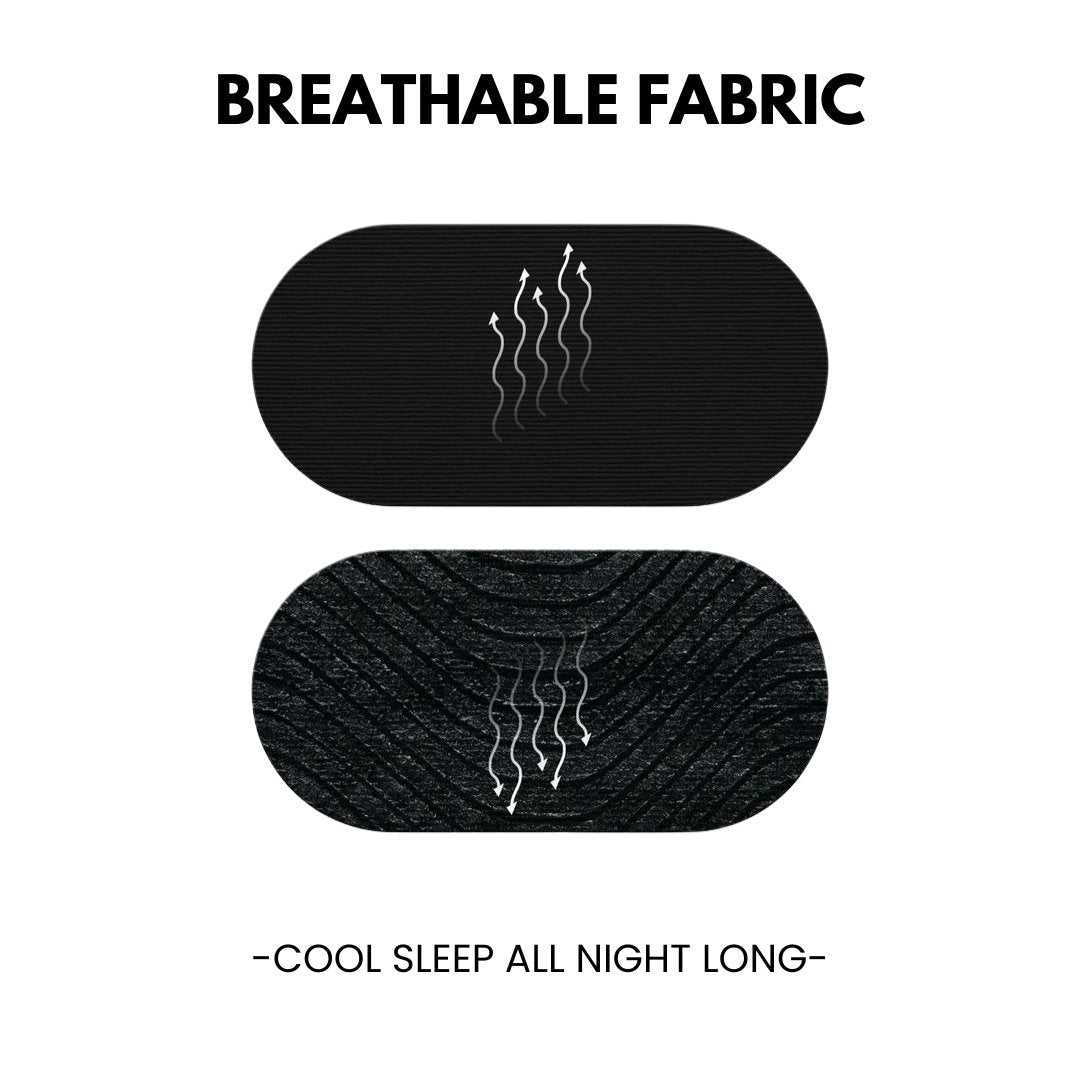
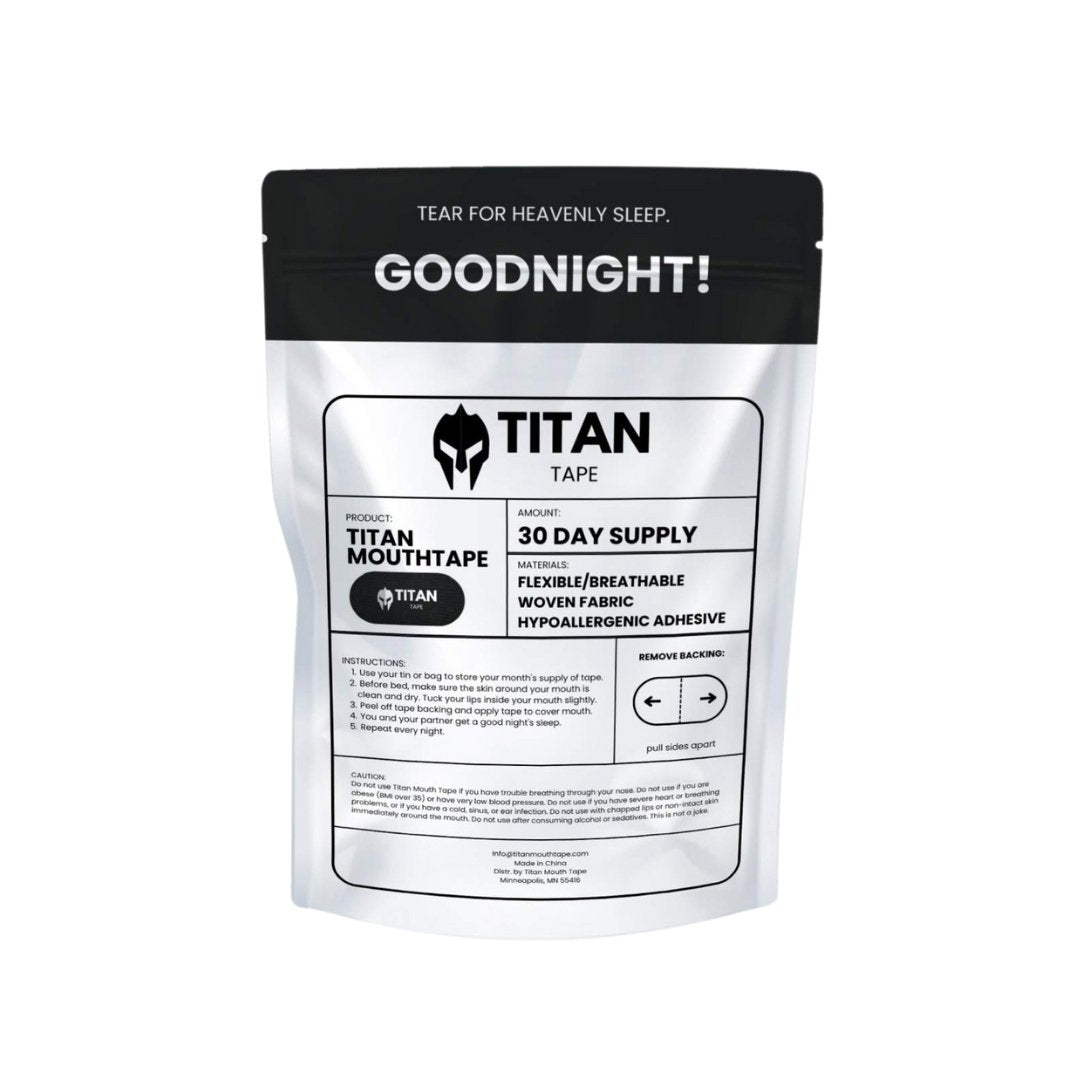
This is the most direct and effective intervention for nighttime mouth breathing. Mouth tape is a strip applied across your lips before bed that holds your mouth gently closed. Air goes through your nose. Your tongue stays against the palate. Your jaw stays in a neutral position.
It doesn't force your mouth closed — you can open your mouth and break the seal if you need to. It provides gentle resistance that prevents the passive jaw drop that causes mouth breathing during sleep.
Most people who try mouth tape notice the difference on night one: no dry mouth, no sore throat, no wet pillow. By night seven, the pattern is clear — better mornings, less snoring, more rest.
Step 4: Practice nasal breathing during the day
If mouth breathing is a habit, you need to retrain the pattern. Start by consciously breathing through your nose during the day — especially during light exercise, walking, and relaxation. The more your body defaults to nasal breathing while awake, the easier the transition during sleep.
Breathing exercises like the Buteyko method specifically train nasal breathing tolerance. Even 10 minutes of conscious nasal breathing practice per day can help reset the pattern over a few weeks.
Step 5: Reduce inflammation before bed
Your nasal passages are often more congested at night due to lying down (which increases blood flow to nasal tissues), evening allergen exposure, and dry indoor air. To reduce nighttime congestion: run a humidifier in the bedroom (40-60% humidity is ideal), avoid eating within 2-3 hours of bed (acid reflux can inflame nasal tissues), keep pets out of the bedroom if you have pet allergies, and wash bedding weekly in hot water to reduce dust mite exposure.
What Doesn't Work (As Well As You'd Hope)
Chin straps. These wrap around your head and hold your jaw closed mechanically. They work in theory but are bulky, uncomfortable, and frequently shift during sleep. Most people abandon them within a week. Mouth tape achieves the same result with less material, more comfort, and better compliance.
Nasal strips alone. Opening the nose helps — but it doesn't prevent your mouth from opening. Many people use nasal strips and still mouth breathe because the mouth is the path of least resistance when the jaw relaxes. Nasal strips work best when paired with mouth tape — open the nose AND close the mouth.
Sleep position pillows alone. Side sleeping helps reduce mouth opening but doesn't prevent it. Many side sleepers still mouth breathe. Position change is one piece — not the whole solution.
Willpower. You can't consciously control your breathing during sleep. You're unconscious. The intervention needs to be mechanical, not mental.
The Complete Approach
The most effective strategy combines multiple interventions:
Clear the nose (treat allergies, rinse with saline, use a nasal strip if needed). Close the mouth (mouth tape). Optimize position (side sleeping when possible). Reduce inflammation (humidifier, allergen reduction, avoid late eating).
For a complete step-by-step nasal breathing guide, read this →
Start with the tape. It's the intervention with the most immediate, measurable impact. If your pillow is dry and your mouth is moist tomorrow morning, you'll know it worked. Everything else builds on that foundation.
Doctor Recommended: "As a maxillofacial surgeon and dentist, I recommend Titan Mouth Tape. Nasal breathing during sleep is essential for airway health and deep restorative rest. Titan's bamboo silk design is the most comfortable and effective mouth tape I have tested. If you struggle with snoring, dry mouth, or poor sleep quality, this is the simplest change you can make for your health." — Dr. Francois P., MD, DDS — Maxillofacial Surgeon
Lab-Tested Safety: Titan's SilkSeal™ adhesive is independently tested by SGS to ISO 10993 medical device standards. Non-toxic (95% cell viability). Non-allergenic (0% reaction rate). Non-irritating (score 0.0/8.0). PFAS-free — 501 compounds tested, zero detected. REACH compliant — 250 toxic substances screened, all clear. See full test results →
Try it tonight. Bamboo silk. SilkSeal™ adhesive. Beard-friendly. No logo on the tape. Free shipping. 30-night Better Sleep Guarantee. Shop Titan Mouth Tape → · Shop TitanAir Nasal Strips →