Mouth Breathing Is Aging Your Face. Here's How.
Share
You're doing everything right. Retinol at night. SPF every morning. You drink water. You eat well. You've invested in the skincare routine, the supplements, the lifestyle.
And your face is still aging faster than it should.
Here's a possibility you haven't considered: it might not be what you're putting on your skin. It might be how you're breathing while you sleep.
The Face Your Breathing Builds
Your facial structure isn't fixed after puberty. It continues to change throughout adulthood — slowly, subtly, but measurably. And one of the factors that research suggests may influence those changes is your breathing pattern during sleep.
When you breathe through your nose, your mouth is closed. Your tongue rests against the roof of your mouth. Your lips are sealed. Your jaw is in a neutral, relaxed position. The muscles of your face are at rest.
When you breathe through your mouth, everything shifts. Your jaw drops open. Your tongue falls to the floor of your mouth. Your lips part. The muscles around your mouth and chin engage differently to accommodate the open airway. Your head may tilt slightly backward to keep the throat open.
Do this for one night, and nothing changes. Do this for years — eight hours a night, every night — and research suggests the cumulative postural effects may become visible.
What the Research Shows
The connection between mouth breathing and facial structure has been most extensively studied in children, where the effects on development are well-documented. But emerging research suggests the relationship doesn't stop at adulthood.
Studies in dental and orthodontic literature have associated chronic mouth breathing with several facial characteristics: a longer, narrower face; a less defined jawline; a recessed chin; forward head posture; and reduced midface development. In children, this pattern is sometimes called "long face syndrome" or "adenoid facies."
In adults, the structural changes are less dramatic than in children (because the bones are no longer actively growing), but the soft tissue and postural effects may still accumulate. Research suggests chronic mouth breathing in adults may be associated with:
Reduced jaw definition. When the mouth hangs open during sleep, the masseter muscles (the muscles that close the jaw) are chronically underused at night. Like any muscle that's underused, they may lose tone over time. The result can be a softer, less defined jawline — not because of weight gain, but because of muscle atrophy from years of sleeping with the mouth open.
Forward head posture. To keep the airway open while mouth breathing, the head often tilts forward and the chin juts out. Over years, this posture may become habitual — contributing to neck tension, a less defined profile, and the appearance of a "tech neck" that isn't actually caused by screens.
Changes around the mouth. Chronic mouth breathing may be associated with changes in the muscles around the lips and chin. The mentalis muscle (the chin muscle) often becomes overactive in mouth breathers, creating a dimpled or strained appearance. The upper lip may appear thinner as it's chronically stretched over parted teeth.
Under-eye changes. Research has associated mouth breathing with "allergic shiners" — dark circles under the eyes caused by venous congestion related to nasal obstruction. While this is more commonly discussed in children, adults with chronic nasal obstruction and mouth breathing may experience similar under-eye changes.
The Skin Damage You Can't See Coming
Beyond structural changes, mouth breathing during sleep may affect your skin through a different mechanism entirely: sleep quality.
Research suggests that mouth breathing is associated with sympathetic nervous system activation during sleep — keeping your body in a low-grade stress state rather than the parasympathetic recovery mode where deep sleep occurs. And deep sleep is when your skin does its most important repair work.
During deep sleep (Stage 3), blood flow to the skin increases. Collagen production ramps up. Cell turnover accelerates. Growth hormone — released primarily during deep sleep — drives tissue regeneration, including skin tissue. This is why dermatologists call it "beauty sleep." It's not a cliché. It's biology.
When mouth breathing fragments your sleep and reduces time in deep stages, several things may happen that affect your skin:
Collagen production may decrease. Less deep sleep may mean less growth hormone, which may mean slower collagen synthesis. Collagen is the protein that keeps skin firm, elastic, and youthful. As production slows, skin may lose elasticity and develop fine lines faster.
Cortisol may stay elevated. Research suggests that poor sleep is associated with elevated cortisol levels. Cortisol is catabolic — it breaks down tissue, including collagen. So not only may you be producing less collagen during fragmented sleep, you may also be actively breaking down what you have.
Inflammation may increase. Chronic poor sleep is associated with elevated inflammatory markers. Skin inflammation can manifest as puffiness, redness, uneven tone, and accelerated aging. The "tired face" people recognize after a bad night isn't just perception — it's measurable inflammatory response.
Dark circles may deepen. The skin under your eyes is the thinnest on your body. When sleep quality drops, blood vessels beneath this skin may become more visible — creating the dark, hollow look associated with sleep deprivation. This effect compounds over time.
No skincare product can fully compensate for what happens when your body doesn't get adequate deep sleep. You can apply retinol to stimulate collagen production, but if your body isn't entering the deep sleep stages where collagen is naturally produced, you're fighting biology with chemistry. Chemistry helps. Biology wins.
The Dry Mouth-Skin Connection
There's another pathway worth understanding: dehydration from mouth breathing.
When your mouth is open all night, you lose moisture through evaporation — not just from your oral cavity, but from your body generally. Your respiratory system is expelling humidified air through an open mouth instead of recycling it through the nasal passages (which naturally humidify and recapture moisture).
This low-grade overnight dehydration may affect skin hydration, turgor, and plumpness — particularly noticeable in the morning. The "deflated" look many people notice when they wake up after a bad night may not be entirely about sleep quality. It may also be about moisture loss from eight hours of open-mouth breathing.
What People Notice First
The structural and skin effects of chronic mouth breathing aren't dramatic overnight. They're cumulative — building so slowly that you don't notice them in the mirror because you see your face every day.
Other people notice. They don't say "your jaw looks less defined" or "your skin is losing elasticity." They say:
"You look tired."
That phrase — "you look tired" — may be the earliest visible signal that your sleep isn't producing recovery. And for many people, the root cause is their mouth falling open during sleep.
Research published in the British Medical Journal had observers evaluate photographs of people after normal sleep versus sleep deprivation. The sleep-deprived faces were consistently rated as looking more fatigued, having more drooping eyelids, redder eyes, darker circles, paler skin, and more downturned mouths. These visible changes occurred after just two nights of poor sleep.
Now imagine that effect compounding over months and years of mouth breathing during sleep.
The Fix Isn't Another Product. It's How You Breathe.
The skincare industry is projected to reach $200 billion globally. Serums. Masks. Devices. Injectables. People will spend enormous amounts of money to slow visible aging.
But if your mouth is open for eight hours every night — suppressing deep sleep, potentially elevating cortisol, possibly reducing collagen production, dehydrating your skin, and allowing your facial muscles to atrophy — no product applied to the surface can fully counteract what's happening underneath.
Nasal breathing during sleep addresses the root variable. When your mouth is closed:
Your tongue rests against the palate, which may help maintain jaw and facial muscle tone. Your parasympathetic nervous system may engage, promoting the deep sleep stages where skin repair occurs. Your body may produce nitric oxide, which research suggests plays a role in vasodilation and circulation — potentially improving blood flow to the skin. Your saliva stays in your mouth, protecting your teeth and gums. Your moisture stays in your body instead of evaporating through an open mouth.
One change. Not a product you apply. A behavior you correct.
How to Start
If you suspect you're mouth breathing at night — dry mouth in the morning, snoring, chronic fatigue despite enough hours, dark circles that won't go away — the simplest intervention is mouth taping. For a deeper look at this specific symptom, see our article on mouth breathing and dark circles under the eyes.
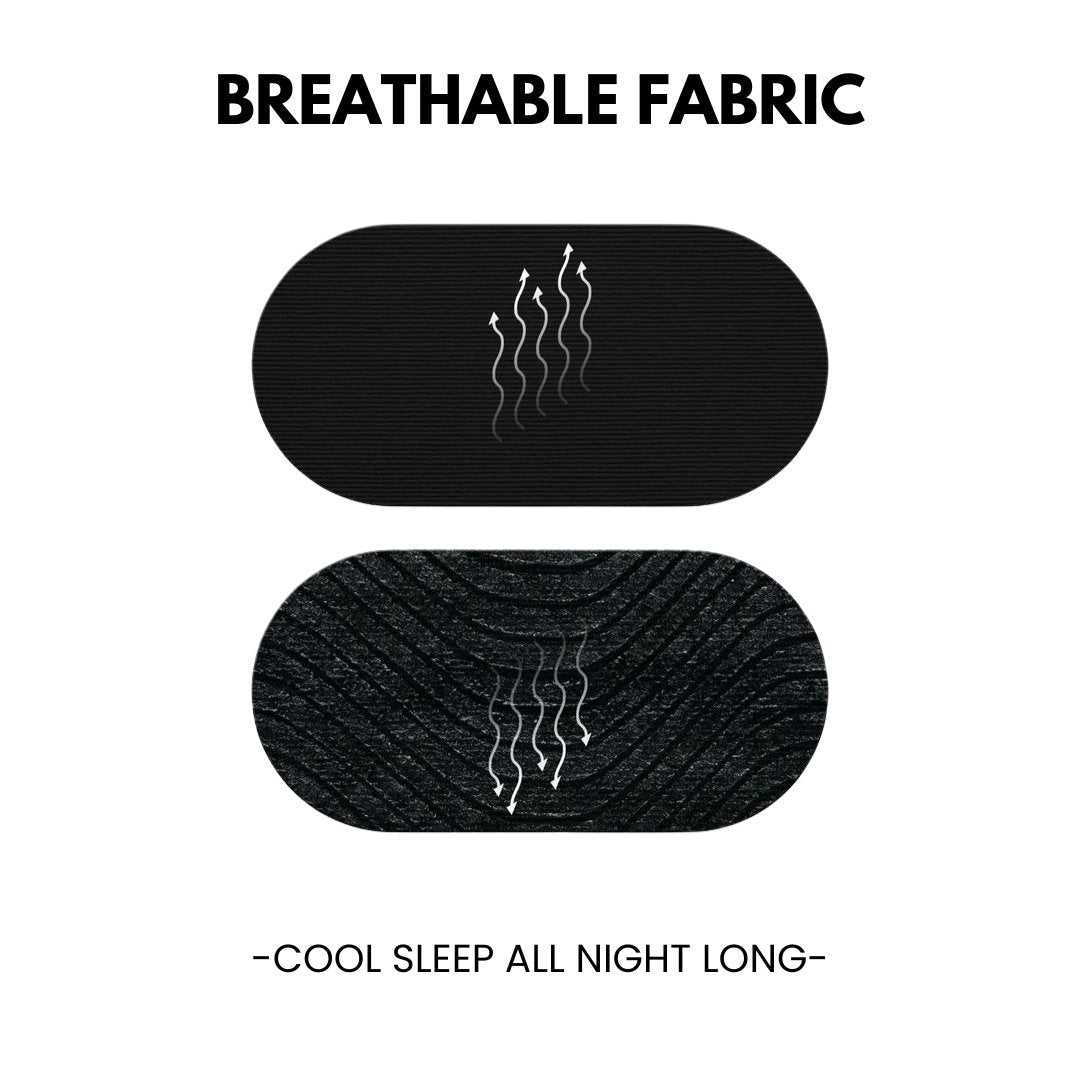
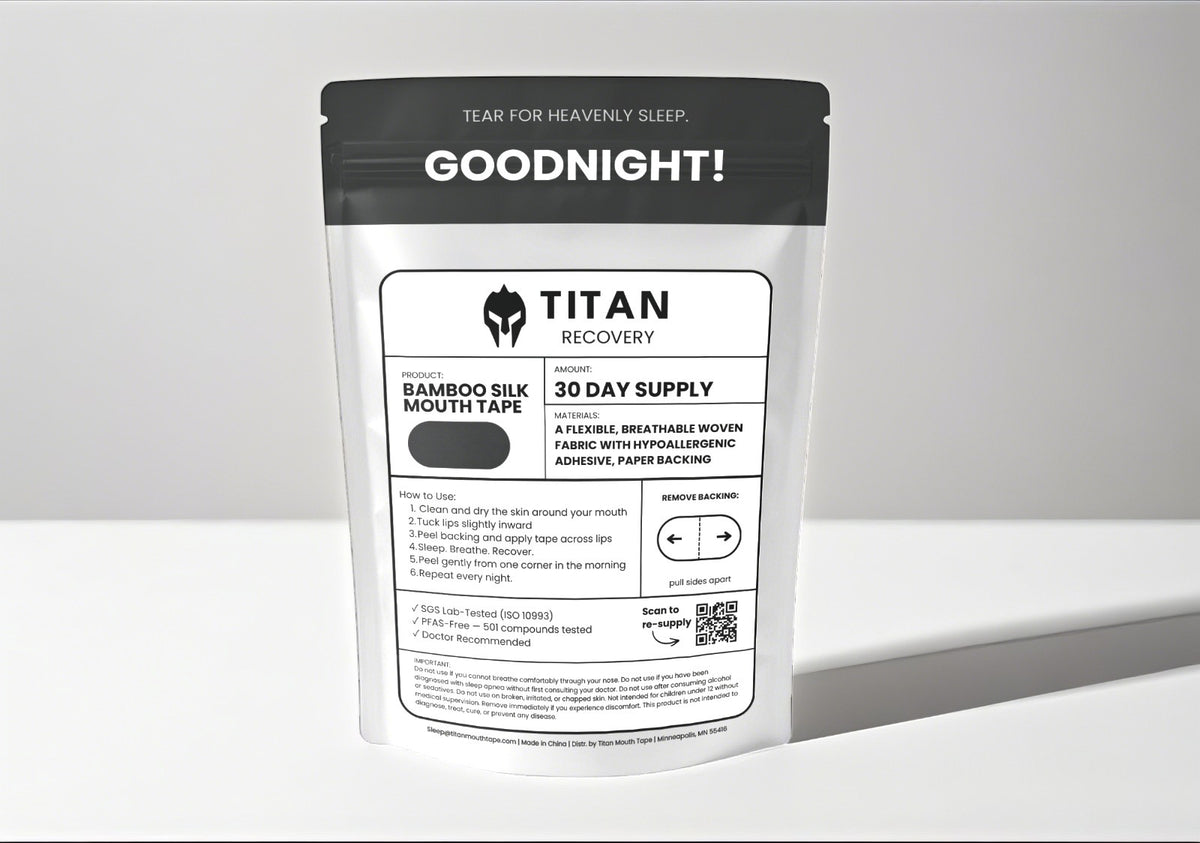
A strip of tape across your lips before bed holds your mouth gently closed. Your tongue stays against the palate -- a position known as proper tongue posture or mewing, which you can learn more about in our guide to tongue posture, mewing, and mouth tape. Air goes through your nose. Your body may shift into the recovery mode it needs to repair, regenerate, and maintain the structures — including the skin and muscles of your face — that determine how you look.
It's not a skincare product. It's not an anti-aging device. It's a strip of tape that may help your body do what it's supposed to do during sleep — including the repair work that shows up on your face every morning.
Your skincare routine starts before you open your eyes. It starts with how you breathe.
Doctor Recommended: "As a maxillofacial surgeon and dentist, I recommend Titan Mouth Tape. Nasal breathing during sleep is essential for airway health and deep restorative rest. Titan's bamboo silk design is the most comfortable and effective mouth tape I have tested. If you struggle with snoring, dry mouth, or poor sleep quality, this is the simplest change you can make for your health." — Dr. Francois P., MD, DDS — Maxillofacial Surgeon
Lab-Tested Safety: Titan's SilkSeal™ adhesive is independently tested by an independent, globally accredited laboratory to ISO 10993 medical device standards. Non-toxic (95% cell viability). Non-allergenic (0% reaction rate). Non-irritating (score 0.0/8.0). PFAS-free — 501 compounds tested, zero detected. compliant with European chemical safety standards — 250 toxic substances screened, all clear. See full test results →
Try it tonight. Bamboo silk. SilkSeal™ adhesive. Beard-friendly. No logo on the tape. Free shipping. 30-night Better Sleep Guarantee. Shop Titan Mouth Tape →