Why Bamboo Mouth Tape Is Different (And What to Look for Before You Buy)
Share
Not all mouth tape is mouth tape.
Some of it is kinesiology tape repackaged in a sleep-themed box. Some of it is medical paper tape with a markup. Some of it is thin plastic strips with a generic adhesive that was never designed for your face.
And then there's bamboo mouth tape — a fundamentally different material that changes what mouth taping actually feels like.
If you've tried mouth taping and found it uncomfortable, irritating, or ineffective, the material was probably the problem. Here's why bamboo silk is different, what to look for, and why it matters more than most people realize.
What Bamboo Mouth Tape Actually Is
Bamboo mouth tape is made from woven bamboo silk — a fabric derived from bamboo fiber that's been processed into a soft, flexible textile. It's the same category of material used in premium bedding, athletic wear, and sensitive-skin garments.
When used as mouth tape, bamboo silk is woven into a thin, lightweight strip that sits across the lips. It doesn't feel like tape. It feels like fabric — because it is fabric. Soft, breathable, and conforming to the contours of your face rather than fighting them.
This distinction matters because the material determines everything about the experience: how the tape feels on your skin, whether it breathes during the night, whether it holds through movement, and whether you'll actually wear it consistently enough to see results.
Bamboo Silk vs. Other Mouth Tape Materials
Understanding why bamboo silk performs differently requires comparing it to what most mouth tapes are actually made from.
Kinesiology tape (athletic tape). This is the most common material in budget mouth tapes. It was designed for knees, shoulders, and ankles — large, flat surfaces during athletic activity. The adhesive is aggressive because it needs to hold through sweat and movement. On the delicate skin around your mouth, that aggressive adhesive may cause irritation, redness, and painful removal — especially on facial hair. The material itself is thick, rigid, and not breathable in the way your face needs during eight hours of sleep.
Medical paper tape. Gentle and hypoallergenic, but paper tape was designed for securing gauze to a wound for a few hours — not holding your mouth closed all night. It has minimal adhesive strength, absorbs moisture (which weakens the bond further), and often falls off within the first few hours of sleep. If you've tried mouth taping with drugstore paper tape and woke up with the tape on your pillow and a dry mouth, the material failed you.
Plastic/synthetic strips. Thin, rigid, and non-breathable. Plastic strips create a moisture trap against the skin — which can weaken the adhesive bond over time and cause irritation. They tend to curl at the edges, breaking the seal. They don't conform to facial contours. And they feel exactly like what they are: plastic stuck to your face.
Silicone patches. Gentle on skin, hypoallergenic, and comfortable — but silicone adhesives are often too weak to hold through an entire night, especially for active sleepers or anyone with facial hair. They also tend to be thicker and more noticeable than fabric-based options.
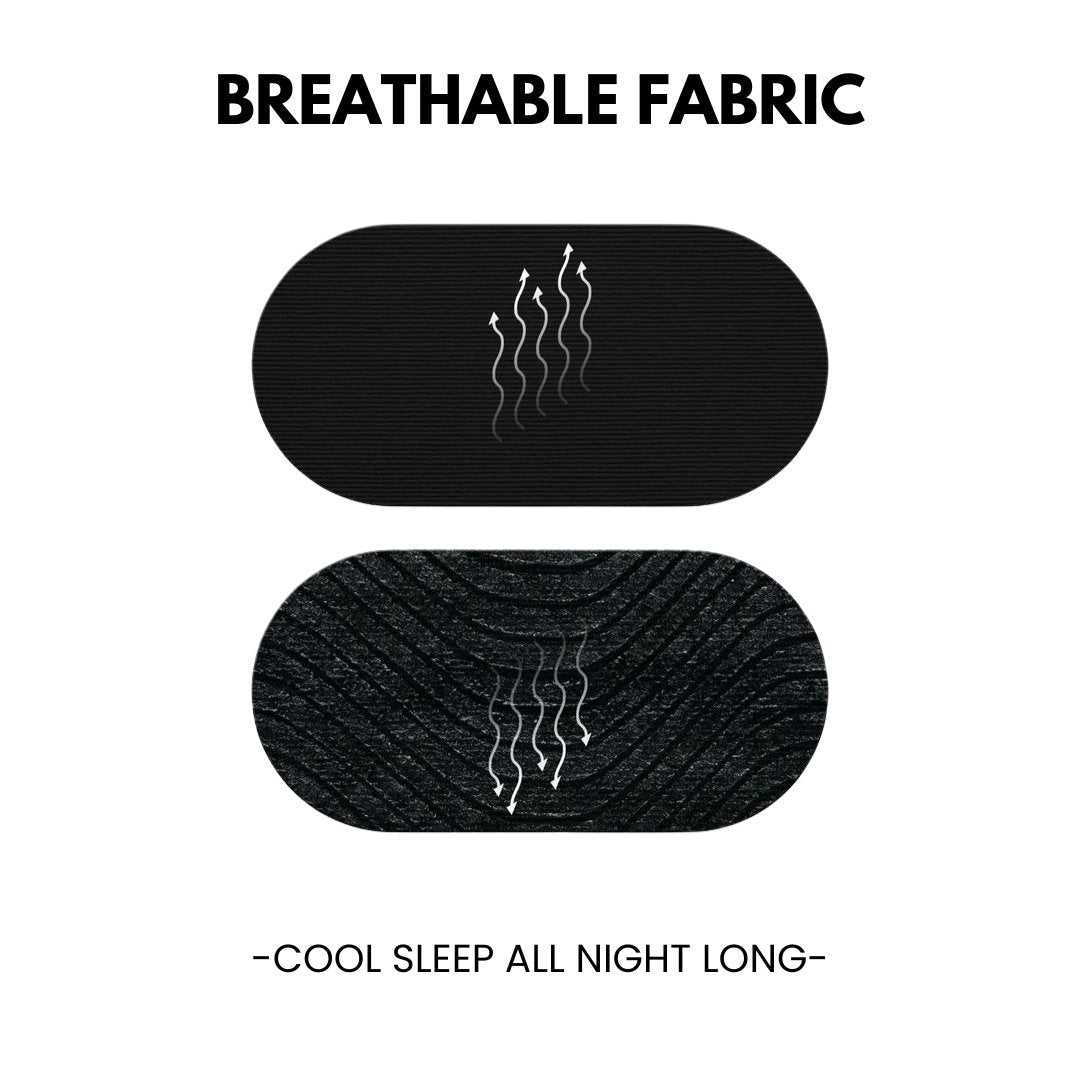
Bamboo silk. Woven, breathable, naturally antibacterial, and soft against skin. The fabric drapes rather than stiffens — conforming to the curves of your lips and the contours around your mouth. It doesn't trap moisture. It doesn't curl at the edges. It doesn't feel like a foreign object on your face. And because it's a woven textile rather than a rigid substrate, it allows the adhesive beneath it to make targeted contact with skin — even through facial hair.
Why Breathability Matters More Than You Think
You wear mouth tape for eight hours. During those eight hours, your face produces moisture — from breathing, from skin oils, from ambient humidity. A material that traps that moisture against your skin creates problems:
The adhesive bond weakens as moisture accumulates beneath it. The skin becomes macerated (softened by excessive moisture), which may increase irritation risk. Bacteria thrive in warm, moist environments — potentially leading to breakouts or skin reactions around the mouth.
Bamboo silk is inherently breathable. The woven structure allows airflow through the tape itself, reducing moisture buildup beneath the adhesive. Research suggests bamboo fiber may also have natural antibacterial properties — meaning the material itself may help inhibit bacterial growth during those eight hours of wear.
This is why people who've tried plastic or kinesiology tape and experienced skin irritation often find that bamboo silk doesn't cause the same reaction. It's not just the adhesive that matters — it's the material sitting on top of it.
The Beard Problem (And Why Bamboo Solves It)
Ask any man with facial hair about mouth taping and you'll hear the same story: it either falls off or rips out hair.
This is a material problem, not a mouth taping problem.
Rigid tapes (kinesiology, plastic) sit on top of facial hair rather than conforming around it. The adhesive bonds to hair fibers instead of skin. Removal is painful. Reapplication is frustrating. Most men quit within a week.
Bamboo silk is a woven fabric — it drapes. When applied over facial hair, the flexible weave conforms around individual hairs rather than flattening them. This allows the adhesive to make contact with the skin beneath the hair, creating a bond that holds through the night without gripping the hair itself.
The result: the tape stays on all night through beards, goatees, and stubble. And in the morning, it peels off cleanly — no hair pulling, no residue, no patches of missing facial hair.
If you've written off mouth taping because of your beard, the material was the problem. Your tape failed you — not the practice.
What to Look for Beyond the Material
Bamboo silk is the foundation. But the tape is only as good as the adhesive beneath it and the testing behind it.
Adhesive safety. The adhesive sits on some of the thinnest, most absorbent skin on your body for a third of your life. Look for a tape whose adhesive has been independently tested under ISO 10993 — the international standard for biological evaluation of medical devices. Specifically: cytotoxicity testing (is it toxic to cells?), skin sensitization testing (does it cause allergic reactions?), and skin irritation testing (does it cause redness or inflammation?). If the brand hasn't published these results, they haven't done the testing.
PFAS screening. PFAS — "forever chemicals" — have been found in adhesive products across consumer categories. A comprehensive screening tests for 500+ individual PFAS compounds. If the brand hasn't screened for PFAS, you don't know what's in the adhesive you're pressing into your skin every night.
No logo on the tape. Some brands print their logo directly on the tape strip. This is a marketing decision, not a design decision. Clean, unbranded tape looks minimal and intentional. A logo across your mouth looks like advertising.
Tested for beards. "Hypoallergenic" doesn't mean beard-friendly. Look for reviews specifically from men with facial hair. If the brand doesn't have them, the adhesive probably wasn't designed for it.
The Comfort Threshold
Here's the thing about mouth taping that nobody talks about: the single biggest determinant of whether it works for you isn't the science, the adhesive strength, or the health benefits. It's whether you'll actually wear it every night.
Consistency is everything. Occasional mouth taping is like occasional exercise — better than nothing, but the results come from daily practice. The people who report the most significant improvements — reduced snoring, better sleep quality, no more dry mouth, improved morning energy — are the ones who tape every single night for weeks and months.
And the only way you'll do that is if the tape is comfortable enough to forget about.
This is where material makes or breaks the habit. If you feel the tape pulling, stretching, or restricting movement — your brain won't relax and you won't sleep well. If the tape smells like chemicals or feels like plastic — you'll rip it off at 2am. If removal hurts — you'll skip it the next night.
Bamboo silk crosses the comfort threshold that other materials don't. Within two or three nights, most people stop noticing it entirely. It becomes invisible — just part of going to bed, like turning off the lights.
That invisibility is the point. The best mouth tape is the one you forget you're wearing.
Not All Bamboo Tape Is the Same
A word of caution: "bamboo" on the label doesn't guarantee quality. The bamboo mouth tape market has grown quickly, and not every brand using bamboo silk has invested in adhesive testing, PFAS screening, or beard-compatible design.
Some brands use bamboo silk with a cheap acrylic adhesive that irritates skin or leaves residue. Some use bamboo silk but haven't tested the adhesive for biocompatibility. Some market "organic bamboo" without any third-party verification of the material or the adhesive safety.
The material is the starting point. The adhesive, the testing, and the design determine whether the product is actually worth putting on your face every night.
When evaluating bamboo mouth tape brands, ask: has the adhesive been independently tested by a third-party laboratory under ISO 10993 standards? Has the product been screened for PFAS? Are the test results published — not summarized in marketing copy, but available as verifiable data? If the answer to any of these is no, the bamboo silk on the surface may be covering an adhesive underneath that hasn't been proven safe.
Why It Matters
Mouth taping is a nightly practice. Not a one-time purchase. Not a weekend experiment. It's something you do to your face, on some of the most sensitive skin on your body, for eight hours a night, for months and years.
The material matters because comfort determines consistency. The adhesive matters because safety determines risk. The testing matters because claims without data are just marketing.
Bamboo silk is the best material currently available for mouth taping — breathable, naturally antibacterial, soft enough to sleep in, strong enough to hold all night, and gentle enough to remove cleanly in the morning. But the bamboo is only as good as what's underneath it.
Choose a tape where both the surface and the adhesive have been tested, verified, and published. Your face deserves that standard.
Doctor Recommended: "As a maxillofacial surgeon and dentist, I recommend Titan Mouth Tape. Nasal breathing during sleep is essential for airway health and deep restorative rest. Titan's bamboo silk design is the most comfortable and effective mouth tape I have tested. If you struggle with snoring, dry mouth, or poor sleep quality, this is the simplest change you can make for your health." — Dr. Francois P., MD, DDS — Maxillofacial Surgeon
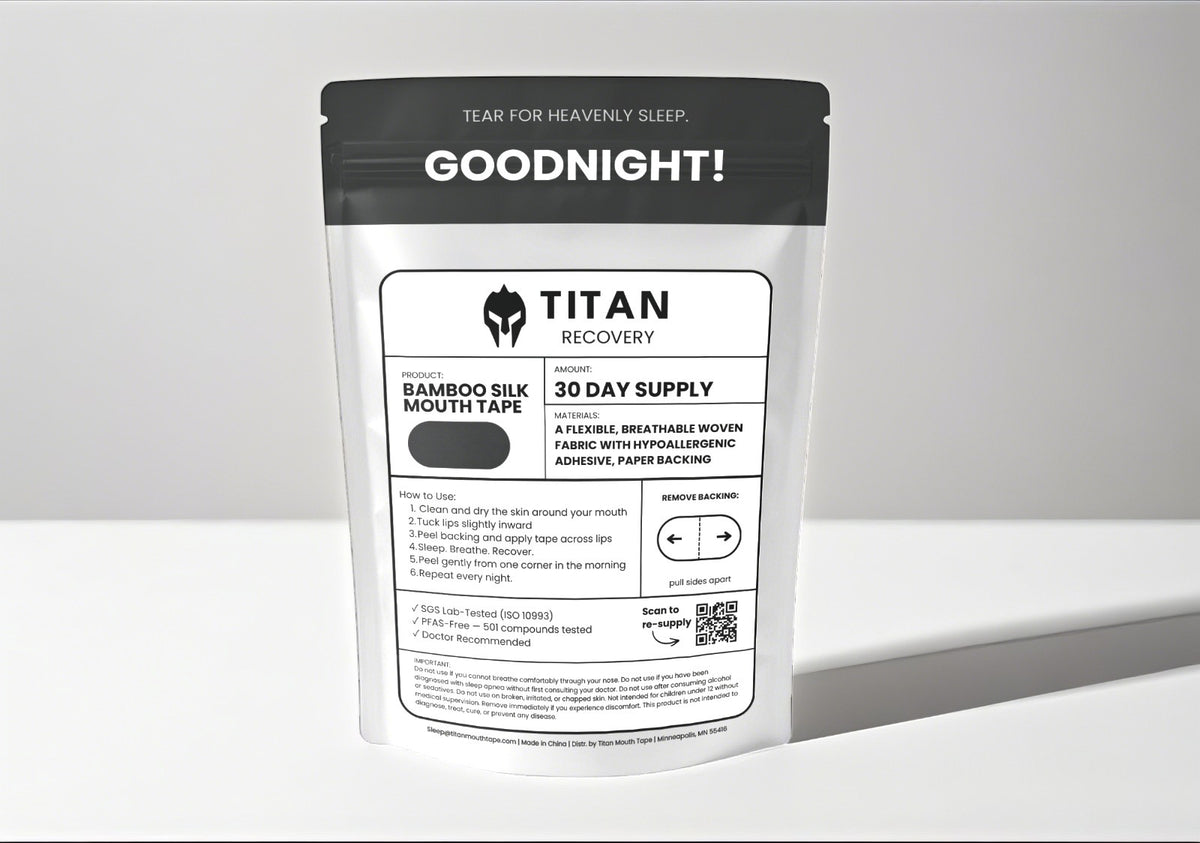
Lab-Tested Safety: Titan's SilkSeal™ adhesive is independently tested to ISO 10993 medical device standards. Non-toxic (95% cell viability). Non-allergenic (0% reaction rate). Non-irritating (score 0.0/8.0). PFAS-free — 501 compounds tested, zero detected. See full test results →
Try it tonight. Bamboo silk. SilkSeal™ adhesive. Beard-friendly. No logo on the tape. Free shipping. 30-night Better Sleep Guarantee. Shop Titan Mouth Tape →